
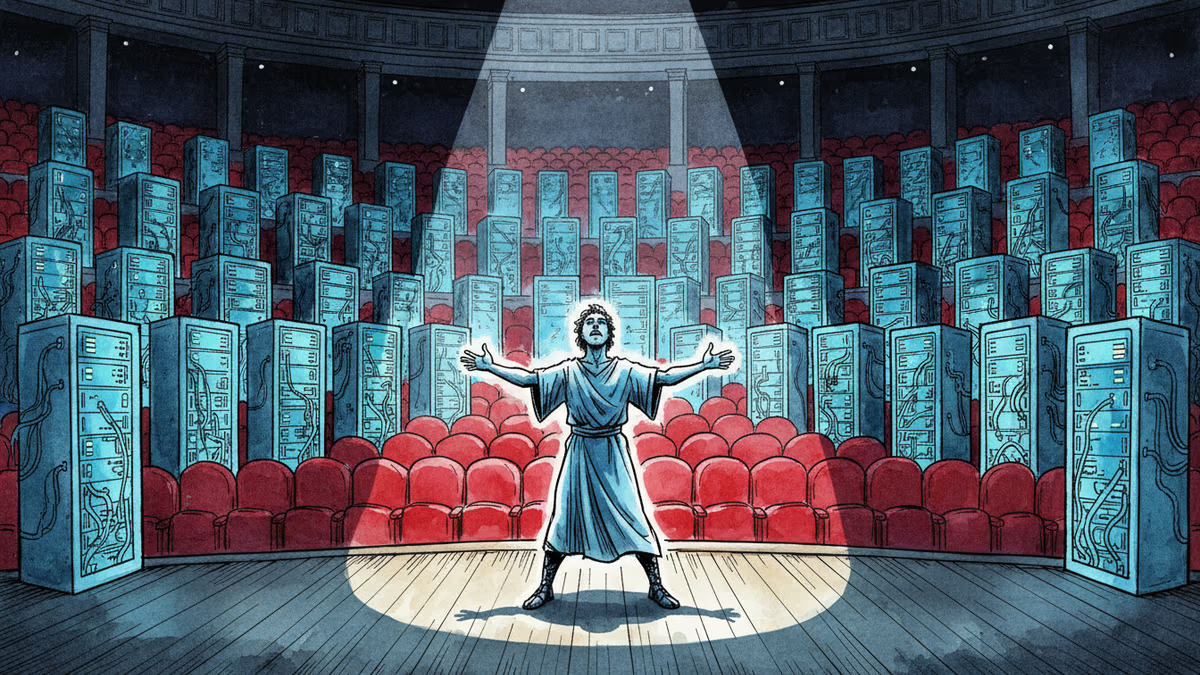
Actors Are Now Auditioning to Train AI
AI companies are hiring actors and writers to generate emotional training data. As creative labor becomes raw material for machine learning, what does that mean for the future of both?
The Audition That Leads Nowhere Near a Stage
The job listing reads like something from a serious casting call. Strong creative instincts. The ability to authentically portray emotion. The capacity to stay true to a character's voice throughout an entire scene. What it doesn't mention: there's no audience, no director, no curtain call.
The role is posted by Handshake AI, a company that supplies training data to OpenAI and other AI labs. Applicants would use their craft not to entertain, but to feed a machine—generating the kind of emotionally textured, character-consistent dialogue that AI models still struggle to produce on their own. The listing identifies the end client only as "one of the leading AI companies."
Handshake AI is one of a growing cluster of firms operating in the training data supply chain, racing to deliver increasingly specific and nuanced human-generated content to AI developers who've begun to hit the limits of what's freely available on the internet.
Why Actors? Because the Internet Isn't Enough
The logic behind hiring performers is, in a way, an admission of failure. Early large language models were trained on enormous scrapes of web text—news articles, novels, forums, Wikipedia. That worked, up to a point. But raw internet text has gaps.
What it lacks is precision of emotional register. How does a character in the middle of grief-tinged rage actually speak? How does a scene sustain tension while keeping a voice consistent across 10, 20, 30 exchanges? How does subtext work when the words on the surface say one thing and the emotional undercurrent says another? These are things actors spend years learning, and they're exactly what AI developers now want to buy.

The training data industry has been quietly specializing for some time. What started as bulk text annotation has evolved into a market for highly specific human outputs: rare language dialects, domain-specific expertise, and now, performative emotional authenticity. As AI models get more capable in general tasks, the frontier moves to the subtle and the human.
The Uncomfortable Position Creative Workers Are In
Here's where it gets complicated. Actors and writers were among the first professional groups to sound the alarm about AI—loudly, publicly, and at significant personal cost. The Hollywood writers' strike of 2023 lasted 148 days, in part over fears that AI would be used to replace or diminish their work. Actors joined them. The core concern wasn't hypothetical: studios were already exploring AI-generated scripts and synthetic performances.
Now, some of those same workers are being asked—and are considering—whether to take jobs training the very systems they protested. The calculus is grim but real. Fewer productions. Thinner audition pipelines. A gig that pays, doing something that at least uses the skills they've spent years developing.
The contract terms, when they exist at all, are rarely transparent. Who owns the data once it's generated? Can the AI company use a performer's emotional range to train a synthetic voice or avatar? What restrictions, if any, apply to downstream use? These questions don't always have clear answers in the agreements being offered.
Three Ways to Read This
From the AI company's perspective, this is straightforward market efficiency. They need better data, they're willing to pay for it, and they're creating income for workers in a struggling industry. The transaction is voluntary and compensated.
From the creative worker's perspective, the situation is less clean. The income is real, but so is the awareness that the output will be used to build systems that may eventually reduce demand for human creativity. It's a short-term trade with long-term implications that are hard to price.
From a regulatory standpoint, this is largely uncharted territory. The EU AI Act addresses some data provenance requirements, but the specific question of how creative labor used in training should be compensated, credited, or restricted is still being worked out—slowly—by legislators who are several product cycles behind the industry.
Authors
Related Articles
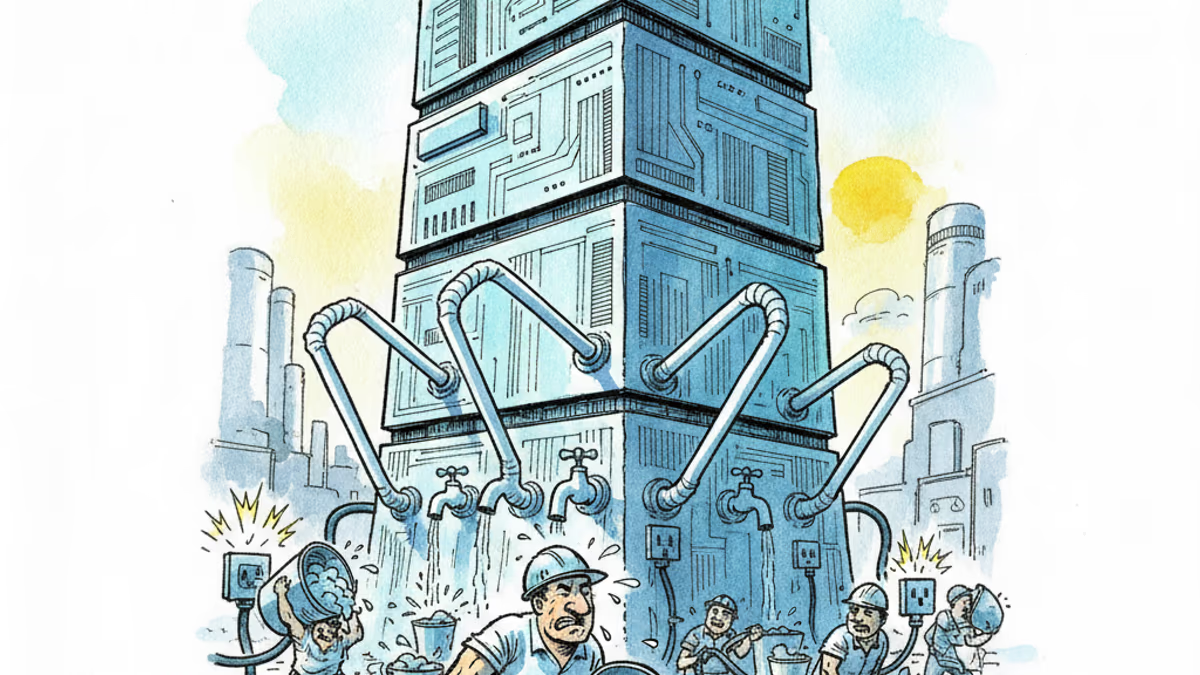
Samsung and SK unveiled a chip and AI investment package worth thousands of trillions of won on June 29. The headline number swings wildly by outlet, but the real contest isn't capital — it's water and power.
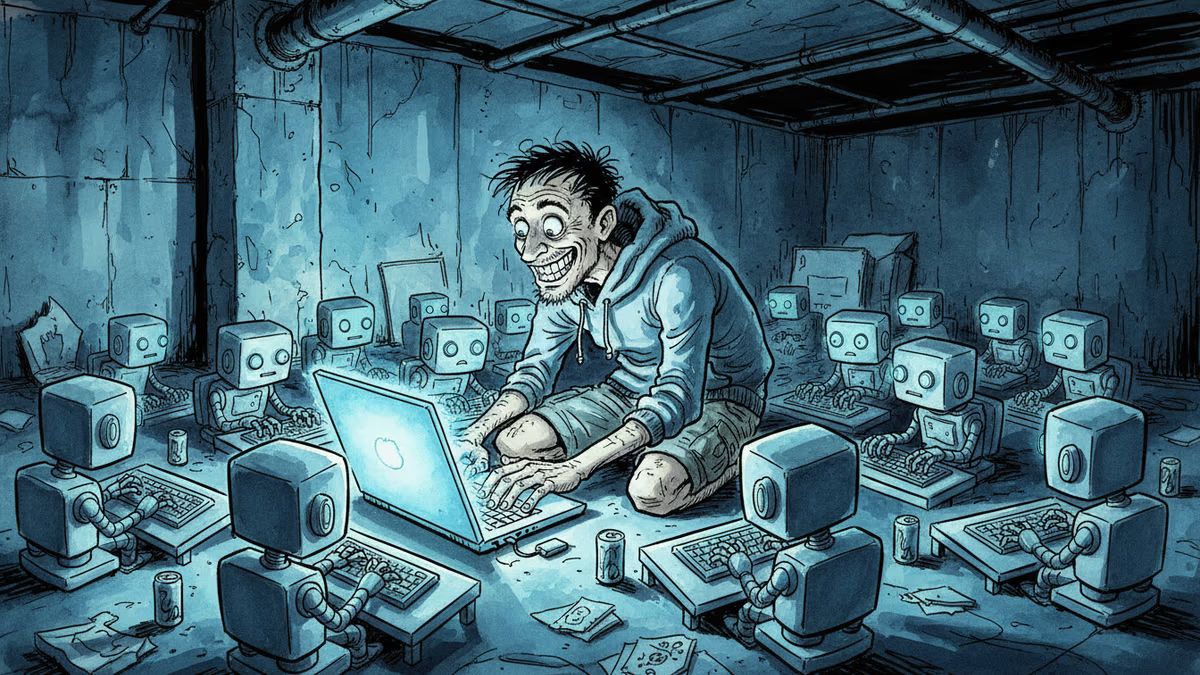
A small but growing group of developers has gone all-in on AI coding agents like Claude Code and OpenClaw. History suggests the rest of us won't be far behind.
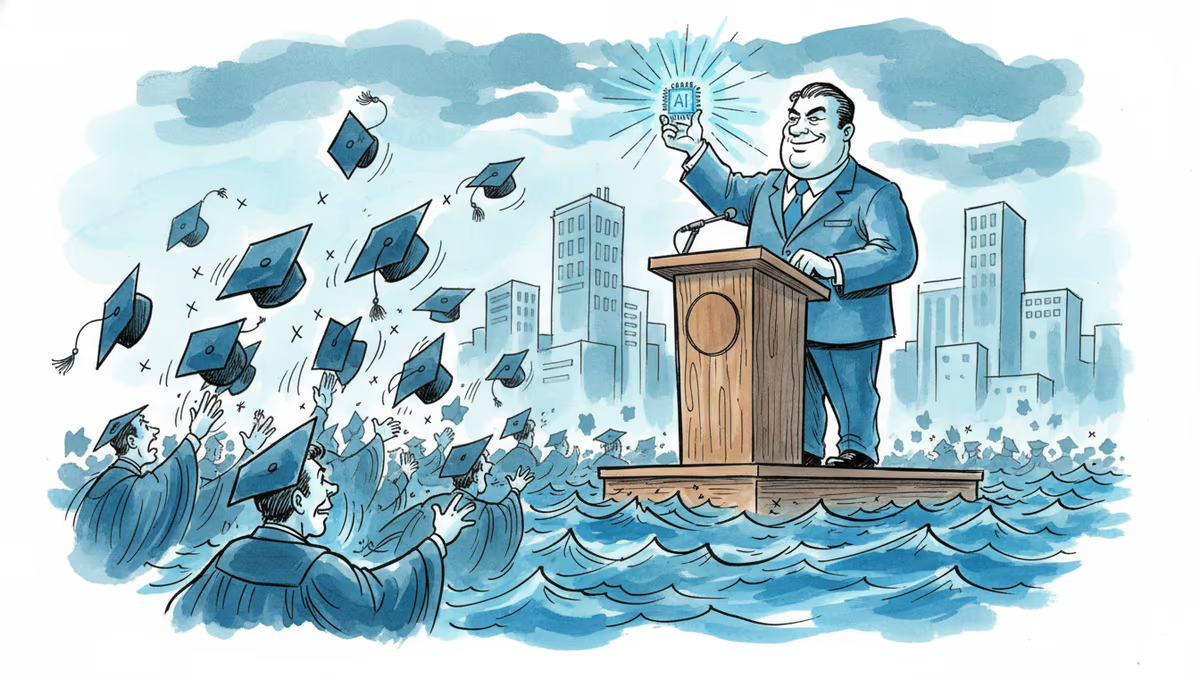
Viral videos show 2026 graduates jeering executives who praise AI at commencement ceremonies. It's not just rudeness — it's a signal about who pays for technological optimism.
Filipino virtual assistants using AI to ghost-manage LinkedIn profiles for executives is now a structured industry. 30 comments a day, fake engagement rings, and a platform struggling to tell real from fabricated.
Samsung and SK unveiled a chip and AI investment package worth thousands of trillions of won on June 29. The headline number swings wildly by outlet, but the real contest isn't capital — it's water and power.
A small but growing group of developers has gone all-in on AI coding agents like Claude Code and OpenClaw. History suggests the rest of us won't be far behind.
Viral videos show 2026 graduates jeering executives who praise AI at commencement ceremonies. It's not just rudeness — it's a signal about who pays for technological optimism.
Filipino virtual assistants using AI to ghost-manage LinkedIn profiles for executives is now a structured industry. 30 comments a day, fake engagement rings, and a platform struggling to tell real from fabricated.
Thoughts
Share your thoughts on this article
Sign in to join the conversation