
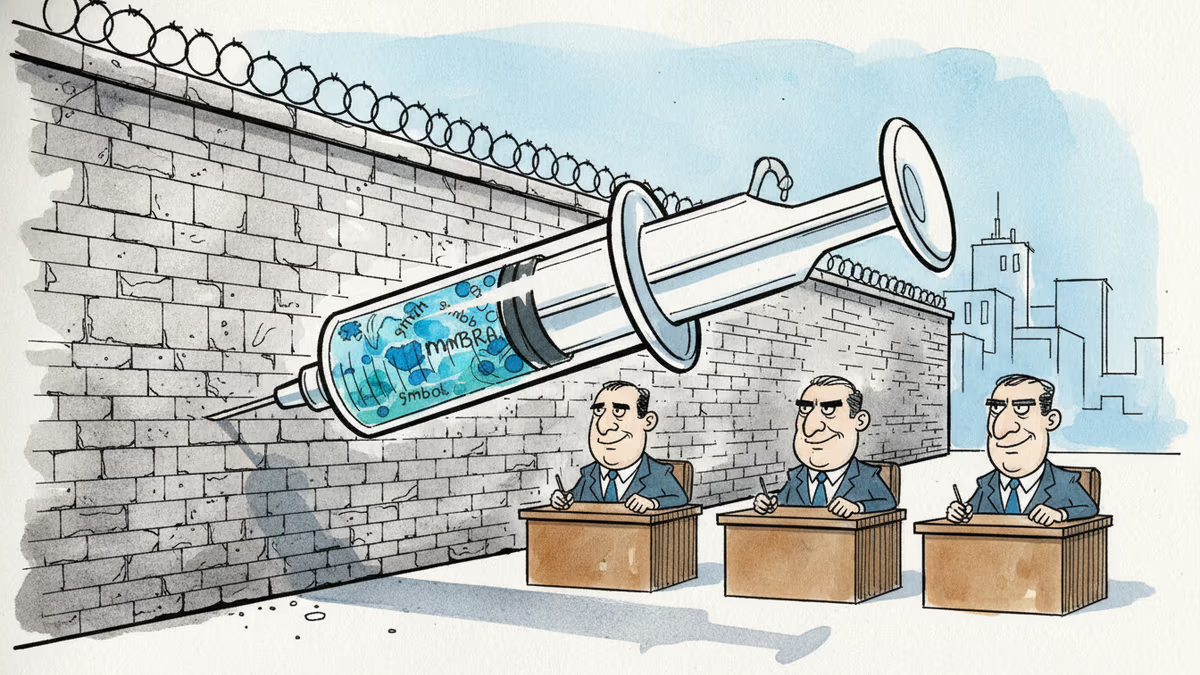
Moderna's Flu Vaccine Hits Unexpected FDA Wall
FDA refuses to review Moderna's mRNA flu vaccine application, marking a shift in vaccine policy under RFK Jr's leadership
The email arrived on a Tuesday night, clinical in its brevity: FDA won't review your flu vaccine application. For Moderna, it wasn't just a regulatory setback—it was a $4 billion reality check in the annual flu vaccine market where the company hoped to revolutionize prevention with mRNA technology.
When Trial Design Becomes Political
The FDA's stated reason was technical: issues with Moderna's Phase 3 trial design for mRNA-1010, specifically the comparator vaccine used in the study. But industry insiders see a deeper shift at play. Since Robert F. Kennedy Jr. took the helm of health policy, the regulatory landscape has transformed dramatically.
The numbers tell the story: childhood vaccine recommendations slashed, $500 million in mRNA pandemic research funding canceled. What was once a science-driven approval process now carries the weight of political ideology.
The Ripple Effect on Innovation
For biotech investors, this rejection signals more than a single company's setback. BioNTech, CureVac, and dozens of smaller mRNA companies have built their futures on the assumption that regulatory approval follows scientific merit. That assumption is now under stress.

The irony is stark: the same mRNA technology that helped end the COVID-19 pandemic is now facing skepticism from the very agencies that once fast-tracked its approval. Investment in mRNA platforms, which peaked at $15 billion in 2021, may face a reckoning as regulatory uncertainty grows.
Beyond Vaccines: A Precedent Problem
This isn't just about flu shots. The FDA's decision could influence how regulators approach other mRNA applications—from cancer treatments to rare disease therapies. Companies developing next-generation vaccines must now factor in not just scientific hurdles, but political winds.
The global implications are significant. European regulators, traditionally more conservative than their U.S. counterparts, may now find themselves as the primary pathway for mRNA innovation. Moderna and its competitors might need to rethink their regulatory strategies entirely.
The Science vs. Politics Divide
Moderna called the rejection "completely unexpected," a phrase that reveals how quickly the regulatory environment has shifted. The company says it will work with the FDA to address concerns, but the broader question remains: when does legitimate scientific scrutiny cross into ideological opposition?
The stakes extend beyond corporate profits. The next pandemic—and experts agree there will be one—may require rapid vaccine development. If political considerations slow that process, the cost could be measured in lives, not just dollars.
Authors
Related Articles
Nine people across three states have been sickened in an E. coli outbreak linked to Raw Farm's unpasteurized dairy. The company refuses to recall. What does this reveal about food safety systems?
After Trump administration officials publicly promoted leucovorin as a potential autism treatment, new prescriptions for children surged 71% in three months. What happens when government rhetoric moves faster than science?
RFK Jr.'s nomination as HHS Secretary sparks unprecedented legal challenge from 15 states over childhood vaccination policies. What this means for public health and global disease prevention.
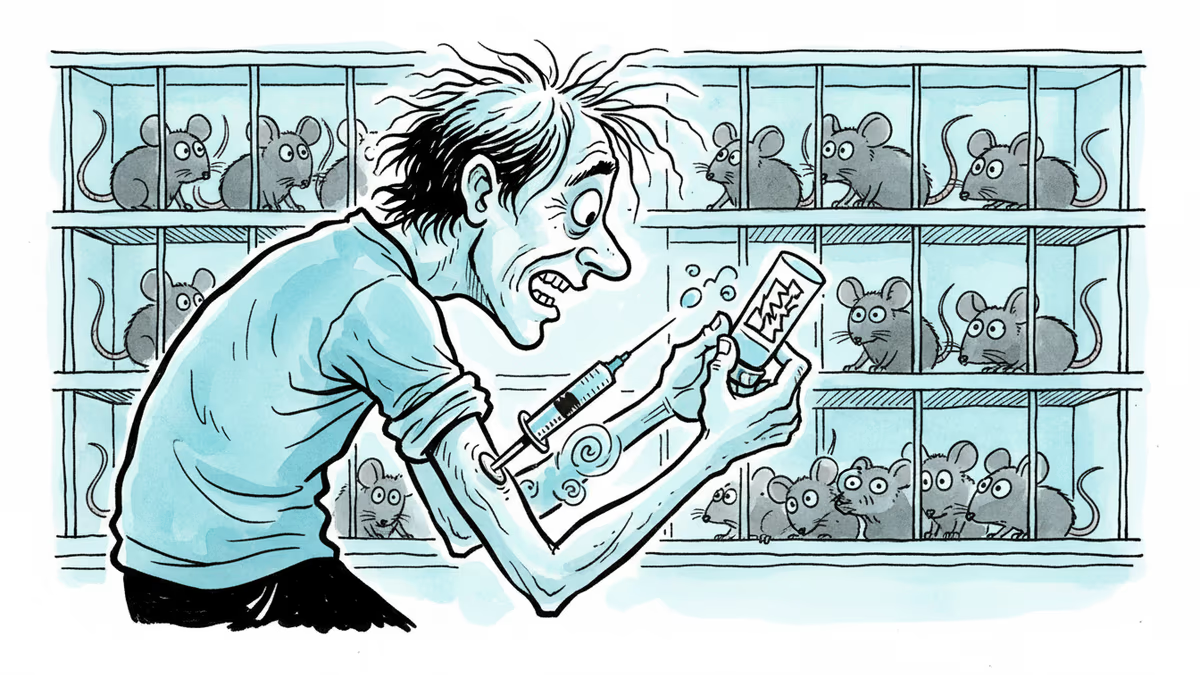
Experimental peptides flood the wellness market with animal data as evidence. Why millions inject unapproved compounds sold with research disclaimers, and what regulators plan to do about it.
Nine people across three states have been sickened in an E. coli outbreak linked to Raw Farm's unpasteurized dairy. The company refuses to recall. What does this reveal about food safety systems?
After Trump administration officials publicly promoted leucovorin as a potential autism treatment, new prescriptions for children surged 71% in three months. What happens when government rhetoric moves faster than science?
RFK Jr.'s nomination as HHS Secretary sparks unprecedented legal challenge from 15 states over childhood vaccination policies. What this means for public health and global disease prevention.
Experimental peptides flood the wellness market with animal data as evidence. Why millions inject unapproved compounds sold with research disclaimers, and what regulators plan to do about it.
Thoughts
Share your thoughts on this article
Sign in to join the conversation