
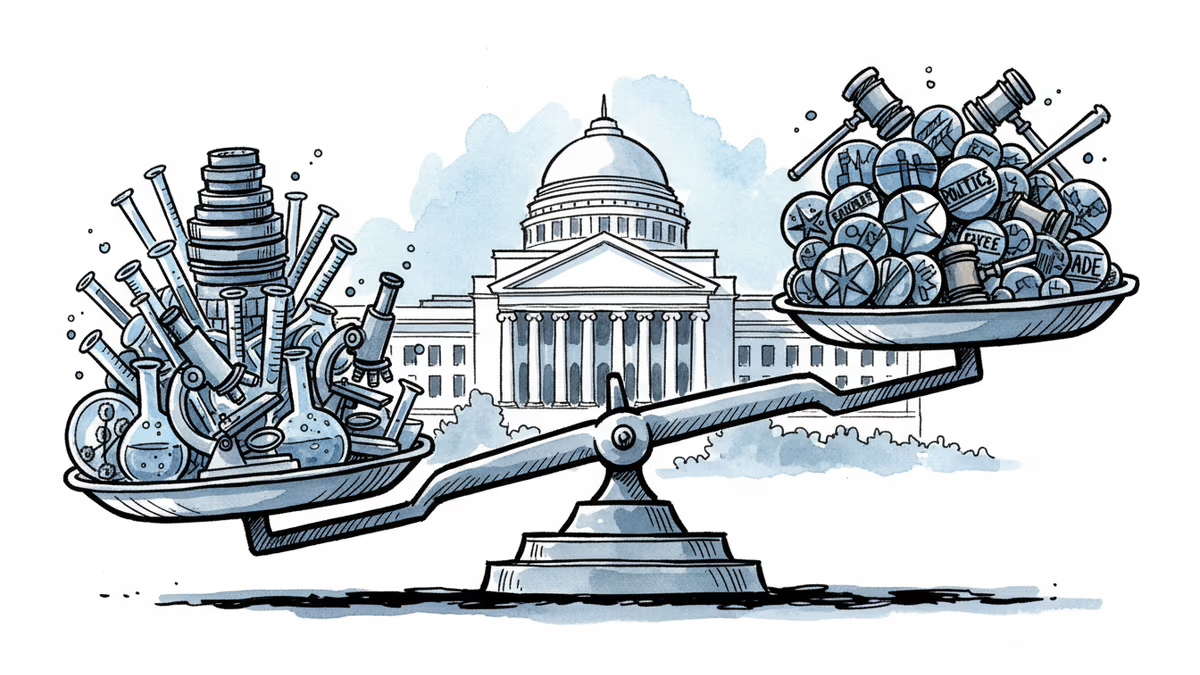
FDA's Moderna Flu Vaccine Flip-Flop Exposes Science vs Politics Battle
Trump appointee overruled FDA scientists to reject Moderna's mRNA flu vaccine, then reversed course within a week after public backlash. Political interference in vaccine approval raises concerns.
When Politics Trumps Science at FDA
One week. That's how long it took for the FDA to reverse one of its most controversial decisions in recent memory. Last week, Moderna publicly blasted the agency for what it called a "shocking refusal" to even consider its mRNA flu vaccine for approval. This wasn't just bureaucratic red tape—it was a political appointee overruling career scientists.
The drama unfolded when Trump administration's top vaccine regulator, Vinay Prasad, rejected Moderna's application despite recommendations from FDA scientists and senior career officials. The decision sent shockwaves through the biotech community, especially given mRNA technology's proven track record during COVID-19.
By Wednesday morning, after what Moderna described as a "formal Type A meeting," the FDA had reversed course. The agency agreed to review the vaccine after the company proposed changes to its regulatory pathway.
The Science vs Politics Divide
This isn't just about one vaccine—it's about the integrity of scientific review. The FDA has long prided itself on evidence-based decision-making, insulated from political pressure. But this episode reveals how political appointees can override scientific consensus.
The irony is stark: mRNA technology, once viewed with skepticism, became the backbone of our pandemic response. Moderna and Pfizer's COVID vaccines saved millions of lives. Now, applying the same proven technology to flu vaccines—which kill 30,000-50,000 Americans annually—faces political roadblocks.
Industry insiders suggest the initial rejection wasn't based on safety or efficacy concerns, but rather on broader political considerations about mRNA technology and Moderna's role in the vaccine landscape.
Market Implications and Investor Uncertainty

For biotech investors, predictability in regulatory pathways is everything. The FDA's flip-flop introduces a new variable: political risk. If scientific merit can be overruled by political appointees, how do you price that uncertainty into investment decisions?
Moderna's stock has been volatile throughout this saga, reflecting investor confusion about regulatory unpredictability. But the implications extend beyond one company. Smaller biotech firms developing innovative treatments may now factor in political risk alongside scientific and commercial challenges.
The reversal also raises questions about the Trump administration's broader vaccine strategy. While positioning itself as pro-innovation, political interference in scientific review processes could actually stifle the very innovation it claims to support.
Public Health at Stake
mRNA flu vaccines represent a significant advancement over traditional egg-based production. They can be developed faster, adapted more quickly to new strains, and potentially offer better protection. In a world where influenza pandemics remain a constant threat, hampering this technology for political reasons seems shortsighted.
The speed of mRNA vaccine development was crucial during COVID-19. If we face another pandemic—whether flu-based or entirely novel—do we want political considerations slowing down our response?
Public health experts worry that politicizing vaccine approvals could undermine confidence in the regulatory system itself. Trust in vaccines, already fragile in some communities, depends on belief that approvals are based on rigorous scientific review, not political calculations.
Global Competitive Implications
While the U.S. debates politics, other countries are advancing mRNA technology. The European Medicines Agency and regulators in Canada, Australia, and elsewhere are reviewing similar applications. If American political interference delays innovation, we risk ceding leadership in a critical technology we helped pioneer.
This has implications beyond vaccines. mRNA technology shows promise for cancer treatments, genetic disorders, and other applications. Political interference in one area could slow progress across the entire platform.
Authors
Related Articles

CAR T cell therapy, proven in blood cancers, is now in hundreds of clinical trials for MS, lupus, and other autoimmune conditions. What the science shows—and what it doesn't yet.
R3 Bio wants to grow human bodies without brains as biological backups. The science is speculative. The ethics are explosive. And the legal framework doesn't exist yet.
Colossal Biosciences raised hundreds of millions to resurrect woolly mammoths and dire wolves. What they're actually doing is more complicated—and more interesting.
Dr. Erica Schwartz, a pro-vaccine physician with an unimpeachable public health résumé, is Trump's third CDC director nominee—a quiet but pointed rebuke of RFK Jr.'s agenda.
CAR T cell therapy, proven in blood cancers, is now in hundreds of clinical trials for MS, lupus, and other autoimmune conditions. What the science shows—and what it doesn't yet.
R3 Bio wants to grow human bodies without brains as biological backups. The science is speculative. The ethics are explosive. And the legal framework doesn't exist yet.
Colossal Biosciences raised hundreds of millions to resurrect woolly mammoths and dire wolves. What they're actually doing is more complicated—and more interesting.
Dr. Erica Schwartz, a pro-vaccine physician with an unimpeachable public health résumé, is Trump's third CDC director nominee—a quiet but pointed rebuke of RFK Jr.'s agenda.
Thoughts
Share your thoughts on this article
Sign in to join the conversation