
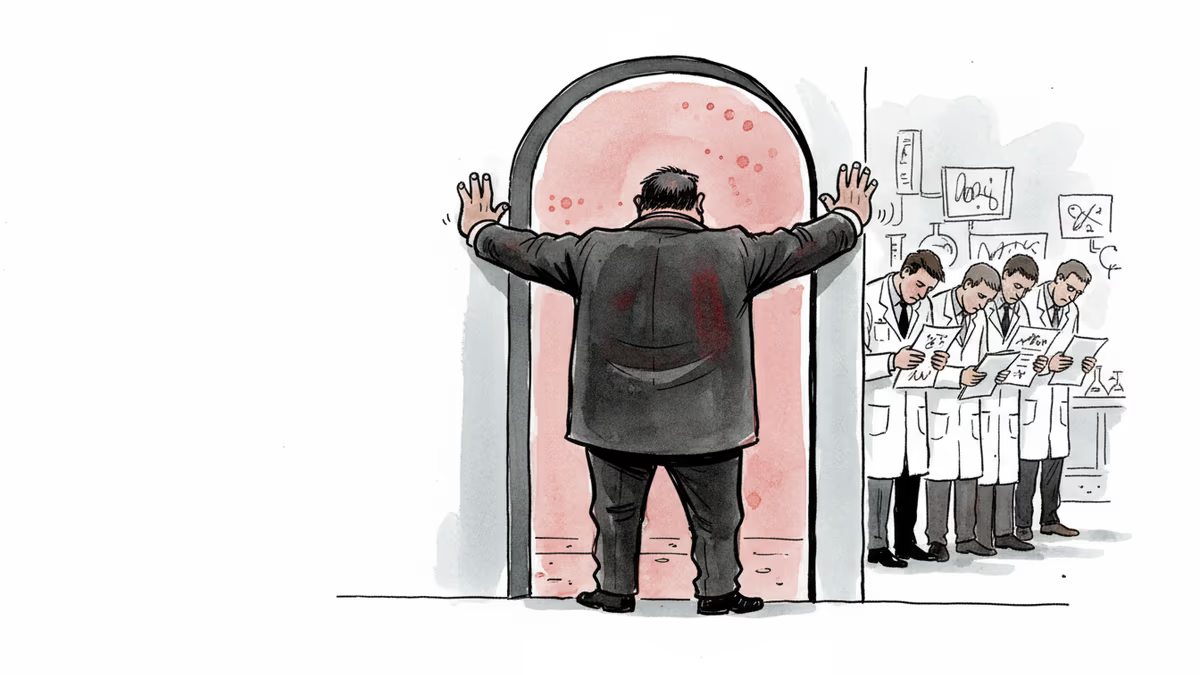
One Man Overruled an Entire Team of FDA Scientists
Trump's top vaccine regulator at FDA single-handedly blocked Moderna's mRNA flu vaccine review despite strong internal opposition from career scientists.
When One Vote Beats a Scientific Consensus
It took 48 hours. That's how long Vinay Prasad needed as Trump's top vaccine regulator at the FDA to single-handedly block Moderna's mRNA flu vaccine review—despite facing organized resistance from the agency's own scientists.
According to reports from Stat News and The Wall Street Journal, a team of career FDA scientists had already prepared to review the vaccine. David Kaslow, a senior career official overseeing vaccine reviews, even wrote a detailed memo objecting to Prasad's rejection. The memo reportedly laid out exactly why the review should proceed.
The Scientists' Last Stand
In early January, FDA scientists spent one hour in a meeting directly challenging Prasad's decision. They told him—a political appointee known for "causing turmoil" and anti-vaccine rhetoric—that blocking the review was the wrong approach.
But their expertise didn't matter. Their collective judgment was overruled by one man's conviction.
When Ideology Meets Regulatory Power

This isn't just about one vaccine. It's about what happens when individual beliefs override institutional scientific processes. The FDA has traditionally operated on scientific consensus and peer review. Having a single political appointee overturn the collective judgment of career scientists represents a fundamental shift in how the agency functions.
Moderna's mRNA flu vaccine represents next-generation technology that could enable faster development and potentially higher efficacy than traditional flu vaccines. In a pandemic scenario, such rapid vaccine development capabilities could be life-saving.
The Broader Regulatory Question
Prasad's decision raises uncomfortable questions about regulatory independence. If one person's skepticism can halt scientific review processes, what happens to evidence-based policymaking?
This extends beyond vaccines. From drug approvals to medical device clearances, the FDA's decisions affect millions of lives. When political appointees can unilaterally override scientific staff, the agency's credibility—and public trust—hangs in the balance.
The Precedent Problem
Other regulatory agencies are watching. If the FDA can be steered by individual ideology rather than collective expertise, what's to stop similar approaches at the EPA, CDC, or other science-based agencies?
The pharmaceutical industry is also taking note. Companies invest billions in drug development based on predictable regulatory processes. When those processes become subject to individual whims, investment decisions—and ultimately, medical innovation—could be affected.
Authors
Related Articles
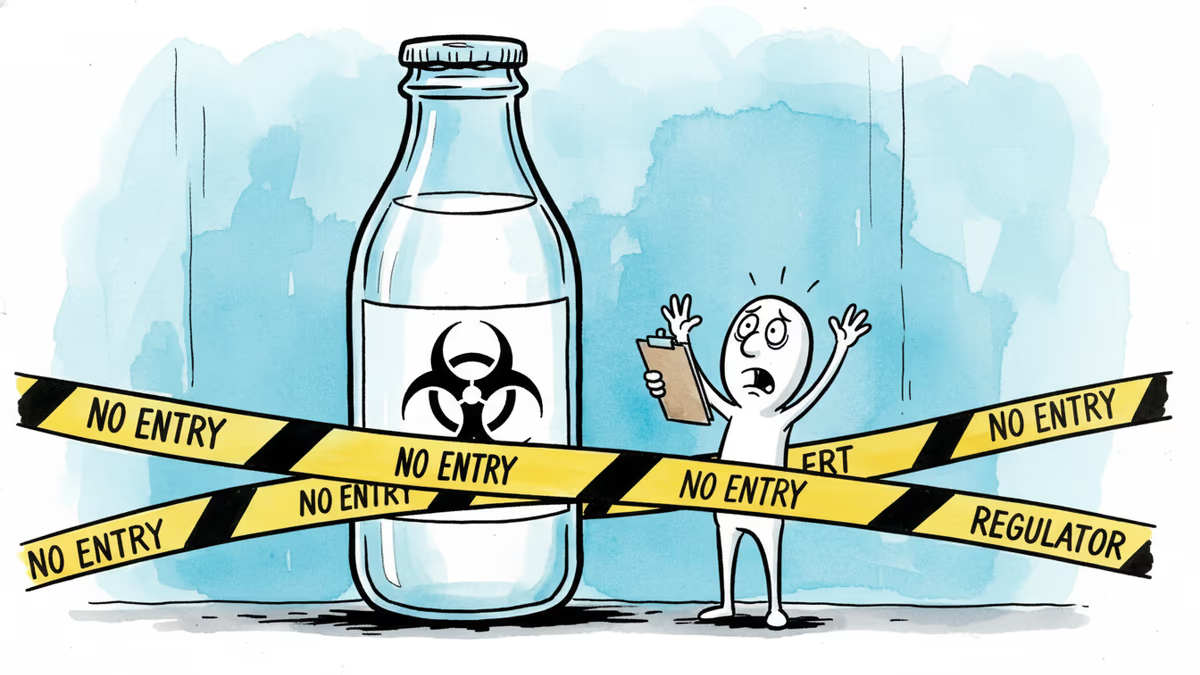
Nine people across three states have been sickened in an E. coli outbreak linked to Raw Farm's unpasteurized dairy. The company refuses to recall. What does this reveal about food safety systems?
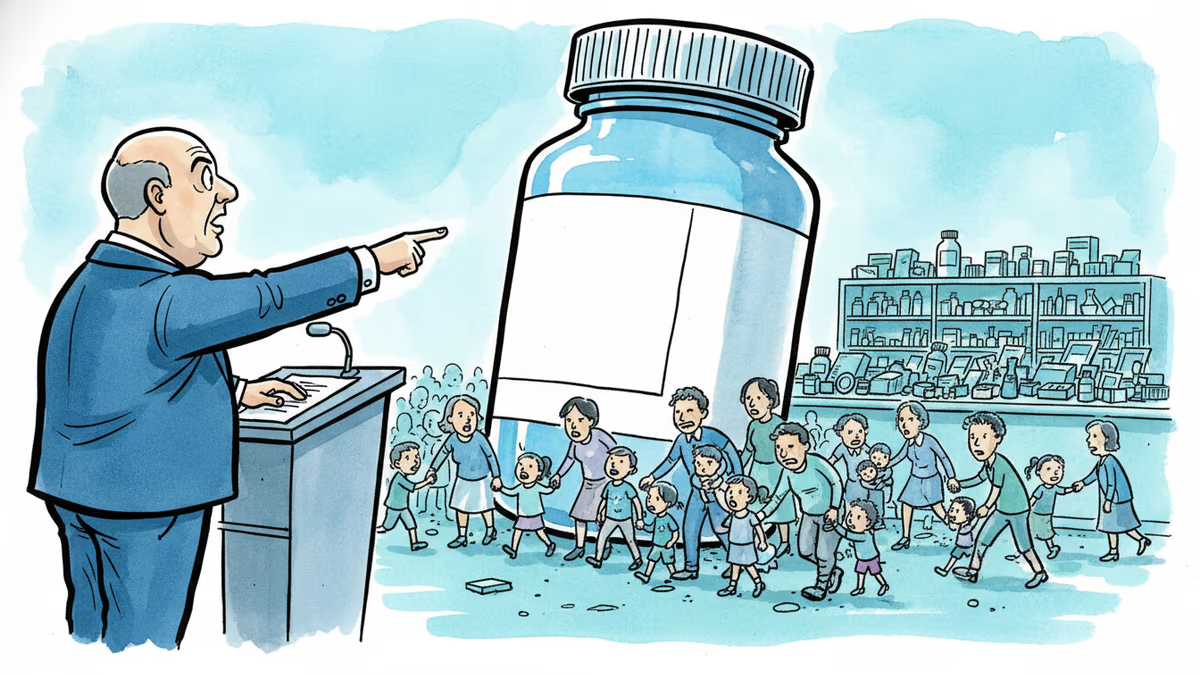
After Trump administration officials publicly promoted leucovorin as a potential autism treatment, new prescriptions for children surged 71% in three months. What happens when government rhetoric moves faster than science?
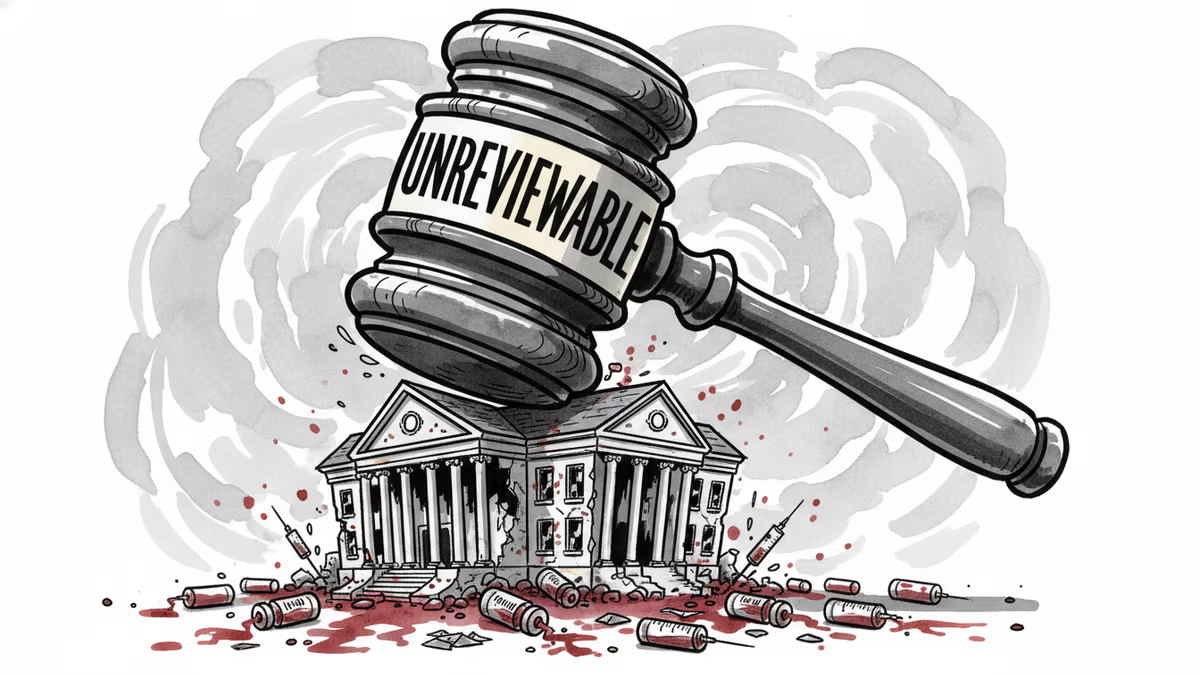
Trump admin lawyer claims RFK Jr.'s vaccine authority is beyond judicial review, even if he tells Americans to ditch vaccines entirely. Medical groups fight back.
The prestigious medical journal The Lancet delivered a scathing critique of RFK Jr.'s first year as US Health Secretary, highlighting concerns over vaccine misinformation and politicized health policy.
Nine people across three states have been sickened in an E. coli outbreak linked to Raw Farm's unpasteurized dairy. The company refuses to recall. What does this reveal about food safety systems?
After Trump administration officials publicly promoted leucovorin as a potential autism treatment, new prescriptions for children surged 71% in three months. What happens when government rhetoric moves faster than science?
Trump admin lawyer claims RFK Jr.'s vaccine authority is beyond judicial review, even if he tells Americans to ditch vaccines entirely. Medical groups fight back.
The prestigious medical journal The Lancet delivered a scathing critique of RFK Jr.'s first year as US Health Secretary, highlighting concerns over vaccine misinformation and politicized health policy.
Thoughts
Share your thoughts on this article
Sign in to join the conversation