
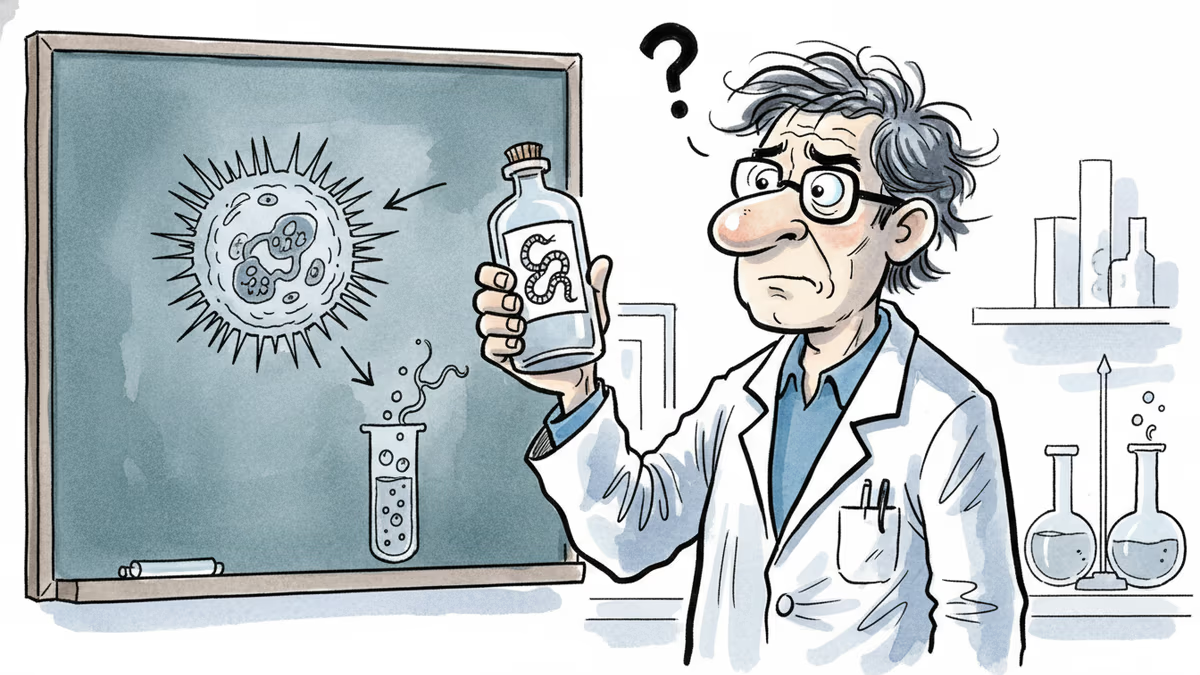
When Politics Trumps Science: Why the US is Funding Ivermectin Cancer Research
The National Cancer Institute is using federal funds to study ivermectin as a cancer cure despite zero scientific evidence. What happens when political ideology drives medical research?
A $1 Deworming Drug vs Cancer: America's Latest Medical Gamble
The National Cancer Institute is about to spend your tax dollars studying whether ivermectin—a $1 anti-parasitic drug that failed spectacularly as a COVID-19 cure—can somehow treat cancer. There's just one problem: there's absolutely no scientific evidence suggesting it can.
Anthony Letai, installed as NCI director by the Trump administration last September, announced the ivermectin research during a January 30 event. No details on study design, timeline, or budget. Just the promise that federal scientists will investigate a drug that large clinical trials have already proven ineffective against COVID-19.
This isn't just about one study. It's about what happens when political ideology drives medical research funding.
The Science Community: "Show Us the Data"
Oncologists and researchers are bewildered. Multiple large-scale trials involving tens of thousands of patients conclusively showed ivermectin doesn't work against COVID-19. Now, three years later, the same drug is being promoted as a potential cancer cure—without any preliminary research or even a theoretical mechanism.
"Where's the preclinical data? Where are the cell studies? Where's the hypothesis?" asks one cancer researcher who requested anonymity. "You don't just jump to human trials because someone has a hunch."
The medical establishment's frustration is palpable. Peer review exists for a reason. Clinical trial protocols exist for a reason. These safeguards prevent exactly this kind of scientifically unfounded research.
The True Believers: "Open Your Minds"

On the other side are the ivermectin advocates—a loose network of physicians, researchers, and online communities who've promoted the drug as a cure-all since the pandemic. They argue mainstream medicine is too rigid, too captured by pharmaceutical interests to consider cheap, off-patent alternatives.
Health Secretary Robert F. Kennedy Jr.—who famously claimed to have had a parasitic worm in his brain—embodies this anti-establishment sentiment. His influence has elevated numerous figures from medicine's fringe to positions of federal power.
These advocates don't see the lack of evidence as a problem. They see it as an opportunity to challenge medical orthodoxy.
What This Means for Medical Research Integrity
Here's the deeper issue: research funding typically follows scientific merit. Peer review committees evaluate proposals based on preliminary data, theoretical frameworks, and potential impact. Political considerations are supposed to be irrelevant.
But when research decisions bypass scientific review in favor of political ideology, several things happen:
Patient trust erodes. If government agencies fund studies without scientific justification, how do patients distinguish legitimate research from politically motivated projects?
Resources get misallocated. Every dollar spent on unfounded ivermectin research is a dollar not spent on promising cancer therapies with actual scientific rationale.
International credibility suffers. American medical research has global influence. When the NCI pursues scientifically questionable studies, it undermines confidence in US research institutions worldwide.
The Regulatory Ripple Effect
This decision will likely embolden other countries' medical maverick movements. If America's premier cancer institute can fund ivermectin research, why shouldn't other nations explore their own politically popular but scientifically dubious treatments?
The precedent is dangerous. Medical research credibility, built over decades of rigorous methodology, can be undermined remarkably quickly.
Authors
Related Articles
The prestigious medical journal The Lancet delivered a scathing critique of RFK Jr.'s first year as US Health Secretary, highlighting concerns over vaccine misinformation and politicized health policy.
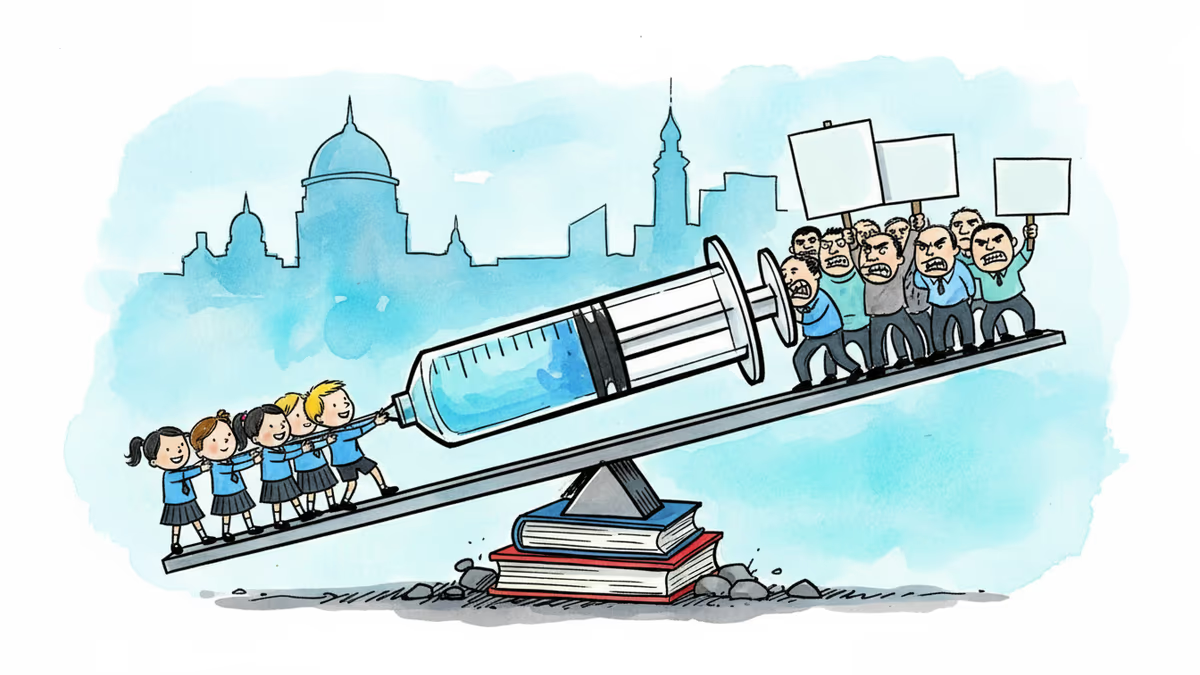
RFK Jr.'s nomination as HHS Secretary sparks unprecedented legal challenge from 15 states over childhood vaccination policies. What this means for public health and global disease prevention.

Deputy Health Secretary Jim O'Neill's controversial vaccine policy changes and longevity research investments spark debate across public health communities.
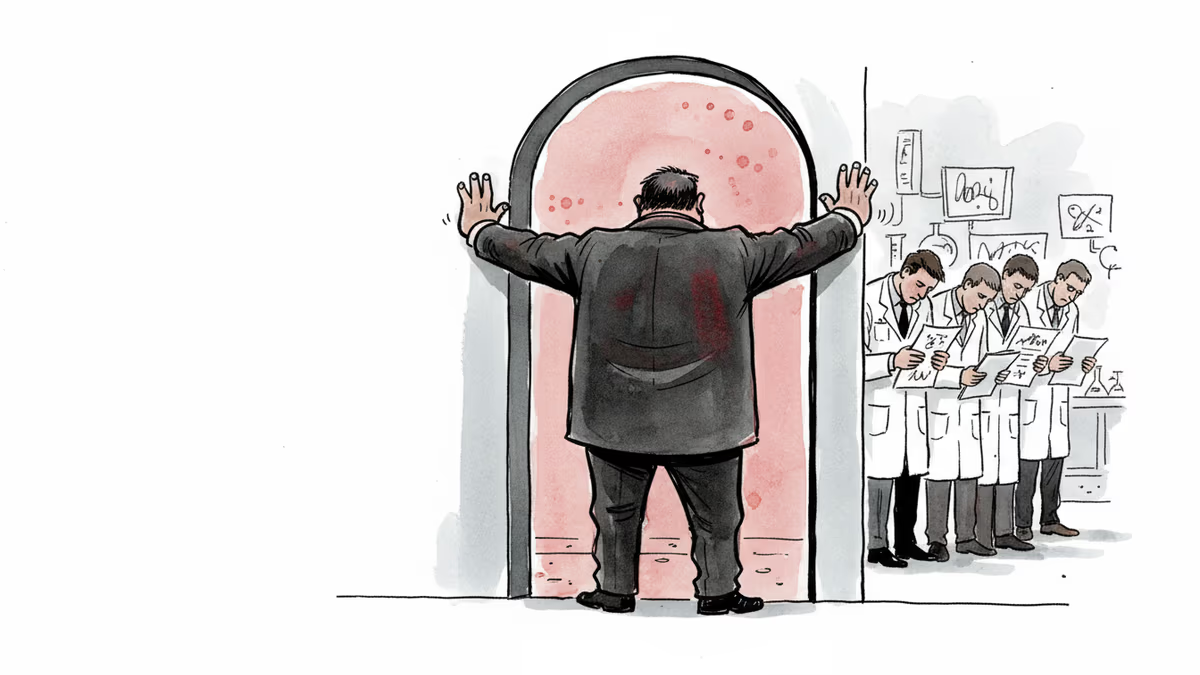
Trump's top vaccine regulator at FDA single-handedly blocked Moderna's mRNA flu vaccine review despite strong internal opposition from career scientists.
The prestigious medical journal The Lancet delivered a scathing critique of RFK Jr.'s first year as US Health Secretary, highlighting concerns over vaccine misinformation and politicized health policy.
RFK Jr.'s nomination as HHS Secretary sparks unprecedented legal challenge from 15 states over childhood vaccination policies. What this means for public health and global disease prevention.
Deputy Health Secretary Jim O'Neill's controversial vaccine policy changes and longevity research investments spark debate across public health communities.
Trump's top vaccine regulator at FDA single-handedly blocked Moderna's mRNA flu vaccine review despite strong internal opposition from career scientists.
Thoughts
Share your thoughts on this article
Sign in to join the conversation