
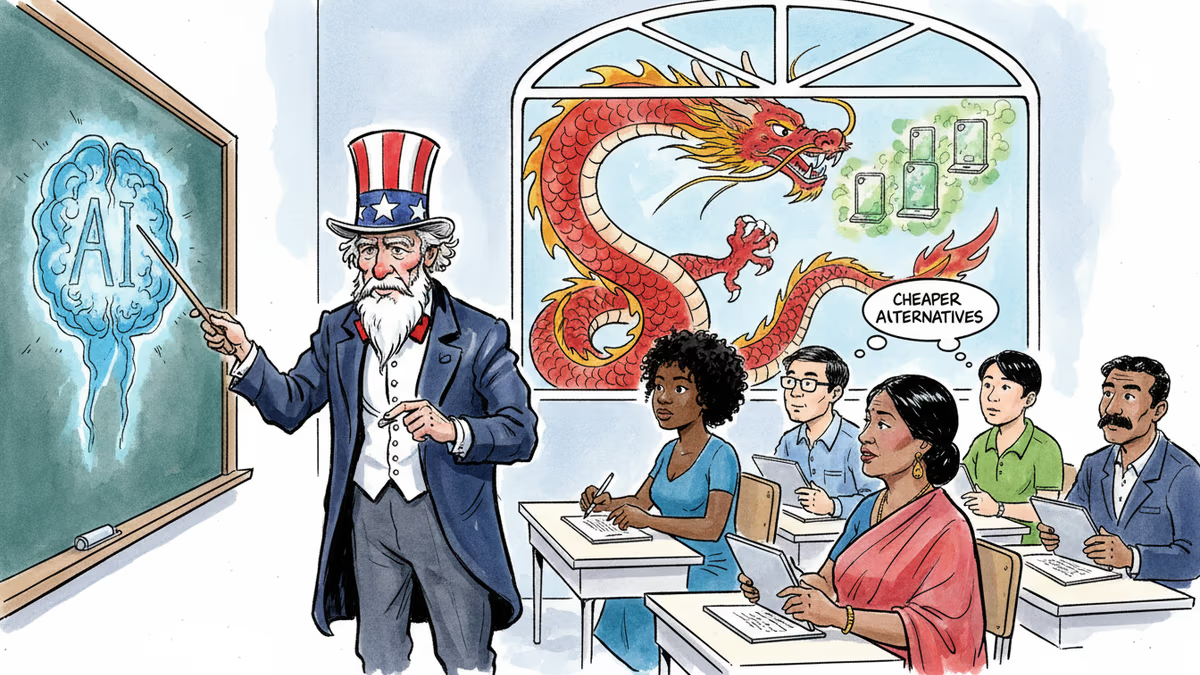
Can America's 'AI Peace Corps' Beat China's Price War?
The U.S. launches Tech Corps to promote American AI globally, but experts doubt volunteers can overcome China's massive cost advantages in developing markets.
$1 vs $10: Is the Battle Already Over?
The U.S. government just announced its newest weapon in the AI wars: volunteers. The Tech Corps program will send STEM graduates abroad to promote American artificial intelligence in developing countries. It sounds noble—until you crunch the numbers.
When Chinese AI models can perform the same tasks at one-tenth the cost of American alternatives, can good intentions overcome economic reality? Brookings Institution fellow Kyle Chan doesn't think so: "I don't think any degree of persuasion or handholding would be able to overcome the sheer economic challenges."
Developers Vote With Their Wallets
The data tells a stark story. On Hugging Face, the world's largest AI model repository, Chinese models dominate the download charts. Alibaba's Qwen3 series, Minimax's M2.5, and Moonshot's Kimi K2.5 aren't just popular—they're reshaping how the Global South thinks about AI.
On cloud inference service OpenRouter, three of the most popular models are Chinese. Why? They're open-source, customizable, dirt cheap, and run entirely on local infrastructure. Meanwhile, OpenAI's GPT-5 and Anthropic's Claude—despite their superior performance—remain luxury goods for cash-strapped organizations in developing markets.
Chinese cloud providers aren't stopping there. They're aggressively expanding overseas, offering low-cost AI services that make American alternatives look overpriced.
The Volunteer Paradox

Starting this fall, Tech Corps volunteers will spend 1-2 years abroad, helping integrate American AI systems into hospitals, farms, and schools. They'll train local staff and customize systems for local languages. The tagline? "American tech. Global good."
But here's the paradox: while launching this AI diplomacy initiative, the Trump administration dismantled the U.S. Agency for International Development (USAID) in early 2025. Health, education, and humanitarian projects affecting millions were shuttered. Even the Peace Corps itself faces budget cuts.
Sending volunteers to promote expensive AI while cutting traditional aid programs sends a mixed message. Can a handful of tech-savvy volunteers succeed where established diplomatic channels are being scaled back?
The Economics of Influence
This isn't just about technology—it's about geopolitical influence. When a hospital in Kenya can choose between a $100 Chinese AI diagnostic system and a $1,000 American equivalent with marginally better accuracy, which do you think they'll pick?
The U.S. still leads in frontier AI research, but Chinese companies are catching up fast in the areas that matter most to developing markets: cost efficiency and accessibility. Open-weight models that run on modest hardware are democratizing AI in ways that proprietary American models simply can't match.
Beyond the Price Tag
Yet price isn't everything. American AI comes with implicit guarantees: better privacy protections, more transparent development processes, and alignment with democratic values. The question is whether these intangible benefits can justify the cost premium.
Some countries might pay extra for "trusted AI," especially as concerns about Chinese surveillance and data practices grow. But for cash-strapped organizations focused on immediate needs, philosophical considerations often take a backseat to budget realities.
Authors
Related Articles
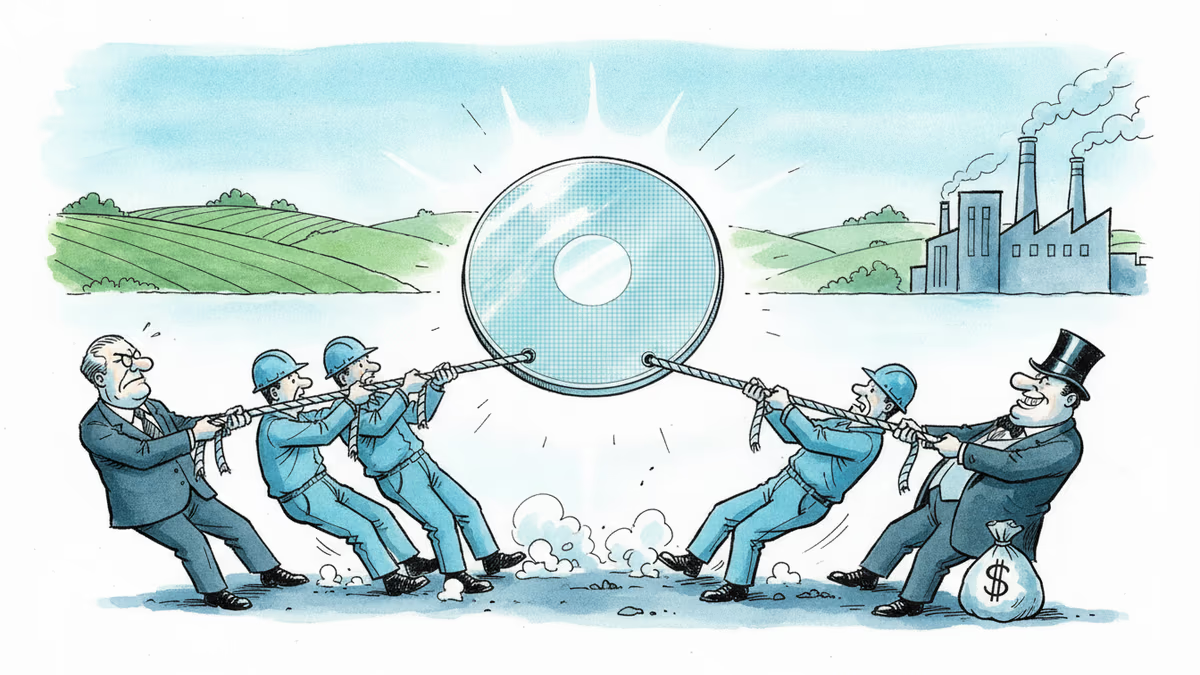
Samsung Electronics' union branch revealed that 84% of survey respondents oppose the government's roughly $290 billion (₩400 trillion) semiconductor megaproject in Gwangju. Government, management, the union and shareholders are all reading the same national project in sharply different ways.
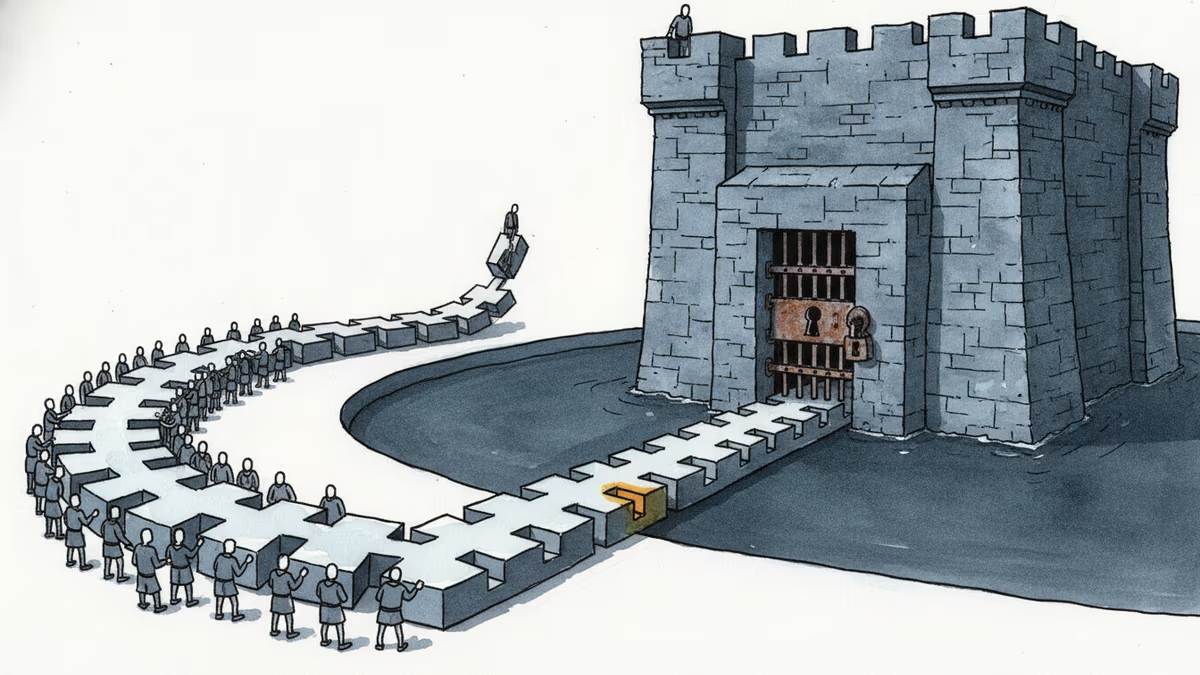
Nvidia shipped roughly a billion RISC-V cores in 2024, then announced it would run CUDA on the open standard. We break down how royalty-free instruction sets and open software stacks are trying to route around CUDA's lock-in. Part 2 of the Semiconductor Sovereignty series.
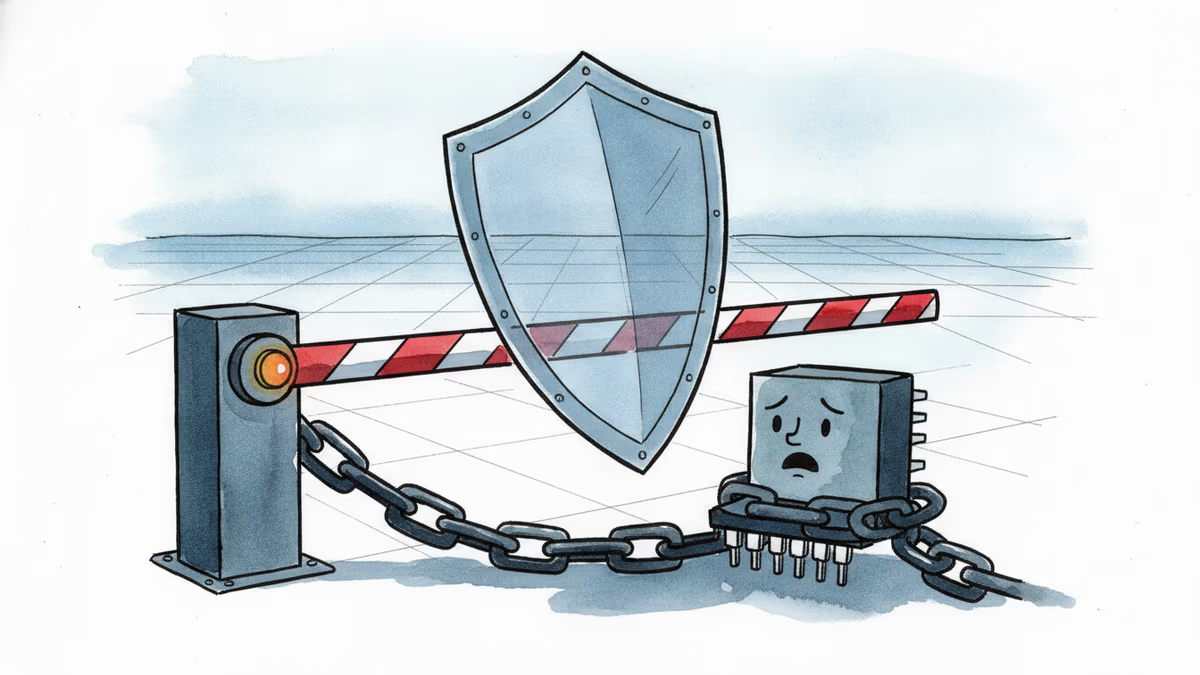
US AI-chip export controls split into three layers in the first half of 2026 — January easing, a May crackdown on circumvention, and a pending bill. Nvidia erased China from its guidance and still posted a record $81.6 billion quarter. A look at the export policy that both shields and cages it.
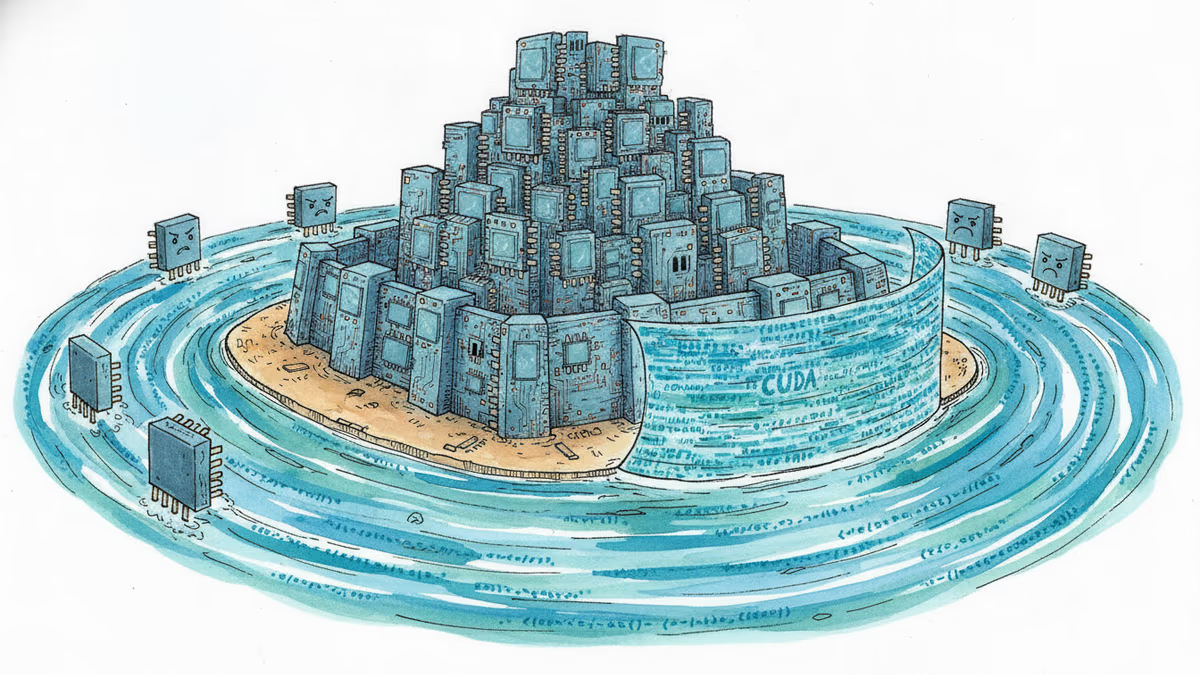
AMD's MI325X matches or beats Nvidia on memory and bandwidth — yet Nvidia's 86-92% share holds. The real moat is CUDA, 20 years in the making. Part 1 of 4.
Samsung Electronics' union branch revealed that 84% of survey respondents oppose the government's roughly $290 billion (₩400 trillion) semiconductor megaproject in Gwangju. Government, management, the union and shareholders are all reading the same national project in sharply different ways.
Nvidia shipped roughly a billion RISC-V cores in 2024, then announced it would run CUDA on the open standard. We break down how royalty-free instruction sets and open software stacks are trying to route around CUDA's lock-in. Part 2 of the Semiconductor Sovereignty series.
US AI-chip export controls split into three layers in the first half of 2026 — January easing, a May crackdown on circumvention, and a pending bill. Nvidia erased China from its guidance and still posted a record $81.6 billion quarter. A look at the export policy that both shields and cages it.
AMD's MI325X matches or beats Nvidia on memory and bandwidth — yet Nvidia's 86-92% share holds. The real moat is CUDA, 20 years in the making. Part 1 of 4.
Thoughts
Share your thoughts on this article
Sign in to join the conversation