

Vaccine Guidelines Are Shifting—And They May Shift Again
Deputy Health Secretary Jim O'Neill's controversial vaccine policy changes and longevity research investments spark debate across public health communities.
The $1 Trillion Budget Chief Who's Rewriting Health Policy
Jim O'Neill's signature on a single document has sent shockwaves through America's public health establishment. As deputy health secretary, his approval of a dramatically reduced childhood vaccination schedule has drawn fierce criticism from medical experts nationwide.
But O'Neill's vision extends far beyond vaccines. In an exclusive interview with MIT Technology Review, he outlined plans to pour federal funding into longevity research through ARPA-H, aiming to extend human healthspan through breakthrough biomedical research. It's a bet that has longevity enthusiasts excited—and traditional public health advocates worried.
The Paradox of Modern Health Policy
O'Neill's approach presents a striking contradiction: scaling back proven preventive measures while investing heavily in speculative life-extension technologies. This dual strategy has divided the health community into distinct camps.
Longevity researchers are celebrating. "Finally, we have government attention and funding for extending healthy human lifespan," one researcher noted. Meanwhile, pediatricians and vaccine experts warn that reducing childhood immunizations could reverse decades of progress against preventable diseases.
When pressed about the criticism, O'Neill maintained that "vaccine guidelines are still subject to change." However, he provided no specifics about potential revisions or timelines.

What This Means for Healthcare Innovation
The policy shift reflects a broader tension in modern medicine: should we prioritize perfecting existing interventions or bet on revolutionary breakthroughs? O'Neill's approach suggests the latter, channeling resources toward ARPA-H projects that promise to tackle aging at its biological roots.
This strategy could reshape the biotech investment landscape. Companies focused on longevity research may see increased federal support, while traditional vaccine manufacturers face an uncertain regulatory environment. The ripple effects could influence everything from drug development timelines to healthcare venture capital flows.
For healthcare professionals, the mixed signals create practical challenges. Should they continue recommending the full vaccination schedule while federal guidelines suggest otherwise? How do they balance evidence-based practice with evolving federal recommendations?
The Global Health Implications
America's policy changes don't happen in isolation. Other countries closely watch U.S. health decisions, particularly in vaccine policy. If reduced vaccination schedules become normalized in America, will other nations follow suit?
Conversely, increased federal investment in longevity research could accelerate global competition in anti-aging technologies. Countries like Singapore and South Korea have already made significant investments in this space—America's entry through ARPA-H could intensify the race.
Authors
Related Articles
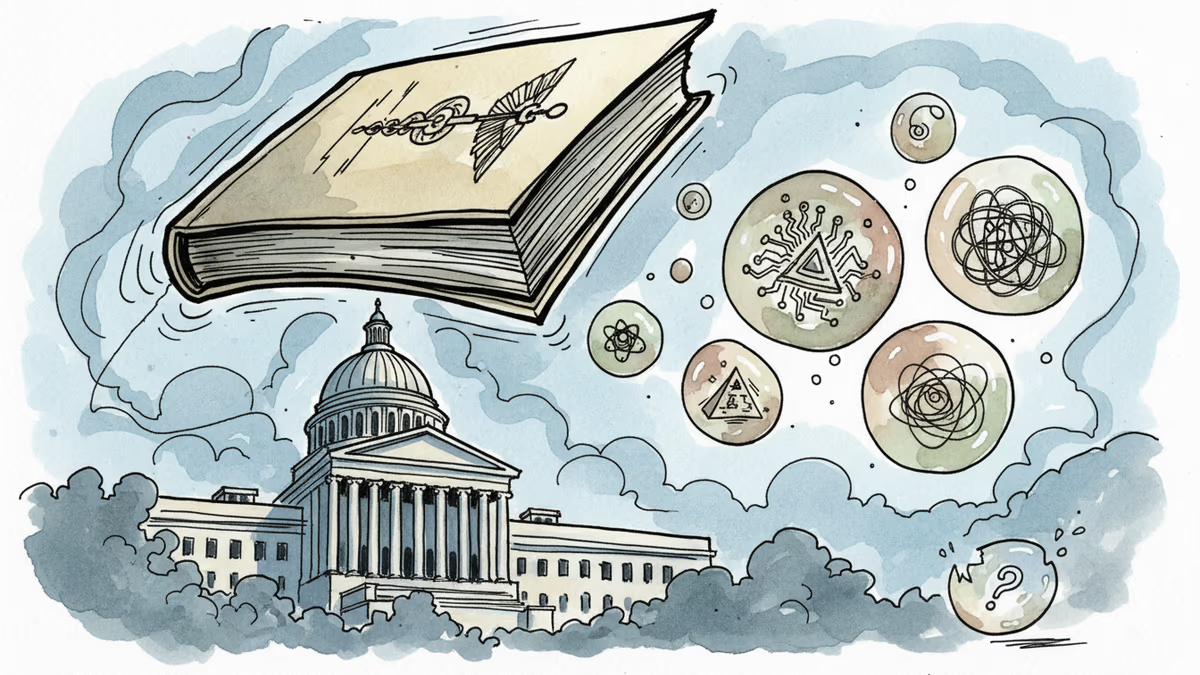
The prestigious medical journal The Lancet delivered a scathing critique of RFK Jr.'s first year as US Health Secretary, highlighting concerns over vaccine misinformation and politicized health policy.
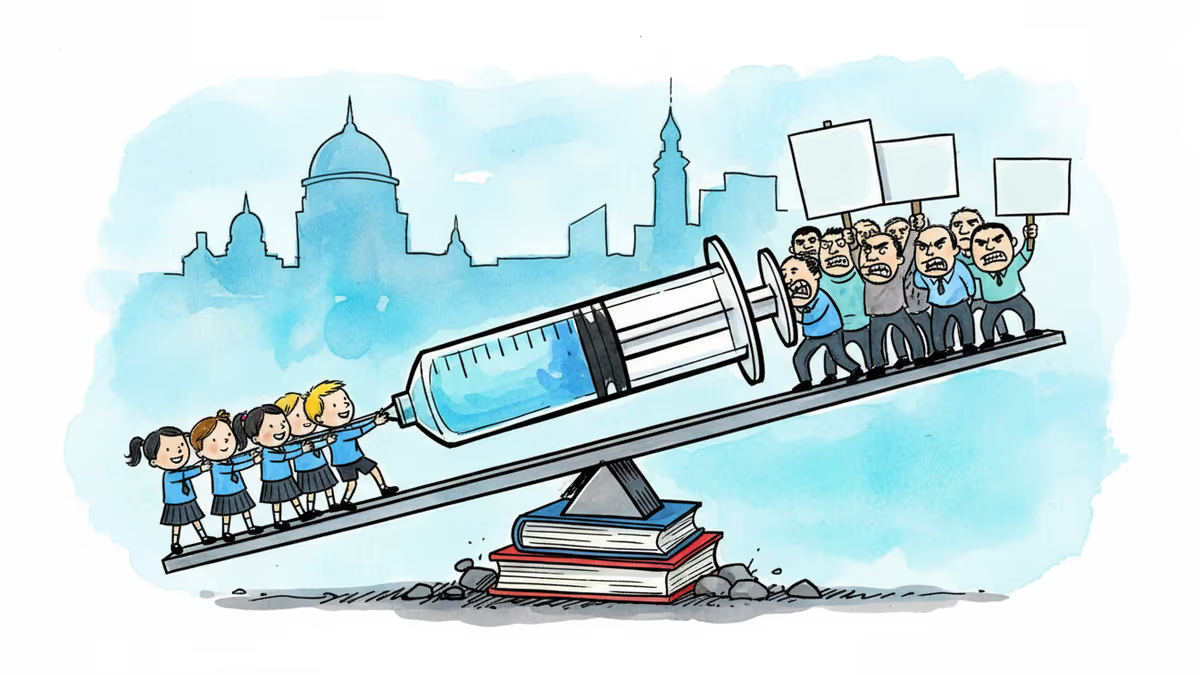
RFK Jr.'s nomination as HHS Secretary sparks unprecedented legal challenge from 15 states over childhood vaccination policies. What this means for public health and global disease prevention.
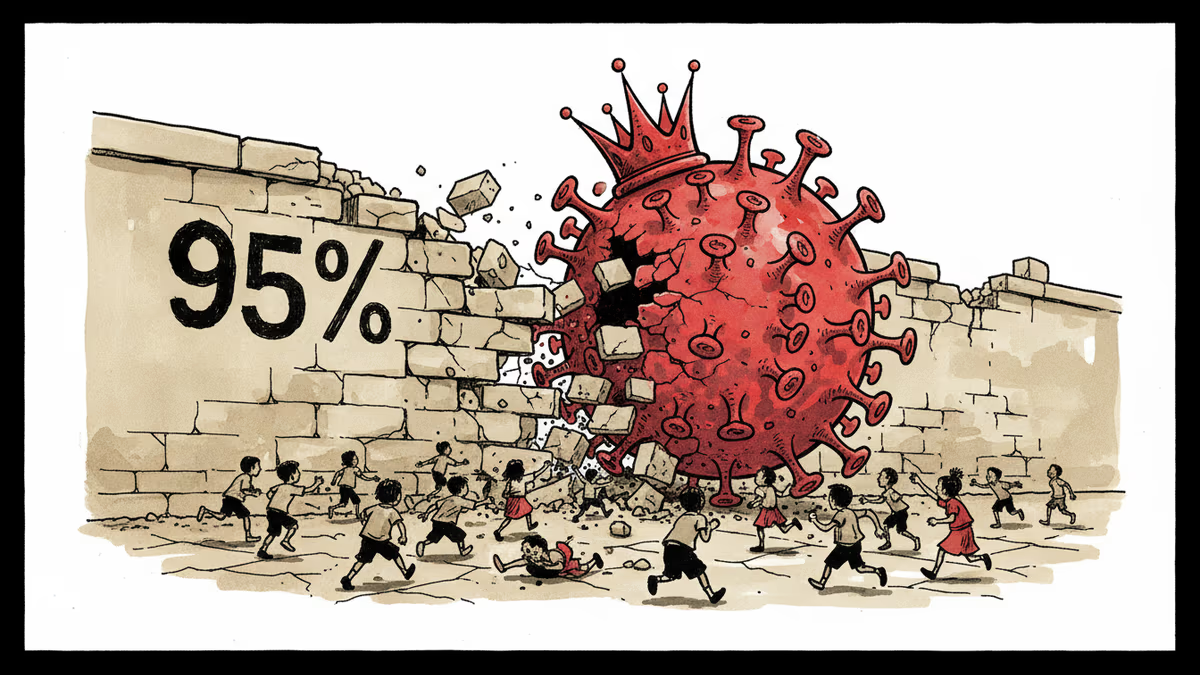
Vaccination rates plummet across London and US states as measles outbreaks surge. What happens when herd immunity collapses and childhood diseases return?
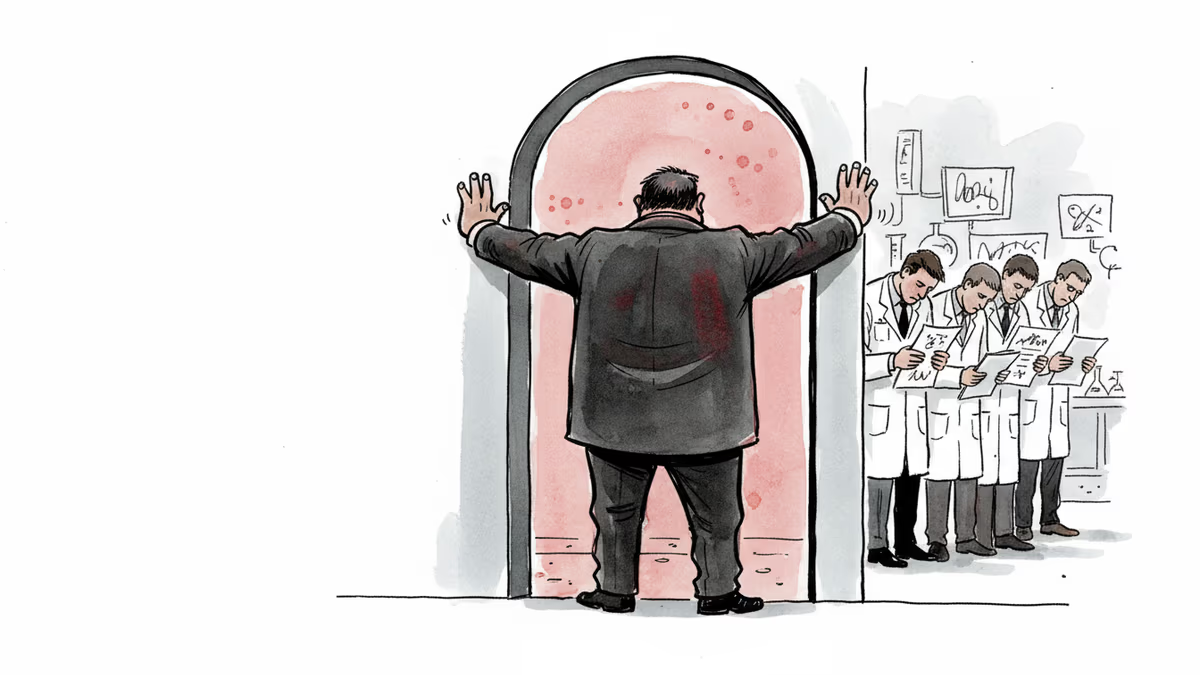
Trump's top vaccine regulator at FDA single-handedly blocked Moderna's mRNA flu vaccine review despite strong internal opposition from career scientists.
The prestigious medical journal The Lancet delivered a scathing critique of RFK Jr.'s first year as US Health Secretary, highlighting concerns over vaccine misinformation and politicized health policy.
RFK Jr.'s nomination as HHS Secretary sparks unprecedented legal challenge from 15 states over childhood vaccination policies. What this means for public health and global disease prevention.
Vaccination rates plummet across London and US states as measles outbreaks surge. What happens when herd immunity collapses and childhood diseases return?
Trump's top vaccine regulator at FDA single-handedly blocked Moderna's mRNA flu vaccine review despite strong internal opposition from career scientists.
Thoughts
Share your thoughts on this article
Sign in to join the conversation