
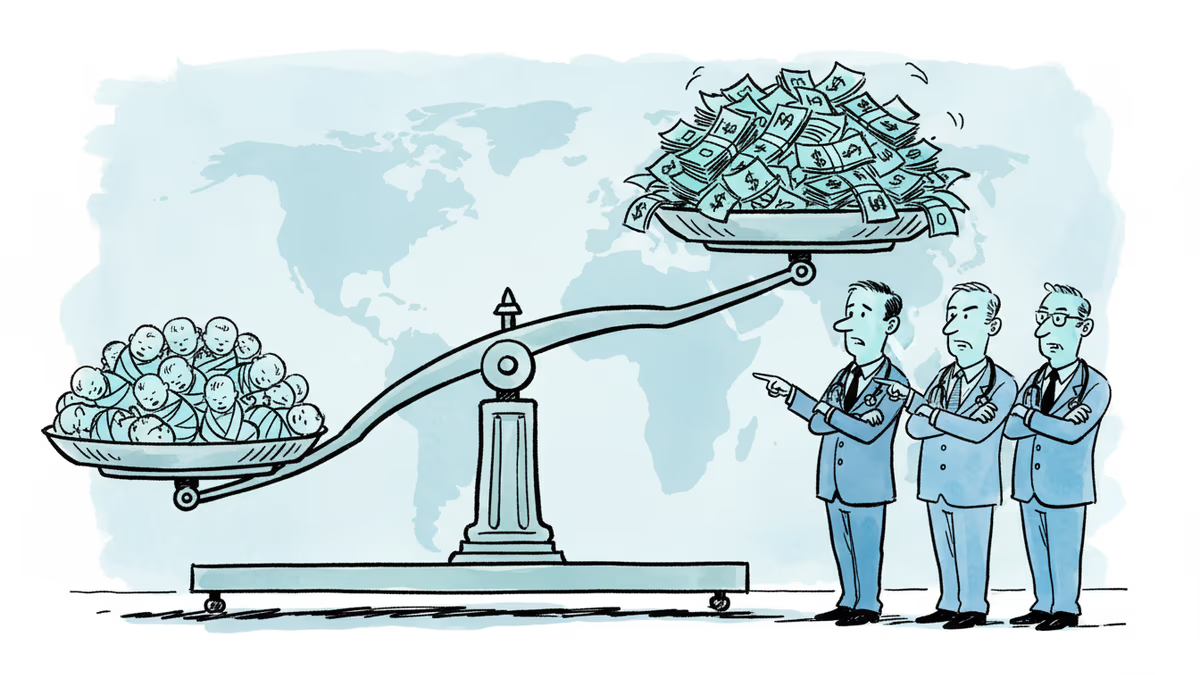
When Medical Ethics Meets Political Ideology: The Guinea-Bissau Controversy
WHO condemns US-funded vaccine trial as unethical for withholding proven hepatitis B vaccines from African newborns. What happens when anti-vaccine politics drives medical research?
$1.6 million from the CDC. A "non-competitive, unsolicited proposal" from Danish researchers. And now, the World Health Organization's harshest condemnation: "unethical."
The controversy centers on a planned trial in Guinea-Bissau that would deliberately withhold proven, life-saving hepatitis B vaccines from some African newborns. It's not about testing a new vaccine—it's about denying an established one to see what happens.
The RFK Jr. Factor
This isn't happening in a vacuum. The funding comes from a CDC now overseen by Robert F. Kennedy Jr., Trump's anti-vaccine Health Secretary. Kennedy has spent years questioning vaccine safety, and now his skepticism is shaping American medical research abroad.
The researchers claim they want to study whether hepatitis B vaccines affect other diseases. But WHO experts aren't buying it. They've listed point by point why the trial is "harmful and low quality"—essentially asking why anyone would design a study that deliberately puts children at risk of a preventable disease.
The Geography of Ethics

Here's the uncomfortable question: Would this trial ever be approved in Boston or Birmingham? The answer reveals everything wrong with global health research.
Guinea-Bissau is one of the world's poorest countries. Its healthcare system is fragile, its regulatory oversight limited. Critics argue this represents a troubling pattern: conducting research in vulnerable populations that would never pass ethical review in wealthy nations.
It's medical colonialism disguised as science—using Africa as a testing ground for experiments that Western countries would reject for their own children.
When Politics Drives Science
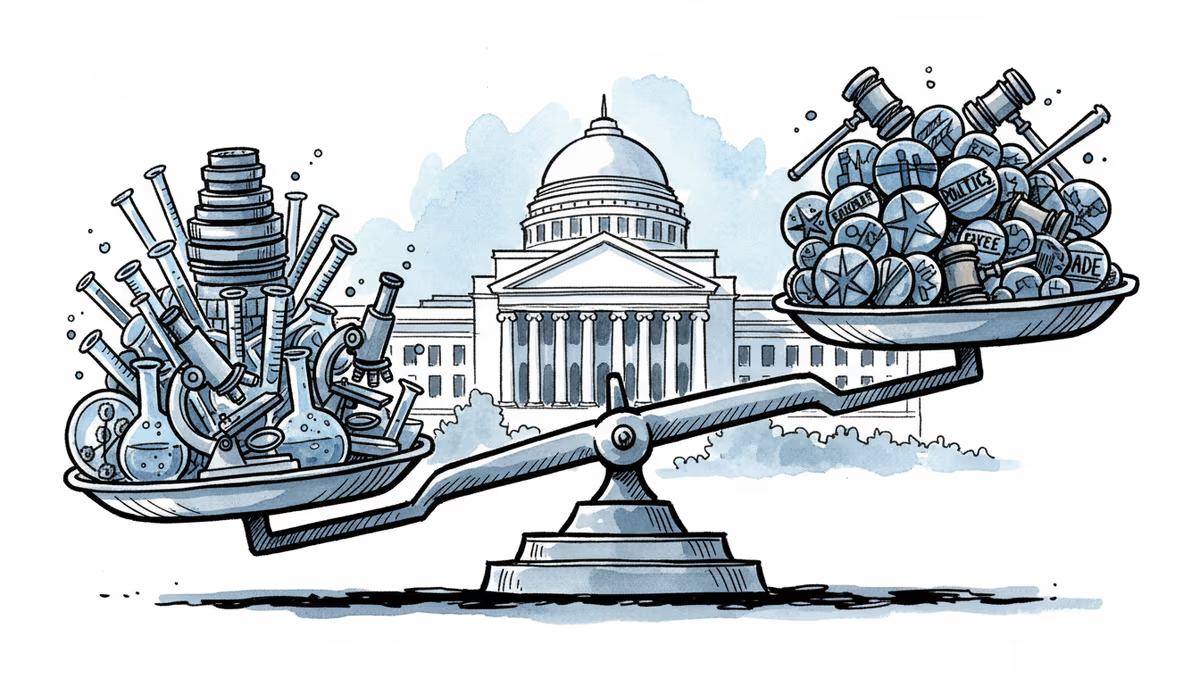
The broader implications extend far beyond one trial. What happens when scientific institutions become vehicles for political ideology? When the CDC—America's premier public health agency—funds research that the WHO calls unethical?
This isn't just about vaccines. It's about the integrity of medical research itself. If political appointees can override scientific consensus, what other "unsolicited proposals" might get funded? What other vulnerable populations might become test subjects for ideologically driven research?
The international health community is watching nervously. America's retreat from evidence-based health policy doesn't just affect Americans—it ripples across the global health architecture that has taken decades to build.
Authors
Related Articles
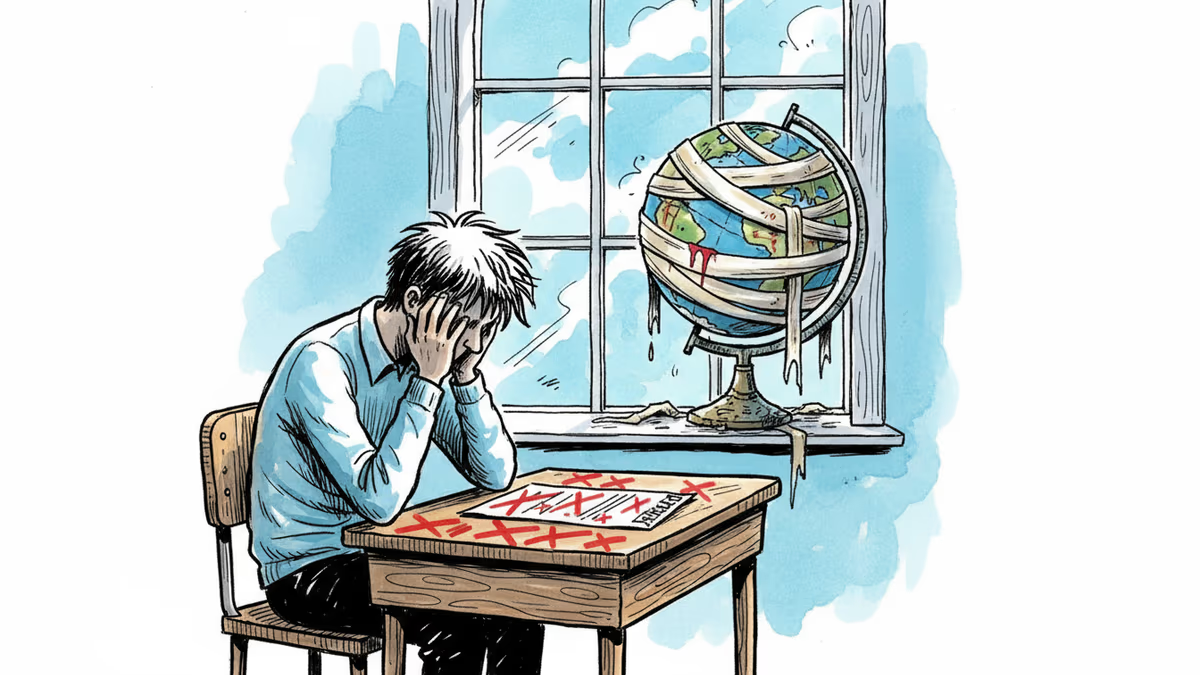
WHO's 2026 global health statistics report shows HIV, tuberculosis, and malaria targets are badly off track. What went wrong—and what does it mean for 2030?
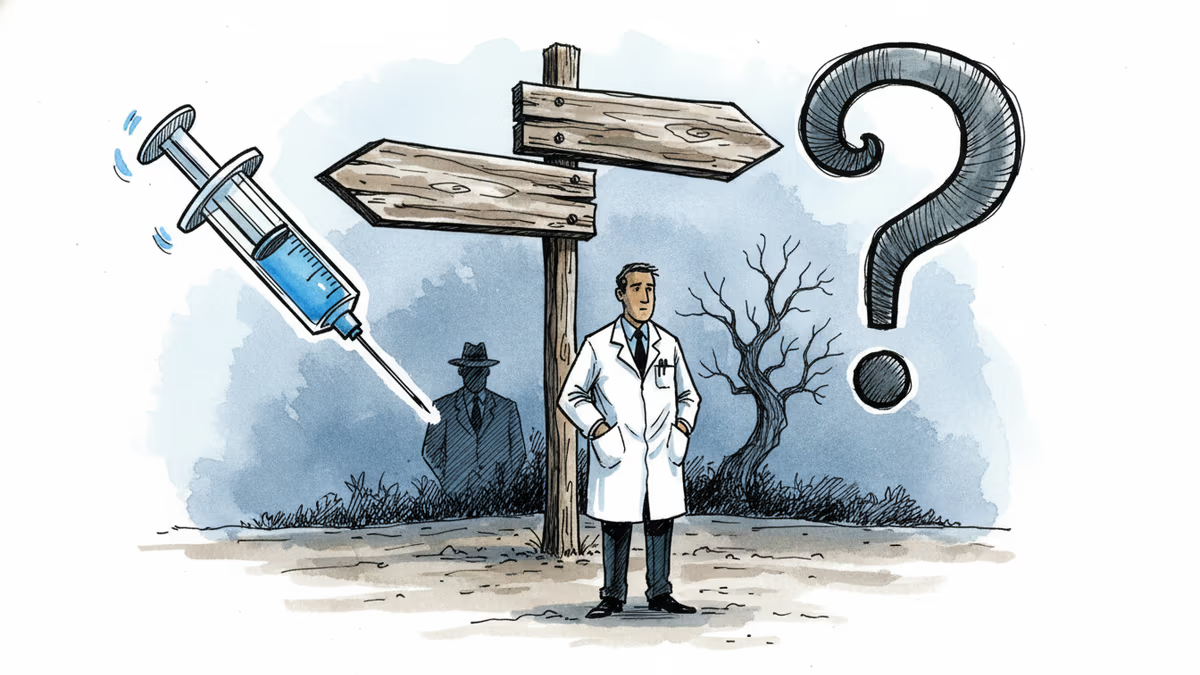
Dr. Erica Schwartz, a pro-vaccine physician with an unimpeachable public health résumé, is Trump's third CDC director nominee—a quiet but pointed rebuke of RFK Jr.'s agenda.
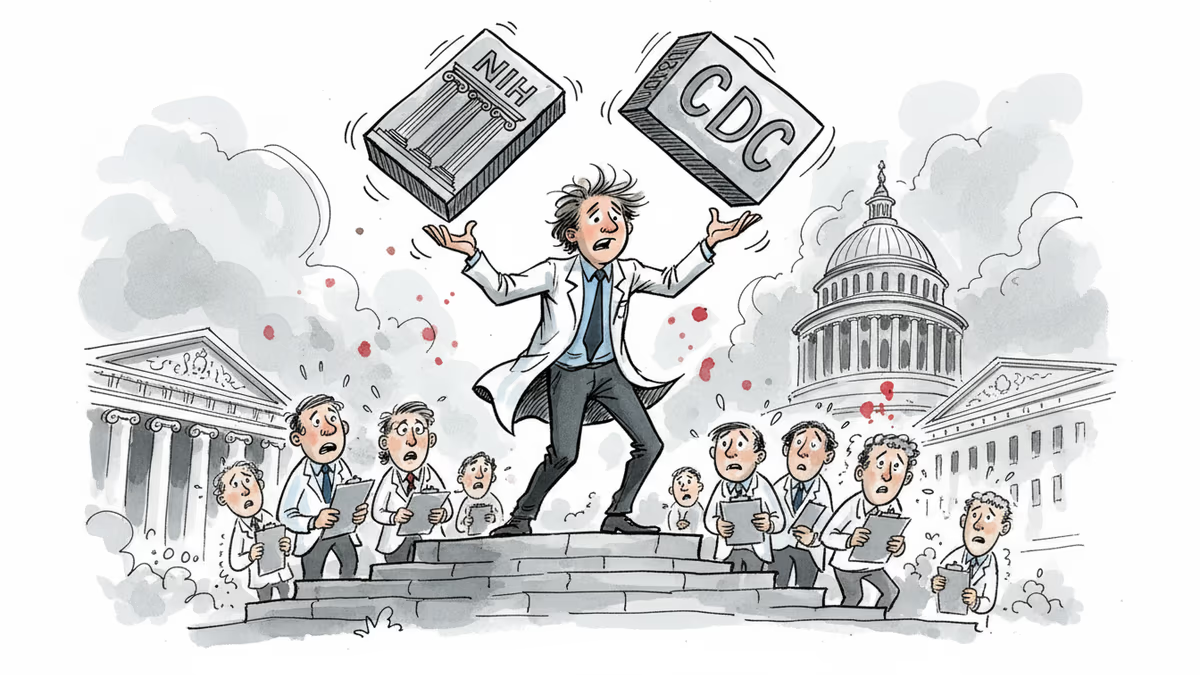
Jay Bhattacharya now leads both NIH and CDC simultaneously, marking unprecedented consolidation of US health authority. With vaccine skeptics gaining influence, scientific independence faces its biggest test in decades.
Trump appointee overruled FDA scientists to reject Moderna's mRNA flu vaccine, then reversed course within a week after public backlash. Political interference in vaccine approval raises concerns.
WHO's 2026 global health statistics report shows HIV, tuberculosis, and malaria targets are badly off track. What went wrong—and what does it mean for 2030?
Dr. Erica Schwartz, a pro-vaccine physician with an unimpeachable public health résumé, is Trump's third CDC director nominee—a quiet but pointed rebuke of RFK Jr.'s agenda.
Jay Bhattacharya now leads both NIH and CDC simultaneously, marking unprecedented consolidation of US health authority. With vaccine skeptics gaining influence, scientific independence faces its biggest test in decades.
Trump appointee overruled FDA scientists to reject Moderna's mRNA flu vaccine, then reversed course within a week after public backlash. Political interference in vaccine approval raises concerns.
Thoughts
Share your thoughts on this article
Sign in to join the conversation