
Waymo Goes Fully Driverless in Nashville as Robotaxi Race Accelerates
Waymo removes safety drivers from Nashville test vehicles, marking another step toward commercial launch. With 11 cities now in play, the autonomous vehicle landscape is shifting rapidly.
11 Cities and Counting: Waymo's Expansion Sprint
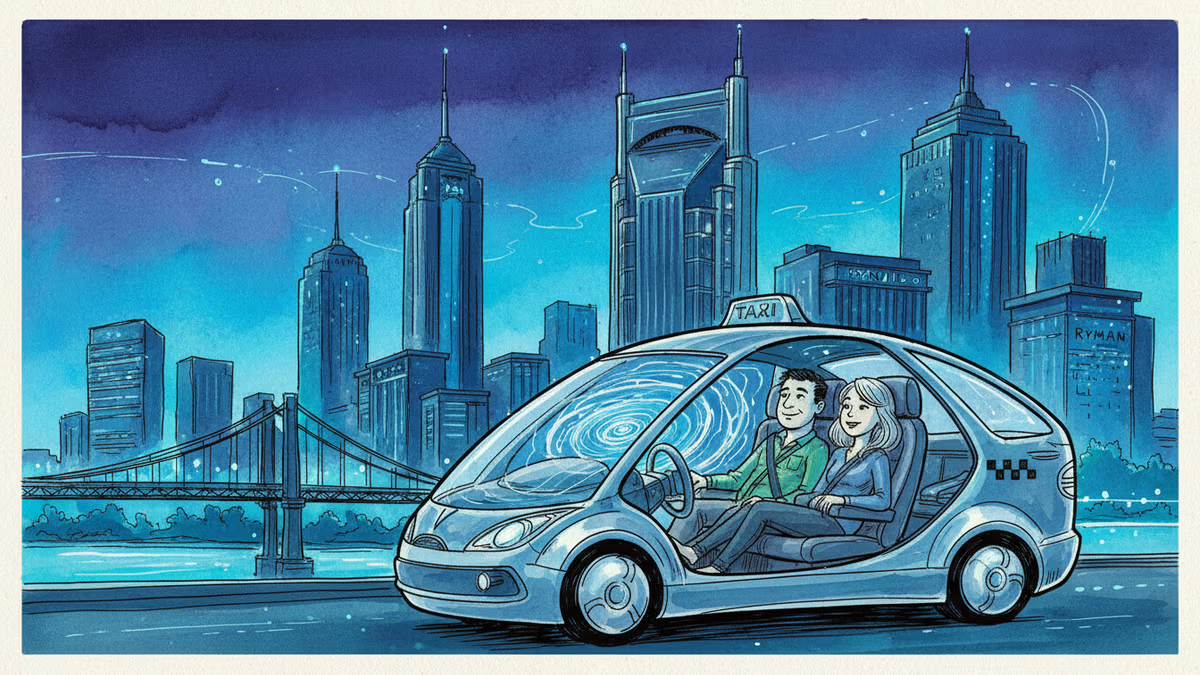
The driver's seat is officially empty in Nashville. Waymo has removed human safety operators from its autonomous test vehicles in the Tennessee capital, marking another milestone in the Alphabet-owned company's aggressive expansion strategy. After months of testing with safety drivers, the company is now running fully driverless vehicles as it prepares to launch commercial robotaxi service later this year.
The numbers tell the story of rapid acceleration. Waymo now operates commercial services in 6 cities—Atlanta, Austin, Los Angeles, Miami, San Francisco Bay Area, and Phoenix—while running driverless test fleets in 5 more, including Nashville. That's 11 urban markets where Waymo's distinctive white SUVs are navigating real streets with real traffic.
The Lyft Partnership: Scaling Through Collaboration
Nashville represents more than just another pin on Waymo's map. It's the testing ground for a crucial partnership with Lyft that could reshape how robotaxis reach consumers. Initially, riders will hail Waymo vehicles directly through the company's own app. But once the service expands, those same vehicles will appear as options within the Lyft app—potentially exposing Waymo to millions of existing rideshare users.
Lyft's role extends beyond just app integration. Through its wholly owned subsidiary Flexdrive, the company will handle the unglamorous but essential backend operations: vehicle maintenance, charging infrastructure, and depot management. It's a division of labor that lets Waymo focus on the technology while Lyft manages the operational complexity of running a fleet.
The Waymo Playbook: Methodical Market Entry

Every new city follows the same methodical progression. First, manually driven vehicles map the area, creating the detailed digital foundation that autonomous systems require. Then comes testing with safety operators, followed by fully driverless trials—often limited to employees. Only after this careful buildup does Waymo open service to paying customers.
This cautious approach stands in stark contrast to the "move fast and break things" mentality that once dominated Silicon Valley. But recent incidents, including a Waymo vehicle striking a child near a Santa Monica elementary school in January, underscore why the company maintains its step-by-step rollout strategy.
Industry Implications: The Robotaxi Reality Check
Waymo's expansion comes as the broader autonomous vehicle industry faces a reality check. Competitors like Cruise have scaled back operations after regulatory scrutiny, while others have shifted focus from robotaxis to freight or specific use cases. Waymo's continued growth suggests that patient, well-funded development may be winning over flashier approaches.
For urban planners and transportation officials, Waymo's expansion raises immediate questions. How do cities prepare infrastructure for vehicles that don't need parking near destinations? What happens to public transit ridership when robotaxis become cost-competitive? Early data from Phoenix and San Francisco suggests robotaxis primarily compete with rideshare and taxi services rather than displacing personal car ownership.
The Competitive Landscape: Who's Keeping Pace?
While Waymo expands its footprint, competitors are taking different approaches. Tesla continues promising full self-driving capabilities for consumer vehicles, while Amazon's Zoox focuses on purpose-built robotaxis in limited markets. Chinese companies like Baidu operate robotaxis in multiple cities but within more controlled environments.
The Nashville launch also highlights the importance of regulatory relationships. Unlike some markets where autonomous vehicle testing faces ongoing scrutiny, Tennessee has positioned itself as AV-friendly, streamlining permits and creating testing corridors. This regulatory welcome mat may explain why companies like Waymo can move from initial testing to driverless operations relatively quickly.
Authors
Related Articles
Waymo's new Ojai robotaxi isn't just a vehicle upgrade. It's the company's most serious attempt yet at cracking the cost problem that has kept autonomous vehicles from scaling. Here's what's really at stake.
A U.S. Senate investigation found that seven autonomous vehicle companies — including Waymo and Tesla — refused to disclose how often remote operators intervene in their vehicles. Here's why that silence matters.
Alphabet's new pay deal for Sundar Pichai links his compensation to Waymo and Wing performance—signaling where Google is placing its biggest bets. Here's what investors should actually read into it.
Swedish startup Einride raises $113M ahead of NYSE debut, deploying 200 autonomous trucks for major brands. The logistics revolution accelerates.
Waymo's new Ojai robotaxi isn't just a vehicle upgrade. It's the company's most serious attempt yet at cracking the cost problem that has kept autonomous vehicles from scaling. Here's what's really at stake.
A U.S. Senate investigation found that seven autonomous vehicle companies — including Waymo and Tesla — refused to disclose how often remote operators intervene in their vehicles. Here's why that silence matters.
Alphabet's new pay deal for Sundar Pichai links his compensation to Waymo and Wing performance—signaling where Google is placing its biggest bets. Here's what investors should actually read into it.
Swedish startup Einride raises $113M ahead of NYSE debut, deploying 200 autonomous trucks for major brands. The logistics revolution accelerates.
Thoughts
Share your thoughts on this article
Sign in to join the conversation