
The Hidden Humans Behind "Self-Driving" Cars
Waymo and Tesla reveal details about remote assistance programs, including Filipino contractors helping San Francisco robotaxis navigate complex situations.
The 3,000 Robotaxis With a 70-Person Safety Net
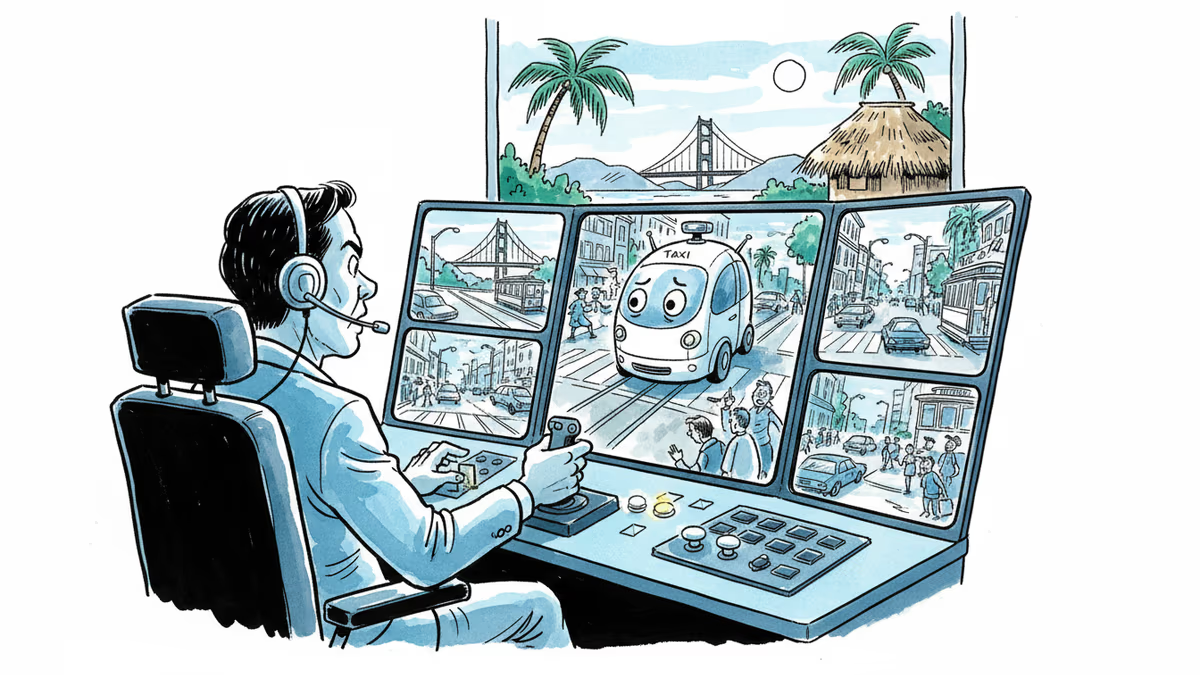
They cruise San Francisco's streets with no one behind the wheel, marketed as "fully autonomous." But when Waymo's 3,000 robotaxis get confused—say, by a power outage that kills traffic lights—they turn to their secret weapon: 70 remote assistants, half of whom are sitting in offices in the Philippines.
This month, government filings from Waymo and Tesla have pulled back the curtain on what the companies call "remote assistance" programs. The details matter because these humans, working from thousands of miles away, can be the difference between a car stopping at a red light or blowing through it.
The revelations challenge a fundamental assumption about self-driving cars: that they're truly self-driving.
Waymo's Global Command Center
In a letter to Senator Ed Markey, Waymo's VP Ryan McNamara outlined how the company's "remote assistance" system works. When the Waymo Driver software encounters a situation it can't handle, it pings human operators who provide "advice and support." The key distinction, McNamara emphasizes: these humans don't directly control or steer the vehicle. The car's system can accept or reject their input.
But the reality is messier than the corporate speak suggests. Last December, when a power outage knocked out San Francisco traffic lights, multiple Waymos got stranded in intersections. In Austin, Texas, Waymo vehicles repeatedly made illegal passes of school buses dropping off students—incidents that triggered a software recall.
Half of Waymo's remote assistants are contractors in the Philippines. They hold Philippine driver's licenses but receive training on US traffic rules. All undergo drug and alcohol testing upon hiring, with 45% subject to random quarterly tests. The most complex situations—crashes, police interactions, regulatory contacts—are handled by highly trained US-based teams.
The 70-to-3,000 ratio suggests the cars handle most situations independently. But when they don't, the human backup system kicks in.
Tesla's "Domestic Only" Approach

Tesla has operated a small robotaxi service in Austin since June, initially with human safety monitors in passenger seats. Last month, CEO Elon Musk announced the company had begun removing these monitors from some vehicles.
In a filing with the California Public Utilities Commission, Tesla's Dzuy Cao revealed the company runs two "remote operator" offices in Austin and the Bay Area. In what seems like a dig at Waymo's Philippines operation, Cao emphasizes Tesla "requires that its remote operators be located domestically."
But Tesla remains tight-lipped about crucial details: How often do these operators intervene? Exactly how do they help? The company's opacity contrasts sharply with Waymo's newfound transparency.
The Safety Stakes
"If there's a person who can make a mistake that can result in or contribute to a crash, then you have a safety issue you have to deal with," says Philip Koopman, an autonomous vehicle researcher at Carnegie Mellon University.
The human element introduces new variables into the safety equation. Remote operators work different shifts, may have varying levels of training, and operate under different regulatory frameworks depending on their location. A Filipino contractor helping a San Francisco robotaxi navigate a complex intersection operates under different labor laws and oversight than a US-based employee.
"For the foreseeable future, there will be people who play a role in the vehicles' behavior," Koopman notes. One of the hardest problems in autonomous driving is building software that knows when to ask for human help.
The Transparency Paradox
The companies' disclosures represent progress in transparency—an industry that has historically been secretive about its limitations. But they also raise uncomfortable questions about marketing claims. If "fully autonomous" vehicles require human oversight, are they truly autonomous?
Consumers boarding a Waymo in San Francisco might assume they're experiencing pure artificial intelligence. They probably don't expect their ride might be guided by someone in Manila who's never driven on American roads.
The regulatory implications are significant. If remote operators are critical to safety, shouldn't they be subject to the same licensing and oversight requirements as traditional drivers? Should there be limits on where these operators can be based?
What level of human involvement are you willing to accept in "autonomous" vehicles?
Authors
Related Articles
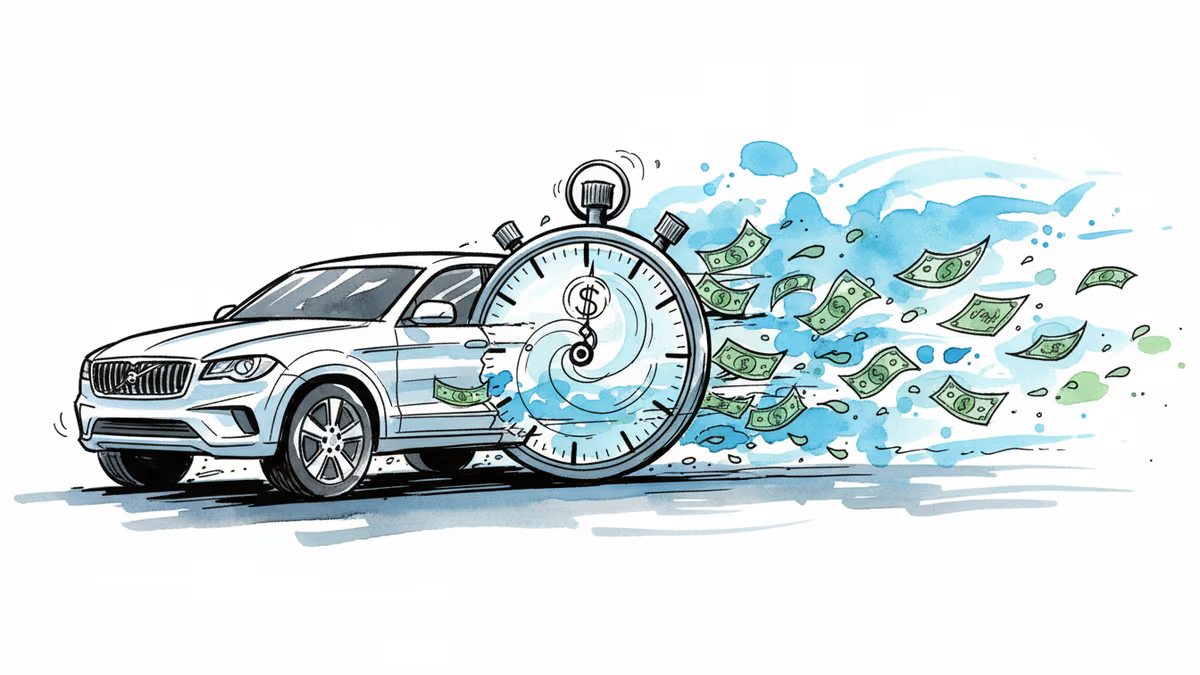
Rivian targets 20,000 R2 SUV sales in six months, matching Tesla Model Y's pace. But can it succeed without federal tax credits in a challenging EV market?
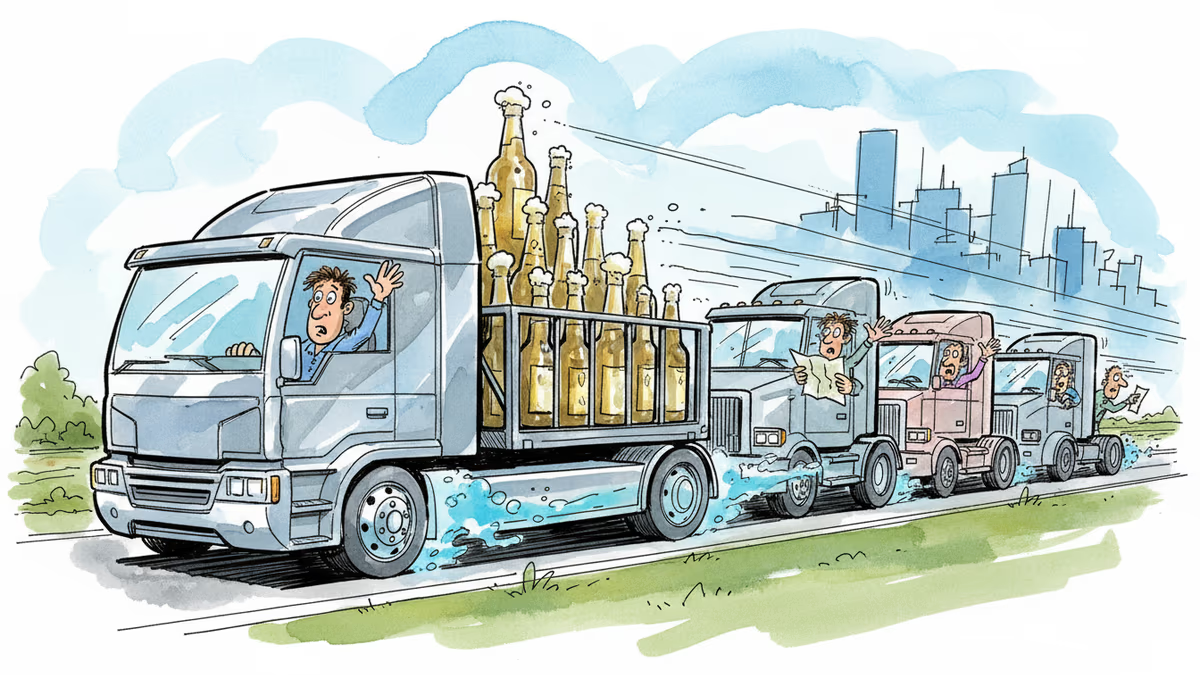
Swedish startup Einride raises $113M ahead of NYSE debut, deploying 200 autonomous trucks for major brands. The logistics revolution accelerates.
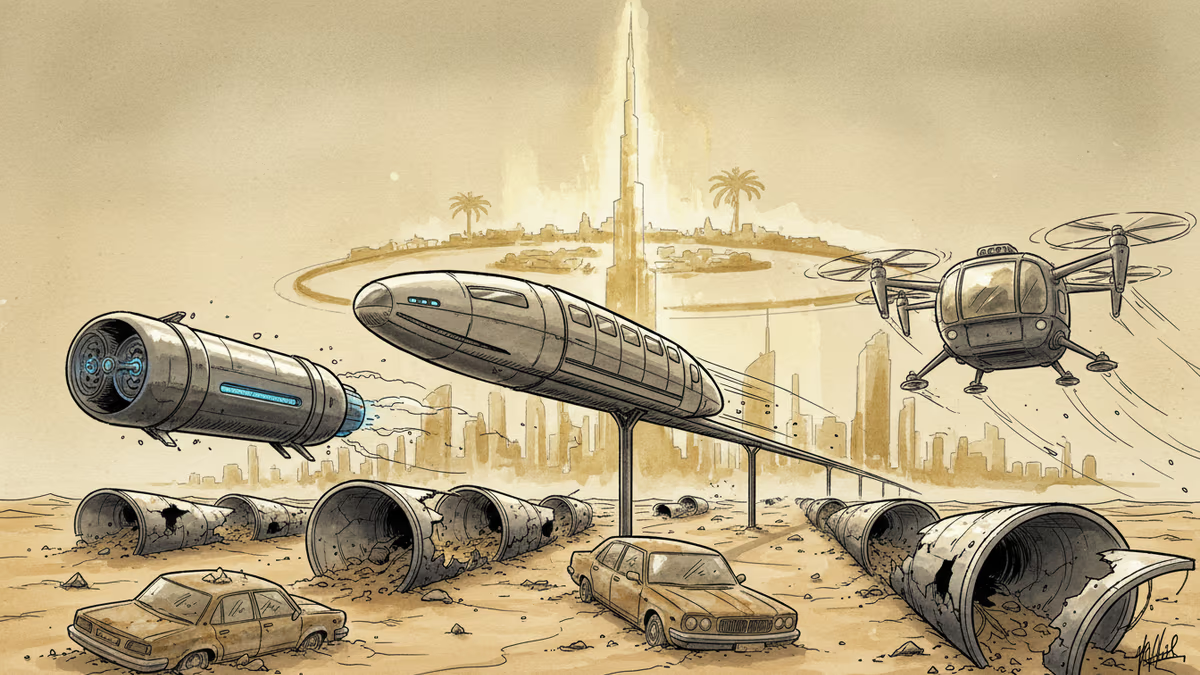
Dubai signs deals with three unproven US transport companies after previous $450M Hyperloop failure and GM Cruise debacle. Will underground tunnels, flying pods, and air taxis work?
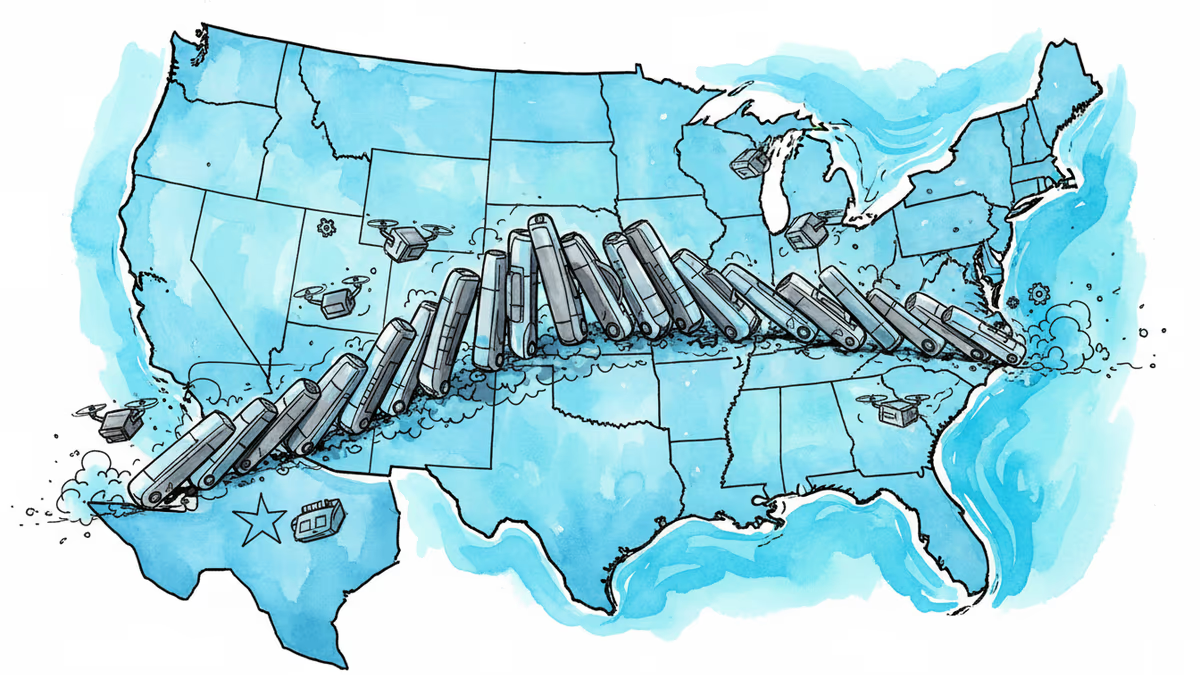
Waymo launches robotaxi services in Dallas, Houston, San Antonio, and Orlando simultaneously, expanding from 3 to 10 cities in just one year. Analyzing the strategy behind this aggressive rollout and what it means for the autonomous vehicle industry.
Rivian targets 20,000 R2 SUV sales in six months, matching Tesla Model Y's pace. But can it succeed without federal tax credits in a challenging EV market?
Swedish startup Einride raises $113M ahead of NYSE debut, deploying 200 autonomous trucks for major brands. The logistics revolution accelerates.
Dubai signs deals with three unproven US transport companies after previous $450M Hyperloop failure and GM Cruise debacle. Will underground tunnels, flying pods, and air taxis work?
Waymo launches robotaxi services in Dallas, Houston, San Antonio, and Orlando simultaneously, expanding from 3 to 10 cities in just one year. Analyzing the strategy behind this aggressive rollout and what it means for the autonomous vehicle industry.
Thoughts
Share your thoughts on this article
Sign in to join the conversation