
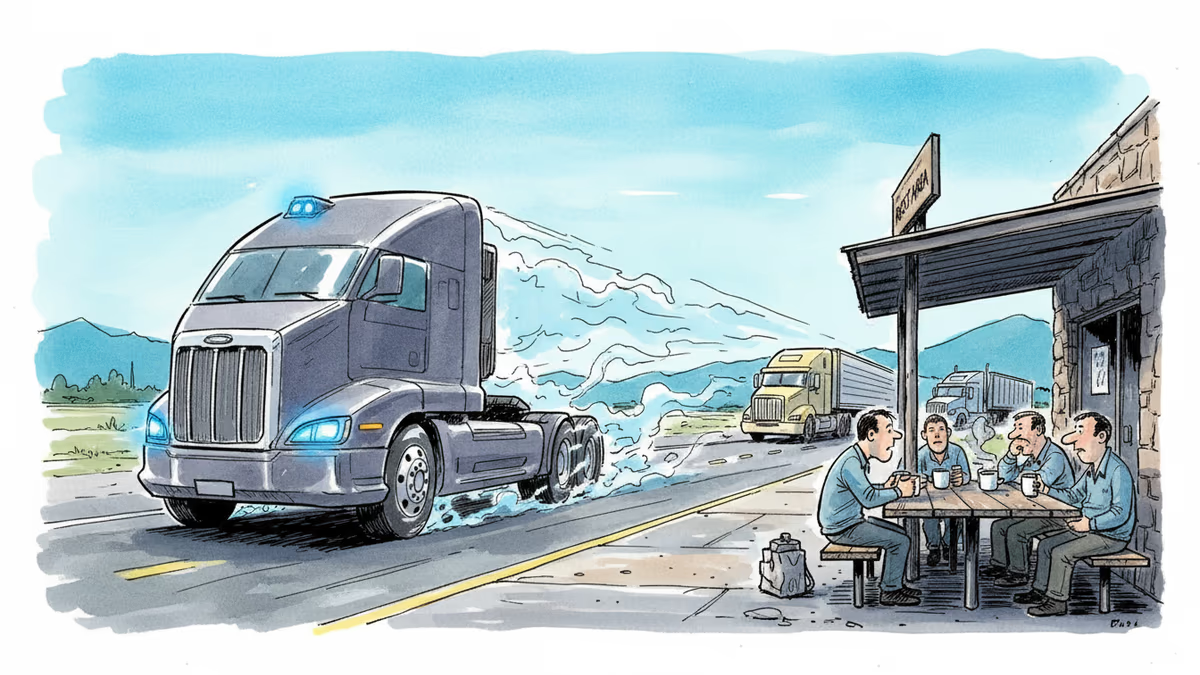
The Truck That Never Sleeps Just Changed Everything
Aurora's self-driving trucks complete 1,000-mile routes non-stop, outperforming human drivers. A logistics revolution or job market disruption?
When Machines Outwork Humans
Fort Worth to Phoenix: 1,000 miles in 15 hours, non-stop. Aurora's self-driving trucks just accomplished what human drivers legally cannot—and the implications ripple far beyond trucking.
Federal regulations force human truck drivers to stop for 30 minutes after 8 hours, limit driving to 11 hours maximum, then mandate 10 hours off-duty. The same route takes human drivers at least a day and a half. Aurora's trucks cut that time nearly in half.
"This represents more than a technological achievement," Aurora CEO Chris Urmson declared. "It is the dawn of a superhuman future for freight." Bold words, but the numbers back them up.
The Economics of Never Stopping
Uber Freight, Werner, FedEx, Schneider—Aurora's client roster reads like a who's who of logistics. They're not betting on autonomous trucks for novelty. They're betting on transit times cut nearly in half.
Early customer Hirschbach is already seeing results on the Fort Worth-Phoenix route. Aurora now operates five driverless routes across Texas, New Mexico, and Arizona, with plans to expand the fleet from 30 trucks today to over 200 by year-end.

The revenue story remains nascent. Aurora generated $3 million in 2025 revenue against $816 million in losses. But that's progress from zero revenue in 2024, and the trajectory points upward as more routes come online.
The Human Factor Equation
Here's where it gets complicated. The U.S. faces a chronic truck driver shortage—over 80,000 positions unfilled, according to industry estimates. Aurora's technology could fill that gap. But what happens when the shortage becomes a surplus?
Truck driving employs 3.5 million Americans. It's often cited as one of the most common jobs for men without college degrees. Aurora's "superhuman" trucks don't just outperform humans—they potentially replace them entirely.
The company's expansion plans are aggressive: Nevada, Oklahoma, Arkansas, Louisiana, and across the Sun Belt. "If you're in the Sun Belt in 2026, you won't just read about the Aurora driver. You'll see it every day," Urmson promised.
The Regulatory Wild Card
Autonomous trucking operates in a regulatory gray zone. Unlike passenger vehicles, commercial trucks face stricter federal oversight. Aurora currently runs some trucks with human safety observers—a requirement from truck manufacturer Paccar. But the company plans to deploy fully unattended International Motors LT trucks in Q2.
State regulators are watching closely. Will they embrace the efficiency gains or pump the brakes over safety concerns? The 250,000 driverless miles Aurora claims with a "perfect safety record" will face scrutiny as operations scale.
Authors
Related Articles
Swedish startup Einride raises $113M ahead of NYSE debut, deploying 200 autonomous trucks for major brands. The logistics revolution accelerates.
Dubai signs deals with three unproven US transport companies after previous $450M Hyperloop failure and GM Cruise debacle. Will underground tunnels, flying pods, and air taxis work?
Waymo launches robotaxi services in Dallas, Houston, San Antonio, and Orlando simultaneously, expanding from 3 to 10 cities in just one year. Analyzing the strategy behind this aggressive rollout and what it means for the autonomous vehicle industry.
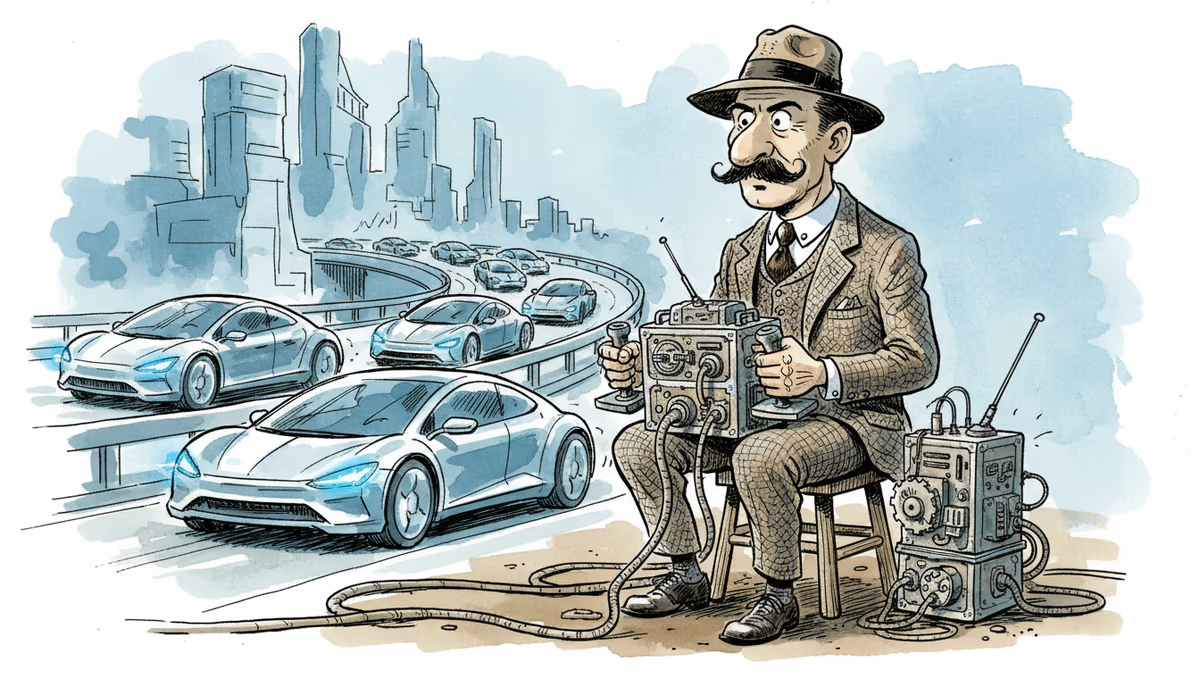
A Spanish engineer's 1903 wireless control invention laid the groundwork for today's autonomous vehicle revolution. Leonardo Torres Quevedo's Telekino changed everything
Swedish startup Einride raises $113M ahead of NYSE debut, deploying 200 autonomous trucks for major brands. The logistics revolution accelerates.
Dubai signs deals with three unproven US transport companies after previous $450M Hyperloop failure and GM Cruise debacle. Will underground tunnels, flying pods, and air taxis work?
Waymo launches robotaxi services in Dallas, Houston, San Antonio, and Orlando simultaneously, expanding from 3 to 10 cities in just one year. Analyzing the strategy behind this aggressive rollout and what it means for the autonomous vehicle industry.
A Spanish engineer's 1903 wireless control invention laid the groundwork for today's autonomous vehicle revolution. Leonardo Torres Quevedo's Telekino changed everything
Thoughts
Share your thoughts on this article
Sign in to join the conversation