
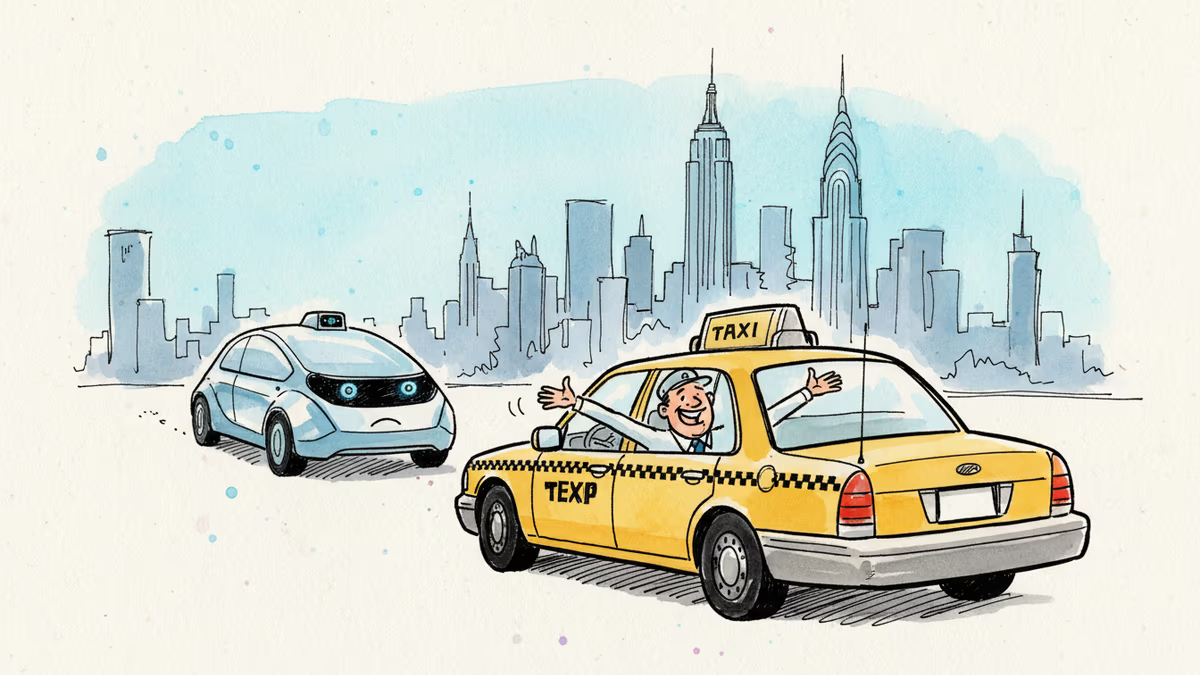
New York Pulls Back on Robotaxis as Political Reality Bites
New York Governor drops robotaxi plan due to legislative opposition. A major setback for Waymo and autonomous vehicle companies eyeing the lucrative NYC market.
500,000 daily taxi rides. That's what New York City represents to robotaxi companies—a goldmine that just got a lot harder to reach.
New York Governor Kathy Hochul has dropped her proposal to allow robotaxi companies to operate commercially in cities outside NYC, citing lack of legislative support. The plan, introduced just last month as part of the state budget, would have opened the door for limited autonomous vehicle deployment while leaving NYC's decision to the mayor and city council.
Waymo's East Coast Dreams Derailed
For Waymo and other AV companies, this represents a significant strategic setback. New York was positioned to become their third major market after San Francisco and Phoenix. The company has already been conducting pilot operations in Manhattan, testing the waters for eventual commercial launch.
The stakes couldn't be higher. NYC's taxi and ride-hailing market generates billions annually, with over 130,000 drivers serving the five boroughs. It's the kind of dense, high-frequency environment where robotaxis could theoretically thrive—and generate substantial revenue.
Currently, only Waymo operates fully commercial robotaxi services in the US, limited to parts of San Francisco and Phoenix. Cruise suspended operations following safety incidents, leaving the field relatively open.
The Politics of Autonomous Disruption
Why did New York legislators balk? The reasons reveal the complex political calculus surrounding AV deployment.

Safety concerns top the list. Recent incidents involving autonomous vehicles, particularly Cruise's pedestrian accident in San Francisco, have heightened scrutiny. New York's chaotic traffic patterns and aging infrastructure add another layer of complexity.
Labor opposition played a crucial role. The city's 13,000 yellow cab drivers and over 100,000 for-hire vehicle drivers represent a powerful constituency. Their unions have been vocal about protecting jobs from automation.
Regulatory uncertainty also factors in. Unlike California's more permissive approach, New York has historically taken a cautious stance on emerging transportation technologies. The state still requires safety drivers for most AV testing.
What This Means for the Industry
The New York setback highlights a broader challenge facing the autonomous vehicle industry: technology readiness doesn't equal market readiness. While companies have made significant technical progress, the path to widespread deployment remains fraught with political and social obstacles.
This could slow the industry's growth trajectory. Investors and companies have been betting on rapid urban expansion, but regulatory resistance may force a more gradual, market-by-market approach.
For competitors like Tesla, Amazon's Zoox, and GM's Cruise, New York's decision might actually provide breathing room to refine their offerings before entering what would have been an intensely competitive market.
The Bigger Picture: Urban Mobility at a Crossroads
New York's retreat reflects broader tensions about the future of urban transportation. Cities worldwide are grappling with similar questions: How do we balance innovation with employment? What level of risk is acceptable for potential benefits?
The decision also underscores the importance of stakeholder engagement. Companies that succeed in AV deployment will likely be those that invest heavily in community relations, safety demonstration, and gradual trust-building—not just technological superiority.
Authors
Related Articles
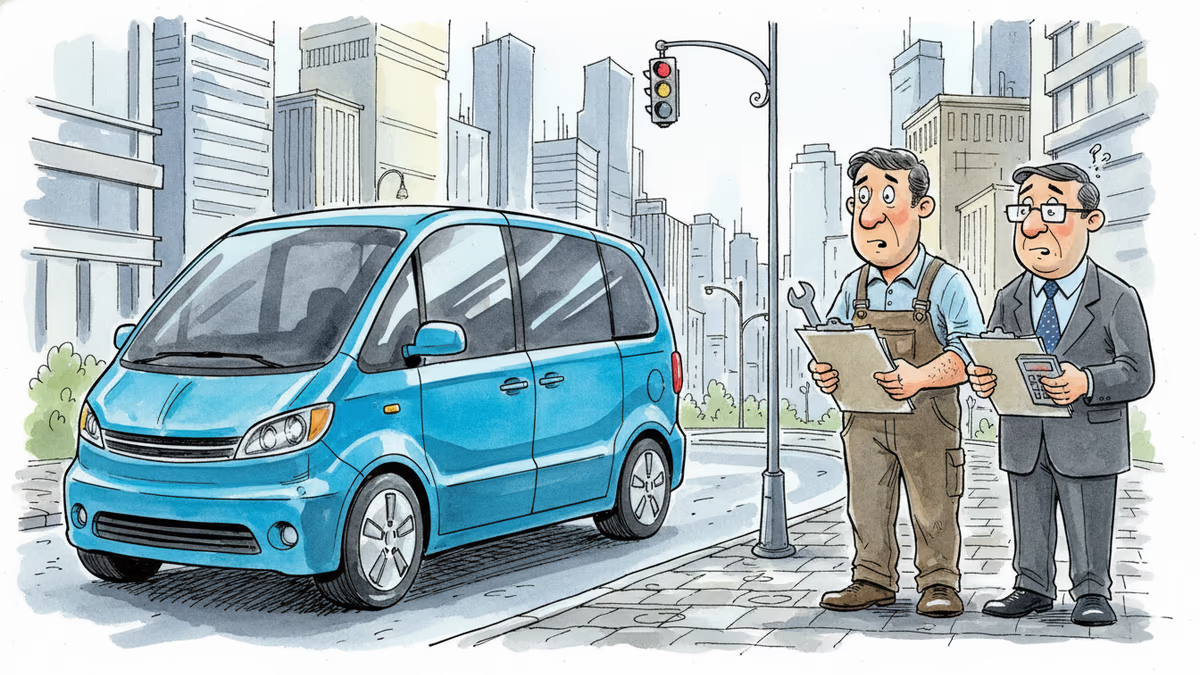
Waymo's new Ojai robotaxi isn't just a vehicle upgrade. It's the company's most serious attempt yet at cracking the cost problem that has kept autonomous vehicles from scaling. Here's what's really at stake.
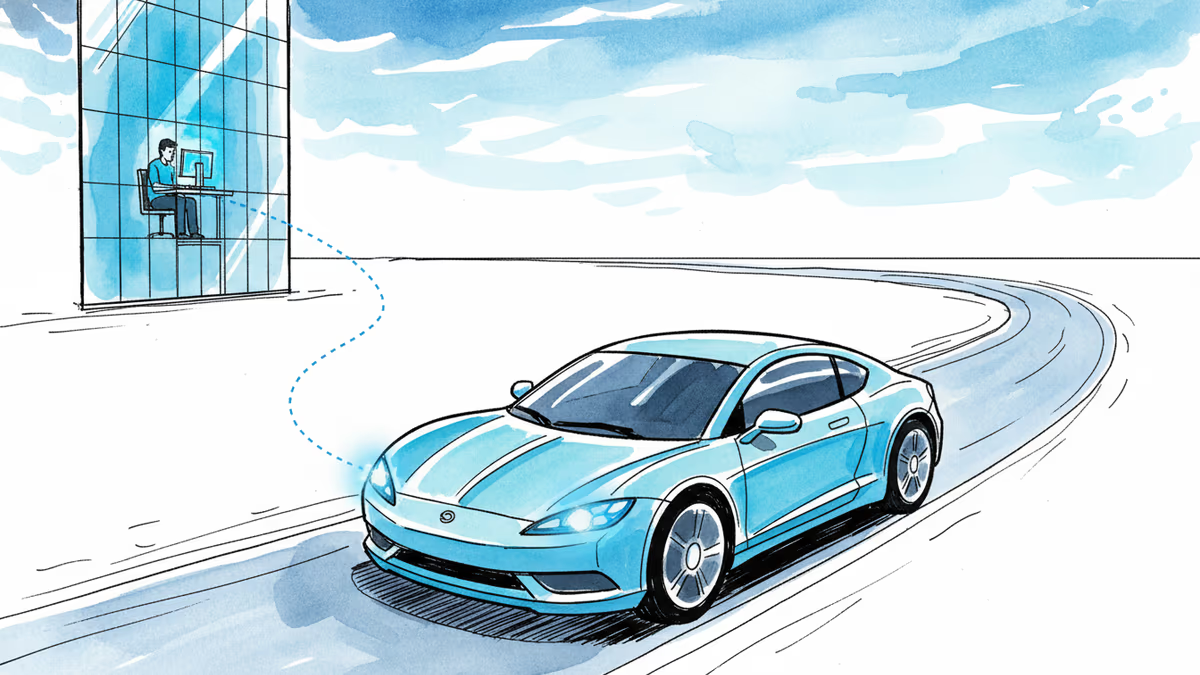
A U.S. Senate investigation found that seven autonomous vehicle companies — including Waymo and Tesla — refused to disclose how often remote operators intervene in their vehicles. Here's why that silence matters.
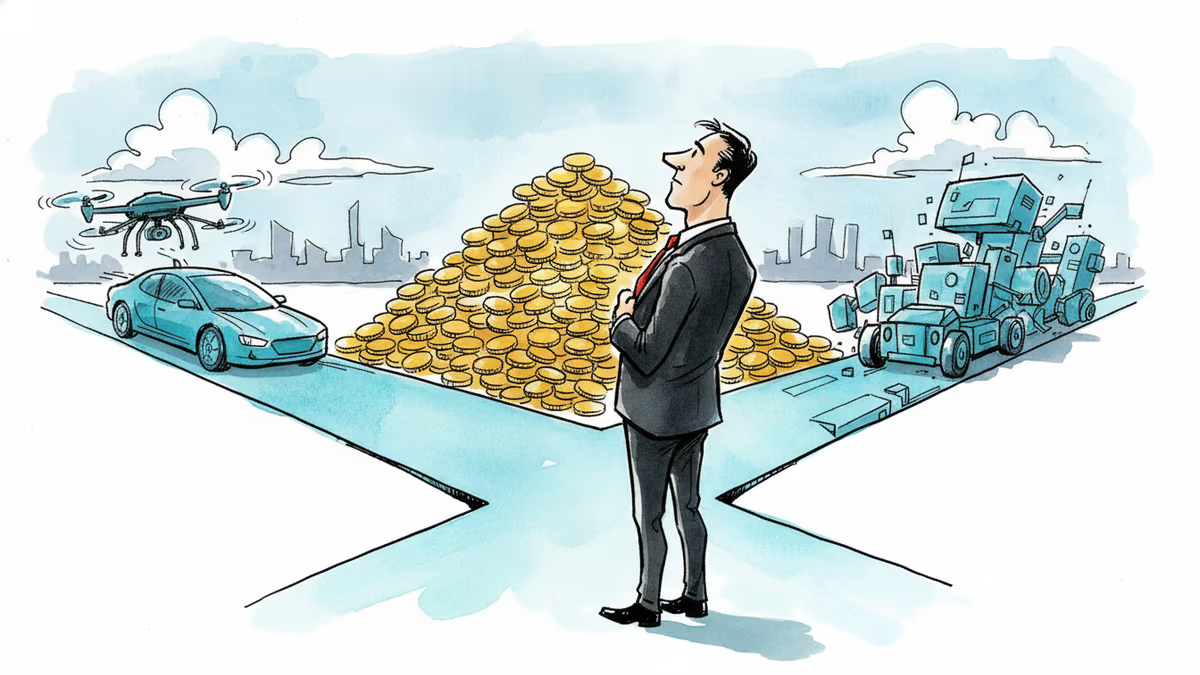
Alphabet's new pay deal for Sundar Pichai links his compensation to Waymo and Wing performance—signaling where Google is placing its biggest bets. Here's what investors should actually read into it.
Swedish startup Einride raises $113M ahead of NYSE debut, deploying 200 autonomous trucks for major brands. The logistics revolution accelerates.
Waymo's new Ojai robotaxi isn't just a vehicle upgrade. It's the company's most serious attempt yet at cracking the cost problem that has kept autonomous vehicles from scaling. Here's what's really at stake.
A U.S. Senate investigation found that seven autonomous vehicle companies — including Waymo and Tesla — refused to disclose how often remote operators intervene in their vehicles. Here's why that silence matters.
Alphabet's new pay deal for Sundar Pichai links his compensation to Waymo and Wing performance—signaling where Google is placing its biggest bets. Here's what investors should actually read into it.
Swedish startup Einride raises $113M ahead of NYSE debut, deploying 200 autonomous trucks for major brands. The logistics revolution accelerates.
Thoughts
Share your thoughts on this article
Sign in to join the conversation