
When Self-Driving Cars Need Human Help to Close Doors
Waymo pays DoorDash drivers $6.25 to close car doors left open by passengers, revealing unexpected challenges in autonomous vehicle operations across six cities.
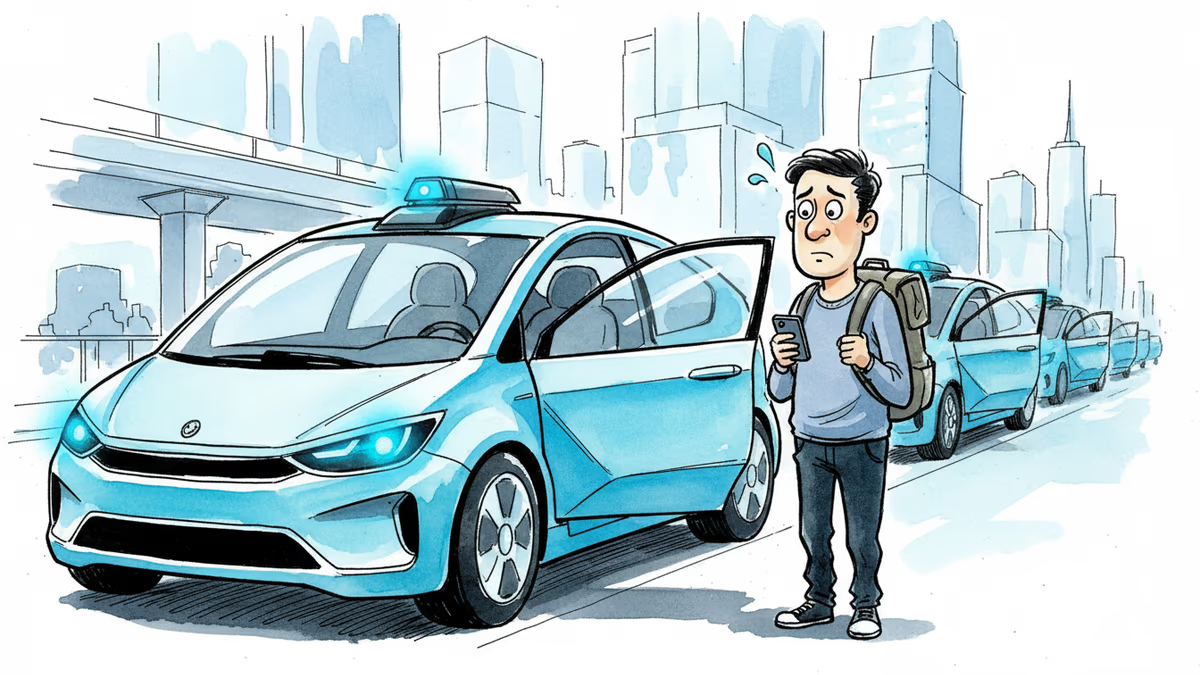
A $6.25 gig job just revealed one of the most ironic problems in autonomous driving: Waymo's self-driving cars can be completely disabled by something as simple as a passenger forgetting to close the door.
The $16 Billion Fleet's Achilles' Heel
Waymo operates across six cities and recently raised $16 billion to expand internationally. These vehicles represent cutting-edge AI that can navigate complex traffic patterns, recognize pedestrians, and make split-second driving decisions. Yet they're rendered completely useless when a door stays ajar.
The problem surfaced when a DoorDash driver in Atlanta received an unusual request: drive less than a mile to close a Waymo car door for $6.25, with a $5 bonus upon completion. The Reddit post documenting this went viral, with one commenter noting the perfect irony: "You actually 'door' dashed."
Both companies confirmed this is a legitimate pilot program. "In the rare event a vehicle door is left ajar, preventing the car from departing, nearby Dashers are notified, allowing Waymo to get its vehicles back on the road quickly," they stated jointly.
The Economics of a Simple Fix

The door-closing service isn't just operational—it's economically rational. An immobilized Waymo can't complete rides, generate revenue, or serve waiting passengers. Worse, it could block traffic flow in busy urban areas.
This isn't Waymo's only door solution. In Los Angeles, the company partners with Honk, a roadside assistance app, paying up to $24 per door closure—nearly four times the Atlanta rate. The price difference suggests either higher operational costs in LA or greater urgency in certain markets.
Waymo acknowledges the issue, noting that future vehicles will feature automated door closures. But for now, the $16 billion autonomous fleet depends on human gig workers for one of the most basic mechanical functions.
The Broader Automation Paradox
This door dilemma illustrates a fundamental tension in automation: the more sophisticated the system, the more vulnerable it becomes to simple failures. Traditional cars don't stop working with open doors—they just beep annoyingly. But autonomous vehicles, designed for safety and liability management, must ensure perfect conditions before operating.
The partnership between Waymo and DoorDash also highlights how the gig economy increasingly serves as a backup system for automated services. When robots fail, humans fill the gaps—often for minimal compensation.
From a passenger perspective, the door issue raises questions about user experience. If you accidentally leave a door open, you've essentially broken a multi-million-dollar piece of technology and potentially disrupted the entire fleet's efficiency.
Authors
Related Articles
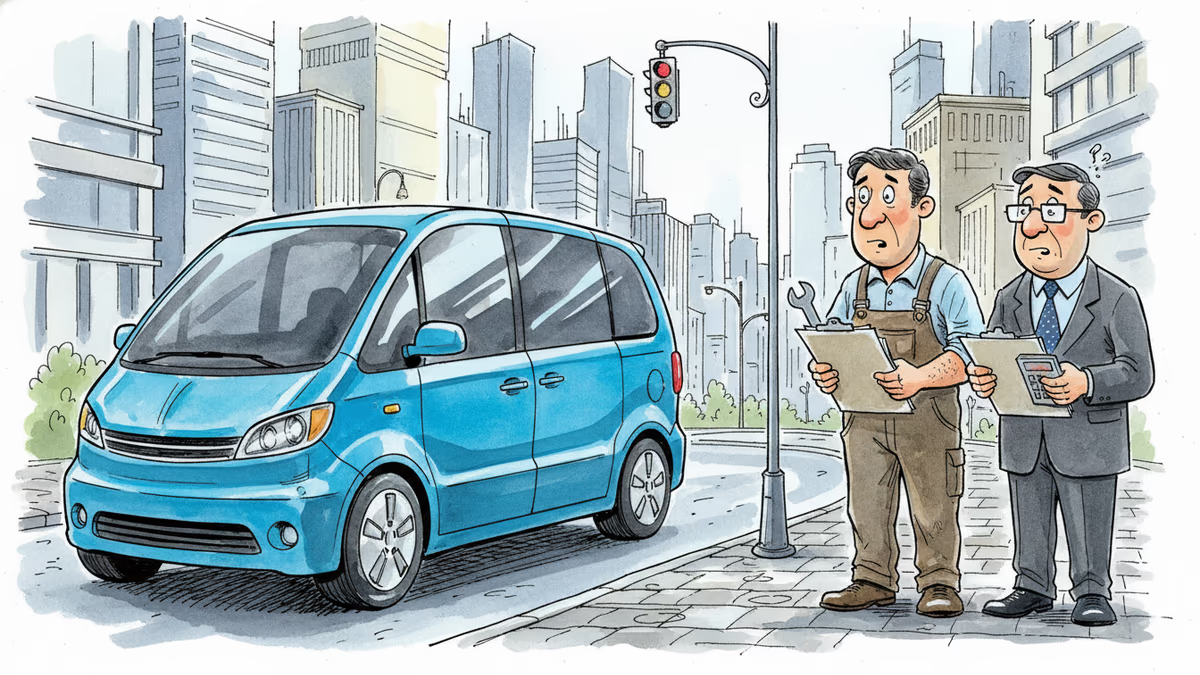
Waymo's new Ojai robotaxi isn't just a vehicle upgrade. It's the company's most serious attempt yet at cracking the cost problem that has kept autonomous vehicles from scaling. Here's what's really at stake.
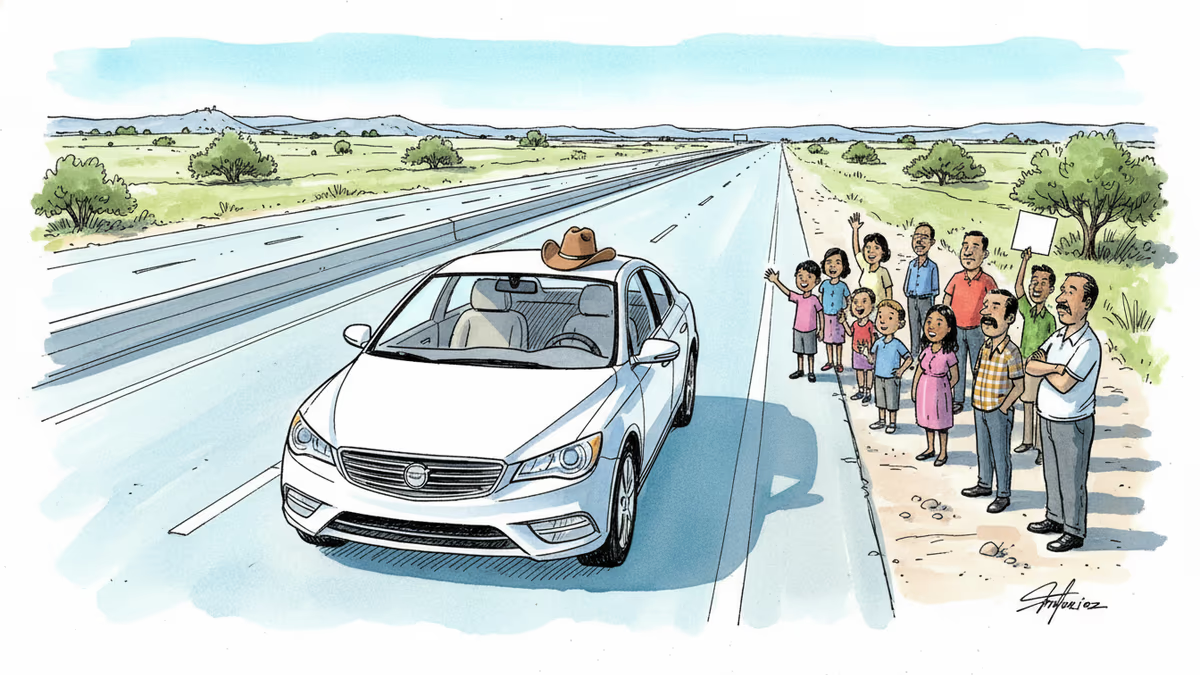
Tesla expanded its driverless robotaxi to Dallas and Houston, even after reporting 14 crashes in Austin. What does this tell us about how autonomous vehicles actually get built?
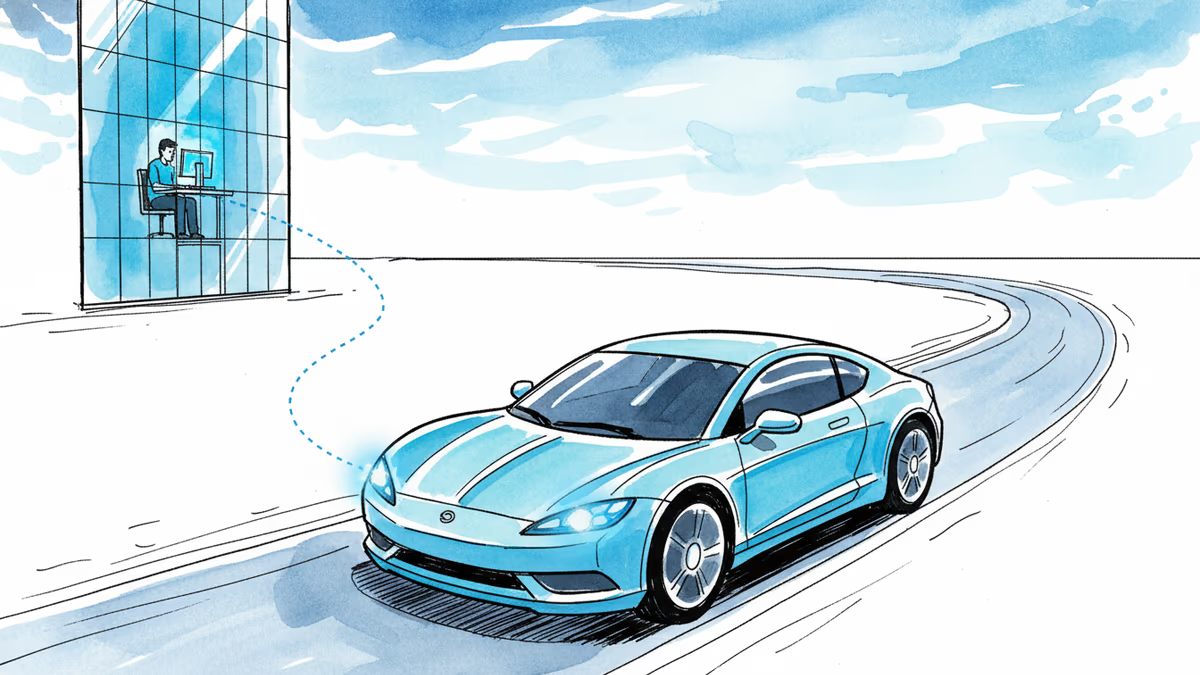
A U.S. Senate investigation found that seven autonomous vehicle companies — including Waymo and Tesla — refused to disclose how often remote operators intervene in their vehicles. Here's why that silence matters.
Uber and WeRide have launched fully driverless robotaxi service in Dubai — no safety operator, real fares. Here's what it means for the global AV race and your next ride.
Waymo's new Ojai robotaxi isn't just a vehicle upgrade. It's the company's most serious attempt yet at cracking the cost problem that has kept autonomous vehicles from scaling. Here's what's really at stake.
Tesla expanded its driverless robotaxi to Dallas and Houston, even after reporting 14 crashes in Austin. What does this tell us about how autonomous vehicles actually get built?
A U.S. Senate investigation found that seven autonomous vehicle companies — including Waymo and Tesla — refused to disclose how often remote operators intervene in their vehicles. Here's why that silence matters.
Uber and WeRide have launched fully driverless robotaxi service in Dubai — no safety operator, real fares. Here's what it means for the global AV race and your next ride.
Thoughts
Share your thoughts on this article
Sign in to join the conversation