
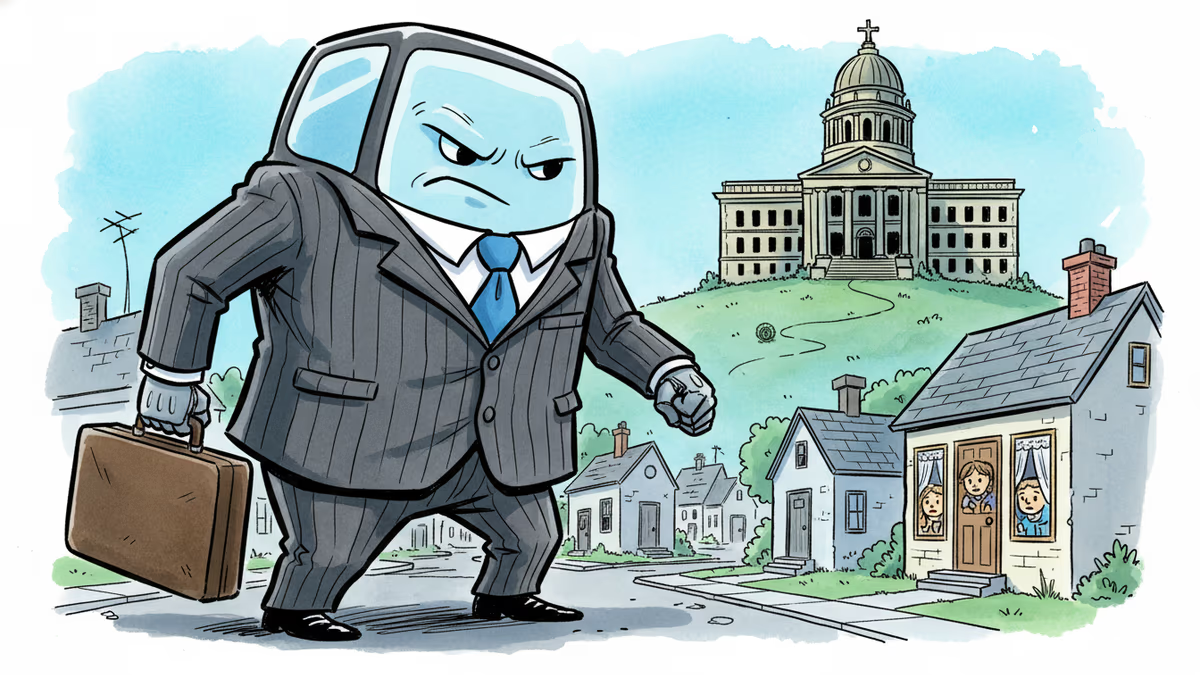
When Big Tech Asks Citizens to Do the Lobbying
Waymo bypassed stalled DC officials and asked residents directly to pressure lawmakers for robotaxi permits. A look at tech companies' evolving political playbook.
1,500 People Moved in 90 Minutes
Waymo sent an email to Washington DC residents Thursday with a simple request: contact your mayor and city council. The result? 1,500 people reached out to district leaders within the first 90 minutes.
After more than a year of trying to convince DC officials to allow driverless robotaxis, Google's self-driving subsidiary finally played the grassroots card. Currently, autonomous vehicles can only test in DC with safety drivers behind the wheel—fully driverless operation remains prohibited.
"We are nearly ready to provide public Waymo rides to everyone in DC," the email stated. "However, despite significant support, District leadership has not yet provided the necessary approvals for us to launch."
The Uber Playbook, Revisited
Waymo's citizen mobilization strategy isn't new. It's lifted straight from the Uber and Lyft playbook from nearly a decade ago. When ride-hailing companies faced regulatory roadblocks, they turned customers into advocates.
The template email Waymo provided was carefully crafted: "Over the past year, I have observed Waymo vehicles operating throughout our local areas, and I am thrilled about the potential advantages this service could provide, including enhanced accessibility and a decline in traffic-related incidents."
But here's the twist—Waymo urged recipients to "use your own words" because personalized messages "have a higher impact." It's lobbying 101: authentic voices carry more weight than form letters.
Bird and other scooter companies used similar tactics, flooding cities with their products first, then mobilizing users to pressure lawmakers for legalization.
Blue State Resistance vs Red State Welcome

Waymo currently operates in six US metro areas—Atlanta, Austin, Los Angeles, Miami, Phoenix, and San Francisco. All had clear regulatory frameworks before the company launched.
Now Waymo is targeting blue-state cities where autonomous vehicle regulations don't exist yet. Besides DC, the company recently began testing in Boston, where city lawmakers pushed for an ordinance last year that would ban driverless taxis.
The political calculation is complex. Democratic-leaning cities often champion environmental benefits and accessibility—core Waymo selling points. But they're also more skeptical of big tech's unchecked expansion.
Federal Override vs Local Control
Tuesday brought good news for Waymo: a House committee advanced legislation directing the federal government to create safety standards for autonomous vehicles while preventing states from passing their own prohibitions.
This federal preemption approach mirrors how ride-hailing companies ultimately succeeded. Rather than fighting city-by-city battles, they pushed for state-level laws that overrode local restrictions.
But local resistance remains fierce. Despite what Waymo calls "significant support," Mayor Muriel Bower and the DC Council have stalled permits for over a year. Three other companies—Nuro and Amazon-owned Zoox—also have DC testing permits but face the same driverless restrictions.
The Democracy Question
Waymo's grassroots mobilization raises uncomfortable questions about corporate influence. Is this citizen empowerment or astroturfing? The company's 90-minute response rate suggests genuine enthusiasm among some residents.
Yet critics worry about tech companies treating citizens as unpaid lobbyists. When Uber deployed similar tactics, it often overwhelmed city councils with coordinated campaigns that looked organic but were corporate-orchestrated.
Waymo spokesperson Ethan Teicher says the company will "be ready to serve Washingtonians this year" and urges local leaders to act.
Authors
Related Articles
Waymo's new Ojai robotaxi isn't just a vehicle upgrade. It's the company's most serious attempt yet at cracking the cost problem that has kept autonomous vehicles from scaling. Here's what's really at stake.
A U.S. Senate investigation found that seven autonomous vehicle companies — including Waymo and Tesla — refused to disclose how often remote operators intervene in their vehicles. Here's why that silence matters.
Alphabet's new pay deal for Sundar Pichai links his compensation to Waymo and Wing performance—signaling where Google is placing its biggest bets. Here's what investors should actually read into it.
Swedish startup Einride raises $113M ahead of NYSE debut, deploying 200 autonomous trucks for major brands. The logistics revolution accelerates.
Waymo's new Ojai robotaxi isn't just a vehicle upgrade. It's the company's most serious attempt yet at cracking the cost problem that has kept autonomous vehicles from scaling. Here's what's really at stake.
A U.S. Senate investigation found that seven autonomous vehicle companies — including Waymo and Tesla — refused to disclose how often remote operators intervene in their vehicles. Here's why that silence matters.
Alphabet's new pay deal for Sundar Pichai links his compensation to Waymo and Wing performance—signaling where Google is placing its biggest bets. Here's what investors should actually read into it.
Swedish startup Einride raises $113M ahead of NYSE debut, deploying 200 autonomous trucks for major brands. The logistics revolution accelerates.
Thoughts
Share your thoughts on this article
Sign in to join the conversation