
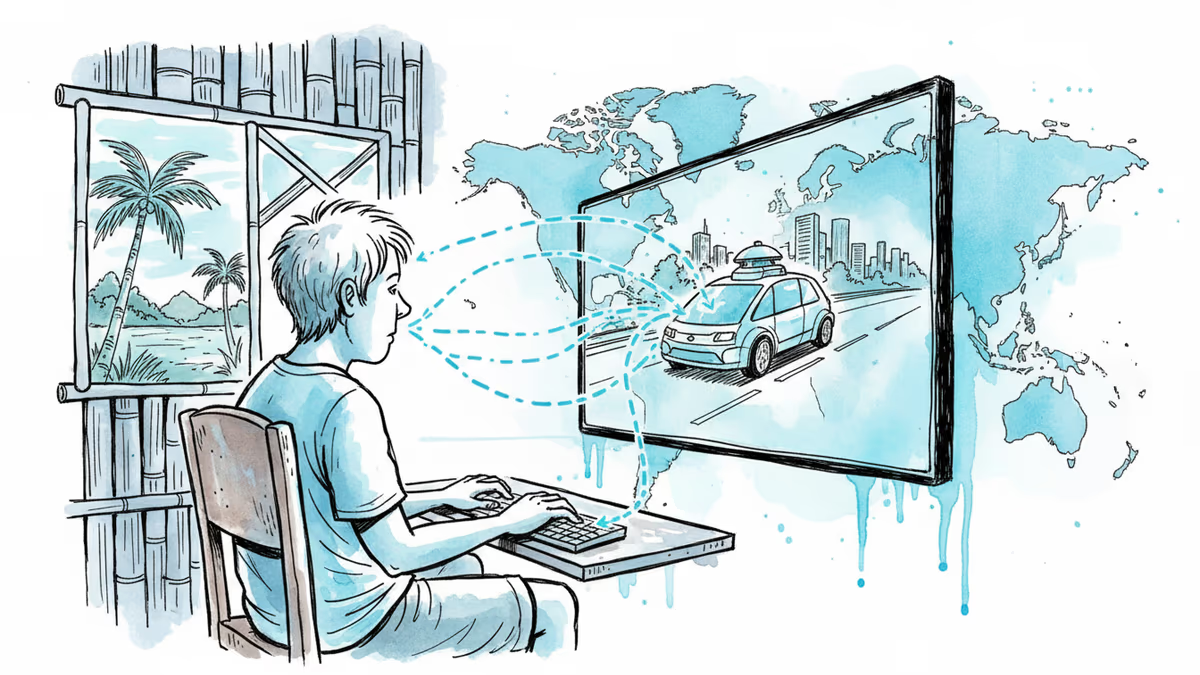
The Humans Behind the Robots: Waymo's Philippine Connection
Waymo reveals 70 remote operators worldwide, including Philippines-based staff, sparking debate about true autonomy in self-driving cars.
70 People Watch 3,000 Robotaxis
When a Waymo robotaxi navigates a tricky intersection in San Francisco, someone 8,000 miles away in the Philippines might be watching. This revelation, dropped during a Senate hearing, has reignited the debate about what "driverless" really means.
Waymo Chief Safety Officer Mauricio Peña found himself in the hot seat when Sen. Ed Markey pressed him about the company's remote assistance operations. Markey's pointed question—how can people without U.S. driver's licenses assist vehicles on U.S. roads—struck a nerve that's still reverberating through the industry.
The numbers are striking: 70 remote assistance agents monitor Waymo's 3,000-vehicle fleet as it logs over 4 million miles weekly and provides 400,000+ rides. That's roughly one human supervisor for every 43 vehicles—a ratio that challenges assumptions about full autonomy.
Remote Driving vs. Remote Assistance: A Crucial Distinction
Waymo quickly moved to clarify, with Global Operations head Ryan McNamara publishing a detailed blog post. The company insists its remote staff don't "drive" the vehicles—they simply respond to specific information requests from the AI system.
The distinction matters legally and technologically. Remote assistance (RA) workers provide contextual information when the autonomous system encounters uncertainty. Meanwhile, Event Response Teams (ERTs)—exclusively U.S.-based—handle complex situations like accidents, law enforcement interactions, and regulatory reporting.

But critics question whether this distinction holds in practice. If a remote operator tells the system "the left lane is clear," isn't that functionally similar to steering guidance?
The Transparency Gamble
For years, AV companies treated remote operations like a trade secret. The logic was simple: admitting human involvement might undermine confidence in the technology's sophistication. Many startups that have since folded "avoided the topic like a plague," as one industry observer noted.
Waymo's candid disclosure represents a strategic shift. "Mystery breeds mistrust," the company now acknowledges. This transparency-first approach contrasts sharply with competitors who still shroud their remote operations in secrecy.
The stakes are high. Tesla recently failed to overturn a $243 million jury verdict in a fatal Autopilot crash—a case it could have settled for $60 million. However, the company did score a win when California's DMV agreed not to suspend its licenses after Tesla stopped using "Autopilot" in state marketing.
Market Expansion Hits Speed Bumps
While Waymo pushes into new territories, political headwinds persist. New York Governor Kathy Hochul withdrew legislation that would have legalized robotaxis statewide outside NYC, citing insufficient legislative support.
This regulatory caution reflects broader public skepticism. Even as Waymo operates commercially in multiple cities, the path to nationwide deployment remains uncertain.
Meanwhile, industry consolidation continues. Lucid Motors just laid off 12% of its workforce—likely hundreds of employees from its 6,800-person global team. The EV startup, which has struggled with production targets, placed affected workers on 60-day administrative leave rather than immediate termination.
Authors
Related Articles
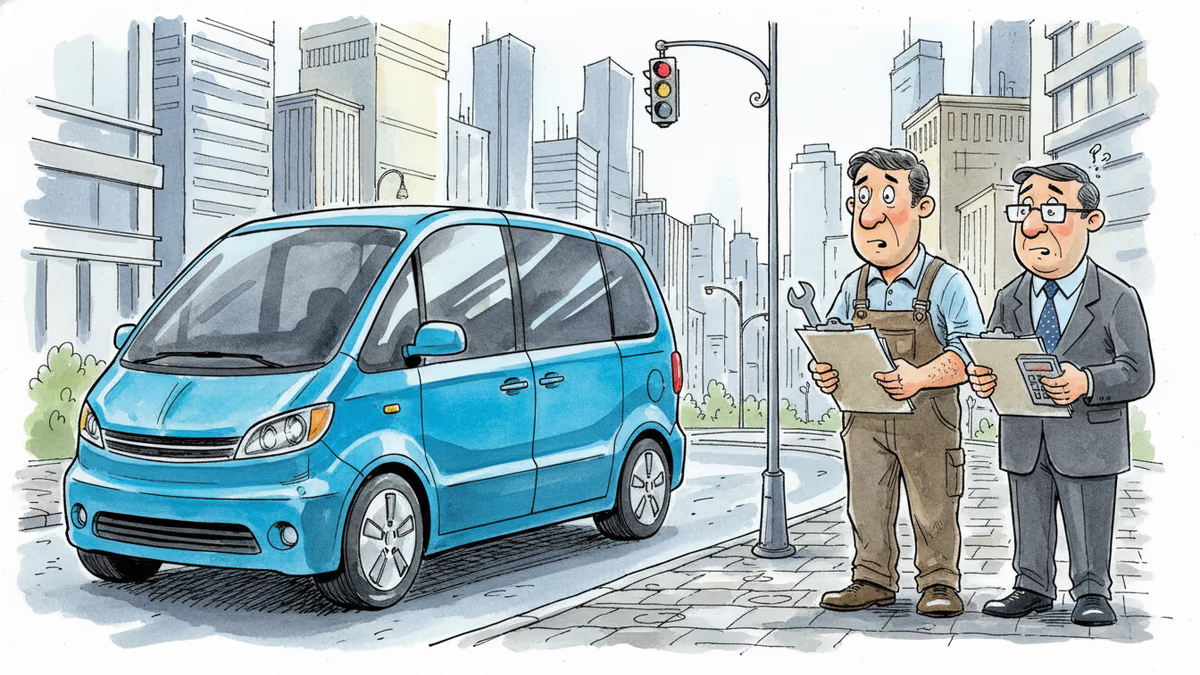
Waymo's new Ojai robotaxi isn't just a vehicle upgrade. It's the company's most serious attempt yet at cracking the cost problem that has kept autonomous vehicles from scaling. Here's what's really at stake.
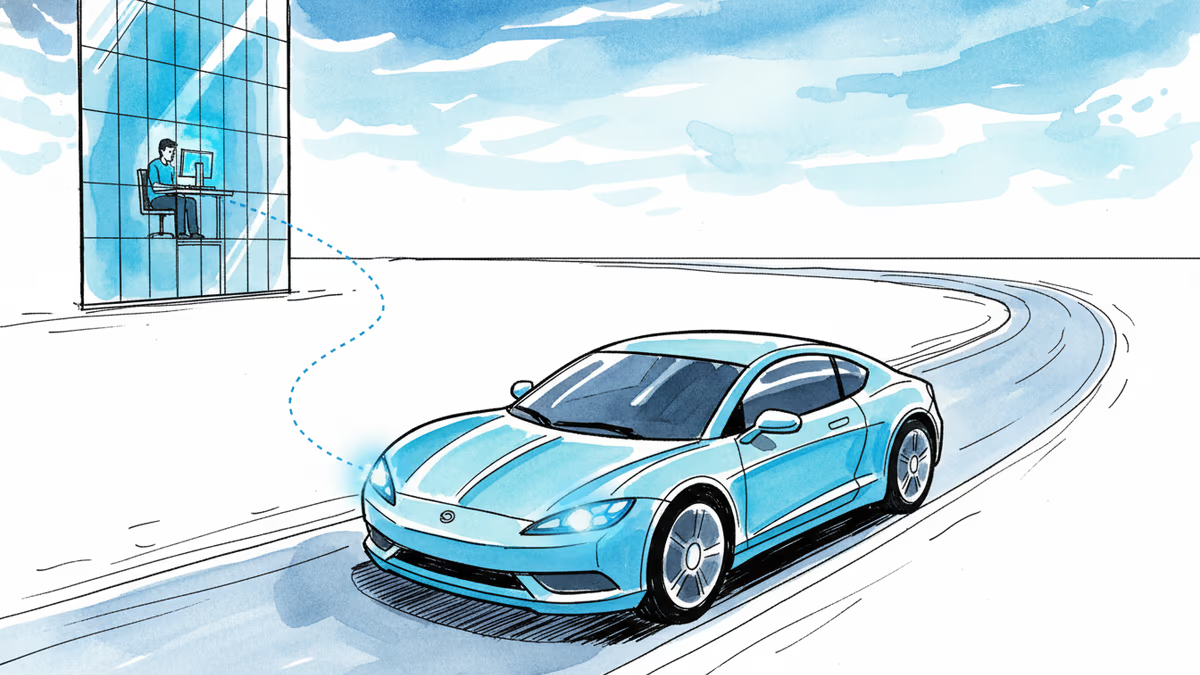
A U.S. Senate investigation found that seven autonomous vehicle companies — including Waymo and Tesla — refused to disclose how often remote operators intervene in their vehicles. Here's why that silence matters.
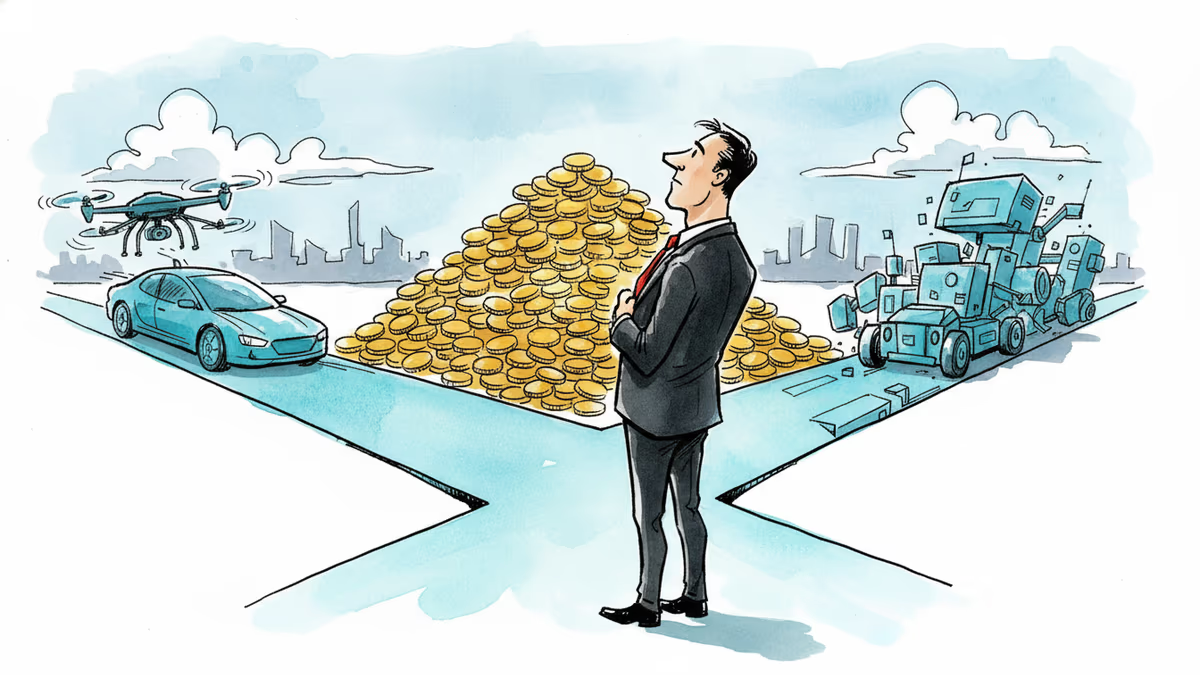
Alphabet's new pay deal for Sundar Pichai links his compensation to Waymo and Wing performance—signaling where Google is placing its biggest bets. Here's what investors should actually read into it.
Swedish startup Einride raises $113M ahead of NYSE debut, deploying 200 autonomous trucks for major brands. The logistics revolution accelerates.
Waymo's new Ojai robotaxi isn't just a vehicle upgrade. It's the company's most serious attempt yet at cracking the cost problem that has kept autonomous vehicles from scaling. Here's what's really at stake.
A U.S. Senate investigation found that seven autonomous vehicle companies — including Waymo and Tesla — refused to disclose how often remote operators intervene in their vehicles. Here's why that silence matters.
Alphabet's new pay deal for Sundar Pichai links his compensation to Waymo and Wing performance—signaling where Google is placing its biggest bets. Here's what investors should actually read into it.
Swedish startup Einride raises $113M ahead of NYSE debut, deploying 200 autonomous trucks for major brands. The logistics revolution accelerates.
Thoughts
Share your thoughts on this article
Sign in to join the conversation