
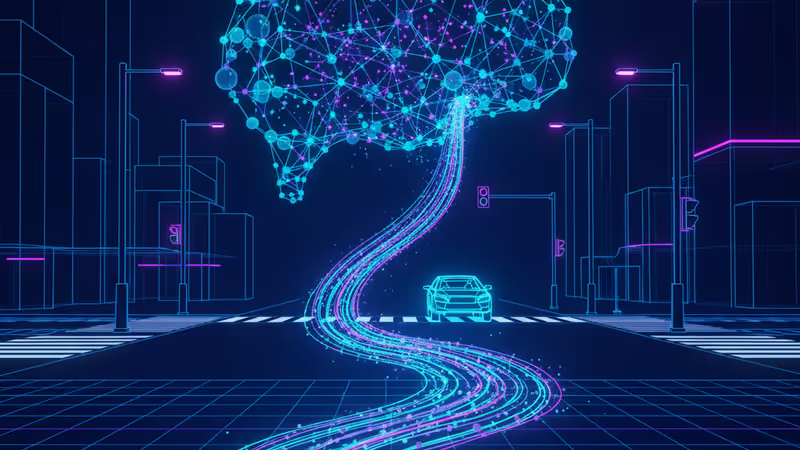
Waymo Ships Software Update After Blackout Paralyzes Its San Francisco Robotaxis
After a massive power outage in San Francisco caused its robotaxis to stall at intersections, Waymo is shipping a software update to help them navigate more 'decisively'.
A city-wide blackout brought the future of driving to a standstill. After its robotaxis froze at intersections across San Francisco, Waymo announced Tuesday it's shipping a software update to help its vehicles navigate disabled traffic lights “more decisively.”
An Overabundance of Caution
According to a blog post from the company, Waymo’s self-driving system is designed to treat dead stoplights as four-way stops, just as human drivers are supposed to. That should have allowed for normal operation, but instead, many vehicles requested a “confirmation check” from Waymo’s remote fleet response team to verify the situation.
The problem arose from a “concentrated spike” in these requests due to the widespread nature of the outage, creating the congestion seen in videos. Waymo stated this system was built “out of an abundance of caution during our early deployment” and is now being refined to “match our current scale.” The company also noted that despite the high-profile stalls, its vehicles “successfully traversed more than 7,000 dark signals on Saturday.”

The Software Fix
The new fleet-wide update aims to solve the issue by providing the self-driving software with “specific power outage context,” allowing it to proceed without human confirmation. Waymo also said it will improve its emergency response protocols by “incorporating lessons from this event.”
Saturday’s mess is the latest example of how Waymo is still uncovering unforeseen issues in real-world conditions. The company previously had to ship updates after a National Highway Traffic Safety Administration (NHTSA) investigation prompted a recall over its robotaxis’ behavior around stopped school buses.
Authors
Related Articles
Waymo's new Ojai robotaxi isn't just a vehicle upgrade. It's the company's most serious attempt yet at cracking the cost problem that has kept autonomous vehicles from scaling. Here's what's really at stake.
Tesla expanded its driverless robotaxi to Dallas and Houston, even after reporting 14 crashes in Austin. What does this tell us about how autonomous vehicles actually get built?
A U.S. Senate investigation found that seven autonomous vehicle companies — including Waymo and Tesla — refused to disclose how often remote operators intervene in their vehicles. Here's why that silence matters.
Uber and WeRide have launched fully driverless robotaxi service in Dubai — no safety operator, real fares. Here's what it means for the global AV race and your next ride.
Waymo's new Ojai robotaxi isn't just a vehicle upgrade. It's the company's most serious attempt yet at cracking the cost problem that has kept autonomous vehicles from scaling. Here's what's really at stake.
Tesla expanded its driverless robotaxi to Dallas and Houston, even after reporting 14 crashes in Austin. What does this tell us about how autonomous vehicles actually get built?
A U.S. Senate investigation found that seven autonomous vehicle companies — including Waymo and Tesla — refused to disclose how often remote operators intervene in their vehicles. Here's why that silence matters.
Uber and WeRide have launched fully driverless robotaxi service in Dubai — no safety operator, real fares. Here's what it means for the global AV race and your next ride.
Thoughts
Share your thoughts on this article
Sign in to join the conversation