
When Robots Hit Kids: The School Zone Test for Self-Driving Cars
A Waymo robotaxi struck a child near a Santa Monica elementary school, raising critical questions about AI safety in vulnerable zones during peak hours.
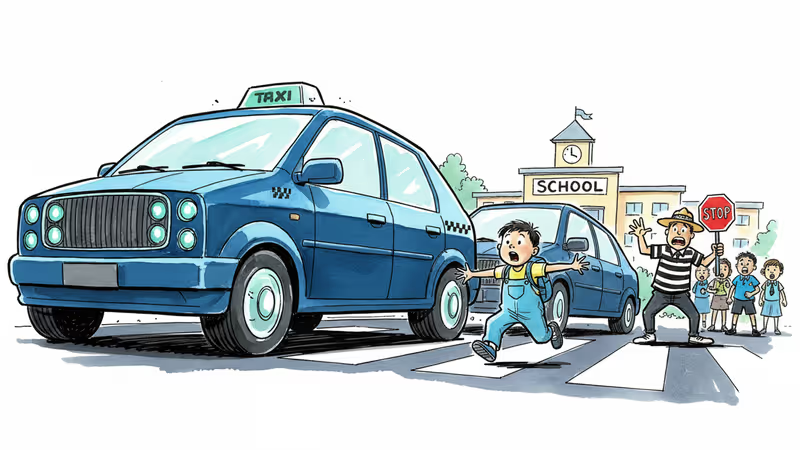
A child stepped out from behind a parked SUV directly into the path of a Waymo robotaxi near a Santa Monica elementary school last week. The autonomous vehicle, traveling at 17 mph, braked hard but still made contact at 6 mph. The child sustained minor injuries, stood up immediately, and walked to the sidewalk.
This wasn't just another fender-bender. It happened within two blocks of an elementary school during morning drop-off hours, with crossing guards, double-parked cars, and other children in the vicinity. The National Highway Traffic Safety Administration has opened an investigation, and it's asking the right question: Did the robotaxi exercise "appropriate caution" given its proximity to vulnerable road users?
The Perfect Storm Scenario
Waymo's sensors detected the child "immediately" as they emerged from behind the stopped vehicle. The company claims a fully attentive human driver would have hit the pedestrian at 14 mph instead of 6 mph – a significant difference that likely prevented serious injury.
But this incident exposes the complexity of school zones during peak hours. Picture the scene: parents double-parking for quick drop-offs, children darting between vehicles, crossing guards managing chaos, and SUVs creating blind spots everywhere. It's a environment where split-second human judgment about context – recognizing the elevated risk of unpredictable child behavior – matters as much as reaction time.
The timing couldn't be worse for Waymo. The company is already facing dual investigations for robotaxis illegally passing school buses – 20 incidents reported in Austin alone, with another probe launched after an Atlanta incident. These aren't isolated technical glitches; they're pattern indicators about how well autonomous systems understand school-related traffic rules and safety protocols.
The Regulation Reckoning

Federal investigators are now scrutinizing whether current AI systems can adequately assess situational risk in high-vulnerability zones. School areas during drop-off and pickup represent some of the most unpredictable traffic environments, where children's behavior defies the logical patterns that autonomous systems rely on.
The NHTSA's investigation will likely focus on whether Waymo's algorithms properly weighted the contextual clues: elementary school proximity, peak drop-off time, presence of crossing guards, and multiple parked vehicles creating visibility obstacles. Should robotaxis automatically reduce speeds more aggressively in school zones? Should they avoid these areas entirely during certain hours?
This case could establish precedent for how regulators evaluate AI decision-making in complex social environments. Unlike highway driving, where variables are more predictable, school zones require understanding human behavior patterns that don't follow traffic engineering models.
The Trust Equation
For parents and communities, this incident crystallizes a fundamental question about autonomous vehicles: Can we trust machines to protect our most vulnerable road users when split-second judgment calls involve children's safety?
Waymo operates in multiple cities, with plans for expansion. Each deployment requires community acceptance, and incidents involving children near schools carry disproportionate weight in public perception. The company's technical superiority in crash avoidance means little if communities don't feel comfortable with robotaxis operating near their children.
The broader autonomous vehicle industry is watching closely. Companies like Cruise, Tesla, and others developing self-driving capabilities need clear regulatory frameworks for high-risk scenarios. This investigation could establish new safety standards specifically for school zones and pedestrian-heavy areas.
Authors
Related Articles
Swedish startup Einride raises $113M ahead of NYSE debut, deploying 200 autonomous trucks for major brands. The logistics revolution accelerates.
Dubai signs deals with three unproven US transport companies after previous $450M Hyperloop failure and GM Cruise debacle. Will underground tunnels, flying pods, and air taxis work?
Waymo launches robotaxi services in Dallas, Houston, San Antonio, and Orlando simultaneously, expanding from 3 to 10 cities in just one year. Analyzing the strategy behind this aggressive rollout and what it means for the autonomous vehicle industry.
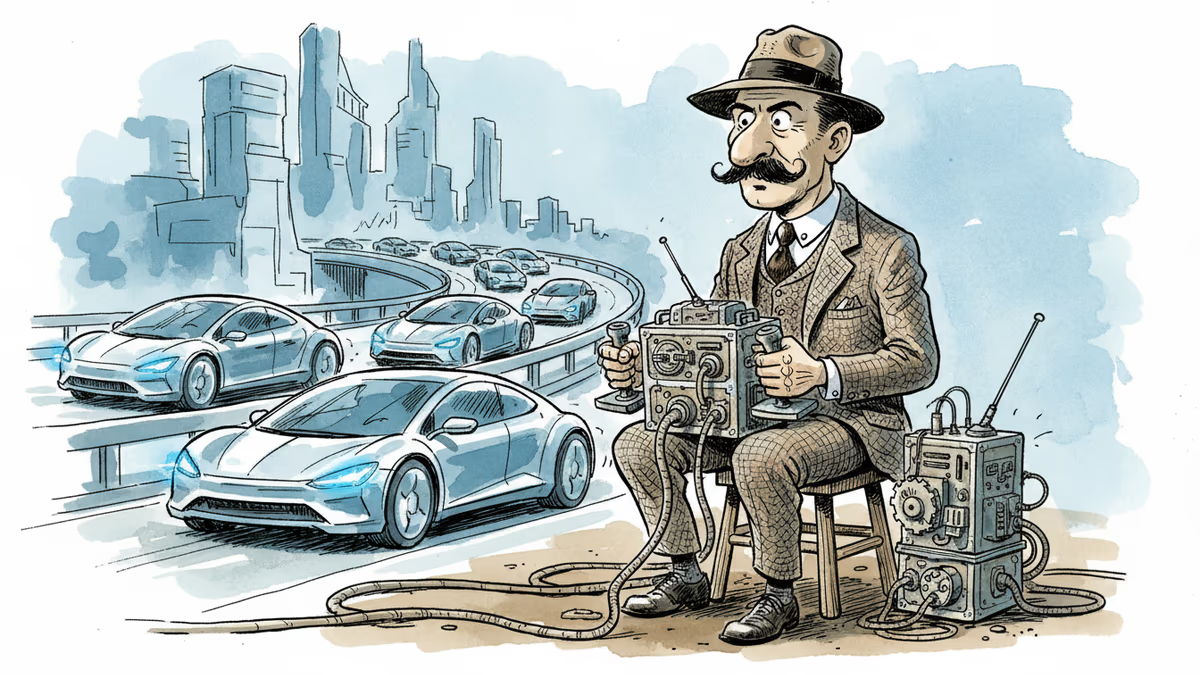
A Spanish engineer's 1903 wireless control invention laid the groundwork for today's autonomous vehicle revolution. Leonardo Torres Quevedo's Telekino changed everything
Swedish startup Einride raises $113M ahead of NYSE debut, deploying 200 autonomous trucks for major brands. The logistics revolution accelerates.
Dubai signs deals with three unproven US transport companies after previous $450M Hyperloop failure and GM Cruise debacle. Will underground tunnels, flying pods, and air taxis work?
Waymo launches robotaxi services in Dallas, Houston, San Antonio, and Orlando simultaneously, expanding from 3 to 10 cities in just one year. Analyzing the strategy behind this aggressive rollout and what it means for the autonomous vehicle industry.
A Spanish engineer's 1903 wireless control invention laid the groundwork for today's autonomous vehicle revolution. Leonardo Torres Quevedo's Telekino changed everything
Thoughts
Share your thoughts on this article
Sign in to join the conversation