
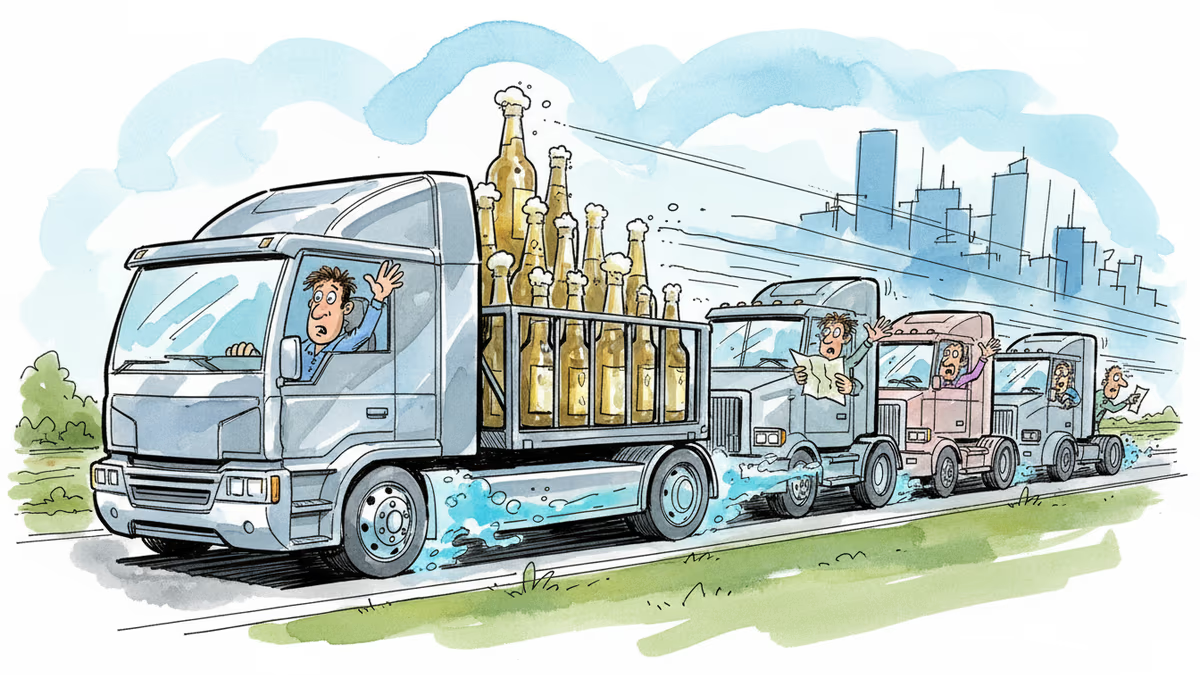
$113M Bet on Driverless Trucks: Is the Freight Industry Ready?
Swedish startup Einride raises $113M ahead of NYSE debut, deploying 200 autonomous trucks for major brands. The logistics revolution accelerates.
When Heineken Trusts a Robot More Than a Human
There's no steering wheel. No driver's seat. No place for a human at all. Yet Einride's autonomous pods are already hauling Heineken beer, PepsiCo snacks, and Carlsberg across Europe and North America. 200 heavy-duty electric trucks operate in this fleet today—and investors just bet $113 million that this is the future of freight.
The Swedish startup secured an oversubscribed funding round ahead of its planned NYSE debut in the first half of 2026, valued at $1.35 billion. That's down from the initial $1.8 billion SPAC valuation, but investor appetite remains strong. The message is clear: someone believes driverless delivery is ready for prime time.
The Two-Track Strategy That's Turning Heads
Einride isn't just another autonomous vehicle company making bold promises. They're hedging their bets with a dual approach that reflects industry realities.
Track one: conventional electric trucks with human drivers for companies like DP World and GE Appliances. Track two: completely driverless pods that look like something from a sci-fi movie, currently deployed with Apotea in Sweden and GE in the US.
This pragmatic approach addresses a fundamental question plaguing the autonomous vehicle industry: what do you do while waiting for full autonomy to arrive? Einride's answer: build the electric infrastructure and customer relationships now, then gradually remove the humans.
The SPAC Highway Gets Crowded

Einride joins a growing convoy of autonomous vehicle companies taking the SPAC route to public markets. Aurora Innovation went public via SPAC in 2021 at a $13 billion valuation and now operates commercial self-driving trucks (though still with human observers). Kodiak AI followed the same path in 2025.
But the track record is mixed. While Aurora has launched commercial operations, the reality check has been sobering—true driverless operation remains limited to specific routes and conditions. The promise of coast-to-coast autonomous freight is still more aspiration than reality.
What Investors Are Really Betting On
The $333 million in total gross proceeds from this transaction signals something deeper than just autonomous vehicle hype. Investors are betting on three convergent trends:
First, the driver shortage crisis. The American Trucking Association estimates the industry is short 80,000 drivers, and that number could hit 160,000 by 2030. Second, the sustainability mandate—major shippers face increasing pressure to decarbonize their supply chains. Third, the operational efficiency gains from removing human limitations like mandatory rest periods.
EQT Ventures and other investors aren't just backing technology; they're backing a fundamental shift in how goods move around the world.
The Regulatory Wild Card
Here's what the funding announcement doesn't address: regulatory approval remains the biggest wildcard. Einride operates in Sweden, the UAE, and select US markets where regulations are more permissive. But scaling globally means navigating a patchwork of different safety standards, liability frameworks, and public acceptance levels.
The company plans to use proceeds for "autonomous deployments in North America, Europe, and the Middle East." Success will depend as much on regulatory roadmaps as technological ones.
Authors
Related Articles
Dubai signs deals with three unproven US transport companies after previous $450M Hyperloop failure and GM Cruise debacle. Will underground tunnels, flying pods, and air taxis work?
Waymo launches robotaxi services in Dallas, Houston, San Antonio, and Orlando simultaneously, expanding from 3 to 10 cities in just one year. Analyzing the strategy behind this aggressive rollout and what it means for the autonomous vehicle industry.
Finnish quantum computing unicorn IQM goes public via SPAC at $1.8B valuation amid quantum stock frenzy. Are investors buying the future or falling for hype?
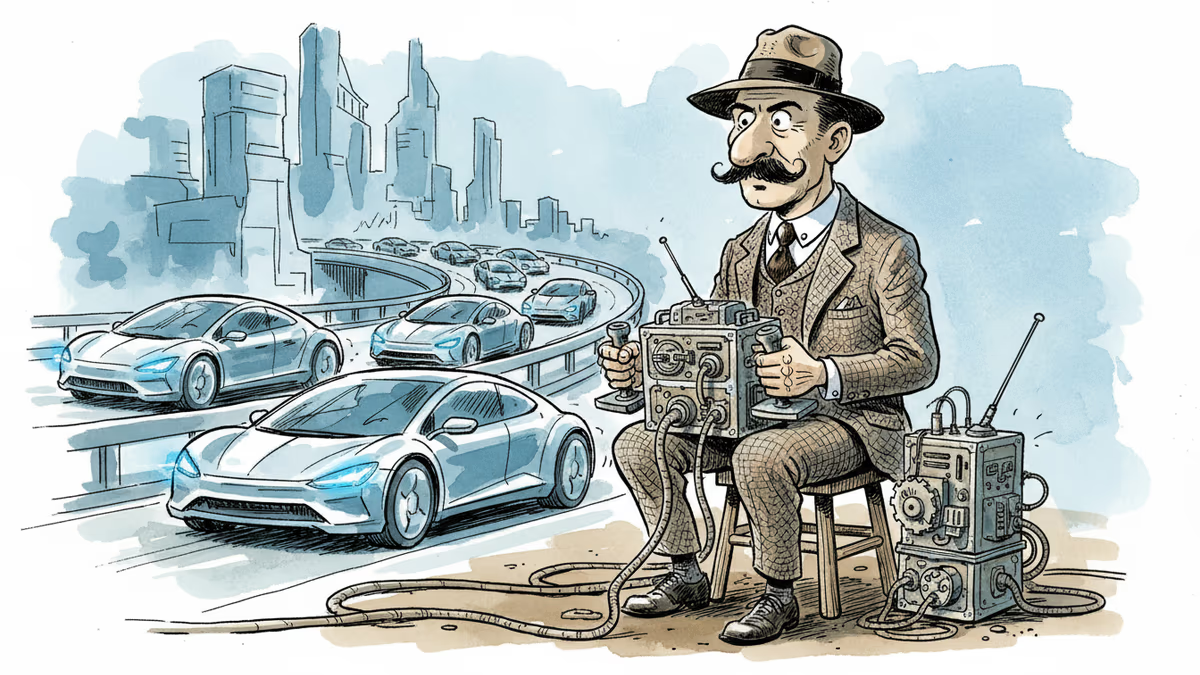
A Spanish engineer's 1903 wireless control invention laid the groundwork for today's autonomous vehicle revolution. Leonardo Torres Quevedo's Telekino changed everything
Dubai signs deals with three unproven US transport companies after previous $450M Hyperloop failure and GM Cruise debacle. Will underground tunnels, flying pods, and air taxis work?
Waymo launches robotaxi services in Dallas, Houston, San Antonio, and Orlando simultaneously, expanding from 3 to 10 cities in just one year. Analyzing the strategy behind this aggressive rollout and what it means for the autonomous vehicle industry.
Finnish quantum computing unicorn IQM goes public via SPAC at $1.8B valuation amid quantum stock frenzy. Are investors buying the future or falling for hype?
A Spanish engineer's 1903 wireless control invention laid the groundwork for today's autonomous vehicle revolution. Leonardo Torres Quevedo's Telekino changed everything
Thoughts
Share your thoughts on this article
Sign in to join the conversation