
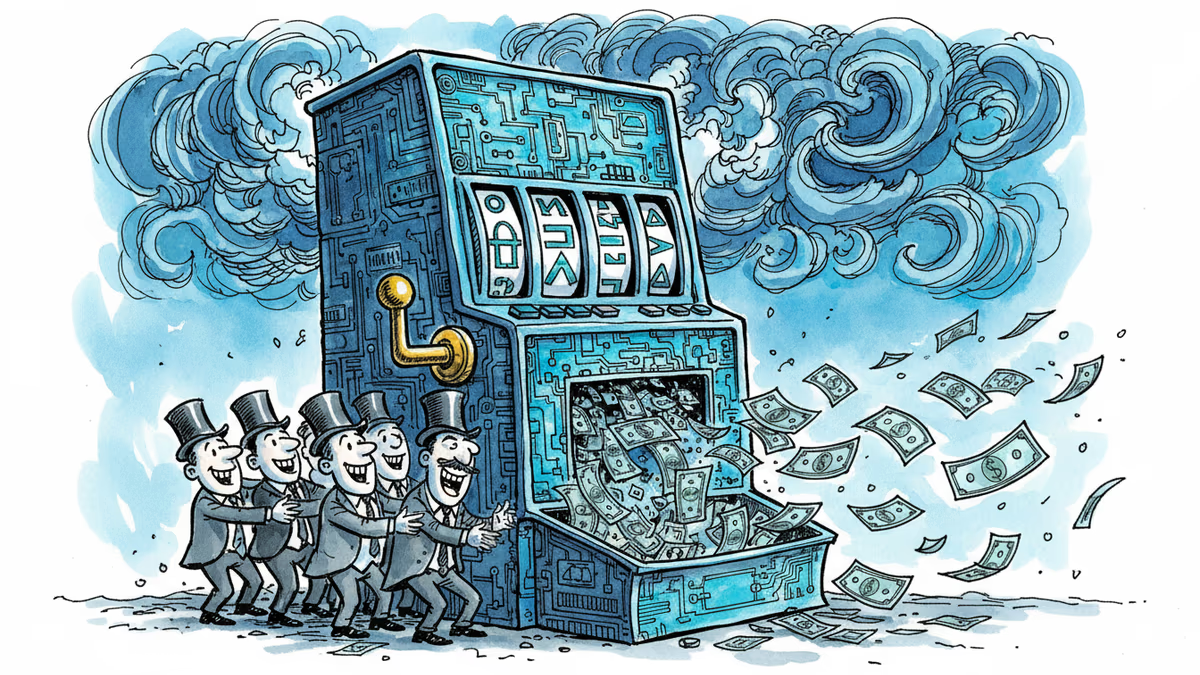
$1.8B Quantum Bet: Innovation Breakthrough or Market Bubble?
Finnish quantum computing unicorn IQM goes public via SPAC at $1.8B valuation amid quantum stock frenzy. Are investors buying the future or falling for hype?
Is $1.8 billion the right price for potential?
Finnish quantum computing company IQM just announced it's going public via SPAC, commanding a $1.8 billion valuation. That's a hefty price tag for a company that spun out of university labs just eight years ago.
Here's the math that should make investors pause: IQM reported $35 million in 2025 revenue. That puts its price-to-sales ratio at roughly 50x – compared to typical tech companies trading at 10-20x. Even with $100 million in bookings, the numbers feel stretched.
The quantum gold rush is heating up
Quantum stocks have been on fire lately. Google's "quantum advantage" claims and government funding announcements have investors convinced we're on the brink of a commercial breakthrough. Infleqtion soared on its NYSE debut this month, while Canada's Xanadu is prepping for a March Nasdaq listing.
The excitement is understandable. Quantum computing promises to revolutionize drug discovery, materials science, and financial modeling. But here's the reality check: industrial applications are still years away, according to most experts.
SPAC déjà vu from 2021?

IQM's choice of a SPAC route raises eyebrows. Sure, it's faster than a traditional IPO, but SPACs peaked in 2021 and left many investors nursing heavy losses. Now quantum companies are reviving this playbook just as market enthusiasm peaks again.
The pattern feels familiar: promising technology, distant commercialization timeline, and investors betting on potential rather than performance. Real Asset Acquisition Corp., the blank-check company merging with IQM, trades on Nasdaq – but will list as American Depositary Shares, adding another layer of complexity.
Different lenses, different risks
For venture investors: IQM has raised $569 million to date, with backers including Ten Eleven Ventures and Germany's Schwarz Group. The SPAC provides an exit opportunity and validates the quantum thesis.
For retail investors: You're essentially betting that quantum computing will deliver on its promises within your investment timeline. The $450 million cash runway post-merger provides breathing room, but burns through R&D quickly.
For competitors: IBM, Google, and other quantum players are watching closely. A successful public quantum company could accelerate industry consolidation or spark an acquisition spree.
The Nordic twist
Unlike pure-play U.S. quantum companies, IQM is considering dual listings on both American and Nordic exchanges. This geographic diversification could provide more stable investor base and regulatory flexibility – or complicate trading liquidity.
Finland's tech ecosystem, which produced Nokia and Supercell, has a track record of global success. But quantum computing requires different fundamentals than mobile games or networking equipment.
Authors
Related Articles
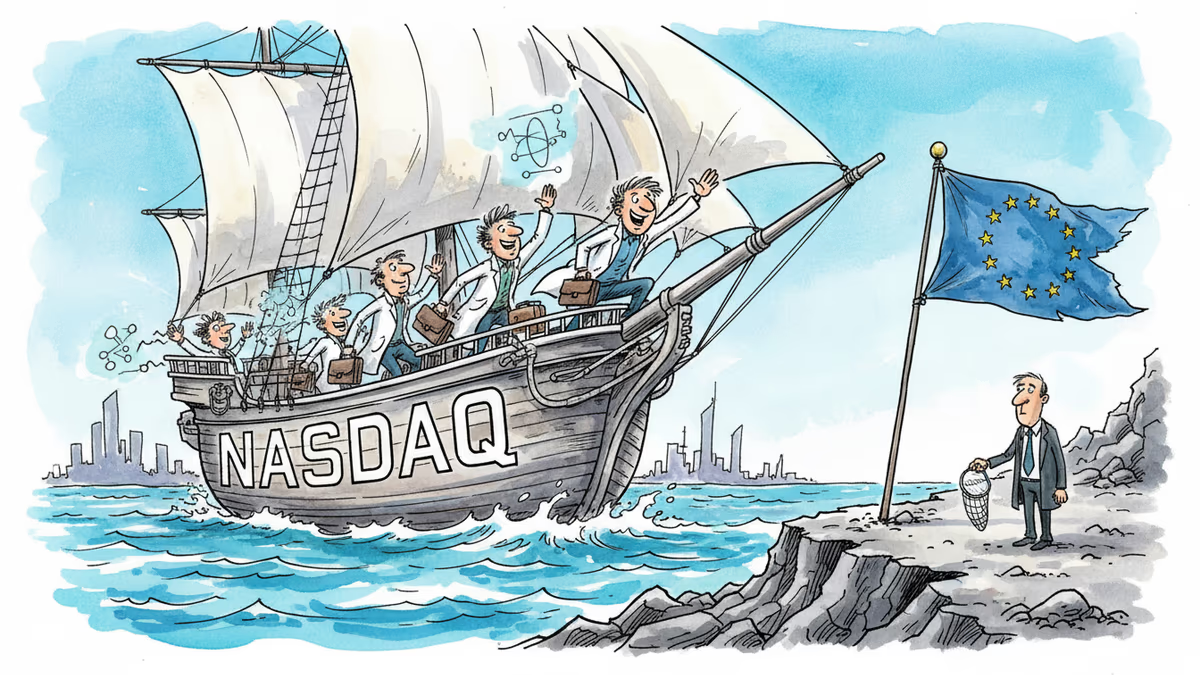
French quantum computing company Pasqal joins the exodus to US markets with a $2B SPAC deal. What's driving European tech champions away from home?

Google unveils quantum-resistant HTTPS certificates for Chrome, but 40x larger certificates threaten internet speed. The trade-off between security and usability begins.

Swedish startup Einride raises $113M ahead of NYSE debut, deploying 200 autonomous trucks for major brands. The logistics revolution accelerates.

General Fusion announces a $1 billion SPAC merger with Spring Valley III. Learn how the fusion startup plans to reach scientific breakeven by 2026 amid rising AI energy demands.
French quantum computing company Pasqal joins the exodus to US markets with a $2B SPAC deal. What's driving European tech champions away from home?
Google unveils quantum-resistant HTTPS certificates for Chrome, but 40x larger certificates threaten internet speed. The trade-off between security and usability begins.
Swedish startup Einride raises $113M ahead of NYSE debut, deploying 200 autonomous trucks for major brands. The logistics revolution accelerates.
General Fusion announces a $1 billion SPAC merger with Spring Valley III. Learn how the fusion startup plans to reach scientific breakeven by 2026 amid rising AI energy demands.
Thoughts
Share your thoughts on this article
Sign in to join the conversation