
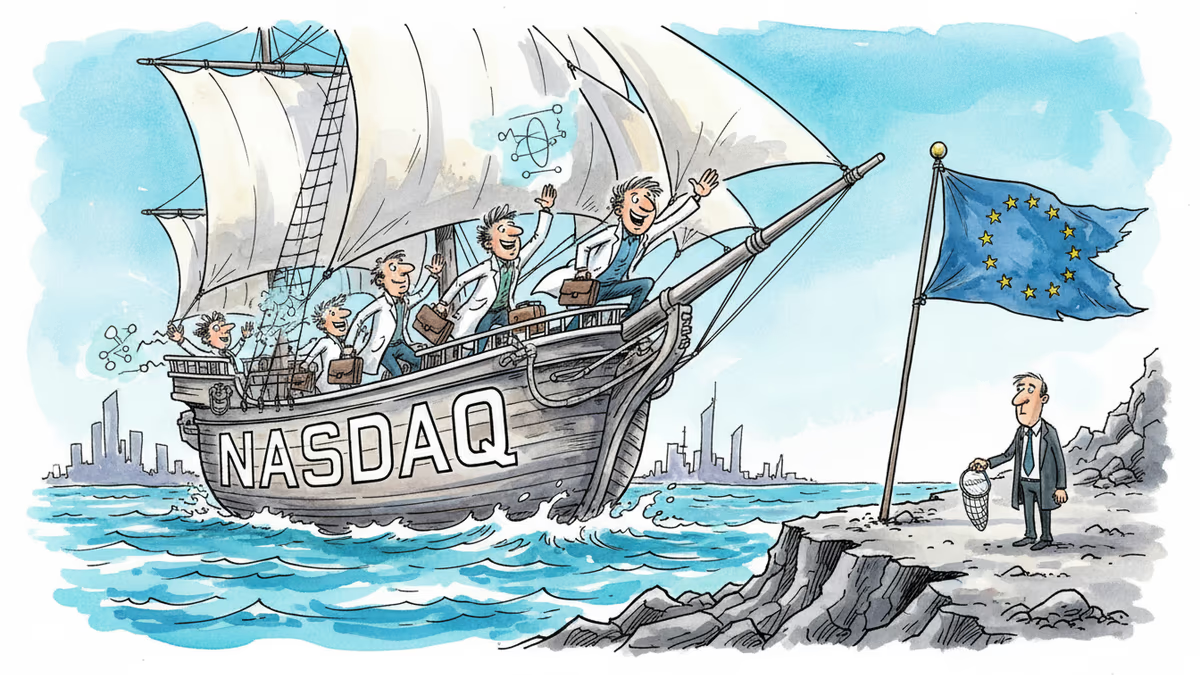
Why Europe's Quantum Stars Are Fleeing to Nasdaq
French quantum computing company Pasqal joins the exodus to US markets with a $2B SPAC deal. What's driving European tech champions away from home?
$2 Billion French Champion Heads West
Two weeks after Finnish quantum unicorn IQM announced its SPAC merger, another European quantum player is making the same move. Pasqal, France's quantum computing darling, is going public via Nasdaq with a $2 billion pre-money valuation, plus a separate $200 million private funding round.
The timing isn't coincidental. US quantum computing stocks have surged in recent months, creating a stark contrast with European market conditions. But this isn't just about riding a wave—it's about a fundamental mismatch between where quantum companies grow and where they can truly scale.
The Great European Exodus
Pasqal embodies the European quantum success story. Backed by France's public investment bank Bpifrance, headquartered in Palaiseau near Paris, working with French giants like EDF and Thales. The company generates tens of millions in annual revenue selling quantum hardware, software, and cloud services.
Yet here it is, heading to Nasdaq. Why? The numbers tell the story. US markets offer the kind of revenue multiples and scale that remain elusive in Europe, especially for deep tech requiring massive long-term investment. When your technology won't fully mature until the end of the decade, you need patient capital with deep pockets.
Pasqal's solution is clever: a dual listing strategy. Nasdaq first, then Euronext in 2026-2027. It's trying to have its croissant and eat it too—accessing American capital while keeping French stakeholders happy.

The Tech Race Nobody's Talking About
Behind the financial maneuvering lies a fierce technical battle. Pasqal co-founder Alain Aspect, a Nobel laureate, champions the "neutral atom" approach to quantum computing. Meanwhile, competitor IQM bets on superconducting qubits. These aren't just different engineering choices—they're fundamentally different visions of how quantum computing will work.
The stakes couldn't be higher. Whichever approach proves superior could unlock applications in drug discovery, cybersecurity, and financial modeling. Pasqal plans to achieve fault-tolerant quantum computing by decade's end, a milestone that could justify today's $2.6 billion pro-forma market cap.
Interestingly, the company has shuffled its executive deck. Former executive chairman Wasiq Bokhari is now CEO, while Loïc Henriet has returned to his CTO role after a stint as CEO. Such musical chairs often signal a company preparing for its next growth phase.
The Geopolitical Wild Card
Pasqal's French identity might actually be an asset. In today's geopolitical climate, being a non-American quantum company could open doors that remain closed to US competitors. French AI lab Mistral AI has already demonstrated this advantage in certain markets.
The company is doubling down on its French roots, promising to hire 50 people over the next 18 months and appointing "a new non-executive chair of French nationality." It's a delicate balance—accessing American capital markets while maintaining European credibility.
Authors
Related Articles
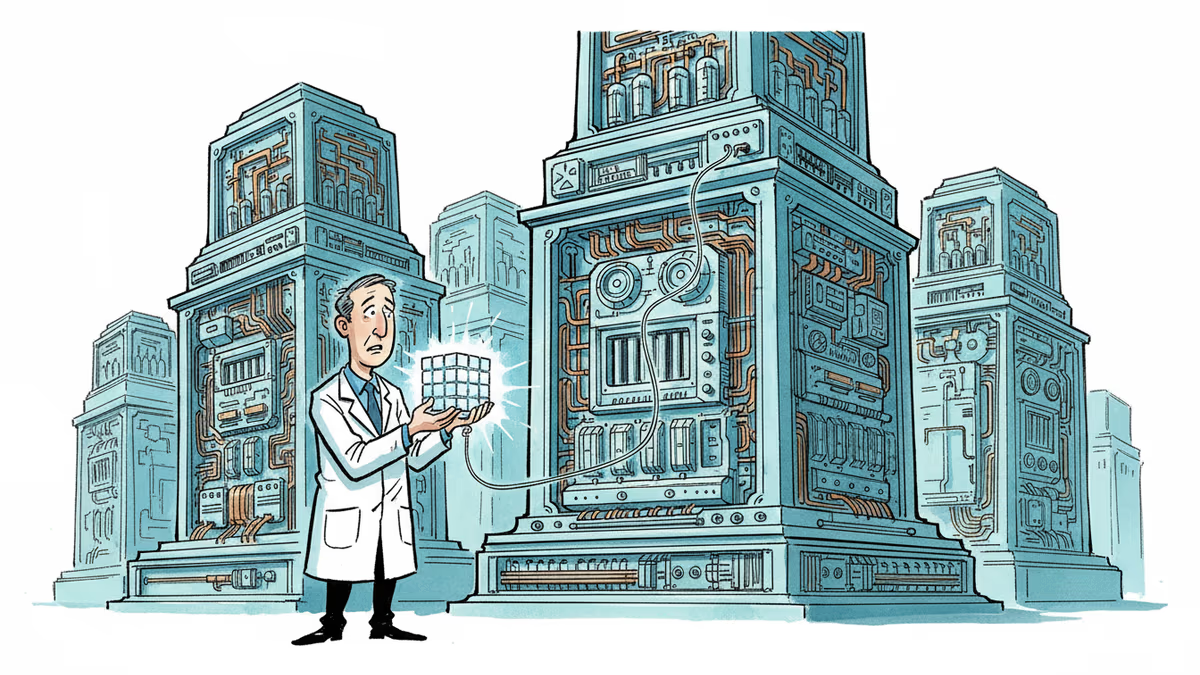
A $7M quantum computing competition is testing whether today's noisy, limited quantum machines can actually help human health—before the powerful ones we've been promised ever arrive.

Google unveils quantum-resistant HTTPS certificates for Chrome, but 40x larger certificates threaten internet speed. The trade-off between security and usability begins.
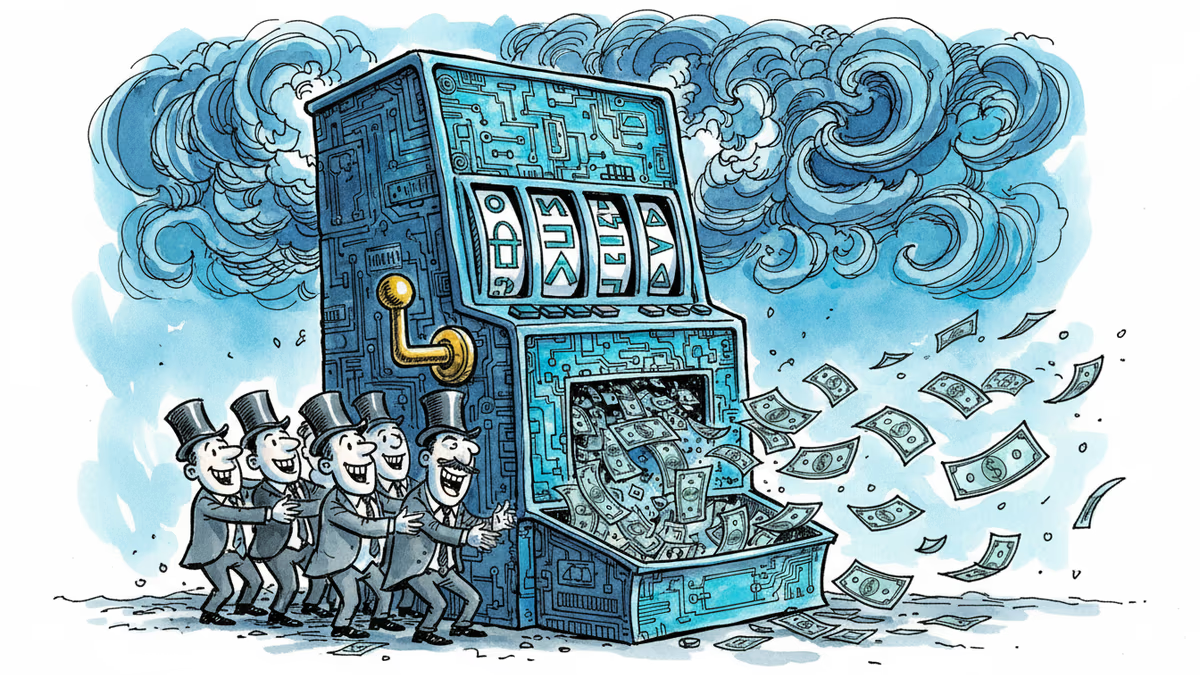
Finnish quantum computing unicorn IQM goes public via SPAC at $1.8B valuation amid quantum stock frenzy. Are investors buying the future or falling for hype?
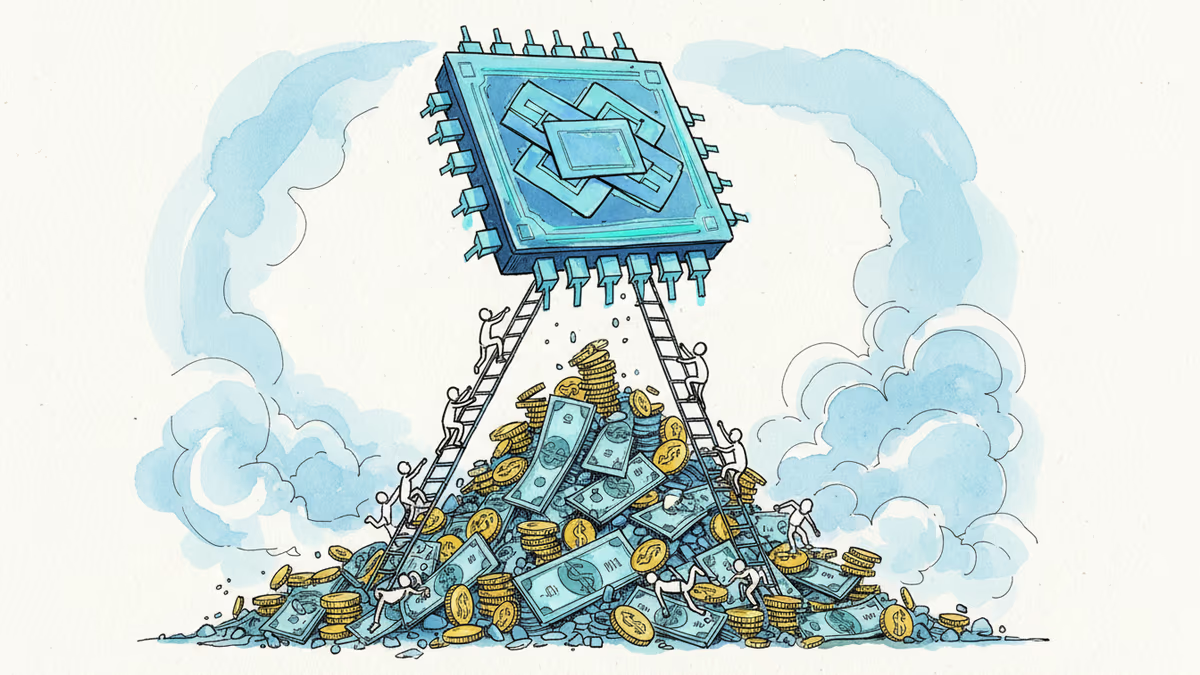
Quantonation raises €220M second fund despite quantum computing being years from industrial scale. Why investors are doubling down on unproven tech.
A $7M quantum computing competition is testing whether today's noisy, limited quantum machines can actually help human health—before the powerful ones we've been promised ever arrive.
Google unveils quantum-resistant HTTPS certificates for Chrome, but 40x larger certificates threaten internet speed. The trade-off between security and usability begins.
Finnish quantum computing unicorn IQM goes public via SPAC at $1.8B valuation amid quantum stock frenzy. Are investors buying the future or falling for hype?
Quantonation raises €220M second fund despite quantum computing being years from industrial scale. Why investors are doubling down on unproven tech.
Thoughts
Share your thoughts on this article
Sign in to join the conversation