
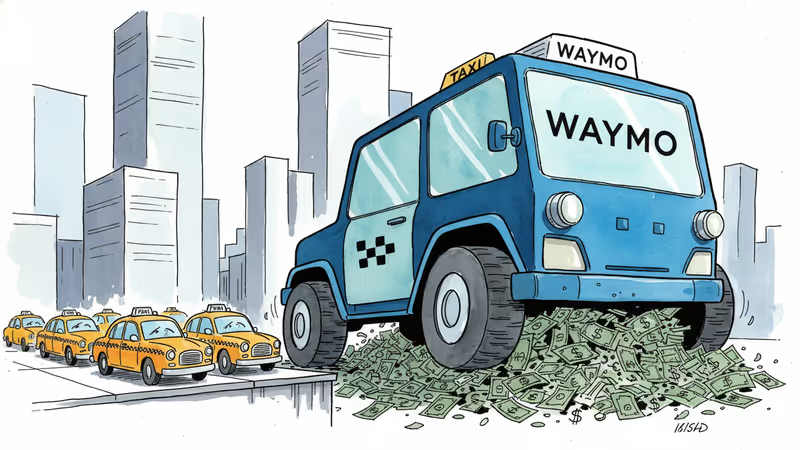
Waymo's $16B Bet: When Robotaxis Stop Being an Experiment
Google's Waymo secures massive $16B funding round, reaching $110B valuation. Analysis of autonomous vehicle market acceleration and industry implications
$16 billion. That's not just funding—that's a declaration of war on every transportation company that thought autonomous vehicles were still years away.
Waymo, Google's robotaxi subsidiary, has nearly locked in this massive funding round that values the company at $110 billion, according to the Financial Times. To put that in perspective, that's more than Ford's entire market cap, for a company that operates in just a handful of cities.
The Money Trail Tells a Story
More than three-quarters of this $16 billion will come from Alphabet, Waymo's parent company. The rest involves heavy hitters: new investors Dragoneer, Sequoia Capital, and DST Global, alongside existing backers Andreessen Horowitz and Abu Dhabi's sovereign fund Mubadala.
This represents a stunning 2.4x jump from Waymo's $45 billion valuation just last year when it raised $5.6 billion. That kind of growth typically signals either massive market validation or massive investor FOMO—possibly both.
Waymo has completed over 20 million trips and generates more than $350 million in annual recurring revenue. Unlike many tech companies burning cash on user acquisition, Waymo is actually making money from its core service.
Expansion Pains and Growing Ambitions

The company recently launched in Miami, adding to its presence in San Francisco and Phoenix. But growth hasn't been seamless. During a widespread San Francisco blackout, multiple Waymo robotaxis stalled at traffic lights—a reminder that even the most advanced AI can be stumped by unexpected infrastructure failures.
These incidents highlight a crucial tension: investors are pouring billions into autonomous vehicle technology, but real-world deployment still faces unpredictable challenges that can't be solved purely through software updates.
The Competitive Landscape Shifts
Waymo's massive funding round sends ripples through the entire mobility ecosystem. Tesla's Full Self-Driving remains in beta after years of promises. Cruise, GM's autonomous unit, has faced regulatory setbacks and safety concerns. Meanwhile, Chinese competitors like Baidu's Apollo are rapidly scaling in their home market.
This funding gives Waymo ammunition to accelerate deployment, improve technology, and potentially acquire competitors or complementary technologies. It also signals to regulators and city planners that robotaxis aren't a distant future concept—they're happening now.
What This Means for Everyone Else
For consumers, Waymo's expansion could mean cheaper, more available autonomous rides in major cities within the next few years. For traditional taxi and rideshare drivers, it represents an existential threat that's now backed by unprecedented capital.
For city planners, the implications are staggering. If robotaxis become mainstream, parking requirements could plummet, traffic patterns could shift dramatically, and urban design principles might need fundamental rethinking.
For investors, Waymo's valuation sets a new benchmark for autonomous vehicle companies. Every startup and established player in this space will be measured against Waymo's $110 billion price tag.
Authors
Related Articles
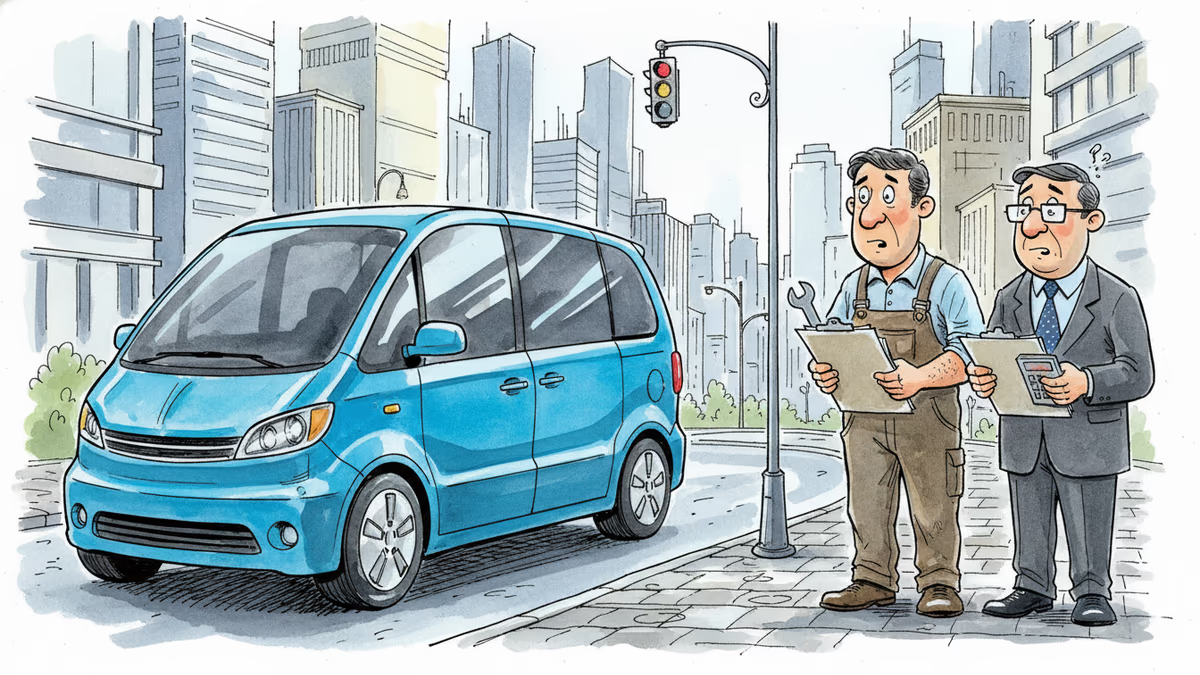
Waymo's new Ojai robotaxi isn't just a vehicle upgrade. It's the company's most serious attempt yet at cracking the cost problem that has kept autonomous vehicles from scaling. Here's what's really at stake.
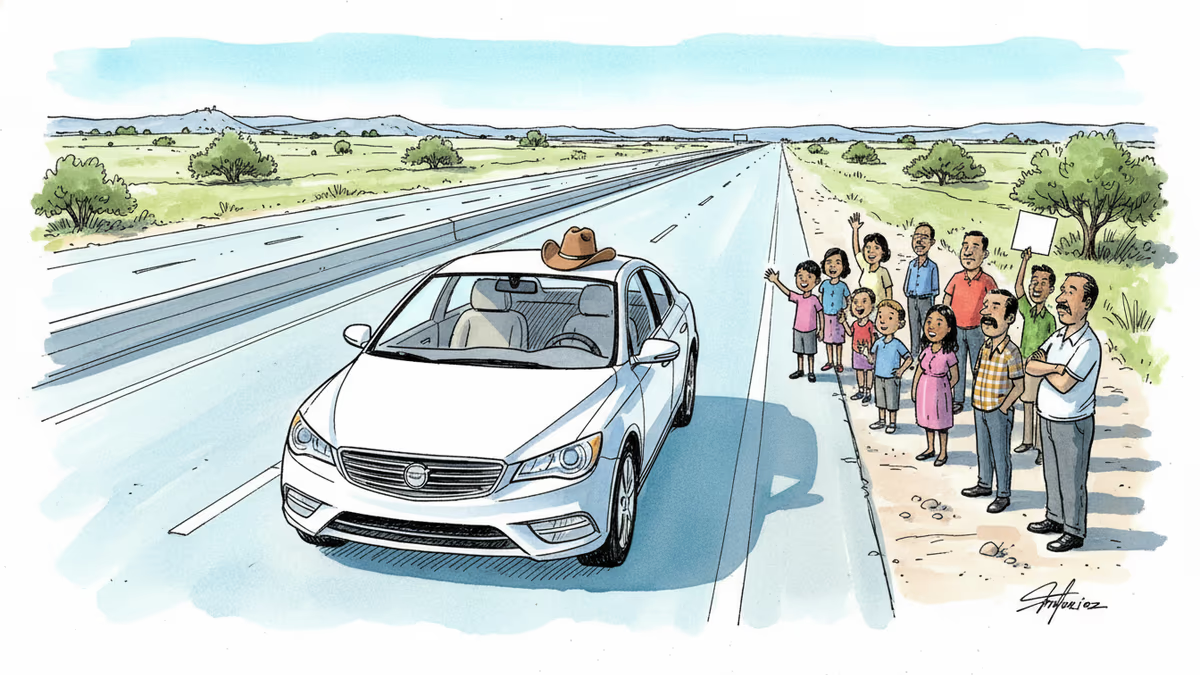
Tesla expanded its driverless robotaxi to Dallas and Houston, even after reporting 14 crashes in Austin. What does this tell us about how autonomous vehicles actually get built?
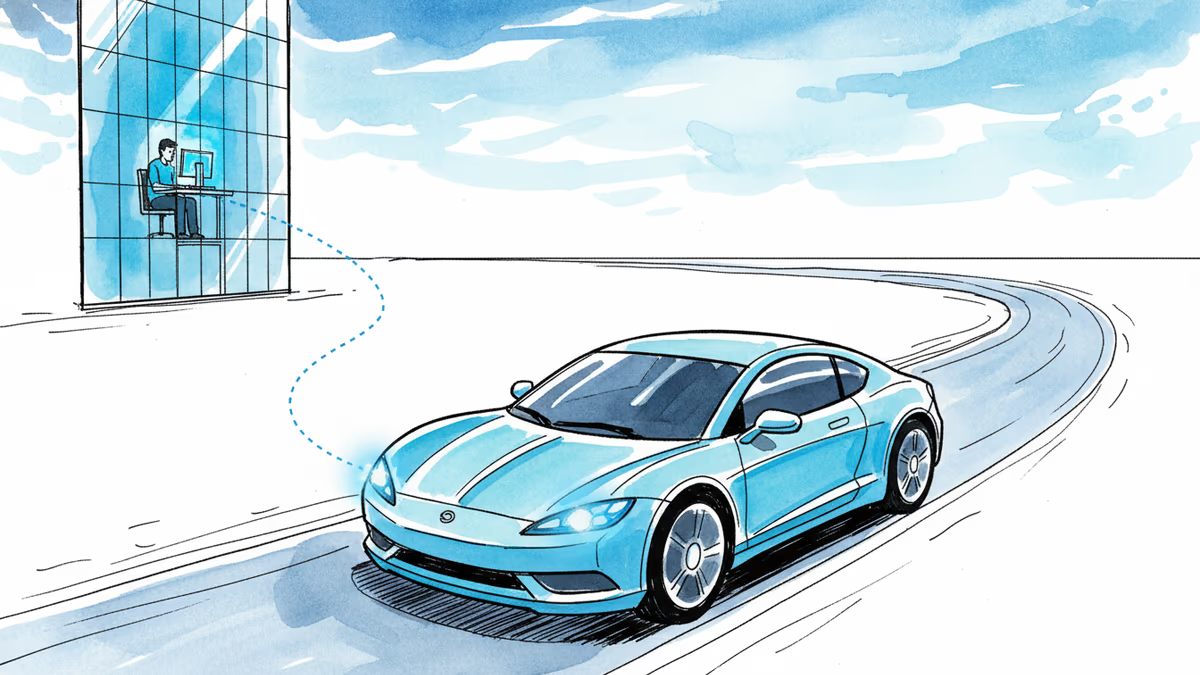
A U.S. Senate investigation found that seven autonomous vehicle companies — including Waymo and Tesla — refused to disclose how often remote operators intervene in their vehicles. Here's why that silence matters.
Uber and WeRide have launched fully driverless robotaxi service in Dubai — no safety operator, real fares. Here's what it means for the global AV race and your next ride.
Waymo's new Ojai robotaxi isn't just a vehicle upgrade. It's the company's most serious attempt yet at cracking the cost problem that has kept autonomous vehicles from scaling. Here's what's really at stake.
Tesla expanded its driverless robotaxi to Dallas and Houston, even after reporting 14 crashes in Austin. What does this tell us about how autonomous vehicles actually get built?
A U.S. Senate investigation found that seven autonomous vehicle companies — including Waymo and Tesla — refused to disclose how often remote operators intervene in their vehicles. Here's why that silence matters.
Uber and WeRide have launched fully driverless robotaxi service in Dubai — no safety operator, real fares. Here's what it means for the global AV race and your next ride.
Thoughts
Share your thoughts on this article
Sign in to join the conversation