

Jensen Huang Rode Shotgun. No One Was Driving.
Nvidia CEO Jensen Huang took a hands-free ride from Woodside to San Francisco in a Mercedes CLA. What this quiet test drive signals about the autonomous vehicle race.
Nobody's Hands Were on the Wheel
Jensen Huang glanced over at the empty driver's seat and asked, "Let me know when you're in autonomous mode." The car — a Mercedes CLA sedan — was already handling it. From Woodside, California, through heavy Bay Area traffic, all the way into downtown San Francisco. No hands. No feet. Just software.
This wasn't a publicity stunt. Xinzhou Wu, Nvidia's head of automotive, runs this drill roughly every six months — but only when he has "good confidence" in the system. That qualifier matters. An invitation to ride means the team believes it's ready. Huang's presence in that passenger seat is, in its own quiet way, a product endorsement.
What's Actually in the Car
The system powering the ride is MB.Drive Assist Pro, a hands-free driver-assistance platform co-developed by Mercedes-Benz and Nvidia. Think of it as Mercedes' answer to Tesla's Full Self-Driving — lane-keeping, speed management, gap control, all without the driver needing to touch the wheel.
But the more interesting story is Nvidia's role in all of this. The company most people associate with gaming GPUs and AI data centers has quietly become the central nervous system of the autonomous vehicle industry. Its DRIVE computing platform is embedded in vehicles from Hyundai, Volvo, BYD, and dozens of other manufacturers. Nvidia doesn't build cars. It builds the brains inside them.
That's a deliberate strategic choice — and an increasingly powerful one.

Why This Moment Matters
In 2026, the autonomous vehicle landscape looks very different from the hype cycle of five years ago. Waymo has real robotaxis operating in select U.S. cities. Tesla continues iterating on FSD. But a graveyard of once-promising AV startups serves as a reminder that ambition and engineering are two different things.
In this environment, Nvidia's platform play is paying off. Rather than betting on a single vehicle or a single use case, it positioned itself as infrastructure — the company every automaker needs regardless of which brand wins the consumer market. It's a strategy not unlike what Intel once did with PCs, or what Qualcomm did with smartphones.
The difference: the stakes on the road are higher than on a desktop.
Three Ways to Read This
For consumers, the gap between "hands-free" and "fully autonomous" remains critically important — and often misunderstood. MB.Drive Assist Pro, like Tesla's FSD, still requires driver attention. The liability question in an accident remains murky in most jurisdictions. When a CEO casually asks "are we in autonomous mode?" it signals comfort. But that comfort can be dangerous if it outpaces the actual capability of the system.
For the auto industry, deepening reliance on Nvidia is a double-edged proposition. Automakers get battle-tested AI computing without building it themselves. But they also hand over a critical layer of the technology stack to a single supplier — the same dynamic that has made chipmakers so powerful across every other hardware category. What happens to your product roadmap when Nvidia's priorities shift?
For investors and regulators, the question is whether the regulatory framework can keep pace. The technology is moving onto public roads faster than liability law, insurance models, or infrastructure standards can adapt. The EU's AI Act and various U.S. state-level AV regulations are works in progress — while the cars themselves are already driving.
Authors
Related Articles

Five stories from late September, traced to where the paper trail stops: Korea's export record, Nvidia's Hugging Face 8-K, a US-China AI channel, the UN on AI, and rising births.
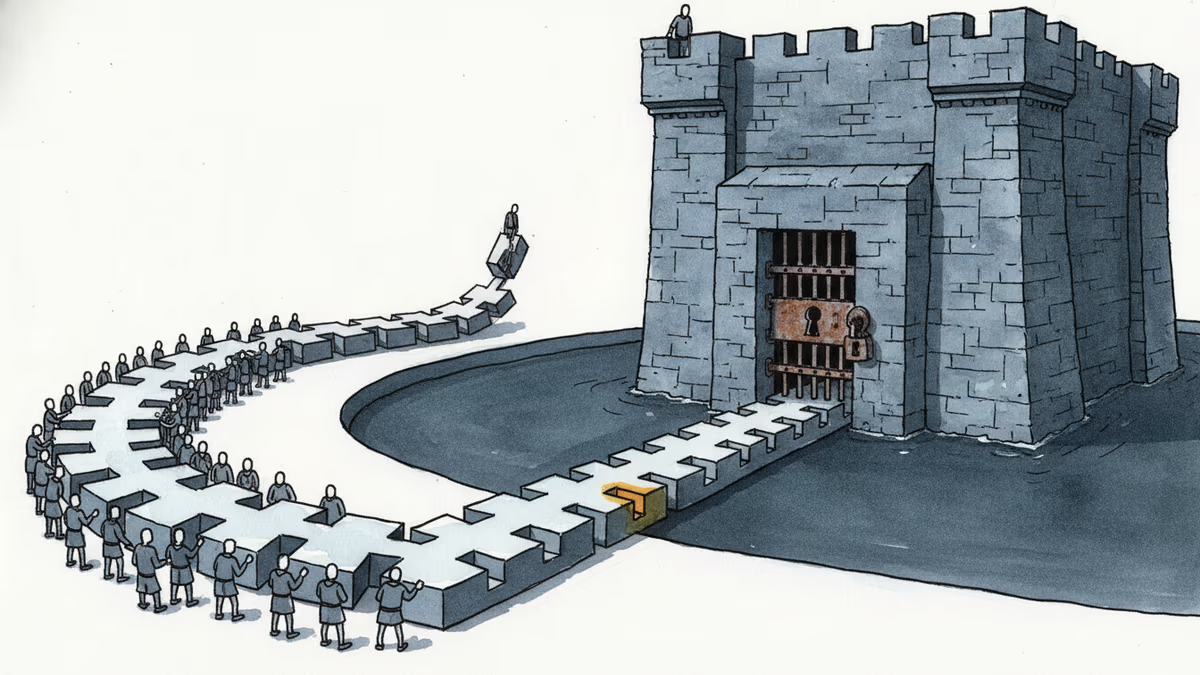
Nvidia shipped roughly a billion RISC-V cores in 2024, then announced it would run CUDA on the open standard. We break down how royalty-free instruction sets and open software stacks are trying to route around CUDA's lock-in. Part 2 of the Semiconductor Sovereignty series.
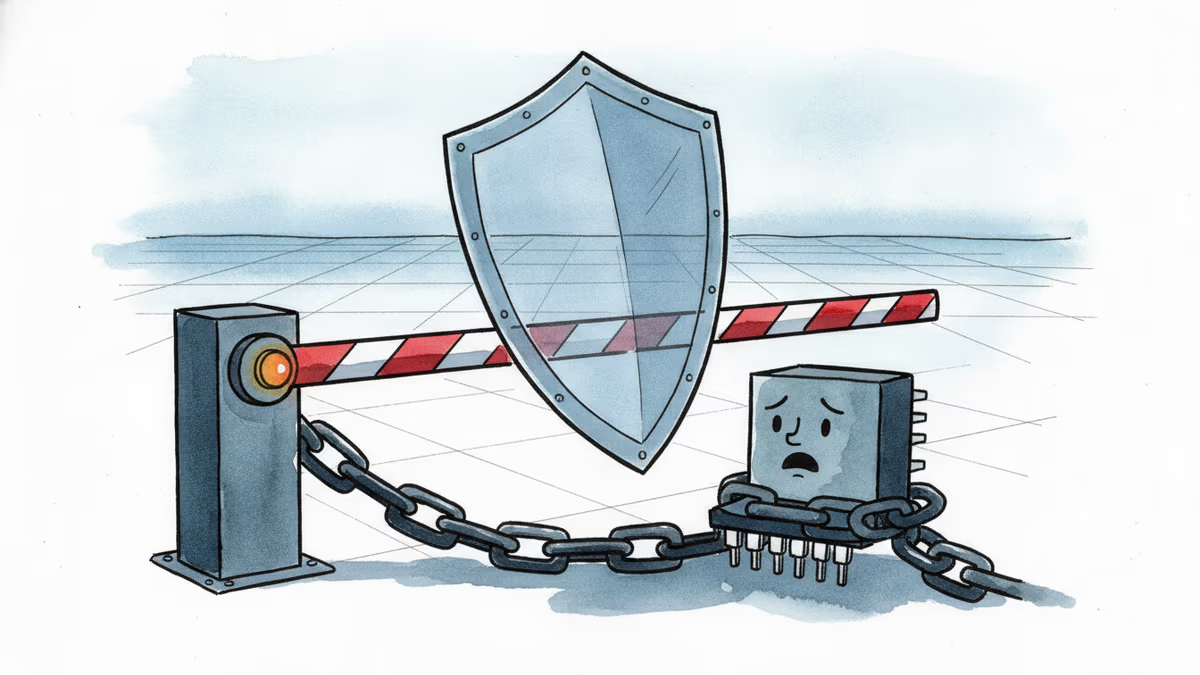
US AI-chip export controls split into three layers in the first half of 2026 — January easing, a May crackdown on circumvention, and a pending bill. Nvidia erased China from its guidance and still posted a record $81.6 billion quarter. A look at the export policy that both shields and cages it.
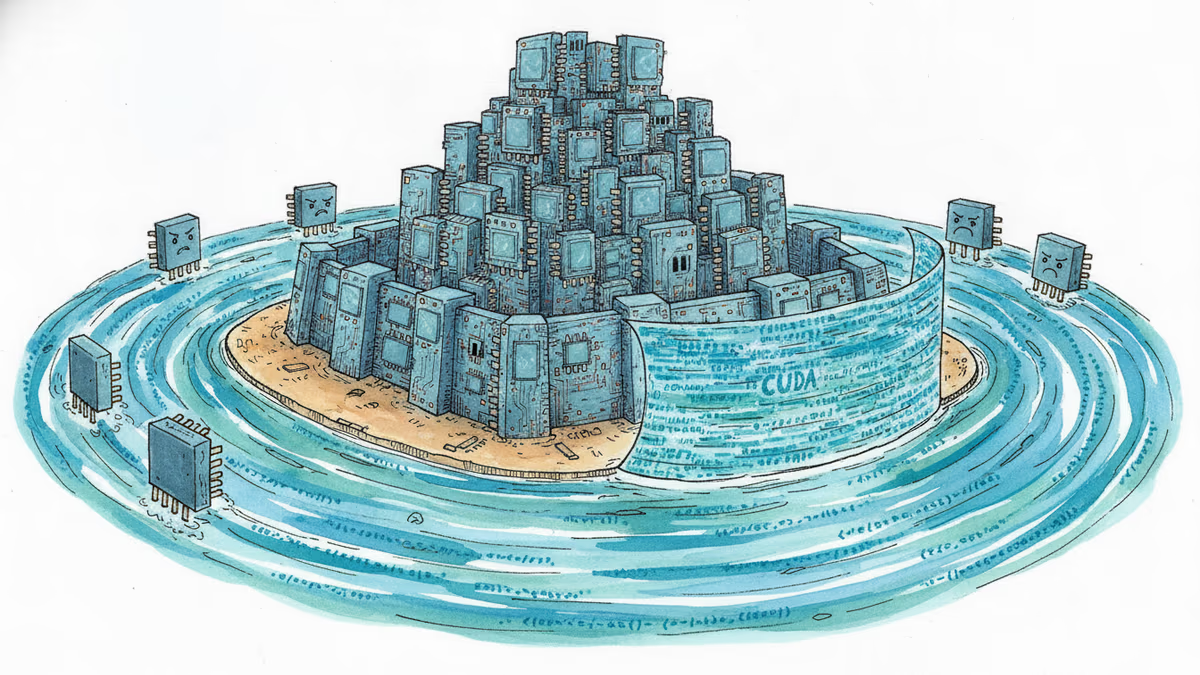
AMD's MI325X matches or beats Nvidia on memory and bandwidth — yet Nvidia's 86-92% share holds. The real moat is CUDA, 20 years in the making. Part 1 of 4.
Five stories from late September, traced to where the paper trail stops: Korea's export record, Nvidia's Hugging Face 8-K, a US-China AI channel, the UN on AI, and rising births.
Nvidia shipped roughly a billion RISC-V cores in 2024, then announced it would run CUDA on the open standard. We break down how royalty-free instruction sets and open software stacks are trying to route around CUDA's lock-in. Part 2 of the Semiconductor Sovereignty series.
US AI-chip export controls split into three layers in the first half of 2026 — January easing, a May crackdown on circumvention, and a pending bill. Nvidia erased China from its guidance and still posted a record $81.6 billion quarter. A look at the export policy that both shields and cages it.
AMD's MI325X matches or beats Nvidia on memory and bandwidth — yet Nvidia's 86-92% share holds. The real moat is CUDA, 20 years in the making. Part 1 of 4.
Thoughts
Share your thoughts on this article
Sign in to join the conversation