
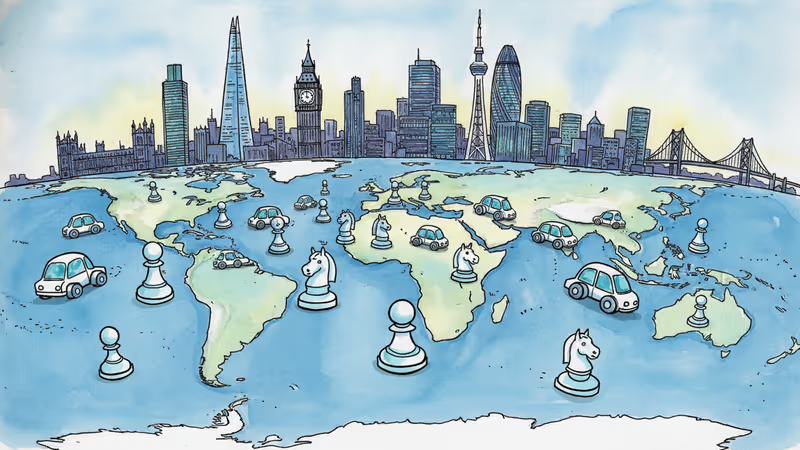
Waymo's $16B War Chest Signals the Global Robotaxi Race Has Begun
Alphabet's Waymo raises $16 billion to expand driverless taxis to London, Tokyo, and 20+ cities. Is this the tipping point for autonomous transportation?
400,000 rides per week. That's how many people are already trusting their commute to Waymo's driverless vehicles across six U.S. cities. Now, with a massive $16 billion funding round, Alphabet's autonomous vehicle unit is preparing to export this reality to London, Tokyo, and more than 20 additional cities worldwide.
From Google Experiment to Global Business
What started as Google's moonshot project in 2009 has evolved into something approaching inevitability. Waymo spent years cautiously testing in Silicon Valley, made its first geographic leap to Phoenix in 2016, and finally received commercial permits in California in August 2023.
The numbers tell the acceleration story: 15 million rides in 2025 alone—triple the previous year's volume. The company has surpassed 20 million lifetime rides and recently expanded to Miami, adding to its presence in San Francisco, Los Angeles, Austin, and Atlanta through partnerships with Uber.
The funding round, led by Dragoneer Investment Group, DST Global, and Sequoia Capital, values Waymo at $126 billion—more than Ford and General Motors combined. Major players like Andreessen Horowitz and Mubadala Capital joined the round, signaling institutional confidence in autonomous transportation's commercial viability.
The International Test
Expanding to London and Tokyo represents Waymo's biggest challenge yet. These cities offer everything that makes autonomous driving difficult: dense pedestrian traffic, complex road layouts, and deeply ingrained transportation cultures.

London's narrow medieval streets and roundabouts will test Waymo's navigation algorithms in ways that American grid systems never could. Tokyo's organized chaos—where millions navigate seamlessly through unspoken social protocols—poses an entirely different challenge. Success in these markets would prove autonomous vehicles can adapt to any urban environment.
For the global automotive industry, Waymo's international expansion sends a clear message. Traditional automakers like Toyota, BMW, and Mercedes-Benz have been developing their own autonomous technologies, but none have achieved Waymo's scale of commercial deployment.
The Safety Paradox
Yet Waymo's rapid expansion comes with growing scrutiny. Recent incidents, including a robotaxi striking a child near a Santa Monica elementary school, have prompted investigations by the National Highway Traffic Safety Administration. The child sustained minor injuries, but the incident highlights the tension between scaling quickly and ensuring safety.
School zone violations and dangerous behaviors around school buses have become recurring issues. Critics argue that Waymo is prioritizing commercial growth over safety refinement—a risky strategy when public trust remains fragile.
"We are no longer proving a concept," Waymo stated in its announcement. "We are scaling a commercial reality." But scaling reality means accepting responsibility for every mile driven and every passenger carried.
The Economic Ripple Effect
Beyond technology, Waymo's expansion represents a fundamental shift in urban economics. Traditional taxi drivers, ride-share operators, and parking businesses face potential disruption. Cities must rethink infrastructure investments when vehicles might not need human-accessible parking.
For investors, the $16 billion bet reflects confidence that autonomous vehicles will capture significant market share from the global taxi and ride-sharing market, estimated at over $100 billion annually. But it also represents a massive capital requirement—highlighting why only the best-funded companies may survive the autonomous vehicle race.
Authors
Related Articles
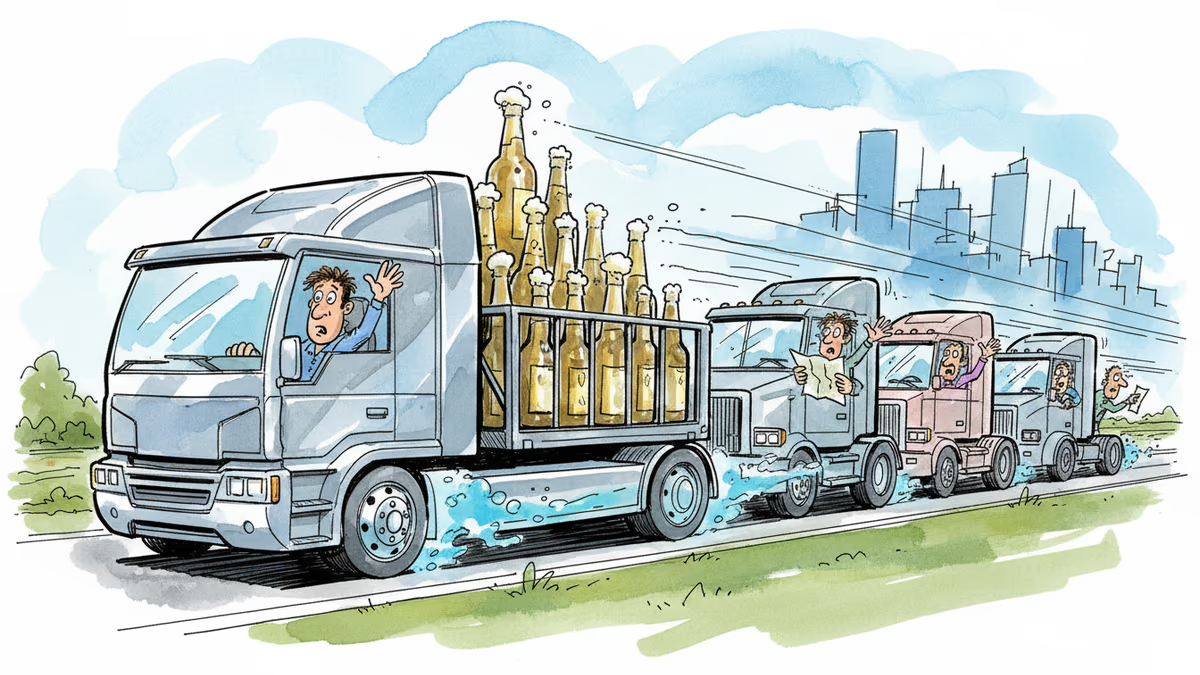
Swedish startup Einride raises $113M ahead of NYSE debut, deploying 200 autonomous trucks for major brands. The logistics revolution accelerates.
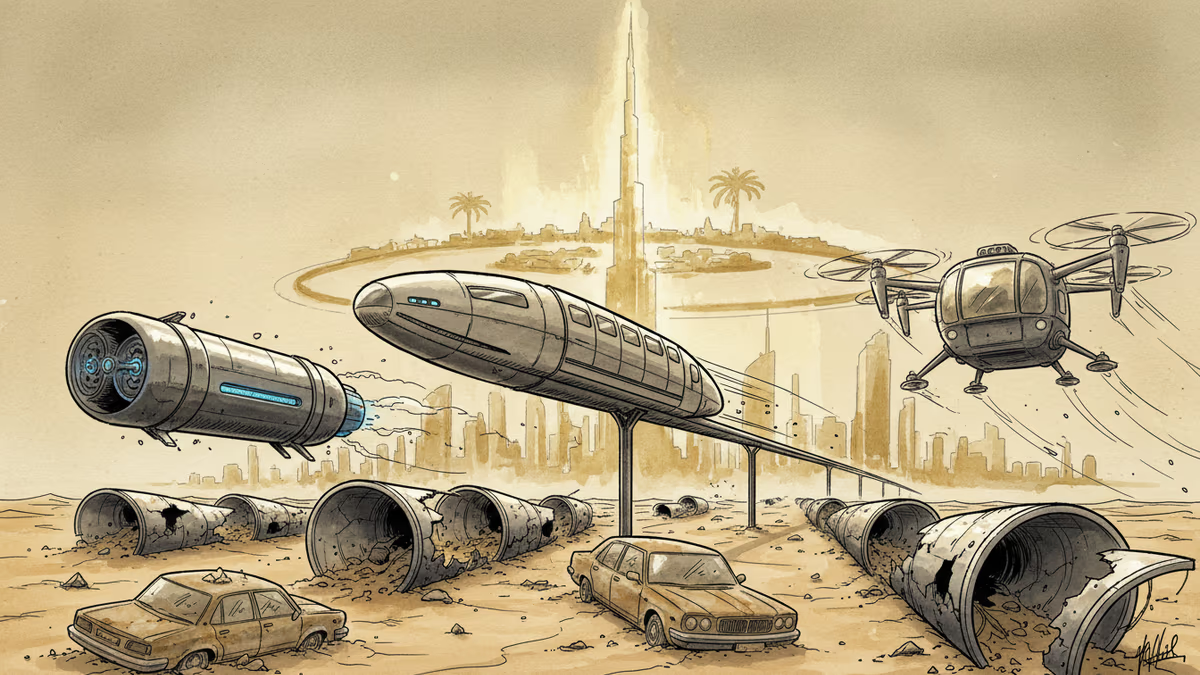
Dubai signs deals with three unproven US transport companies after previous $450M Hyperloop failure and GM Cruise debacle. Will underground tunnels, flying pods, and air taxis work?
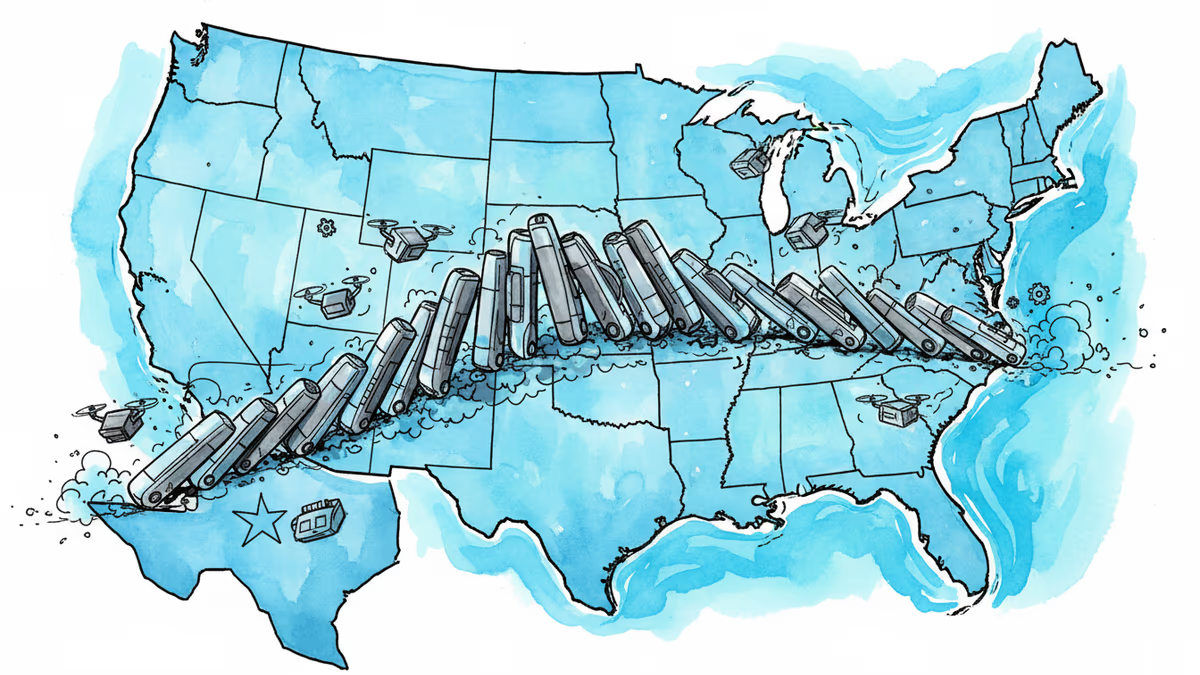
Waymo launches robotaxi services in Dallas, Houston, San Antonio, and Orlando simultaneously, expanding from 3 to 10 cities in just one year. Analyzing the strategy behind this aggressive rollout and what it means for the autonomous vehicle industry.
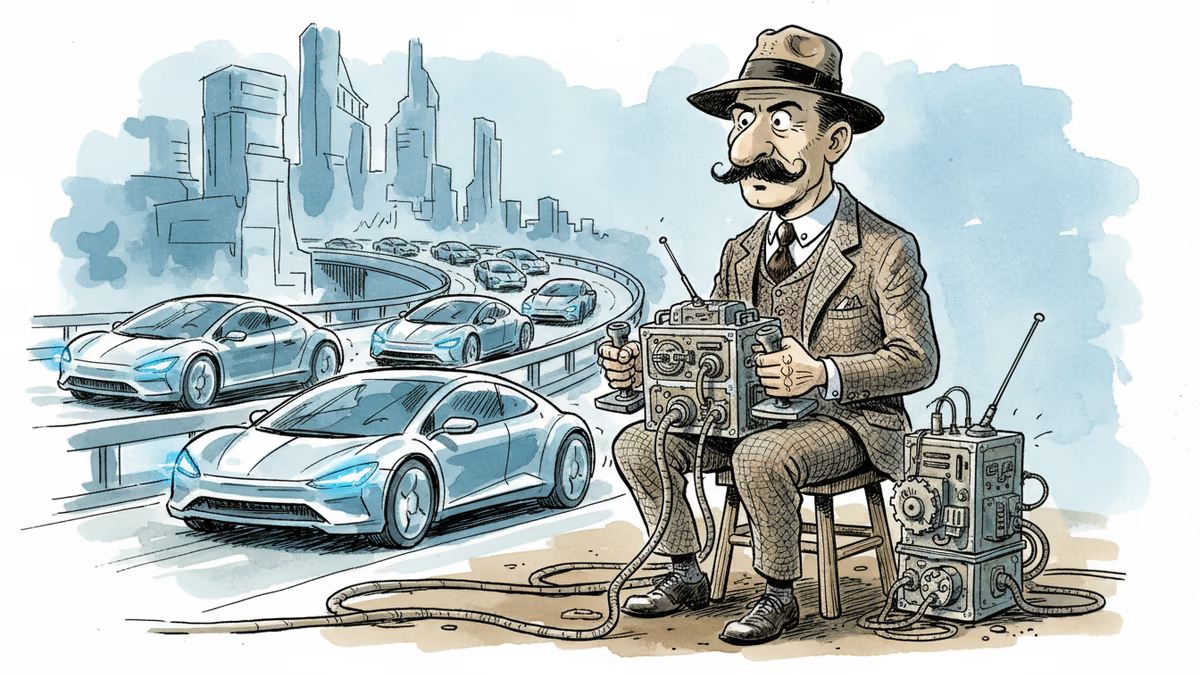
A Spanish engineer's 1903 wireless control invention laid the groundwork for today's autonomous vehicle revolution. Leonardo Torres Quevedo's Telekino changed everything
Swedish startup Einride raises $113M ahead of NYSE debut, deploying 200 autonomous trucks for major brands. The logistics revolution accelerates.
Dubai signs deals with three unproven US transport companies after previous $450M Hyperloop failure and GM Cruise debacle. Will underground tunnels, flying pods, and air taxis work?
Waymo launches robotaxi services in Dallas, Houston, San Antonio, and Orlando simultaneously, expanding from 3 to 10 cities in just one year. Analyzing the strategy behind this aggressive rollout and what it means for the autonomous vehicle industry.
A Spanish engineer's 1903 wireless control invention laid the groundwork for today's autonomous vehicle revolution. Leonardo Torres Quevedo's Telekino changed everything
Thoughts
Share your thoughts on this article
Sign in to join the conversation