
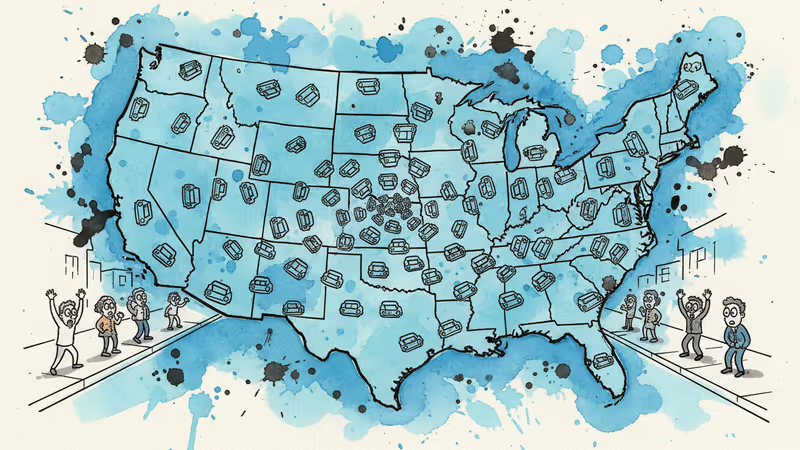
Waymo's $16B Bet: Can Robotaxis Finally Go Mainstream?
Waymo raises massive funding to expand robotaxi service to 20 new cities in 2026. What does this mean for the future of urban transportation and autonomous driving adoption?
$16 billion doesn't just buy you a lot of cars—it buys you a shot at redefining how millions of people move through cities. Waymo's latest funding round, led by Dragoneer Investment Group, signals the autonomous vehicle company is ready to move beyond its current six-city footprint and make robotaxis a nationwide reality.
The Google spinoff plans to launch in at least 20 new cities throughout 2026, a dramatic expansion that would put self-driving cars within reach of tens of millions more Americans. With its current fleet of over 2,500 robotaxis generating real revenue in cities like San Francisco and Phoenix, Waymo is betting that autonomous driving has finally moved from science fiction to scalable business.
The Money Behind the Movement
Dragoneer Investment Group's leadership of this round sends a clear signal to the market. Known for backing late-stage companies before they go public, Dragoneer typically invests in firms that have proven their business models work at scale. Their $16 billion commitment values Waymo at $126 billion—more than Ford or General Motors.
This isn't just venture capital throwing money at moonshots anymore. The funding comes as Waymo reports actual paying customers taking hundreds of thousands of rides monthly. Unlike the hype cycles that have plagued autonomous driving for years, this expansion is built on operational data from real streets with real passengers.
The timing also matters. While competitors like Cruise have faced regulatory setbacks and Tesla's Full Self-Driving remains perpetually "coming soon," Waymo has quietly built the most extensive commercial robotaxi operation in the world.
Beyond the Tech: What Changes for Cities

For urban planners and city officials, Waymo's expansion represents both opportunity and challenge. Robotaxis could reduce the need for parking spaces—some estimates suggest each shared autonomous vehicle could replace up to 10 private cars. That's valuable real estate that could become housing, parks, or commercial space.
But the transition won't be smooth. Cities will need to rethink traffic patterns, update regulations, and manage the displacement of traditional taxi and rideshare drivers. The 20-city expansion means these conversations are moving from theoretical to immediate.
For consumers, the promise is convenience without car ownership costs. No insurance, no maintenance, no parking fees—just transportation on demand. Yet questions remain about pricing, availability during peak times, and service in lower-income neighborhoods.
The Competitive Landscape Shifts
Waymo's aggressive expansion puts pressure on traditional automakers who've been more cautious with autonomous driving. While companies like Toyota and Volkswagen focus on driver assistance features, Waymo is betting on full autonomy as the winning strategy.
The funding also highlights how the autonomous vehicle race has become a capital game. Building fleets, mapping cities, and maintaining 24/7 operations requires massive ongoing investment. Smaller players may find themselves squeezed out as companies like Waymo achieve economies of scale.
For rideshare giants Uber and Lyft, this expansion represents both threat and opportunity. Both companies have partnerships with autonomous vehicle developers, but Waymo's direct-to-consumer model could eventually challenge their platform dominance.
Authors
Related Articles
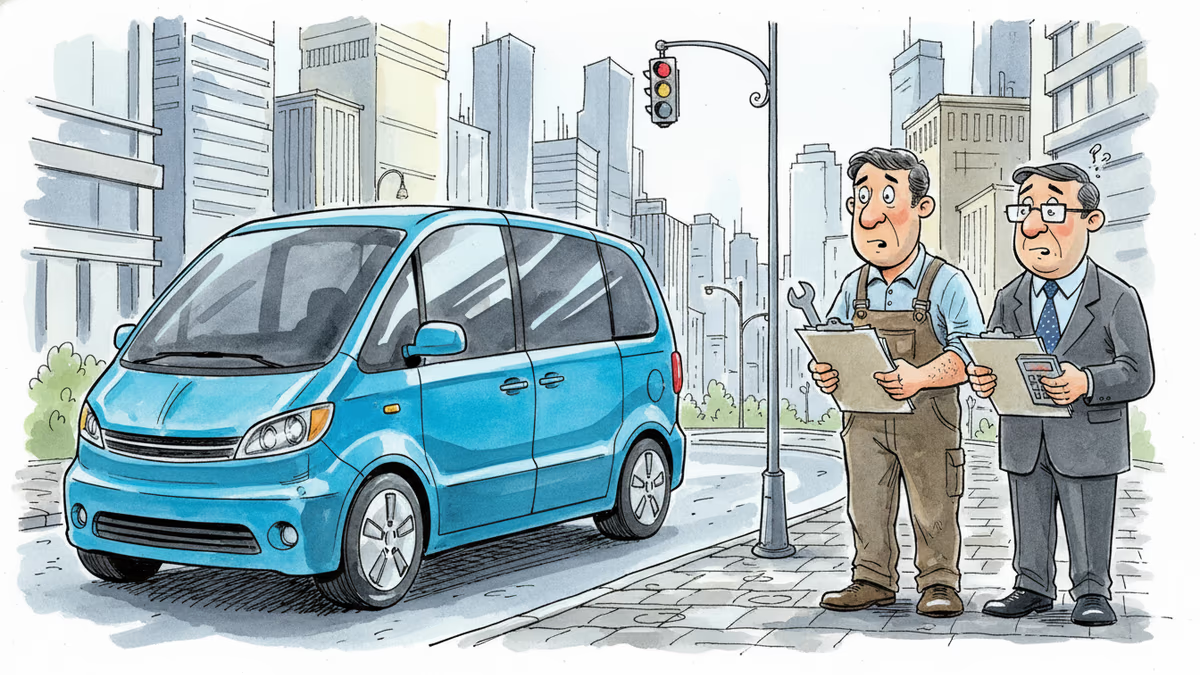
Waymo's new Ojai robotaxi isn't just a vehicle upgrade. It's the company's most serious attempt yet at cracking the cost problem that has kept autonomous vehicles from scaling. Here's what's really at stake.
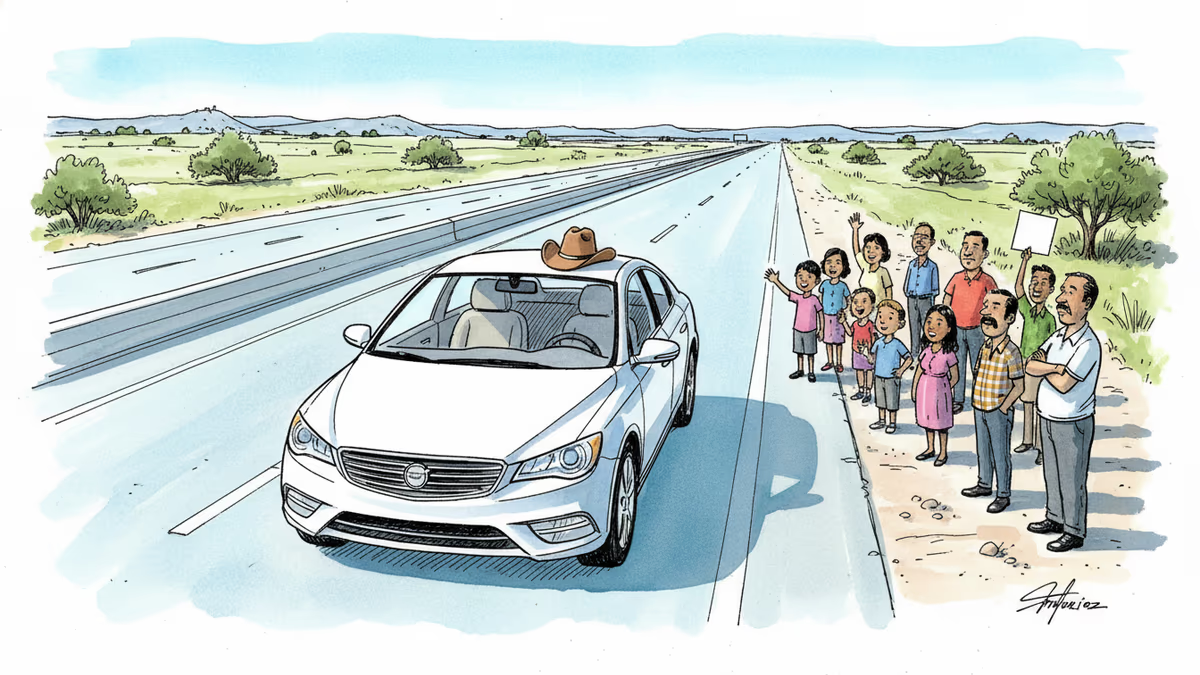
Tesla expanded its driverless robotaxi to Dallas and Houston, even after reporting 14 crashes in Austin. What does this tell us about how autonomous vehicles actually get built?
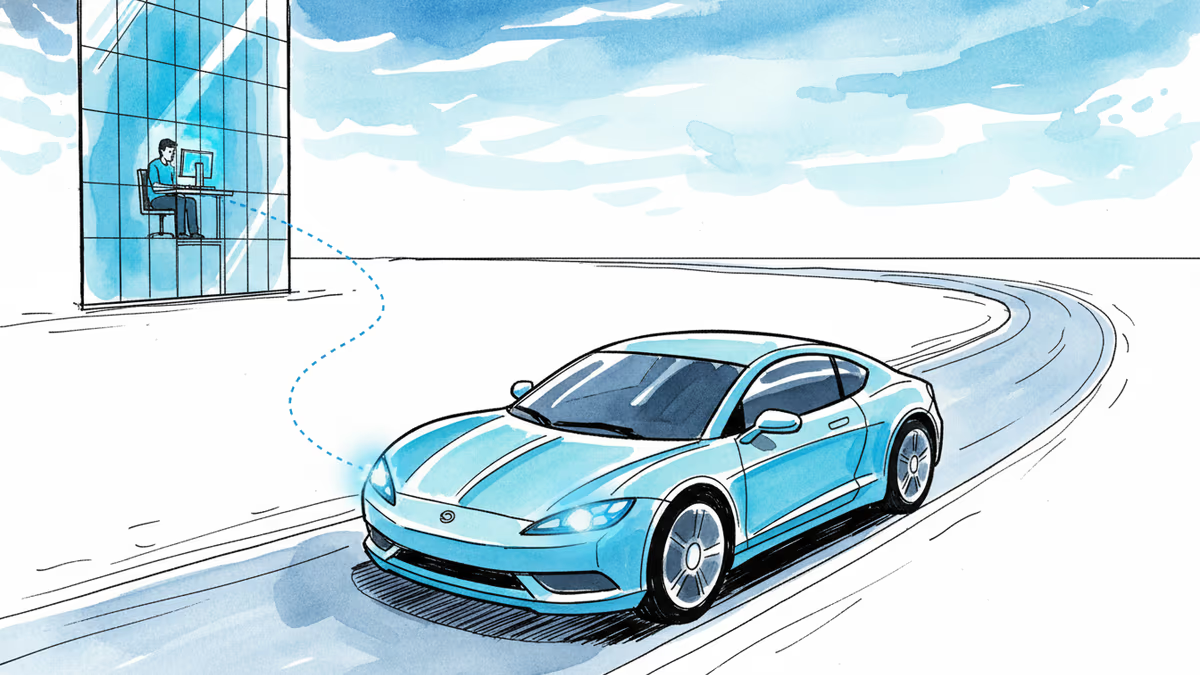
A U.S. Senate investigation found that seven autonomous vehicle companies — including Waymo and Tesla — refused to disclose how often remote operators intervene in their vehicles. Here's why that silence matters.
Uber and WeRide have launched fully driverless robotaxi service in Dubai — no safety operator, real fares. Here's what it means for the global AV race and your next ride.
Waymo's new Ojai robotaxi isn't just a vehicle upgrade. It's the company's most serious attempt yet at cracking the cost problem that has kept autonomous vehicles from scaling. Here's what's really at stake.
Tesla expanded its driverless robotaxi to Dallas and Houston, even after reporting 14 crashes in Austin. What does this tell us about how autonomous vehicles actually get built?
A U.S. Senate investigation found that seven autonomous vehicle companies — including Waymo and Tesla — refused to disclose how often remote operators intervene in their vehicles. Here's why that silence matters.
Uber and WeRide have launched fully driverless robotaxi service in Dubai — no safety operator, real fares. Here's what it means for the global AV race and your next ride.
Thoughts
Share your thoughts on this article
Sign in to join the conversation