
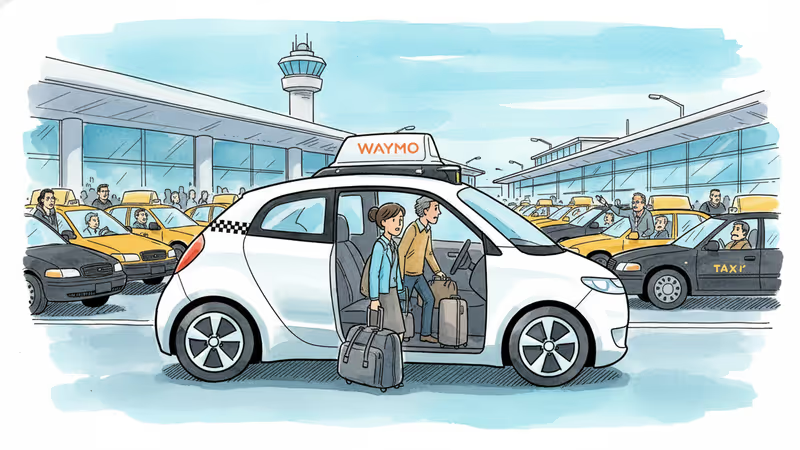
Waymo Finally Cracks SFO: Robotaxis Take Flight at San Francisco Airport
After years of negotiations, Waymo launches robotaxi service at San Francisco International Airport. What does this milestone mean for autonomous vehicle adoption?
After years of back-and-forth negotiations, Waymo has finally unlocked one of the most coveted destinations in the Bay Area transportation network. The company announced it's now offering robotaxi rides to select passengers traveling to and from San Francisco International Airport—a breakthrough that could reshape how millions of travelers think about getting around.
The milestone comes after Waymo signed a "Testing and Operations Pilot Permit" with SFO in September 2025. What started as limited service for chosen riders will gradually expand until "anyone who wants to can hail a Waymo at the airport" in the coming months, according to the company.
Why Airports Matter for Autonomous Vehicles
Airports represent the perfect storm of conditions where robotaxis can truly shine. Think about it: travelers are often unfamiliar with local transportation options, carrying heavy luggage, and willing to pay premium prices for convenience. They're also typically traveling longer distances than the average urban trip, making the economics more favorable for autonomous vehicle operators.
But airports are also complex ecosystems. SFO handles over 50 million passengers annually, creating a logistical nightmare of traffic flow, safety protocols, and stakeholder management. Traditional taxi companies, ride-share services, shuttles, and public transit all compete for the same passenger pool.
For Waymo, cracking SFO isn't just about adding another pickup location—it's about proving that autonomous vehicles can handle one of the most demanding transportation scenarios in urban America.
The Ripple Effect Across the Industry
Waymo's airport breakthrough sends a clear signal to competitors and regulators alike. If robotaxis can safely navigate the chaos of airport pickup zones, handle passenger luggage, and maintain reliable service schedules, what's stopping them from dominating other high-value transportation corridors?

Cruise, Waymo's main rival in San Francisco, has faced significant setbacks after safety incidents led to suspended operations. Meanwhile, traditional players like Uber and Lyft are watching nervously as their most profitable routes—airport runs—become testing grounds for their potential replacements.
The timing is particularly significant given the broader autonomous vehicle industry's struggle with public perception and regulatory approval. Success at SFO could accelerate similar partnerships at airports nationwide, from LAX to JFK.
The Human Cost of Progress
Behind the technological achievement lies a more complex story about economic disruption. Airport taxi drivers often depend on these high-fare trips to make their daily quotas profitable. A single airport run can equal several shorter city trips in terms of revenue.
Yet the transition may not be entirely zero-sum. Waymo's 24/7 availability and potentially shorter wait times could expand the overall market, converting passengers who previously relied on public transit, rental cars, or ride-sharing services. The question is whether this market expansion can offset the displacement of traditional drivers.
Some transportation economists argue that autonomous vehicles will create new job categories—remote vehicle monitoring, maintenance, customer service—but whether these opportunities will be accessible to displaced drivers remains unclear.
What This Means for Travelers
For passengers, Waymo's airport service promises several advantages: consistent pricing without surge multipliers, no awkward small talk, and vehicles specifically designed for comfort during longer trips. The company's fleet uses Jaguar I-PACE electric SUVs, offering ample luggage space and a premium experience.
However, questions remain about edge cases that human drivers handle instinctively. What happens when flights are delayed and pickup times change? How does the system handle passengers with special needs or unusual luggage requirements? These scenarios will test whether autonomous vehicles can truly replace human judgment in complex service situations.
The success or failure at SFO may well determine whether autonomous vehicles remain a Silicon Valley curiosity or become the backbone of American urban mobility. The stakes couldn't be higher.
Authors
Related Articles
Waymo's new Ojai robotaxi isn't just a vehicle upgrade. It's the company's most serious attempt yet at cracking the cost problem that has kept autonomous vehicles from scaling. Here's what's really at stake.
A U.S. Senate investigation found that seven autonomous vehicle companies — including Waymo and Tesla — refused to disclose how often remote operators intervene in their vehicles. Here's why that silence matters.
Alphabet's new pay deal for Sundar Pichai links his compensation to Waymo and Wing performance—signaling where Google is placing its biggest bets. Here's what investors should actually read into it.
Swedish startup Einride raises $113M ahead of NYSE debut, deploying 200 autonomous trucks for major brands. The logistics revolution accelerates.
Waymo's new Ojai robotaxi isn't just a vehicle upgrade. It's the company's most serious attempt yet at cracking the cost problem that has kept autonomous vehicles from scaling. Here's what's really at stake.
A U.S. Senate investigation found that seven autonomous vehicle companies — including Waymo and Tesla — refused to disclose how often remote operators intervene in their vehicles. Here's why that silence matters.
Alphabet's new pay deal for Sundar Pichai links his compensation to Waymo and Wing performance—signaling where Google is placing its biggest bets. Here's what investors should actually read into it.
Swedish startup Einride raises $113M ahead of NYSE debut, deploying 200 autonomous trucks for major brands. The logistics revolution accelerates.
Thoughts
Share your thoughts on this article
Sign in to join the conversation