
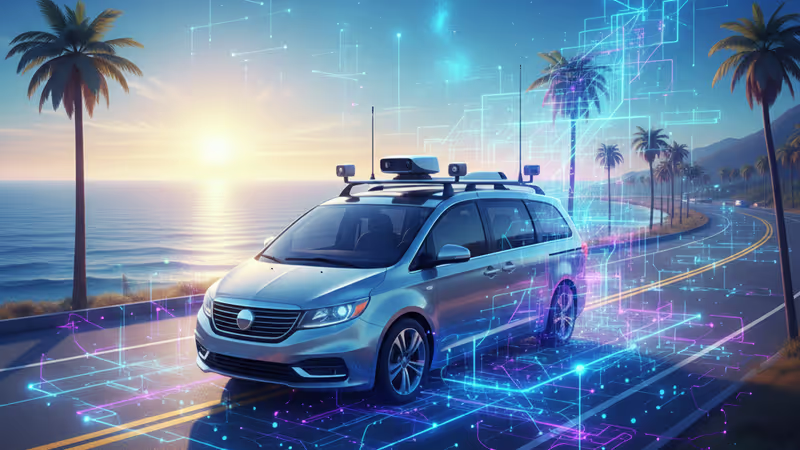
Waymo Ojai Robotaxi Unveiled: Rebranding Zeekr for the US Market at CES 2026
Waymo officially rebrands its Zeekr-made robotaxi to 'Ojai' at CES 2026. Explore the strategic reasons behind the name change, hardware specs, and global expansion plans.
"Oh hi!" That's the greeting you'll soon hear from Waymo's latest fleet member. At CES 2026, the autonomous driving giant revealed that its custom-built robotaxi, manufactured by Chinese automaker Zeekr, has been officially renamed Ojai.
Waymo Ojai Robotaxi: A Strategic Shift in Branding
The transition from the Zeekr RT to Ojai isn't just about a catchy name. Named after a tranquil California town known for wellness and arts, the rebrand aims to bridge the gap with the American public. According to Waymo spokesperson Chris Bonelli, the company determined that Zeekr lacked brand recognition in the U.S. By choosing a name that sounds like a friendly greeting, Waymo is humanizing its high-tech hardware.
The partnership with Geely-owned Zeekr dates back to 2021. While the 2022 prototype famously lacked a steering wheel, the version displayed at CES 2026 includes one, reflecting a more pragmatic approach to current safety regulations and operational needs.

Hardware Specs and Global Expansion Goals
The Ojai features a sophisticated sensor suite, including 13 cameras, 4 lidars, and 6 radars. Beyond the name, the paint has been updated from a blue tint to a sleek silver. The vehicle is currently undergoing final testing with Waymo employees in San Francisco and Phoenix, signaling that a public commercial launch is imminent.
Waymo is moving fast. Already operating in five major U.S. hubs, the company plans to expand to 12 more cities over the next year. This ambitious roadmap includes Denver, Las Vegas, and its first major international foray into London.
Authors
Related Articles
Waymo's new Ojai robotaxi isn't just a vehicle upgrade. It's the company's most serious attempt yet at cracking the cost problem that has kept autonomous vehicles from scaling. Here's what's really at stake.
Tesla expanded its driverless robotaxi to Dallas and Houston, even after reporting 14 crashes in Austin. What does this tell us about how autonomous vehicles actually get built?
A U.S. Senate investigation found that seven autonomous vehicle companies — including Waymo and Tesla — refused to disclose how often remote operators intervene in their vehicles. Here's why that silence matters.
Uber and WeRide have launched fully driverless robotaxi service in Dubai — no safety operator, real fares. Here's what it means for the global AV race and your next ride.
Waymo's new Ojai robotaxi isn't just a vehicle upgrade. It's the company's most serious attempt yet at cracking the cost problem that has kept autonomous vehicles from scaling. Here's what's really at stake.
Tesla expanded its driverless robotaxi to Dallas and Houston, even after reporting 14 crashes in Austin. What does this tell us about how autonomous vehicles actually get built?
A U.S. Senate investigation found that seven autonomous vehicle companies — including Waymo and Tesla — refused to disclose how often remote operators intervene in their vehicles. Here's why that silence matters.
Uber and WeRide have launched fully driverless robotaxi service in Dubai — no safety operator, real fares. Here's what it means for the global AV race and your next ride.
Thoughts
Share your thoughts on this article
Sign in to join the conversation