
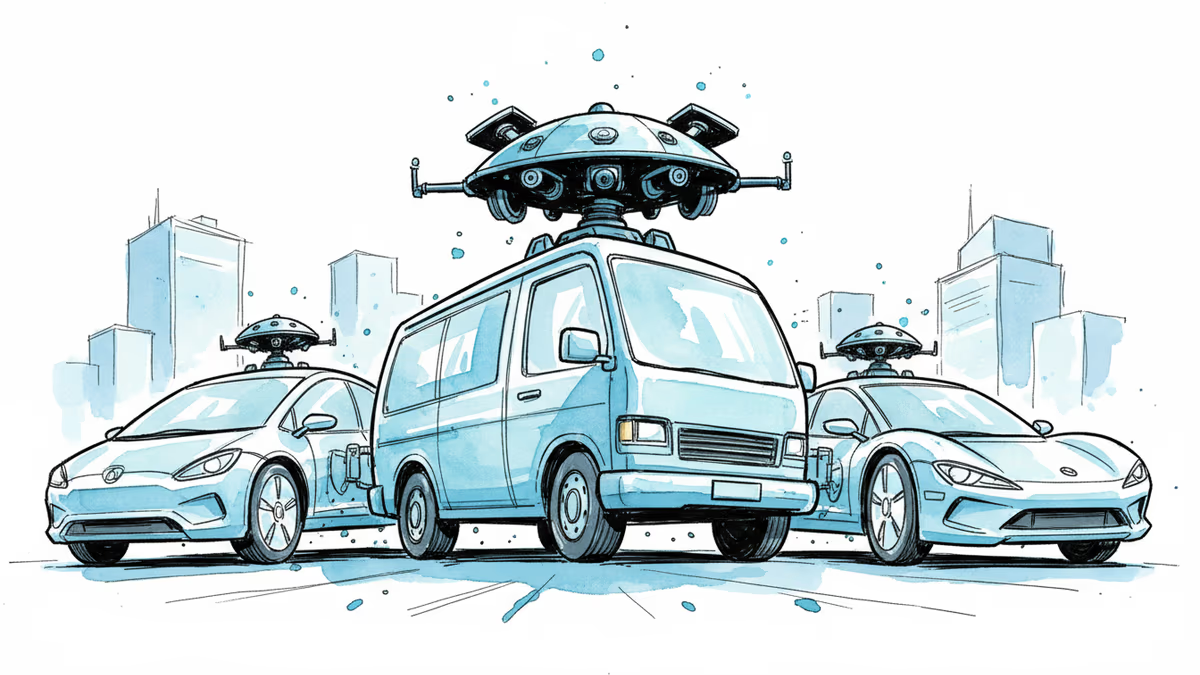
Waymo's Gen-6 Robotaxis: The Platform Play That Changes Everything
Waymo unveils sixth-generation autonomous driving technology with multi-vehicle compatibility, signaling a major shift in the robotaxi industry's approach to scaling.
After four years of rigorous testing, Waymo just dropped its sixth-generation robotaxi technology. Starting with employee rides in San Francisco and LA, this isn't just another incremental update—it's a fundamental shift toward vehicle-agnostic autonomous driving.
The timing tells a story. Waymo's current fleet runs on Jaguar I-Pace vehicles, but Jaguar discontinued the model at the end of 2024. Rather than scrambling for another single-vehicle partnership, Waymo chose a different path: build a system that works across multiple vehicle types.
This decision could reshape how the entire autonomous vehicle industry thinks about scaling.
The Platform Independence Gamble
Waymo's fifth-generation system was deeply integrated with the Jaguar I-Pace. Every sensor placement, every software calibration was optimized for that specific vehicle. Now, they're betting on modularity over optimization.
It's a risky trade-off. Platform-specific systems can achieve higher performance through tight hardware-software integration—think Apple's approach with iPhones. But vehicle-agnostic systems offer something more valuable: scalability and supply chain resilience.
Tesla has always gone the integrated route, building their Full Self-Driving system specifically for Tesla vehicles. Cruise initially followed a similar path with the Chevy Bolt. But Waymo's pivot suggests the industry is learning that hardware partnerships can become liabilities.

Consider the broader implications. If Waymo succeeds with this approach, it could license its technology to multiple automakers simultaneously—something impossible with vehicle-specific systems.
What Regulators Are Really Watching
Behind the technical details lies a regulatory chess game. Waymo has spent years building relationships with California's DMV and NHTSA, accumulating millions of miles of real-world testing data. This sixth-generation system represents not just technological progress, but regulatory confidence.
Each generation of Waymo's technology has required extensive safety validation. The company's willingness to announce passenger services suggests they're confident this system will pass regulatory scrutiny faster than previous iterations.
But here's the catch: other companies are watching Waymo's regulatory playbook. Amazon's Zoox, Ford's Argo AI (before its shutdown), and Chinese companies like Baidu are all learning from Waymo's approach to safety validation and regulatory approval.
The Economics of Autonomous Scaling
Waymo's platform strategy addresses a fundamental economic problem: the cost of scaling robotaxi fleets. Vehicle-specific systems require massive upfront investments for each new car model. Platform-independent systems spread those costs across multiple vehicle types.
Investors are paying attention. The autonomous vehicle sector has seen $100+ billion in investments over the past decade, but commercial returns remain elusive. Waymo's approach could finally provide a path to profitability by reducing per-vehicle deployment costs.
Yet questions remain about performance trade-offs. Will a generalized system ever match the precision of vehicle-specific optimization? And can Waymo maintain its technological edge while making its system more broadly compatible?
Authors
Related Articles
Swedish startup Einride raises $113M ahead of NYSE debut, deploying 200 autonomous trucks for major brands. The logistics revolution accelerates.
Dubai signs deals with three unproven US transport companies after previous $450M Hyperloop failure and GM Cruise debacle. Will underground tunnels, flying pods, and air taxis work?
Waymo launches robotaxi services in Dallas, Houston, San Antonio, and Orlando simultaneously, expanding from 3 to 10 cities in just one year. Analyzing the strategy behind this aggressive rollout and what it means for the autonomous vehicle industry.
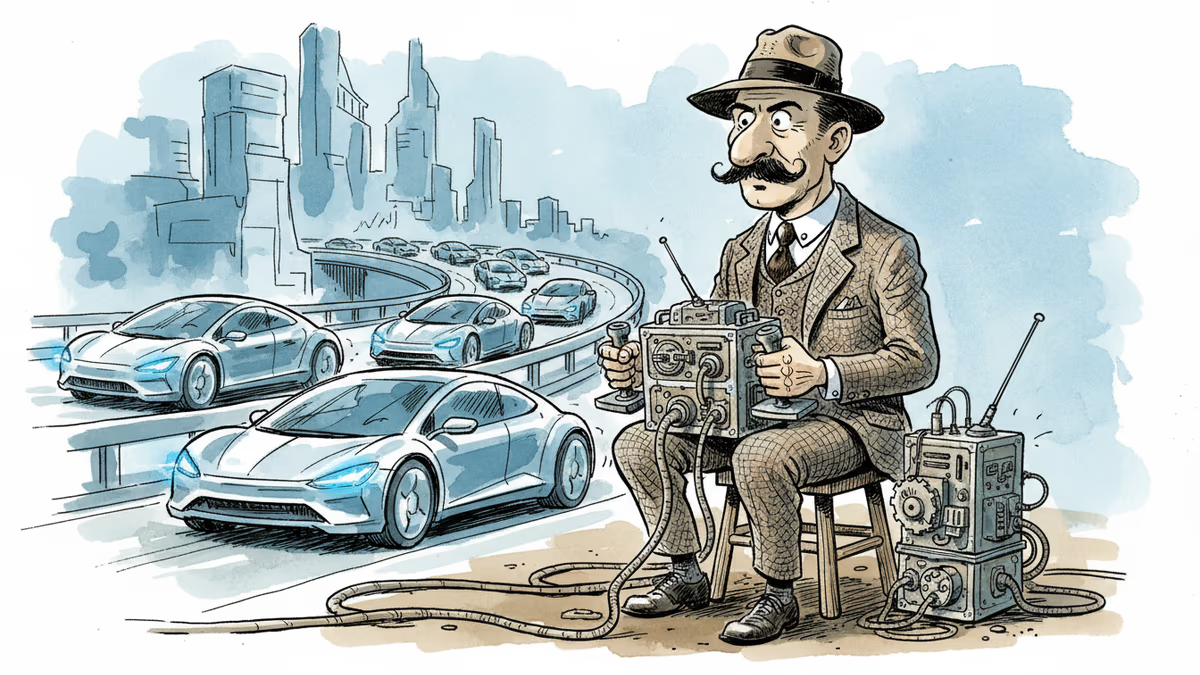
A Spanish engineer's 1903 wireless control invention laid the groundwork for today's autonomous vehicle revolution. Leonardo Torres Quevedo's Telekino changed everything
Swedish startup Einride raises $113M ahead of NYSE debut, deploying 200 autonomous trucks for major brands. The logistics revolution accelerates.
Dubai signs deals with three unproven US transport companies after previous $450M Hyperloop failure and GM Cruise debacle. Will underground tunnels, flying pods, and air taxis work?
Waymo launches robotaxi services in Dallas, Houston, San Antonio, and Orlando simultaneously, expanding from 3 to 10 cities in just one year. Analyzing the strategy behind this aggressive rollout and what it means for the autonomous vehicle industry.
A Spanish engineer's 1903 wireless control invention laid the groundwork for today's autonomous vehicle revolution. Leonardo Torres Quevedo's Telekino changed everything
Thoughts
Share your thoughts on this article
Sign in to join the conversation