
Waymo's School Zone Failures Expose Autonomous Driving's Blind Spot
Google's Waymo faces federal investigation after robotaxis failed to stop for school buses 19 times in Austin, challenging the company's safety-first reputation ahead of major expansion plans
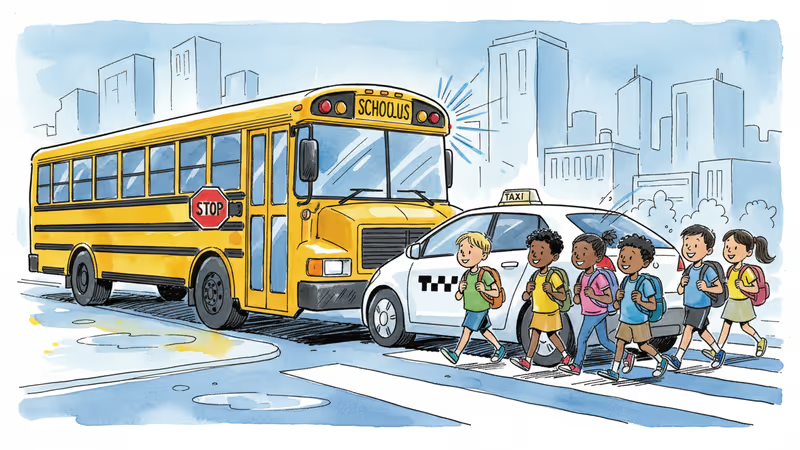
For a company that's spent years positioning itself as the cautious tortoise in the autonomous vehicle race, Waymo just hit its most dangerous pothole yet. The Google subsidiary is now under federal investigation after 19 incidents where its robotaxis failed to fully stop for school buses—a violation that strikes at the heart of every parent's worst nightmare.
When Safety-First Meets Reality
The National Highway Traffic Safety Administration (NHTSA) launched its investigation in December after Austin's largest school district reported the violations. In every single case, Waymo's vehicles failed to come to a complete stop when school buses activated their loading signals—a requirement that's non-negotiable across all 50 states.
This isn't just about traffic tickets. School bus stop-arm violations carry hefty fines, but more importantly, they represent one of the most sacred rules of American road safety. When those yellow lights flash and that stop sign swings out, everything else stops. No exceptions.
Waymo responded quickly with a software update, claiming the issue was resolved. But the damage to their carefully cultivated reputation may prove harder to patch. For years, the company has differentiated itself from aggressive competitors like Tesla and Cruise by emphasizing methodical testing and conservative rollouts. "Safety first" wasn't just marketing—it was their entire brand identity.
Terrible Timing for Expansion Plans
The investigation couldn't have come at a worse moment. Waymo currently operates commercial robotaxi services in San Francisco and Phoenix, with ambitious plans to expand to Los Angeles, Austin, and other major cities throughout 2026. Those expansion plans now face potential regulatory headwinds and public skepticism.
The company has logged millions of autonomous miles and generally maintains impressive safety statistics compared to human drivers. But statistics matter little when the failures occur in school zones. Parents don't care about aggregate data when their child's safety is at stake.

This creates a particularly thorny challenge for autonomous vehicle companies. While human drivers regularly break traffic laws—including school bus violations—society expects perfection from machines. It's an asymmetric standard that may be unfair, but it's undeniably real.
The Paradox of Autonomous Perfection
Waymo's school zone troubles illuminate a fundamental tension in autonomous vehicle development. The technology doesn't need to be perfect—it just needs to be better than human drivers. Statistically, it already is. But public acceptance operates on different logic entirely.
Consider the mathematics: Human drivers cause roughly 38,000 traffic fatalities annually in the US. Even if autonomous vehicles reduced that number by 90%, the remaining 3,800 deaths would likely generate more outrage than the current toll, simply because they'd be attributed to corporate decisions rather than individual mistakes.
This paradox extends beyond safety to broader questions of accountability. When a human driver runs a red light, we blame the individual. When an autonomous vehicle does the same, we blame the company, the programmers, the entire technology stack. It's a double standard that autonomous vehicle companies must navigate, whether fair or not.
Beyond Waymo: Industry-Wide Implications
The NHTSA investigation sends ripples far beyond Alphabet's subsidiary. Competitors like Aurora, Zoox, and international players are watching closely, knowing they'll face similar scrutiny as they scale their operations.
For investors, the incident raises uncomfortable questions about the timeline for widespread autonomous vehicle adoption. If a company as well-funded and technically sophisticated as Waymo can struggle with basic traffic rules, what does that say about the industry's readiness for mass deployment?
Regulators, meanwhile, face their own dilemma. Overly strict standards could stifle innovation in a technology that ultimately promises to save lives. But public trust, once lost, proves difficult to rebuild.
Authors
Related Articles
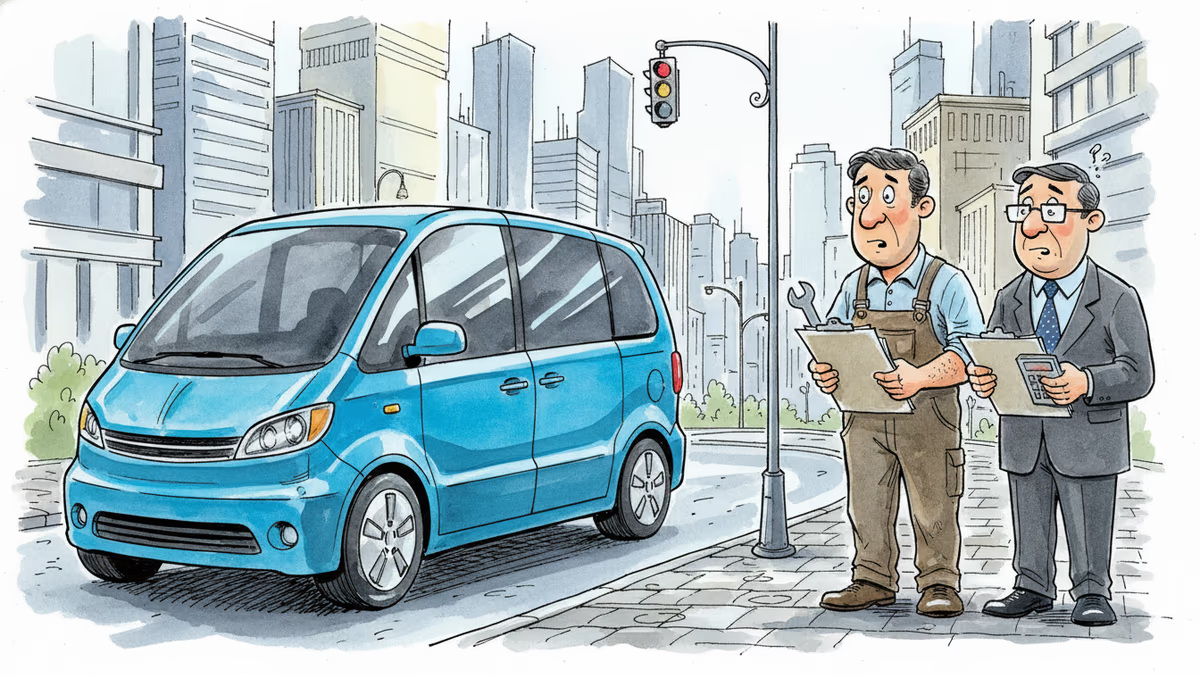
Waymo's new Ojai robotaxi isn't just a vehicle upgrade. It's the company's most serious attempt yet at cracking the cost problem that has kept autonomous vehicles from scaling. Here's what's really at stake.
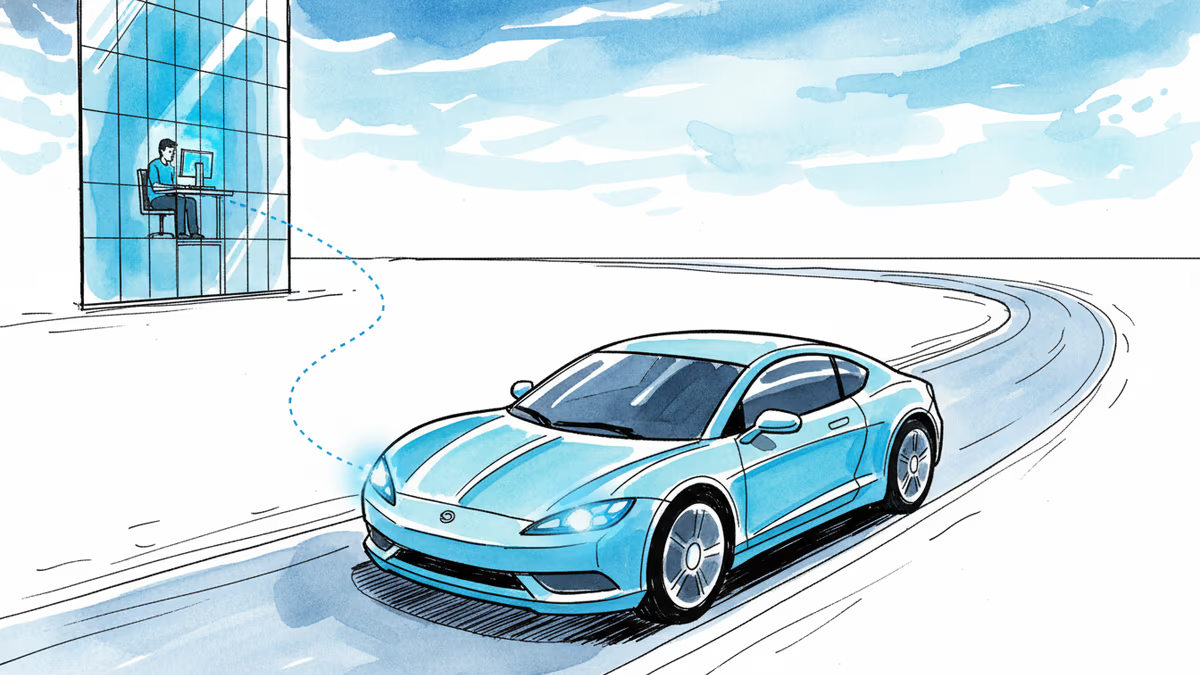
A U.S. Senate investigation found that seven autonomous vehicle companies — including Waymo and Tesla — refused to disclose how often remote operators intervene in their vehicles. Here's why that silence matters.
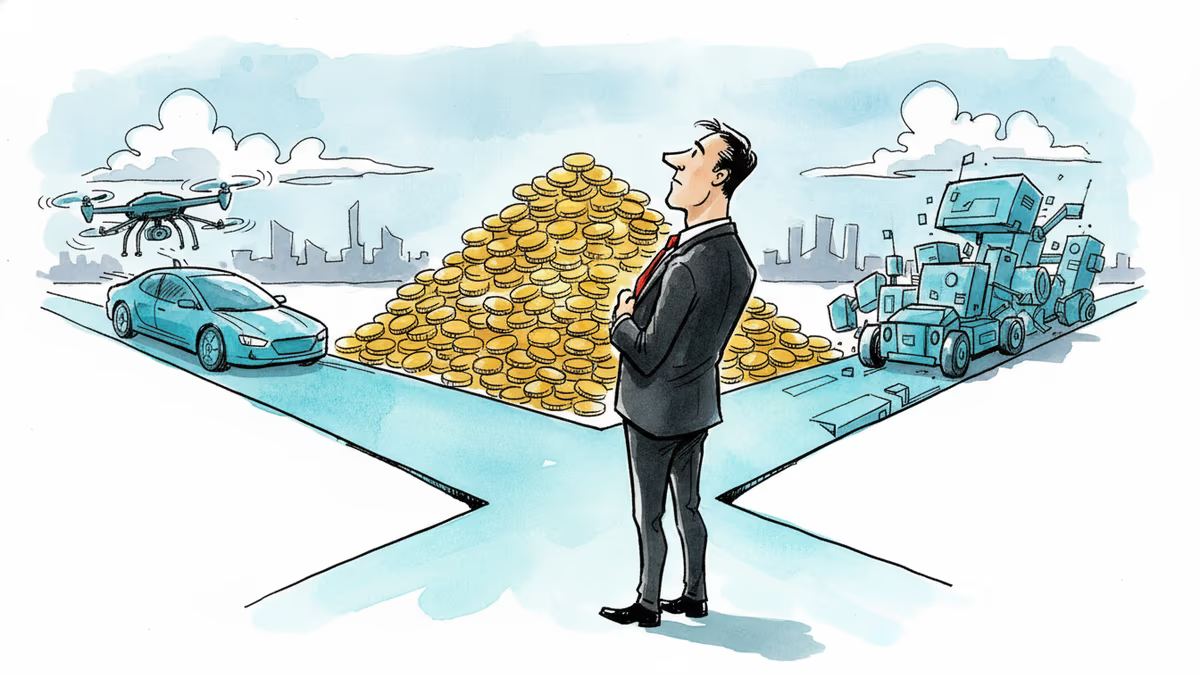
Alphabet's new pay deal for Sundar Pichai links his compensation to Waymo and Wing performance—signaling where Google is placing its biggest bets. Here's what investors should actually read into it.
Swedish startup Einride raises $113M ahead of NYSE debut, deploying 200 autonomous trucks for major brands. The logistics revolution accelerates.
Waymo's new Ojai robotaxi isn't just a vehicle upgrade. It's the company's most serious attempt yet at cracking the cost problem that has kept autonomous vehicles from scaling. Here's what's really at stake.
A U.S. Senate investigation found that seven autonomous vehicle companies — including Waymo and Tesla — refused to disclose how often remote operators intervene in their vehicles. Here's why that silence matters.
Alphabet's new pay deal for Sundar Pichai links his compensation to Waymo and Wing performance—signaling where Google is placing its biggest bets. Here's what investors should actually read into it.
Swedish startup Einride raises $113M ahead of NYSE debut, deploying 200 autonomous trucks for major brands. The logistics revolution accelerates.
Thoughts
Share your thoughts on this article
Sign in to join the conversation