

Waymo's DC Stalemate Reveals the Politics of Self-Driving Cars
Despite $16B funding and 20M rides served, Waymo faces regulatory gridlock in Washington DC. What does this mean for autonomous vehicle expansion across America?
$16 billion in fresh funding. 20 million rides served. Six cities operational with a dozen more planned for 2025. Yet Waymo, Alphabet's self-driving subsidiary, finds itself stuck in an unexpected place: the regulatory maze of Washington, DC.
The irony is striking. While Waymo's white electric Jaguars cruise smoothly through San Francisco and Phoenix, they're hitting roadblocks in America's power center—despite the company spending tens of thousands on lobbying firms and testing since 2024.
The Regulatory Reality Check
Unlike other cities where Waymo launched, DC lacks the legal framework for fully driverless operations. The company took a calculated risk announcing its DC plans in April 2024, betting on regulatory approval that hasn't materialized. While DC allows testing with safety drivers—a permit Waymo, Amazon'sZoox, and two others hold—commercial driverless service remains off-limits.
The holdup isn't just bureaucratic inertia. DC Councilmember Charles Allen, who chairs the Transportation and Environment Committee, poses a fundamental question: "What problem are we trying to solve?"
Allen doesn't see dangerous ride-hail driving as a pressing DC issue. Instead, he worries about economic disruption in a city already reeling from federal job cuts. "I don't think cities are defining very well what dilemma the remedy will solve," he says. "As a policymaker, you're just trying to chase the shiny ball."
The Human Factor

Behind the regulatory delays lies a deeper concern about displacement. Current ride-hail drivers enjoy flexible scheduling—they can pick up shifts when needed. Autonomous vehicles threaten this gig economy lifeline, particularly problematic in a city where federal layoffs have already shaken the local economy.
Allen describes his own Waymo ride as "very pleasant," though he noted the vehicle's confusion at a "difficult intersection" required human intervention. A December incident in San Francisco, where a power outage froze several Waymos in traffic, reinforced his concerns about urban oversight and safety protocols.
The National Stakes
DC's regulatory gridlock reflects a broader challenge facing the autonomous vehicle industry. Without federal regulations, companies must navigate a patchwork of state laws—currently 22 states have passed AV legislation, creating an inconsistent national landscape.
This week's Senate Commerce Committee hearing on self-driving technology underscored the stakes, with lawmakers emphasizing road safety and the need to stay ahead of China. A successful DC deployment could put the technology front-of-mind for the nation's most influential decision-makers.
Waymo faces similar challenges elsewhere. In Boston, the company returned this week but acknowledged it needs Massachusetts to "legalize fully autonomous vehicles" before offering driverless rides. The state currently requires human operators behind the wheel.
The Waiting Game
DC's path forward remains unclear. The District Department of Transportation's safety report—originally due last fall—has been delayed until spring due to budget cuts. Meanwhile, Mayor Muriel Bowser appears reluctant to issue additional testing permits, according to Allen. With Bowser not seeking re-election, the city's AV stance could shift under new leadership.
The regulatory uncertainty creates a peculiar situation: a technology company that's mastered the complexities of urban navigation finds itself navigating an even more complex maze of local politics and economic concerns.
Authors
Related Articles
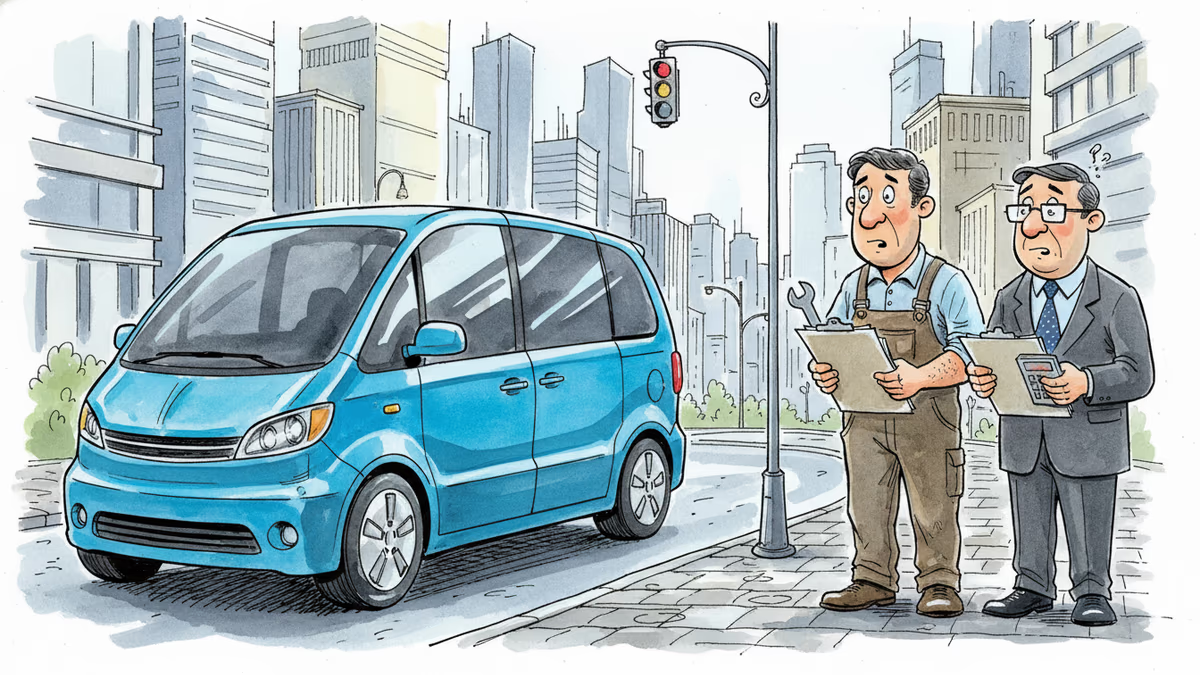
Waymo's new Ojai robotaxi isn't just a vehicle upgrade. It's the company's most serious attempt yet at cracking the cost problem that has kept autonomous vehicles from scaling. Here's what's really at stake.
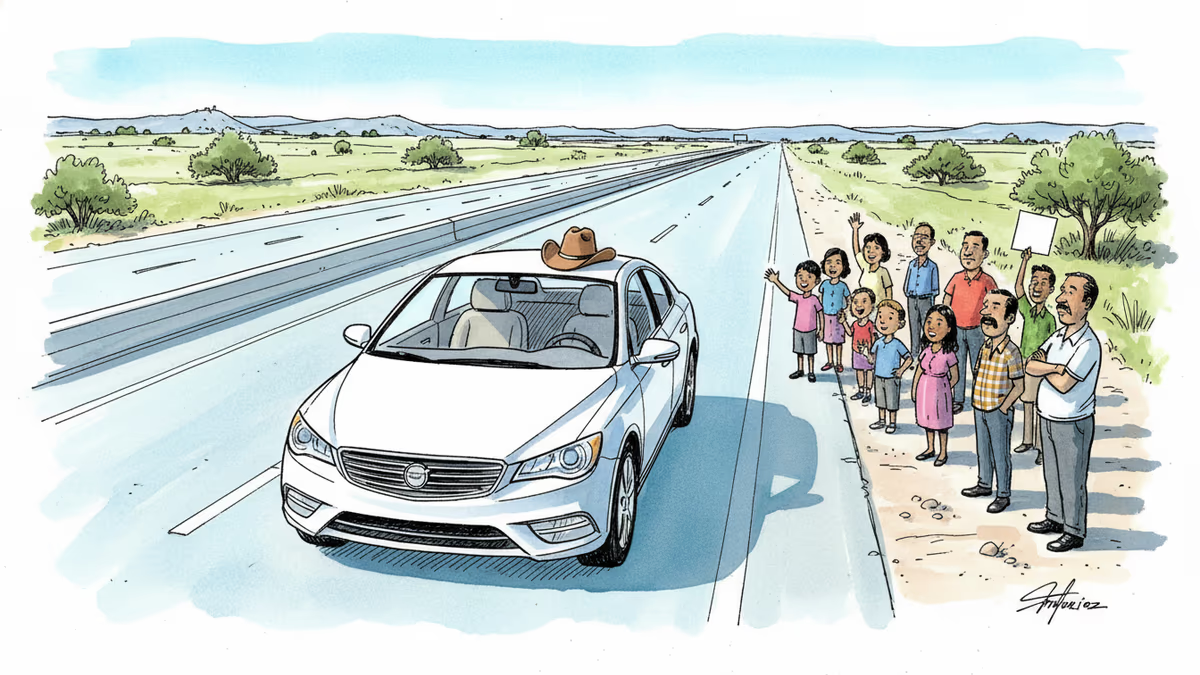
Tesla expanded its driverless robotaxi to Dallas and Houston, even after reporting 14 crashes in Austin. What does this tell us about how autonomous vehicles actually get built?
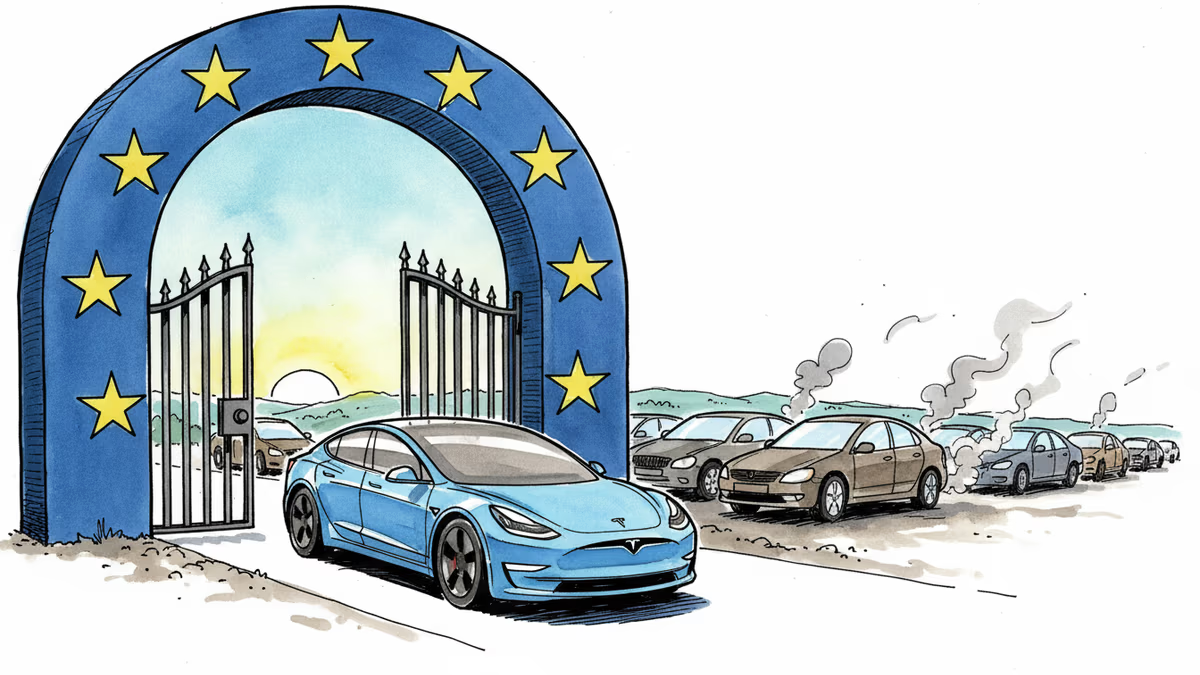
The Netherlands became the first European country to officially approve Tesla's FSD Supervised. With EU's type-approval framework, this could ripple across 27 member states fast.
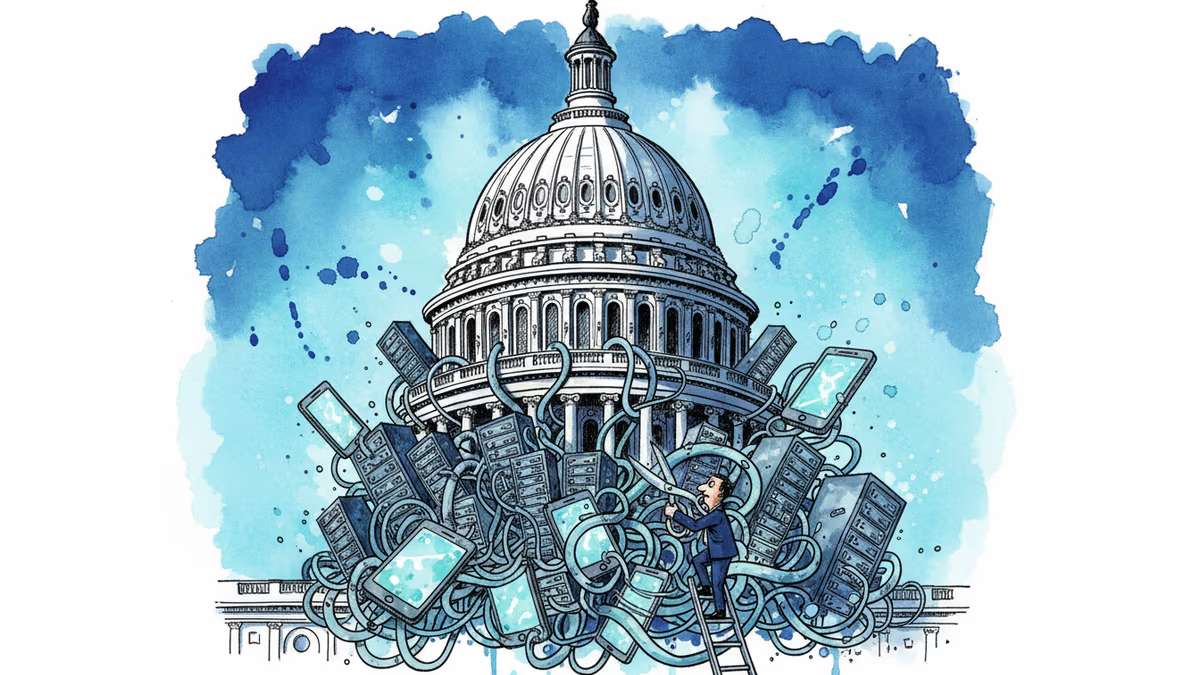
As Washington D.C. enters another political spring, the battle over Big Tech regulation is heating up — and the stakes extend far beyond Silicon Valley.
Waymo's new Ojai robotaxi isn't just a vehicle upgrade. It's the company's most serious attempt yet at cracking the cost problem that has kept autonomous vehicles from scaling. Here's what's really at stake.
Tesla expanded its driverless robotaxi to Dallas and Houston, even after reporting 14 crashes in Austin. What does this tell us about how autonomous vehicles actually get built?
The Netherlands became the first European country to officially approve Tesla's FSD Supervised. With EU's type-approval framework, this could ripple across 27 member states fast.
As Washington D.C. enters another political spring, the battle over Big Tech regulation is heating up — and the stakes extend far beyond Silicon Valley.
Thoughts
Share your thoughts on this article
Sign in to join the conversation