

A 12-Minute Red Moon You Can't Afford to Miss
The first major astronomical event of 2026 unfolds March 3rd as a total lunar eclipse paints the moon red for just 12 minutes. Why this rare 'blood moon' matters more than you think.
Twelve minutes. That's how long the moon will glow red on March 3rd, 2026. But here's the catch—you'll need to be in North America to see it, and you'll need to wake up before dawn.
This isn't just any lunar eclipse. It's the first major astronomical event of 2026, and it's happening at the worst possible time for most observers.
Racing Against Sunrise
The timing couldn't be more dramatic. As the moon reaches totality—that magical moment when it turns deep red—it'll be kissing the horizon, about to disappear behind buildings and trees.
Here's when the show starts:
- Los Angeles: 3:04 AM
- Denver: 4:04 AM
- Chicago: 5:04 AM
- New York: 6:04 AM
East Coast viewers face the biggest challenge. By the time totality hits New York, the moon will be so low that skyscrapers and hills could block the view entirely. NASA recommends finding the highest vantage point possible—rooftops, parking garages, anywhere with an unobstructed western horizon.
The Science Behind the Spectacle
Why does the moon turn red instead of disappearing completely? It's all about Earth's atmosphere acting like a cosmic filter.

When Earth slides between the sun and moon, our planet casts a shadow. But Earth isn't just a solid rock—it's wrapped in layers of atmosphere that bend and filter sunlight. Blue light scatters away (that's why our sky is blue), while red and orange wavelengths curve around Earth's edge and reach the moon.
NASA describes it poetically: "It's as if all the world's sunrises and sunsets are projected onto the moon." Every red sunrise you've ever seen, every orange sunset—they're all contributing to this 12-minute cosmic light show.
Rarer Than You Think
Here's a surprising fact: total lunar eclipses are actually rarer than total solar eclipses. Solar eclipses happen every 18 months on average, while lunar eclipses occur every 2.5 years.
So why do lunar eclipses seem more common? Geography. A total solar eclipse is only visible from a narrow band on Earth's surface—maybe 100 miles wide. But a lunar eclipse? Anyone on the night side of the planet can see it.
That's what makes this March event both special and frustrating. Half the world will miss it entirely. Europe, Africa, and most of Asia will see nothing. Only Central and South Asia might catch a partial eclipse.
The Bigger Picture
This eclipse represents something larger than a 12-minute spectacle. In an age when we can stream any content instantly, when virtual reality promises to transport us anywhere, there's something irreplaceable about shared astronomical experiences.
Astronomy clubs across North America are already planning viewing parties. Amateur photographers are scouting locations. Hotels in prime viewing areas are booking up.
It's a reminder that despite all our technology, we're still passengers on a rock spinning through space, occasionally treated to cosmic choreography that no algorithm can replicate.
Authors
Related Articles
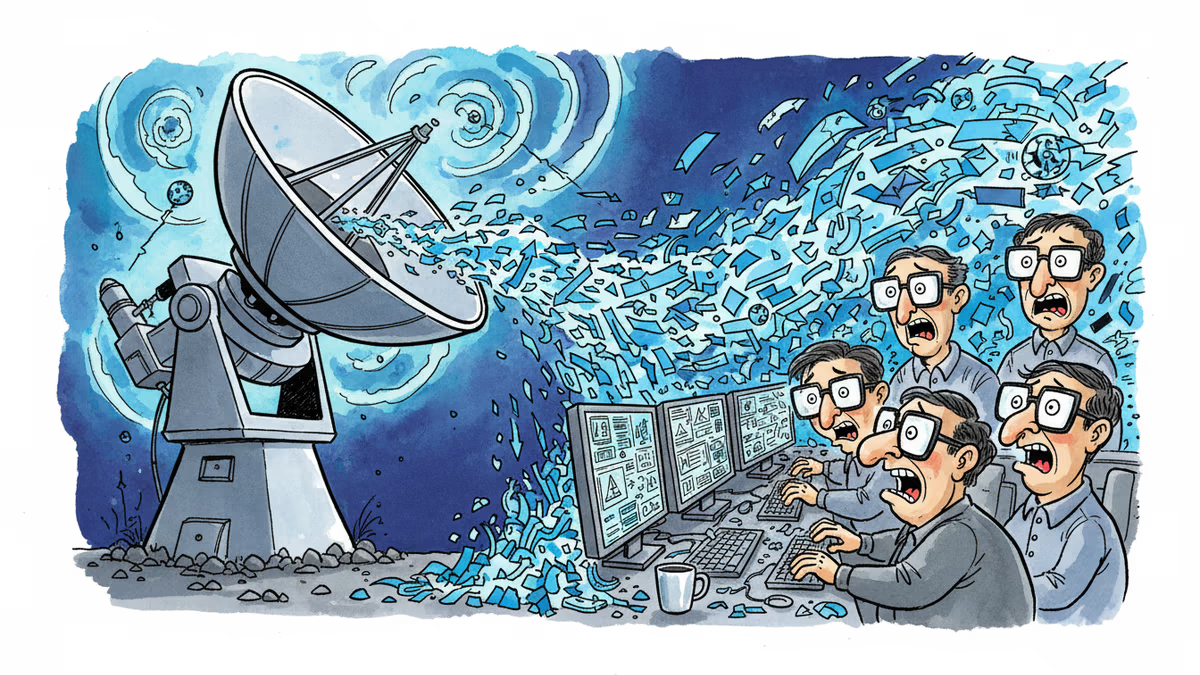
The Vera C. Rubin Observatory's automated alert system went live, flooding astronomers with 800,000 alerts about asteroids, supernovas, and black holes on its first night. The age of astronomical big data has begun.

As the Kuiper Belt comes into focus with next-generation telescopes, astronomers prepare to discover 10 times more objects than the 4,000 found over 30 years—and possibly solve the Planet X mystery.
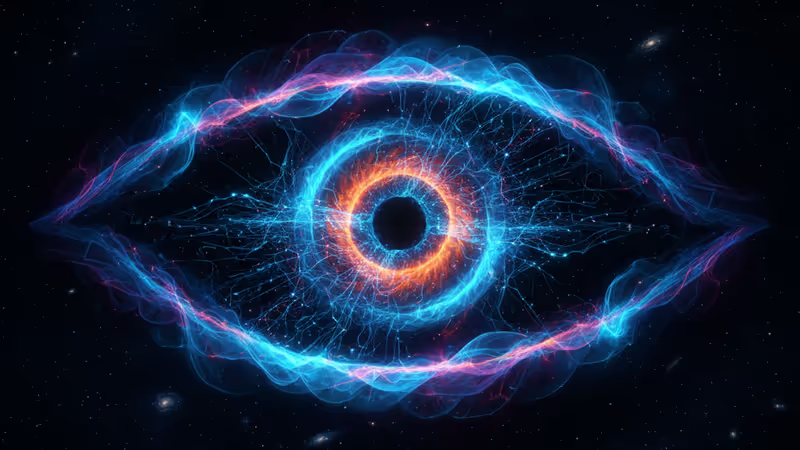
Explore the Helix Nebula, known as the 'Eye of Sauron,' located 655 light-years away. Learn how this planetary nebula offers a glimpse into the Sun's future.
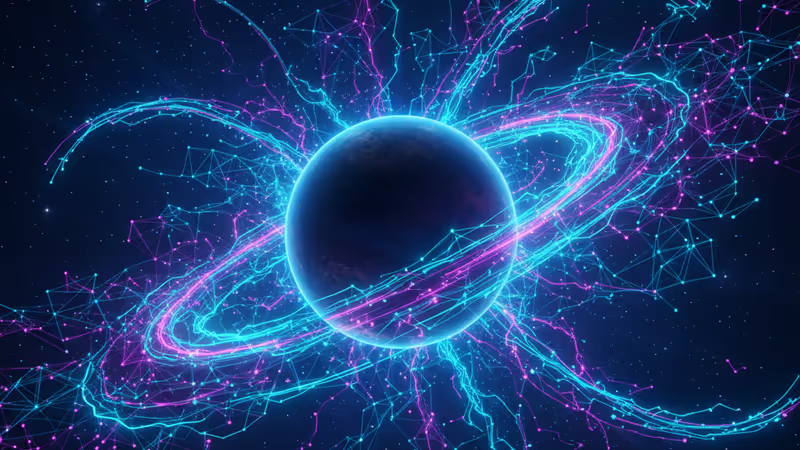
Astronomers have achieved the first direct rogue planet mass measurement using gravitational microlensing. Learn how this Saturn-mass orphan was discovered.
The Vera C. Rubin Observatory's automated alert system went live, flooding astronomers with 800,000 alerts about asteroids, supernovas, and black holes on its first night. The age of astronomical big data has begun.
As the Kuiper Belt comes into focus with next-generation telescopes, astronomers prepare to discover 10 times more objects than the 4,000 found over 30 years—and possibly solve the Planet X mystery.
Explore the Helix Nebula, known as the 'Eye of Sauron,' located 655 light-years away. Learn how this planetary nebula offers a glimpse into the Sun's future.
Astronomers have achieved the first direct rogue planet mass measurement using gravitational microlensing. Learn how this Saturn-mass orphan was discovered.
Thoughts
Share your thoughts on this article
Sign in to join the conversation