
Google's AI Game Generator Sends Gaming Stocks Tumbling
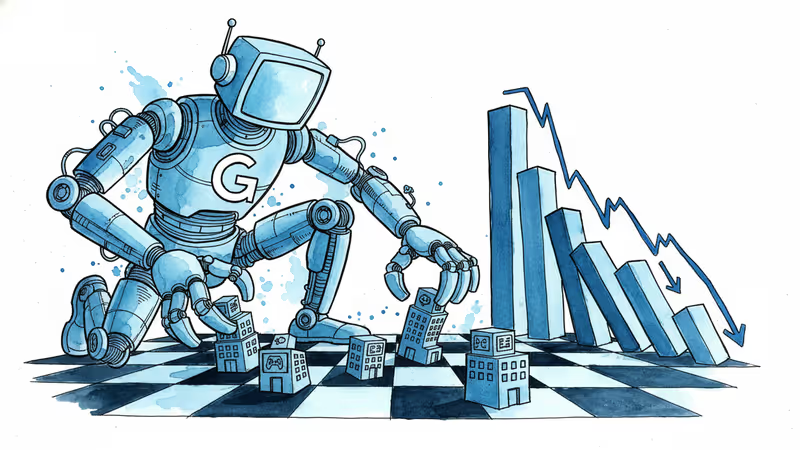
Major gaming stocks plunged up to 24% after Google unveiled Project Genie, an AI tool that generates interactive games from text prompts.
When Google unveiled its AI-powered game creation tool on Thursday, Wall Street's reaction was swift and brutal. By Friday's close, major gaming companies saw their stock prices crater: Take-Two Interactive dropped 7.93%, Roblox plummeted 13.17%, and Unity suffered a devastating 24.22% decline.
Project Genie: The Game Development Disruptor
Project Genie represents Google's bold entry into AI-generated gaming. The tool allows users to create interactive experiences through simple text prompts—no coding required. Think of it as ChatGPT for game development, where describing your vision can instantly produce a playable experience.
The market's panic isn't unfounded. Unity, which provides the backbone for countless games through its development engine, took the hardest hit. Investors are clearly worried that AI could democratize game creation to a point where traditional development tools become obsolete.
Roblox, built on user-generated content, faces a different threat. If anyone can create sophisticated games with AI, why would creators need Roblox's platform? Meanwhile, Take-Two, publisher of massive franchises like Grand Theft Auto, might seem insulated—but even AAA studios could find their development costs and timelines disrupted.

The Broader Creative Backlash
Project Genie arrives amid growing controversy over AI's impact on creative industries. Artists and developers have repeatedly accused AI companies of training models on copyrighted work without permission. The tool's environmental footprint—AI models consume massive amounts of electricity and water—adds another layer of concern.
For game developers, the existential question looms: Will AI enhance their creativity or replace their expertise? The answer likely depends on whether you're a solo indie developer or part of a hundred-person studio.
Market Reality Check
While Friday's stock movements grabbed headlines, they might reflect more fear than fundamental change. Creating a compelling game involves far more than generating interactive elements—it requires narrative design, player psychology, monetization strategy, and community building.
Google's demo showed impressive technical capabilities, but can Project Genie create the next Fortnite or Minecraft? The gap between a functional game and a cultural phenomenon remains vast.
Authors
Related Articles

Samsung and SK unveiled a chip and AI investment package worth thousands of trillions of won on June 29. The headline number swings wildly by outlet, but the real contest isn't capital — it's water and power.

In a post-Google I/O interview, Sundar Pichai acknowledged flawed search results, real AI anxiety, and an AGI timeline that makes the label irrelevant. Here's what he said — and what it means.
Google is building AI agents that search the web proactively, without user prompting. That's not just a product update — it's a fundamental shift in who controls the information you receive.

Viral videos show 2026 graduates jeering executives who praise AI at commencement ceremonies. It's not just rudeness — it's a signal about who pays for technological optimism.
Samsung and SK unveiled a chip and AI investment package worth thousands of trillions of won on June 29. The headline number swings wildly by outlet, but the real contest isn't capital — it's water and power.
In a post-Google I/O interview, Sundar Pichai acknowledged flawed search results, real AI anxiety, and an AGI timeline that makes the label irrelevant. Here's what he said — and what it means.
Google is building AI agents that search the web proactively, without user prompting. That's not just a product update — it's a fundamental shift in who controls the information you receive.
Viral videos show 2026 graduates jeering executives who praise AI at commencement ceremonies. It's not just rudeness — it's a signal about who pays for technological optimism.
Thoughts
Share your thoughts on this article
Sign in to join the conversation