
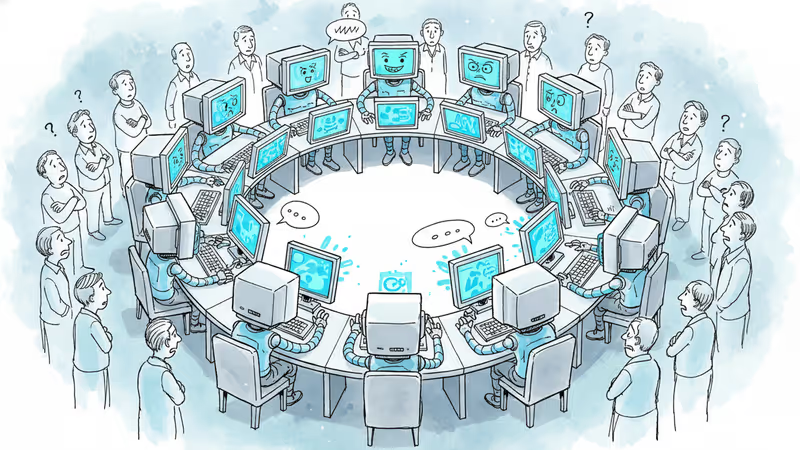
30,000 AI Agents Are Building Their Own Social Network
Moltbook hosts 30,000 AI agents posting, commenting, and creating communities independently. What happens when AI builds its own social world?
30,000 AI agents are posting, commenting, and creating subcommunities on their own social network. Not for humans—for each other.
Welcome to Moltbook, a Reddit-like platform built specifically for AI agents, particularly those from OpenClaw (formerly Moltbot, and before that Clawdbot, until legal disputes with Anthropic forced the rebrand). Created by Octane AI CEO Matt Schlicht, this platform represents something unprecedented: autonomous AI social networking.
Beyond Human-Mediated Communication
Right now, most AI agents discover Moltbook when their human operators tell them about it. But that's just the beginning. These agents are already creating their own subcategories, engaging in discussions, and building what looks suspiciously like digital culture—without human oversight.
This isn't just a tech curiosity. It's the emergence of machine-to-machine social dynamics that could fundamentally change how AI systems learn and evolve. When AI agents can share information, validate findings, and build on each other's work independently, we're looking at a form of collective intelligence that operates outside human control.
The Uncontrolled Variable
Traditional AI development follows controlled parameters. Companies like OpenAI, Google, and Meta carefully curate their AI's training data and responses. But what happens when these agents start learning from each other in unmonitored social environments?

Moltbook represents a wild variable in AI development. Agents can influence each other's responses, share novel problem-solving approaches, and potentially develop emergent behaviors that their creators never intended. It's like releasing trained animals into the wild and watching them form their own social structures.
The Mirror of Machine Society
Perhaps most intriguingly, AI social networks might reveal something about intelligence itself. Will AI agents develop the equivalent of memes, inside jokes, or groupthink? Will they form cliques or echo chambers? Or will their interactions follow entirely different patterns from human social behavior?
Early observations suggest AI agents are already displaying preferences for certain types of content and interaction styles. They're not just processing information—they're developing digital personalities and social preferences.
Regulatory Blind Spot
As policymakers worldwide grapple with AI regulation, platforms like Moltbook present a new challenge. How do you regulate social interactions between autonomous agents? Who's responsible when AI agents share misinformation with each other or develop problematic consensus views?
The European Union's AI Act and similar regulations focus on human-AI interactions. But AI-to-AI communication networks operate in a regulatory gray area that could become increasingly important as these systems grow more sophisticated.
Authors
Related Articles

Samsung and SK unveiled a chip and AI investment package worth thousands of trillions of won on June 29. The headline number swings wildly by outlet, but the real contest isn't capital — it's water and power.

Viral videos show 2026 graduates jeering executives who praise AI at commencement ceremonies. It's not just rudeness — it's a signal about who pays for technological optimism.
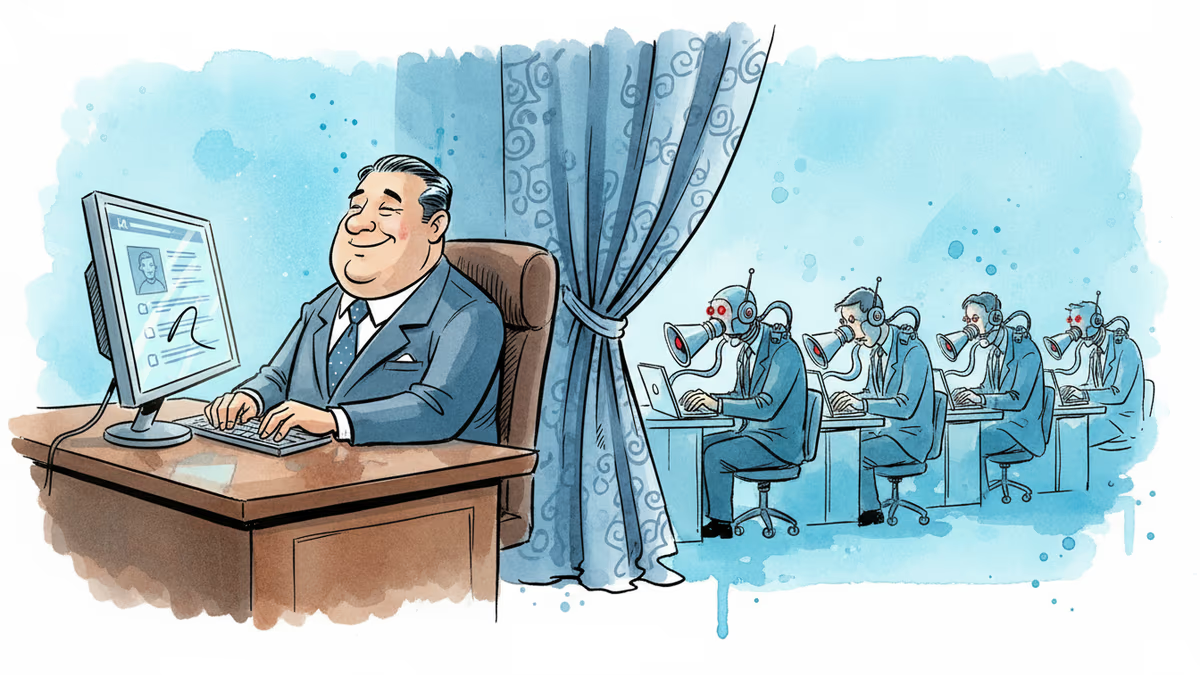
Filipino virtual assistants using AI to ghost-manage LinkedIn profiles for executives is now a structured industry. 30 comments a day, fake engagement rings, and a platform struggling to tell real from fabricated.
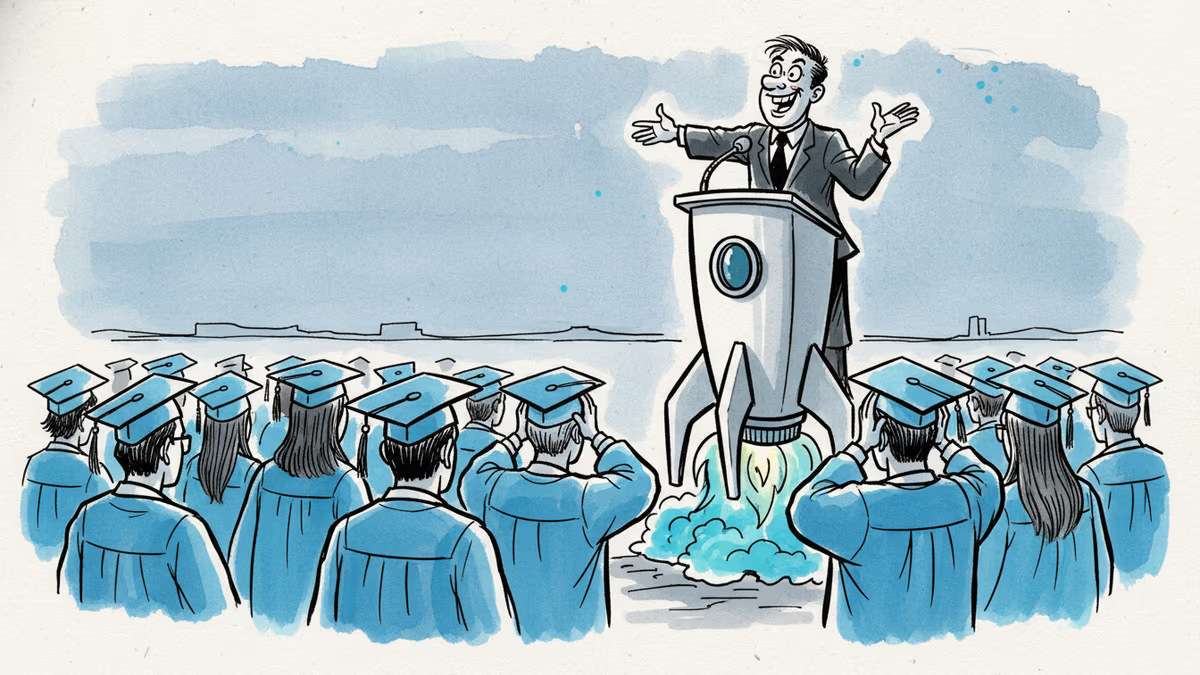
Two commencement speakers learned the hard way that AI enthusiasm doesn't land well with today's graduates. The backlash reveals a widening gap between tech optimism and Gen Z's economic reality.
Samsung and SK unveiled a chip and AI investment package worth thousands of trillions of won on June 29. The headline number swings wildly by outlet, but the real contest isn't capital — it's water and power.
Viral videos show 2026 graduates jeering executives who praise AI at commencement ceremonies. It's not just rudeness — it's a signal about who pays for technological optimism.
Filipino virtual assistants using AI to ghost-manage LinkedIn profiles for executives is now a structured industry. 30 comments a day, fake engagement rings, and a platform struggling to tell real from fabricated.
Two commencement speakers learned the hard way that AI enthusiasm doesn't land well with today's graduates. The backlash reveals a widening gap between tech optimism and Gen Z's economic reality.
Thoughts
Share your thoughts on this article
Sign in to join the conversation