
Facebook Is Paying Creators to Show Up. Is It Worth It?
Meta's new Creator Fast Track program offers up to $3,000/month guaranteed pay to lure creators from TikTok, YouTube, and Instagram. After paying out $3B in 2025, what's the real play here?
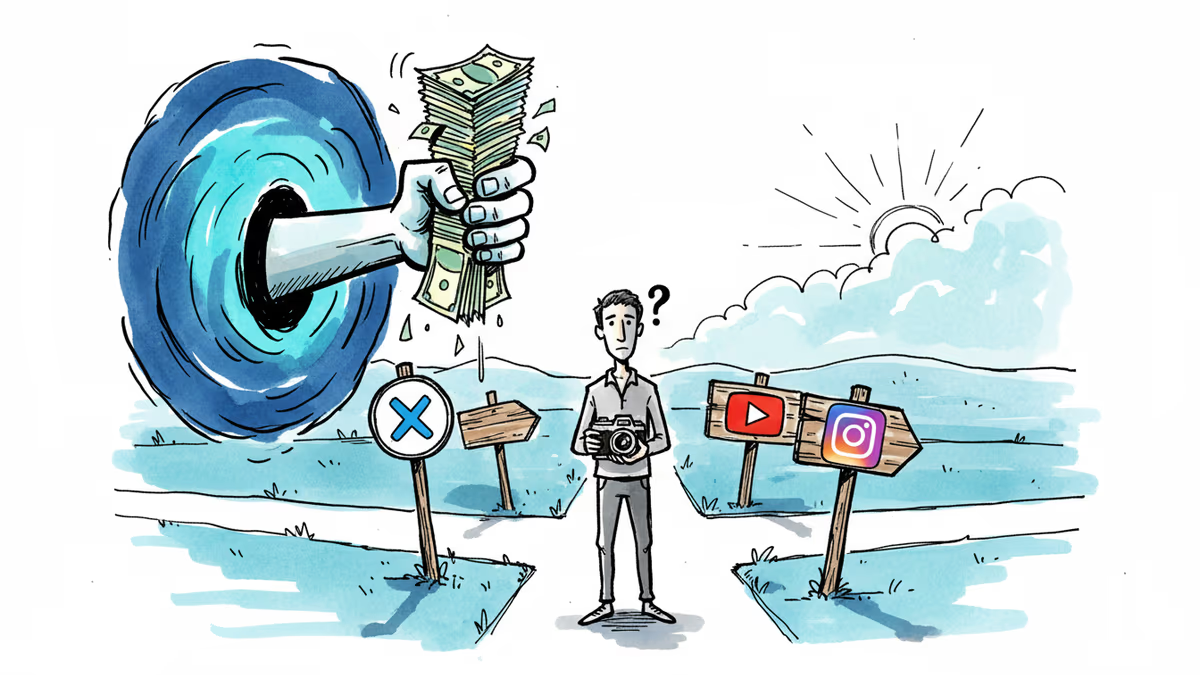
Imagine you've spent three years building 500,000 followers on TikTok. The brand deals are flowing. The algorithm finally likes you. Then Facebook calls and says: "Post your existing videos on our platform for three months. We'll pay you $3,000 a month just to show up." No new content required. No follower minimum on Facebook. Just... come.
That's not a hypothetical. That's Meta's new "Creator Fast Track" program, announced this week — and it's the most direct signal yet that the platform wars have shifted from chasing users to buying creators.
What Facebook Is Actually Offering
The mechanics are straightforward. Creators with at least 100,000 followers on Instagram, TikTok, or YouTube qualify for $1,000 per month in guaranteed pay for three months on Facebook. Cross the one million follower threshold on any of those platforms, and that number jumps to $3,000 per month.
But the more interesting part isn't the money — it's the conditions. Or rather, the lack of them.
Normally, earning money on Facebook requires meeting the platform's own follower and engagement thresholds. Creator Fast Track bypasses all of that. Eligible creators get immediate access to Facebook's monetization tools, boosted reach on Reels, and — crucially — they keep those monetization privileges even after the three-month program ends.
Yair Livne, VP of Creator Product at Facebook, was candid about why the program exists: "We wanted to address creators' concerns that it would be a hard road to onboard onto Facebook and build a community from scratch." He added that if three months isn't enough time to build an audience, Facebook will continue boosting reach until it believes the creator has found their footing.
And here's the kicker Livne emphasized: you don't need to create anything new. A back catalog of your best-performing videos qualifies. Repurposed content counts.
The $3 Billion Context

This program doesn't exist in a vacuum. Meta disclosed that it paid creators nearly $3 billion through its monetization programs in 2025 — a 35% increase from the prior year and its highest annual payout ever. Of that total, 60% went to Reels creators. The number of creators earning more than $10,000 annually on Facebook grew by over 30% year-over-year.
Those are numbers designed to be read by creators sitting on the fence. They're also numbers that tell a story about where Facebook's content strategy is heading: short-form video, creator-driven, and increasingly competitive with YouTube and TikTok on financial terms.
Alongside Creator Fast Track, Meta is rolling out new earnings transparency tools. A "qualified views" metric will show creators how many of their views actually count toward earnings — because not all views are equal. Someone who watches one second of your Reel before swiping? That's a non-qualified view. An "earnings rate" metric will display approximate pay per 1,000 qualified views, while a "non-qualified views" breakdown will explain why certain views didn't count and how creators can improve future performance.
The transparency is genuinely useful. It's also a window into how tightly Meta controls what "counts" in its ecosystem.
Three Perspectives on the Same Deal
For creators, the offer is hard to dismiss. Getting paid to repost existing content while simultaneously expanding your distribution footprint sounds like a no-brainer. But the calculus gets complicated after month three. Guaranteed pay disappears. Reach boosts eventually taper. What remains is a creator now embedded in another platform's algorithm, with all the dependency that implies. The history of platform-creator relationships — from Vine's collapse to YouTube's repeated monetization policy shifts — suggests that terms can change faster than audiences can be rebuilt.
For advertisers and marketers, this is a supply-side expansion play. More established creators posting on Facebook means more premium inventory, more engagement signals, and potentially more efficient ad spend. If Creator Fast Track successfully migrates even a fraction of top-tier creators from competing platforms, Facebook's advertising proposition strengthens meaningfully.
For competitors, the pressure is real. TikTok is navigating ongoing regulatory uncertainty in the US. YouTube has long been the default home for professional creators but doesn't offer guaranteed baseline pay. Snapchat and emerging platforms are fighting for the same talent pool. Facebook's willingness to write checks — not just promise future earnings — changes the negotiating dynamic across the industry.
The Deeper Question About Platform Power
There's a structural tension worth naming. Creator Fast Track is designed to solve a cold-start problem: creators won't come because they have no audience, and audiences won't come because there are no creators. By injecting cash and algorithmic lift, Meta short-circuits that loop.
But the solution also concentrates power. When a platform can pay creators to show up, set the rules for what views "qualify," and decide when a creator has "found their audience," it's not just a distribution partner — it's a gatekeeper with a financial relationship attached. The new metrics give creators more data, but the underlying decisions about what content earns and what doesn't remain with Meta.
This isn't unique to Facebook. Every major platform operates this way. What's shifting is the explicitness of the transaction.
Authors
Related Articles
A law firm marketing itself on AI-powered legal success submitted fake citations in a federal appeal. Now its lawyers face sanctions — and the broader AI legal industry faces a credibility crisis.
Snap, YouTube, and TikTok settled a landmark school district lawsuit over social media addiction. With 1,000+ similar cases pending, this could reshape Big Tech's liability landscape.
Five major publishers and author Scott Turow have filed a class action lawsuit against Meta, alleging the company used illegal pirate sites like LibGen to train its Llama AI models without permission.
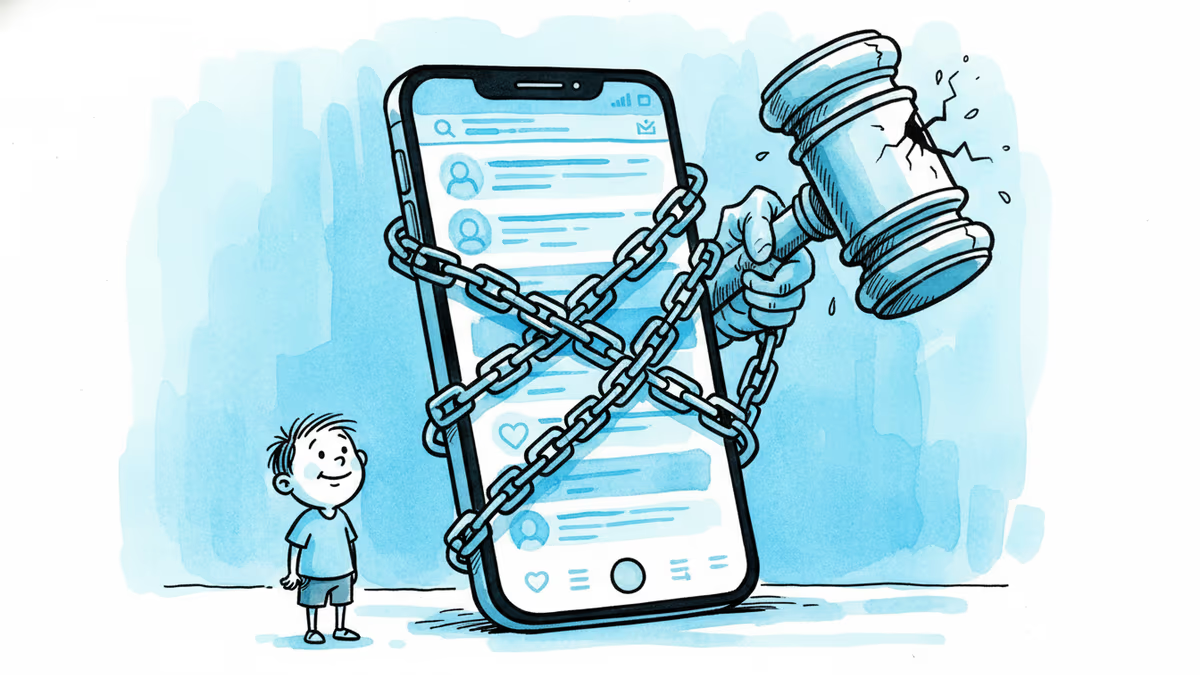
New Mexico already won $375 million from Meta. Now it wants something harder to give: a court order forcing Facebook, Instagram, and WhatsApp to redesign themselves. A three-week trial starts Monday.
A law firm marketing itself on AI-powered legal success submitted fake citations in a federal appeal. Now its lawyers face sanctions — and the broader AI legal industry faces a credibility crisis.
Snap, YouTube, and TikTok settled a landmark school district lawsuit over social media addiction. With 1,000+ similar cases pending, this could reshape Big Tech's liability landscape.
Five major publishers and author Scott Turow have filed a class action lawsuit against Meta, alleging the company used illegal pirate sites like LibGen to train its Llama AI models without permission.
New Mexico already won $375 million from Meta. Now it wants something harder to give: a court order forcing Facebook, Instagram, and WhatsApp to redesign themselves. A three-week trial starts Monday.
Thoughts
Share your thoughts on this article
Sign in to join the conversation