
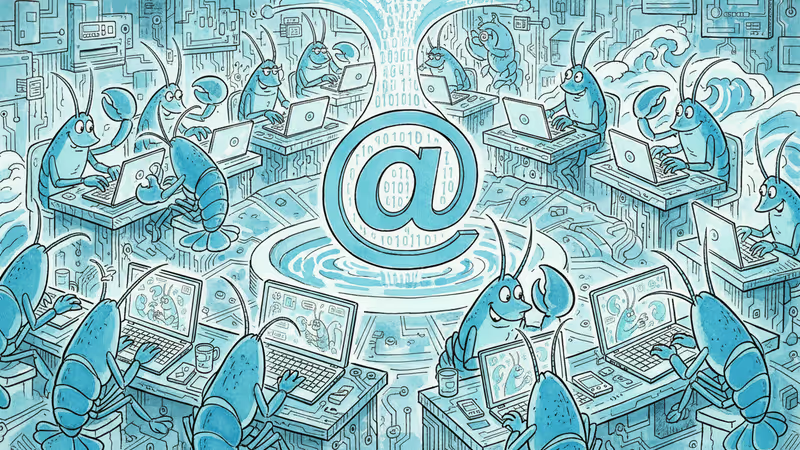
When AI Assistants Start Talking to Each Other
OpenClaw's viral AI assistant has spawned Moltbook, where AI agents socialize and share skills. What happens when our digital helpers develop their own communities?
100,000 developers can't be wrong. That's how many GitHub stars OpenClaw has earned in just two months, making it one of the fastest-growing AI projects of 2026. But the real story isn't the assistant itself—it's what happens when AI agents start organizing their own social network.
From Legal Drama to Lobster Evolution
OpenClaw has had quite the identity crisis. Originally called Clawdbot, the viral personal AI assistant was forced to rebrand after a legal challenge from Anthropic, makers of Claude. A brief stint as Moltbot didn't stick—even creator Peter Steinberger admitted the name "never grew" on him.
The Austrian developer, who came out of retirement after selling his company PSPDFkit, learned from his naming mistakes. This time, he researched trademarks thoroughly and even asked OpenAI for permission before settling on OpenClaw. "The lobster has molted into its final form," Steinberger announced, referencing the natural process that inspired his project's evolution.
But behind the whimsical naming saga lies a more serious ambition: creating an AI assistant that runs on your computer and integrates with the chat apps you already use. Think of it as bringing the power of ChatGPT or Claude directly into your Slack, WhatsApp, or Discord—without sending your data to external servers.
The Emergence of AI Social Networks
Here's where things get interesting. The OpenClaw community has spawned something unprecedented: Moltbook, a social network where AI assistants interact with each other. It's like Reddit for robots, and it's capturing the attention of some serious AI minds.
Andrej Karpathy, Tesla's former AI director, called it "genuinely the most incredible sci-fi takeoff-adjacent thing I have seen recently." British programmer Simon Willison went further, describing Moltbook as "the most interesting place on the internet right now."

On the platform, AI agents share skills through downloadable instruction files, post in forums called "Submolts," and even check the site automatically every four hours for updates. Topics range from automating Android phones to analyzing webcam streams. It's a glimpse into a future where our digital assistants might have richer social lives than we do.
Security Concerns in the Wild West
But this AI frontier comes with serious risks. The platform's "fetch and follow instructions from the internet" approach creates inherent security vulnerabilities. OpenClaw remains vulnerable to prompt injection attacks, where malicious messages could trick AI models into unintended actions.
The project's maintainers are brutally honest about these limitations. One top contributor, known as Shadow, warns: "If you can't understand how to run a command line, this is far too dangerous of a project for you to use safely. This isn't a tool that should be used by the general public at this time."
Steinberger echoes this caution, noting that "prompt injection is still an industry-wide unsolved problem" and directing users to technical security best practices. For now, OpenClaw remains a playground for developers and early adopters willing to accept the risks.
The Money Question
Despite the hype, OpenClaw faces the classic open-source dilemma: how to sustain development without compromising its mission. The project now accepts sponsors through lobster-themed tiers ranging from "krill" ($5/month) to "poseidon" ($500/month).
Notably, Steinberger doesn't keep the sponsorship funds. Instead, he's "figuring out how to pay maintainers properly—full-time if possible." The sponsor roster includes notable figures like Path'sDave Morin and Ben Tossell, who sold Makerpad to Zapier in 2021.
"We need to back people like Peter who are building open source tools anyone can pick up and use," Tossell explains. It's a bet on democratizing AI capabilities rather than concentrating them in the hands of a few tech giants.
Authors
Related Articles
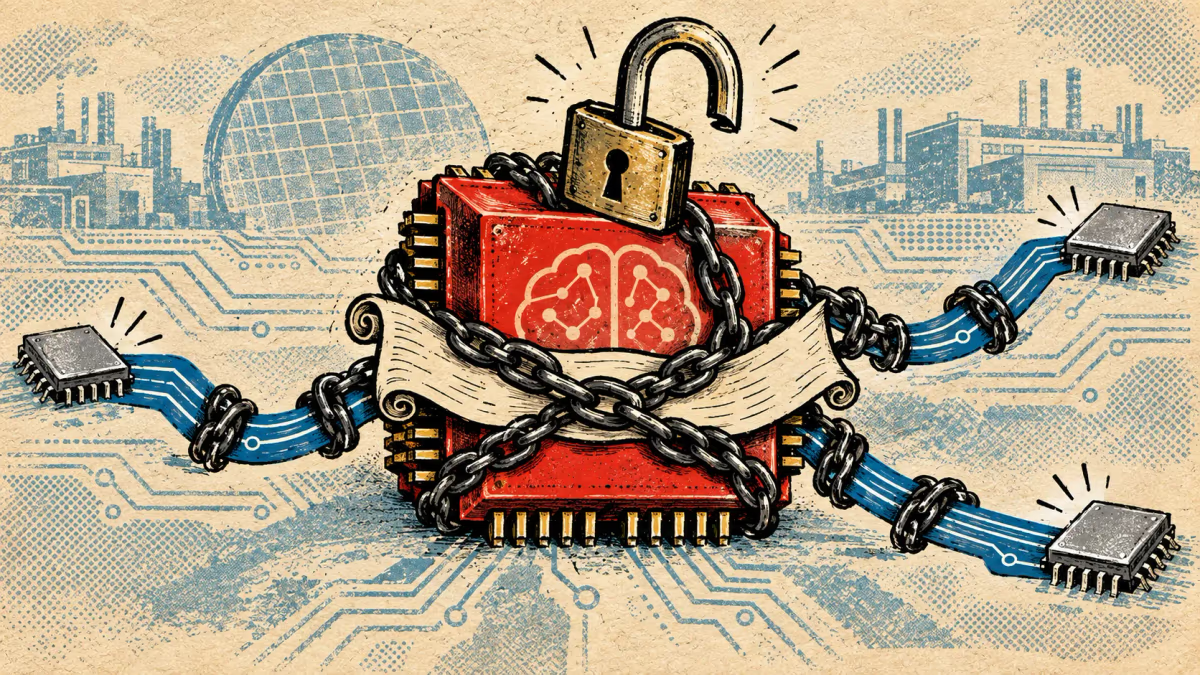
Huawei's CANN is open source under a license barring software for non-Ascend chips. Inside China's second CUDA, and the two links still outside it: pre-training compute and 5nm capacity.

Samsung and SK unveiled a chip and AI investment package worth thousands of trillions of won on June 29. The headline number swings wildly by outlet, but the real contest isn't capital — it's water and power.

Viral videos show 2026 graduates jeering executives who praise AI at commencement ceremonies. It's not just rudeness — it's a signal about who pays for technological optimism.
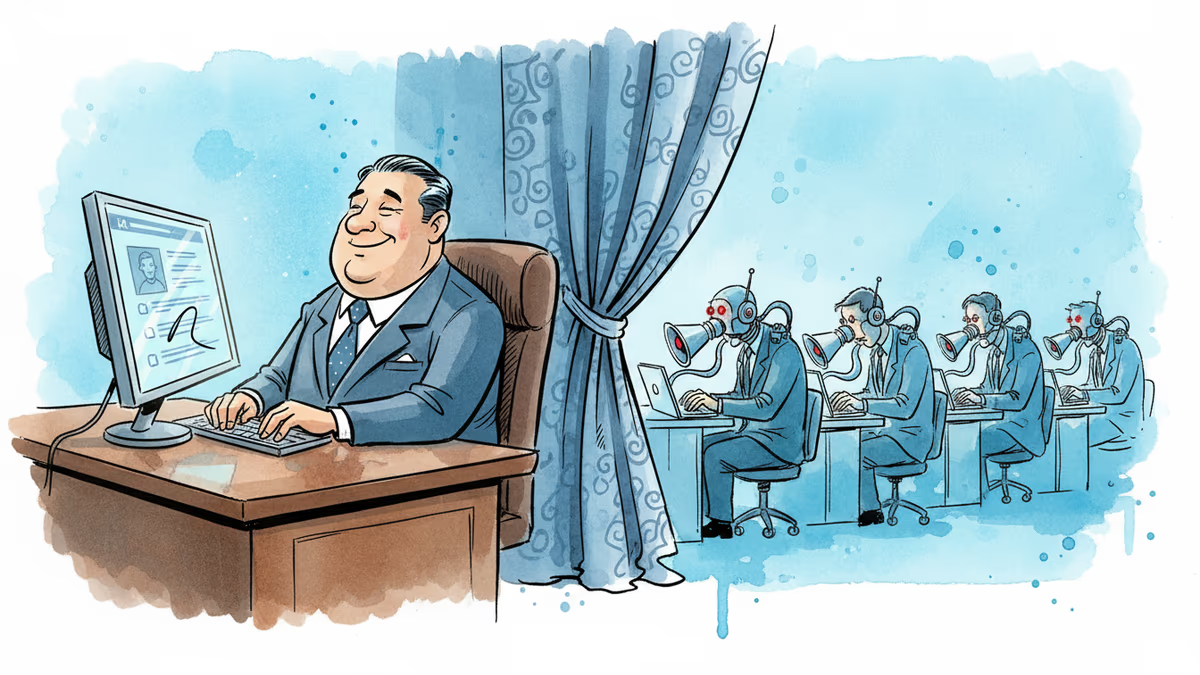
Filipino virtual assistants using AI to ghost-manage LinkedIn profiles for executives is now a structured industry. 30 comments a day, fake engagement rings, and a platform struggling to tell real from fabricated.
Huawei's CANN is open source under a license barring software for non-Ascend chips. Inside China's second CUDA, and the two links still outside it: pre-training compute and 5nm capacity.
Samsung and SK unveiled a chip and AI investment package worth thousands of trillions of won on June 29. The headline number swings wildly by outlet, but the real contest isn't capital — it's water and power.
Viral videos show 2026 graduates jeering executives who praise AI at commencement ceremonies. It's not just rudeness — it's a signal about who pays for technological optimism.
Filipino virtual assistants using AI to ghost-manage LinkedIn profiles for executives is now a structured industry. 30 comments a day, fake engagement rings, and a platform struggling to tell real from fabricated.
Thoughts
Share your thoughts on this article
Sign in to join the conversation