
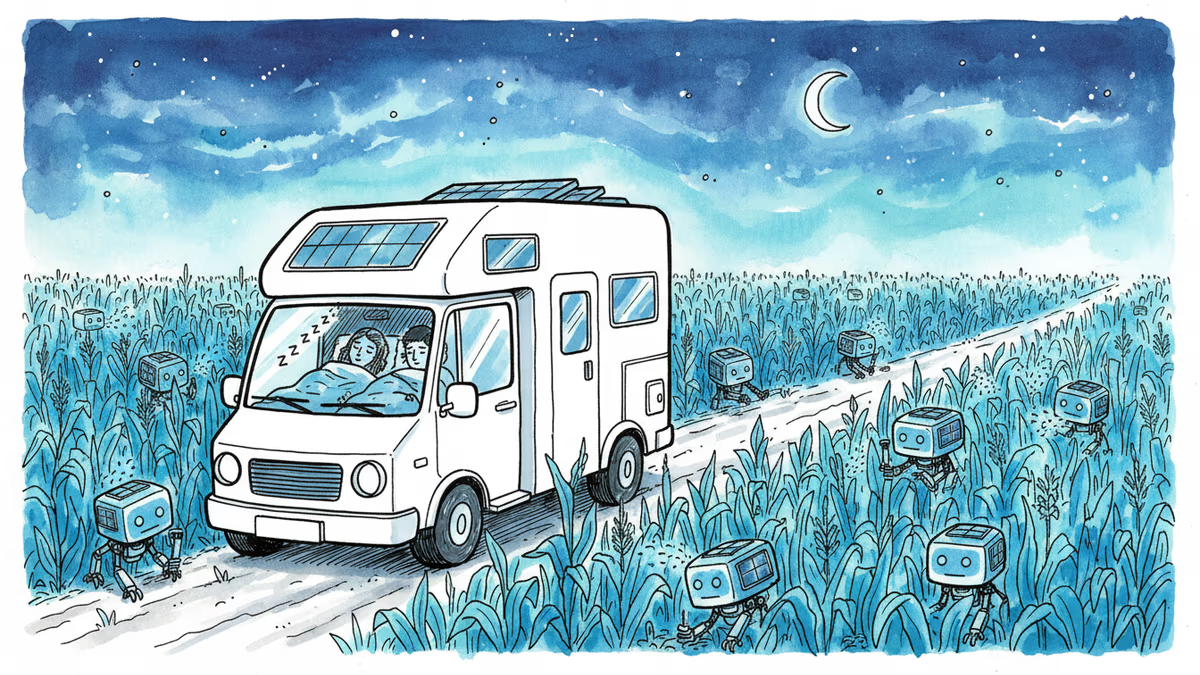
From Camper Van to Corn Fields: How Two Founders Cut Fertilizer Waste by 70%
Upside Robotics' solar-powered autonomous robots are revolutionizing agriculture by reducing fertilizer waste by 70% and saving farmers $150 per acre. Here's why farmers are asking for this technology.
The $150-Per-Acre Problem Nobody Talks About
Picture this: You're a corn farmer who just spent thousands on fertilizer, only to watch 70% of it wash away unused. It's not poor planning—it's how agriculture has worked for decades. But two entrepreneurs sleeping in a camper van beside Canadian corn fields have cracked a code that's saving farmers $150 per acre while slashing environmental waste.
Jana Tian and Sam Dugan of Upside Robotics didn't just build another agricultural robot. They lived the problem. "We spent probably more time than farmers did in a lifetime in their fields," Tian recalls. The result? Solar-powered autonomous robots that deliver precise amounts of fertilizer exactly when crops need it.
Why Traditional Farming Wastes $50 Billion Annually
The math is brutal: only 30% of applied fertilizer actually reaches the crops. The rest becomes runoff, polluting waterways and wasting money. Farmers typically apply fertilizer once per season in massive quantities, front-loading nutrients that plants can't absorb all at once.
"Crops need fertilizer during the season as well," explains Tian, a former chemical engineer at Unilever. "But the traditional approach forces farmers to guess how much they'll need months in advance." It's like taking a year's worth of vitamins in January and hoping they last until December.
This isn't just an efficiency problem—it's an environmental crisis. Excess nitrogen fertilizer creates algae blooms, dead zones in waterways, and contributes to greenhouse gas emissions. The global fertilizer market is worth over $200 billion, meaning waste alone represents a $140 billion annual loss.
From Remote-Control Car to $7.5M Startup
The founders' journey reads like a Silicon Valley fairy tale, but grittier. After meeting at Entrepreneur First accelerator in 2023, they bought a camper trailer and literally moved from field to field. Dugan, who'd been building robots since age ten, constructed their first prototype in just two weeks—essentially a remote-controlled car they operated manually while walking through corn rows.

"We would be walking, sometimes around the clock. We have spent every hour of the day in a corn field at some point," Dugan says. This wasn't just dedication; it was data collection. They needed to understand exactly when, where, and how much fertilizer each plant required.
The hands-on approach paid off. They went from 70 acres in 2024 to 1,200 acres in 2025, with 100% customer retention. Now they're preparing to serve over 3,000 acres in 2026, with more than 200 farms on their waitlist.
The Farmer Perspective: Why They're Buying In
Skepticism about agricultural technology runs deep in farming communities, and for good reason—many "revolutionary" solutions have promised more than they delivered. But Upside's approach differs fundamentally: farmers are asking for it.
"In a lot of cases, our farmers actually asked for this solution," Tian notes. The value proposition is clear: 70% reduction in fertilizer use translates to immediate cost savings and environmental benefits. For a typical corn operation, that's thousands of dollars per season.
The robots use proprietary algorithms analyzing weather and soil data to determine optimal fertilizer timing and quantities. They're solar-powered, meaning no fuel costs, and lightweight enough to avoid soil compaction—a major concern with heavy farm machinery.
The Bigger Agricultural Revolution
Upside recently raised $7.5 million in seed funding led by Plural, with participation from Garage Capital and Clearpath Robotics founders. But the real story isn't the funding—it's the shift toward precision agriculture that addresses both economic and environmental pressures.
Climate change is intensifying weather volatility, making traditional farming methods increasingly unreliable. Meanwhile, global food demand is rising while arable land shrinks. Technologies like Upside's robots represent a path toward sustainable intensification—producing more food with fewer inputs.
The company is eyeing expansion into the U.S. corn belt, where the market opportunity is massive. American farmers use over 20 million tons of fertilizer annually, suggesting potential for significant environmental and economic impact.
Authors
Related Articles
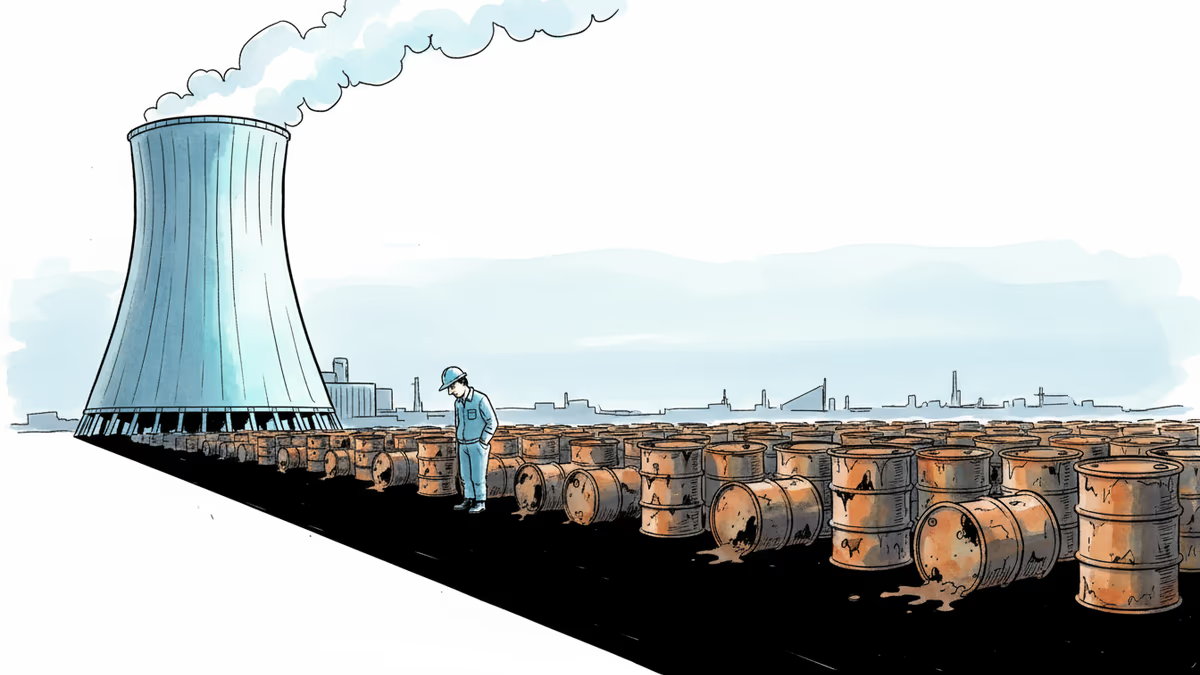
Nuclear power is winning fans across the political spectrum—and Big Tech is pouring billions in. But America still has no permanent home for the 2,000 metric tons of high-level waste its reactors produce every single year.
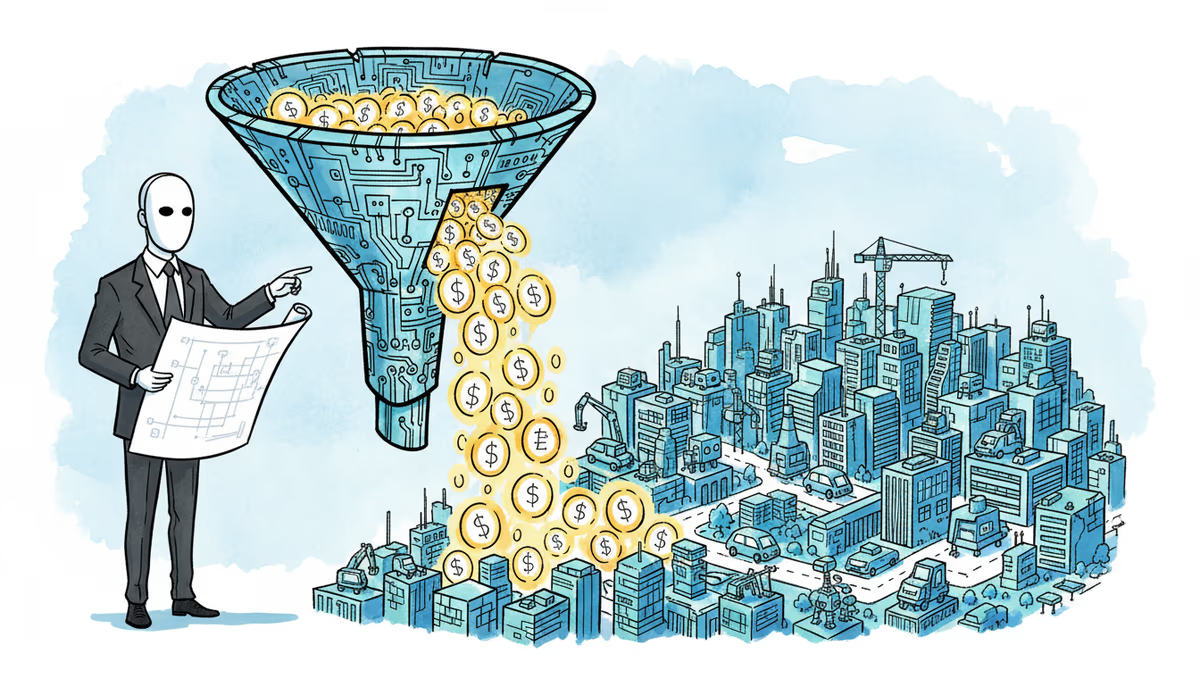
Eclipse Ventures just raised $1.3B to build an ecosystem of physical AI startups across transportation, energy, robotics, and defense. Here's why the strategy matters more than the money.
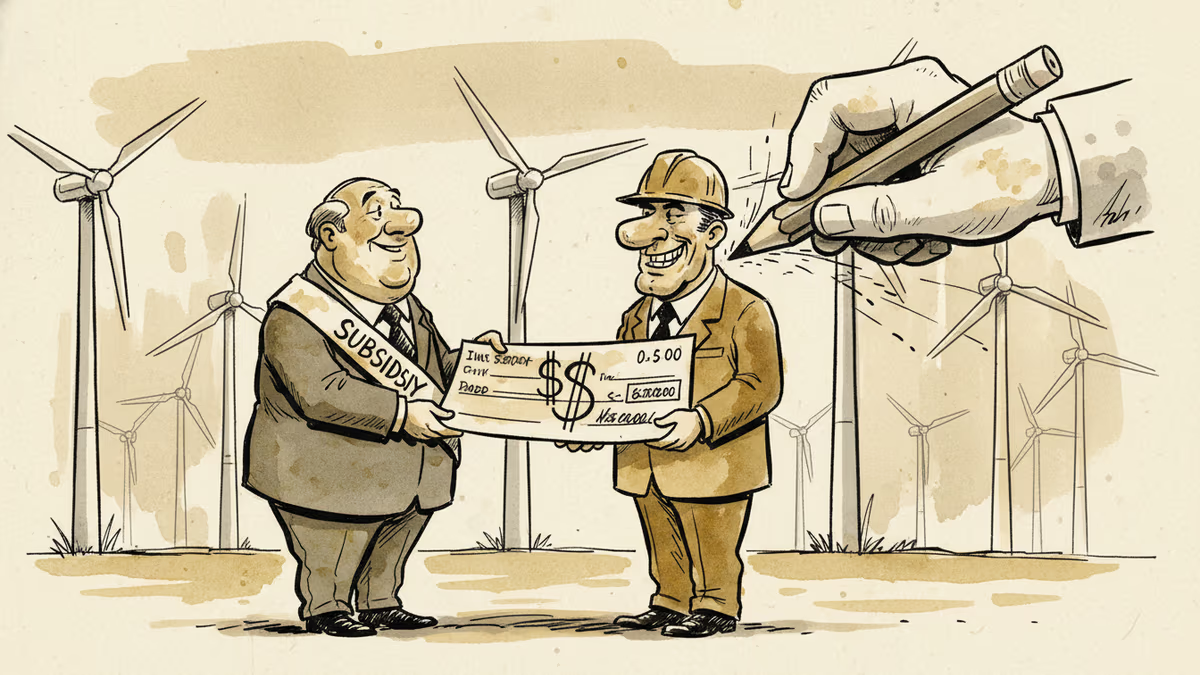
The Trump administration struck a deal to buy back offshore wind leases from TotalEnergies for $1 billion, redirecting that money into fossil fuel projects. What this means for energy markets, grid reliability, and the future of U.S. climate policy.
NASA's Swift Observatory is falling out of orbit. A $30M commercial robot mission may save it—and rewrite the rules for space infrastructure maintenance.
Nuclear power is winning fans across the political spectrum—and Big Tech is pouring billions in. But America still has no permanent home for the 2,000 metric tons of high-level waste its reactors produce every single year.
Eclipse Ventures just raised $1.3B to build an ecosystem of physical AI startups across transportation, energy, robotics, and defense. Here's why the strategy matters more than the money.
The Trump administration struck a deal to buy back offshore wind leases from TotalEnergies for $1 billion, redirecting that money into fossil fuel projects. What this means for energy markets, grid reliability, and the future of U.S. climate policy.
NASA's Swift Observatory is falling out of orbit. A $30M commercial robot mission may save it—and rewrite the rules for space infrastructure maintenance.
Thoughts
Share your thoughts on this article
Sign in to join the conversation