
When Warehouse Drones Get 'Curious,' $40M Follows
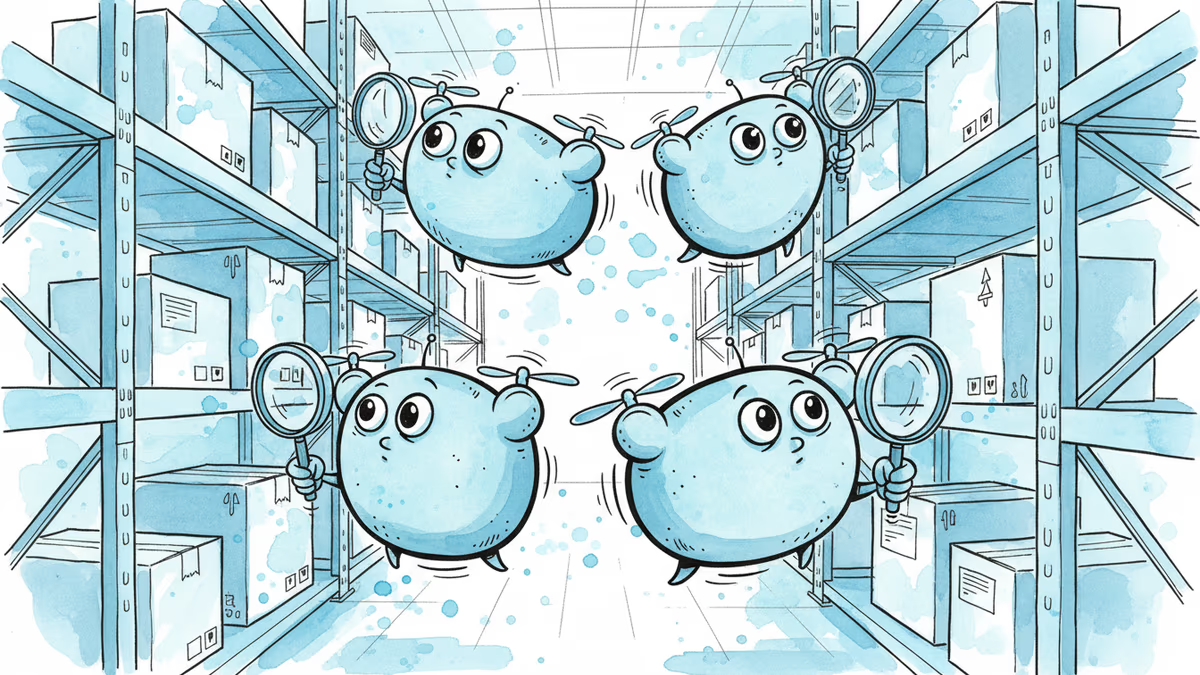
Gather AI raised $40M Series B for warehouse drones that don't just scan—they get curious. This isn't your typical surveillance tech.
$40 million. That's what happens when drones stop being passive scanners and start getting curious.
Gather AI just closed a Series B round led by Smith Point Capital, the VC firm founded by former Salesforce co-CEO Keith Block. But here's the twist: these aren't your typical warehouse surveillance drones. They're designed to be curious.
"It took Keith and his team five minutes to get what we're doing," co-founder and CEO Sankalp Arora told TechCrunch. What they're doing is teaching machines to wonder—and it's working.
From FBI Training Grounds to Warehouse Floors
The story begins at Carnegie Mellon University, where four PhD students built one of the world's first autonomous helicopters. Their testing ground? FBI training facilities at Quantico.
"My PhD work focused on how to make different kinds of flying robots curious," Arora explained. "So they're curious about boxes and bar codes and workflows."
That curiosity isn't random. Gather AI's drones and cameras, mounted on forklifts and flying through warehouses, actively seek out barcodes, lot codes, expiration dates, case counts, damages, and occupancy issues. The goal: discover and predict problems like low inventory, misplaced stock, and safety hazards before they become costly mistakes.
The Anti-LLM Approach

While everyone's chasing large language models, Gather AI went old school—and it's paying off. "They're not end-to-end neural networks," Arora explains. "They are classical Bayesian techniques, combined with neural networks."
Bayesian techniques use probability-based methods to teach computers visual interpretation. Unlike LLMs, they don't hallucinate. They gather information (hence the company name), learn from data and prior knowledge, then make decisions about their next action.
This approach landed them the 2025 Nebius Robotics award for Vision AI and Streaming Video Analytics in December.
The Embodied AI Frontier
Gather AI sits at the edge of what experts call "embodied AI"—robots that interact with the physical world rather than just chat interfaces. It's a market that Kwik Trip, Axon, GEODIS, and NFI Industries are already betting on as customers.
With 60 employees and $74 million raised to date, the startup is positioning itself for the next wave of warehouse automation. But this isn't just about efficiency—it's about working in environments hostile to humans, like freezers and cold storage facilities.
The Curiosity Premium
Investors are paying a premium for curiosity. Bain Capital Ventures, XRC Ventures, and Hillman Investments joined the round, betting that curious machines will outperform programmed ones.
The logic is compelling: traditional warehouse systems follow scripts. Curious systems adapt, learn, and improve. They don't just execute tasks—they discover new problems and solutions.
The $40 million bet isn't just on better warehouse management—it's on whether artificial curiosity can create value that programmed intelligence cannot. The jury's still out, but the drones are definitely paying attention.
Authors
Related Articles

Samsung and SK unveiled a chip and AI investment package worth thousands of trillions of won on June 29. The headline number swings wildly by outlet, but the real contest isn't capital — it's water and power.

Viral videos show 2026 graduates jeering executives who praise AI at commencement ceremonies. It's not just rudeness — it's a signal about who pays for technological optimism.

Filipino virtual assistants using AI to ghost-manage LinkedIn profiles for executives is now a structured industry. 30 comments a day, fake engagement rings, and a platform struggling to tell real from fabricated.
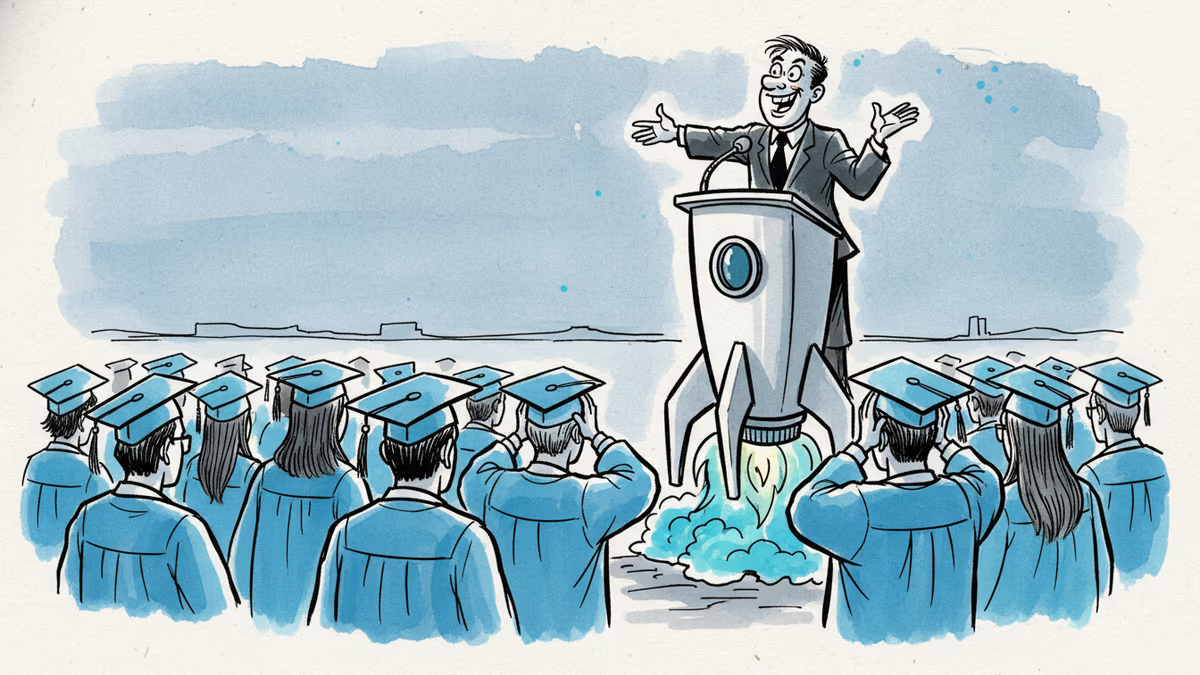
Two commencement speakers learned the hard way that AI enthusiasm doesn't land well with today's graduates. The backlash reveals a widening gap between tech optimism and Gen Z's economic reality.
Samsung and SK unveiled a chip and AI investment package worth thousands of trillions of won on June 29. The headline number swings wildly by outlet, but the real contest isn't capital — it's water and power.
Viral videos show 2026 graduates jeering executives who praise AI at commencement ceremonies. It's not just rudeness — it's a signal about who pays for technological optimism.
Filipino virtual assistants using AI to ghost-manage LinkedIn profiles for executives is now a structured industry. 30 comments a day, fake engagement rings, and a platform struggling to tell real from fabricated.
Two commencement speakers learned the hard way that AI enthusiasm doesn't land well with today's graduates. The backlash reveals a widening gap between tech optimism and Gen Z's economic reality.
Thoughts
Share your thoughts on this article
Sign in to join the conversation