
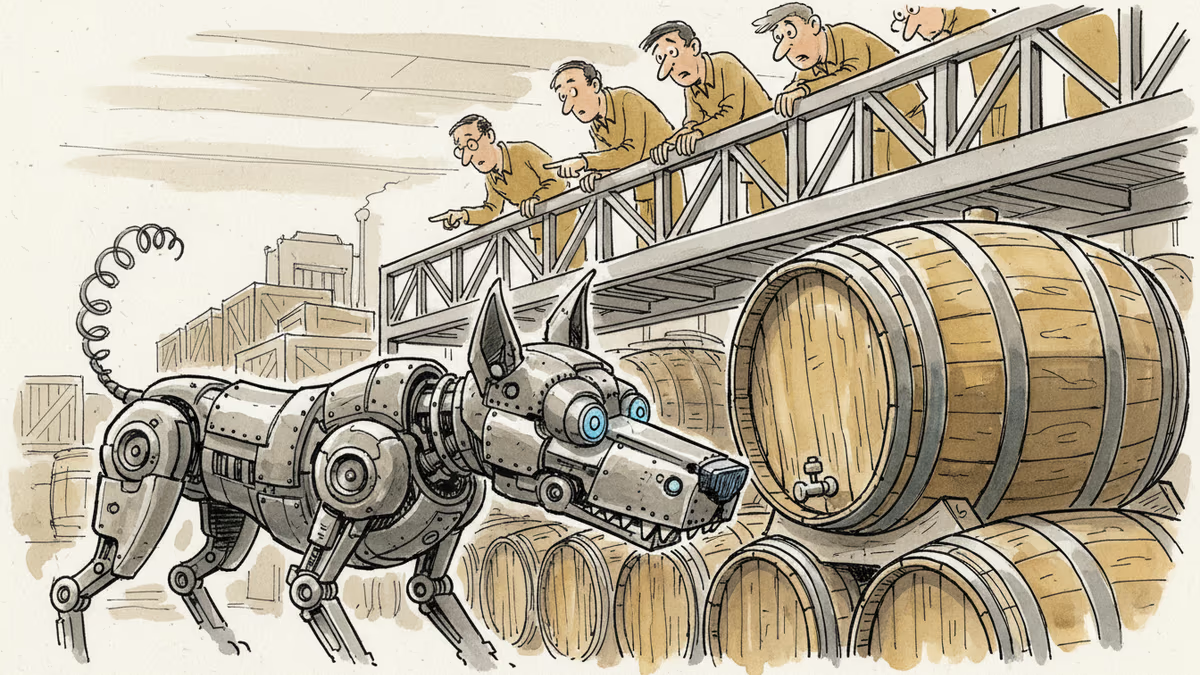
Why Robot Dogs Are Patrolling Whisky Warehouses
Bacardi deploys modified Boston Dynamics robots to sniff out leaking whisky barrels, revolutionizing traditional quality control in spirits manufacturing.
$100,000 robot versus $10 million worth of aging whisky. That's the math that convinced Bacardi to unleash a robot dog in their warehouses.
Meet Royal Barkla, a modified Boston Dynamics Spot robot that's revolutionizing how the world's largest privately-held spirits company hunts for leaking barrels. In its first warehouse patrol, this mechanical bloodhound identified problems in 10% of the casks it inspected—leaks that human workers had missed for years.
The Angel's Share Problem
Every whisky distiller knows about the "angel's share"—the 2% of liquid that naturally evaporates from Scottish barrels each year. It's not just accepted; it's celebrated as essential to whisky's character. Some distillers have even tried wrapping barrels in plastic to deny the angels their due, but most consider it a sacred cost of doing business.
The problem starts when angels get greedy. Damaged barrels, loose metal hoops, or popped stoppers can accelerate evaporation invisibly, draining casks while altering the flavor of what remains.
"In traditional warehouses, workers walk around and physically knock on casks," explains Angus Holmes, Bacardi's whisky category director. "They can tell by the sound how full the barrel is." But at Dewar's warehouses, barrels are stacked ceiling-high in tight formations—25,000 casks per warehouse, completely inaccessible to human inspection.
When Nose Beats Knock
The solution came from Scotland's National Manufacturing Institute, which suggested an unconventional approach: give a robot dog a sense of smell.

Engineers fitted Royal Barkla with a 3D-printed arm and ethanol vapor sensor. Instead of knocking on barrels, the robot sniffs each one, logging ethanol levels and flagging barrels losing too much booze. The mechanical mutt follows programmed patrol routes, creating a data-driven map of warehouse health.
"It moves with some pace," Holmes jokes. "And it makes that horrible, horror-movie, floor-scratching sound as it chases after you."
But the scratching pays off. In field trials, Royal Barkla found "enough leaks to make it worthwhile to continue," validating a sub-$100,000 investment against potential losses worth millions.
The Vertical Challenge
Royal Barkla has one major limitation: it can only reach 1.5 meters high. In warehouses where barrels tower to the ceiling, that means most casks remain beyond the robot's nose.
Bacardi's already planning the sequel. "We've found a spider robot that can climb," Holmes reveals, painting a decidedly more unsettling picture of future leak detection. The alternative? Ethanol-sensing drones that can fly through warehouses hunting for boozy hot spots—a natural extension since Bacardi already uses drones for security and facility inspections.
Industry Implications
The whisky world is watching. If successful, this technology could transform quality control across spirits manufacturing. Andrew Hamilton from NMIS notes that "repeatable, data-driven monitoring adds real value, helping producers better understand loss rates and plan for future spirit value."
But it raises questions about the industry's relationship with tradition. Whisky-making has relied on human expertise for centuries—master distillers who can detect subtle changes by sight, smell, and sound.
Authors
Related Articles
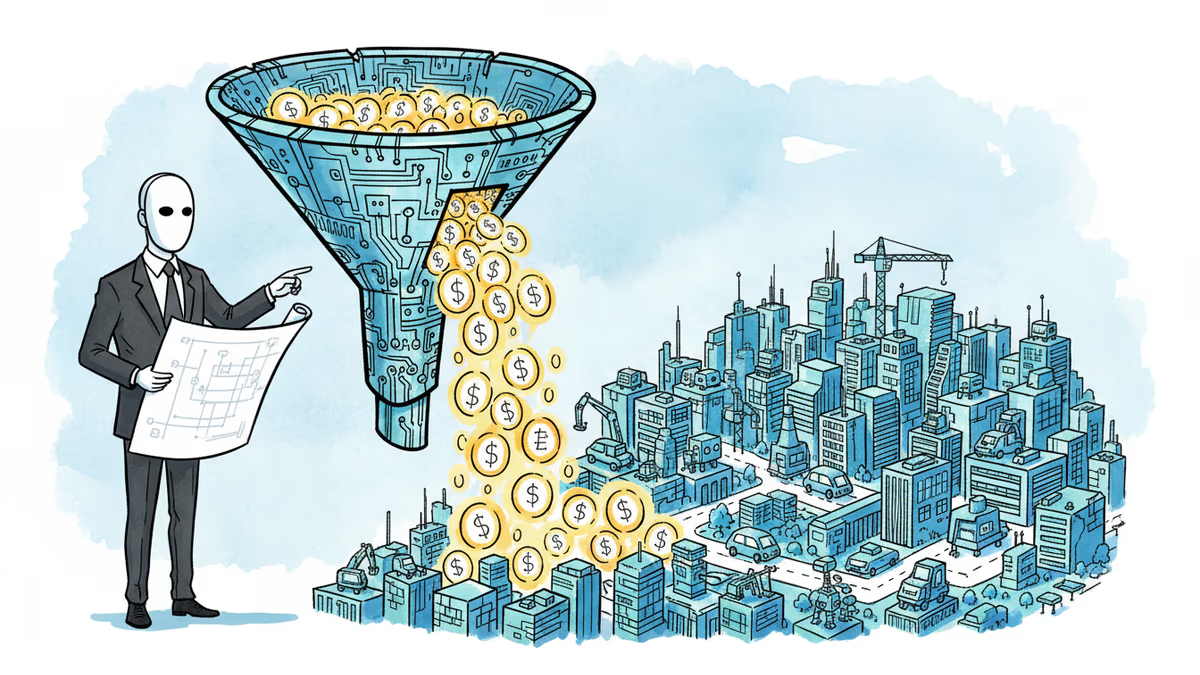
Eclipse Ventures just raised $1.3B to build an ecosystem of physical AI startups across transportation, energy, robotics, and defense. Here's why the strategy matters more than the money.
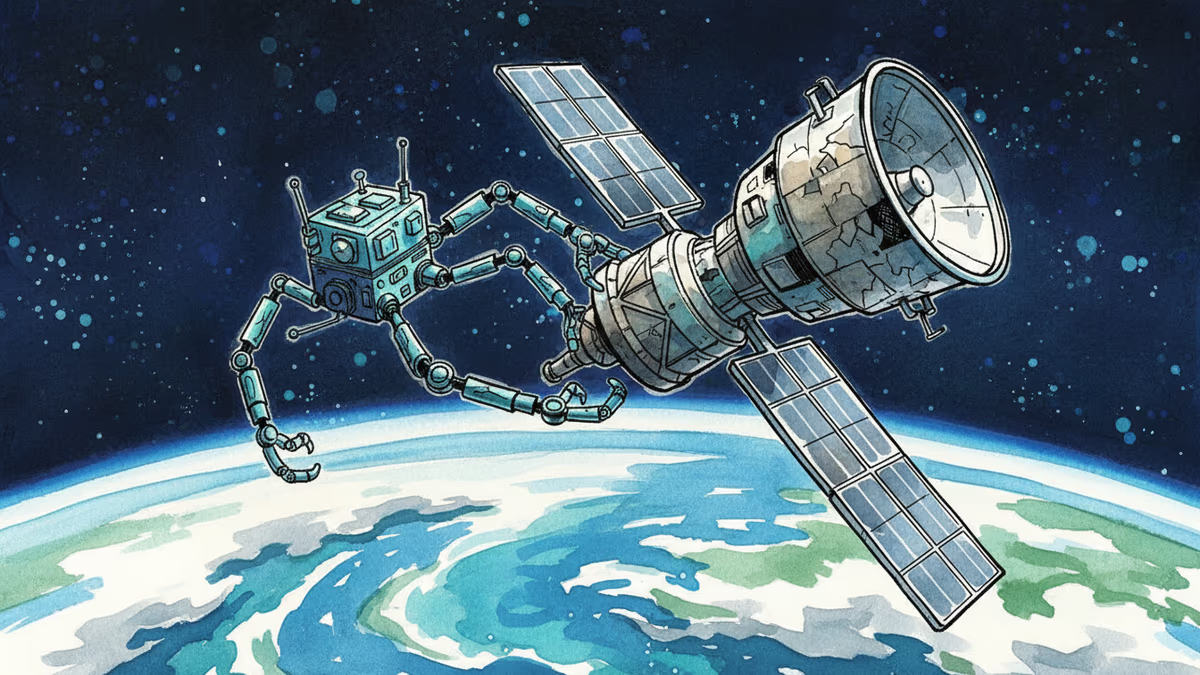
NASA's Swift Observatory is falling out of orbit. A $30M commercial robot mission may save it—and rewrite the rules for space infrastructure maintenance.
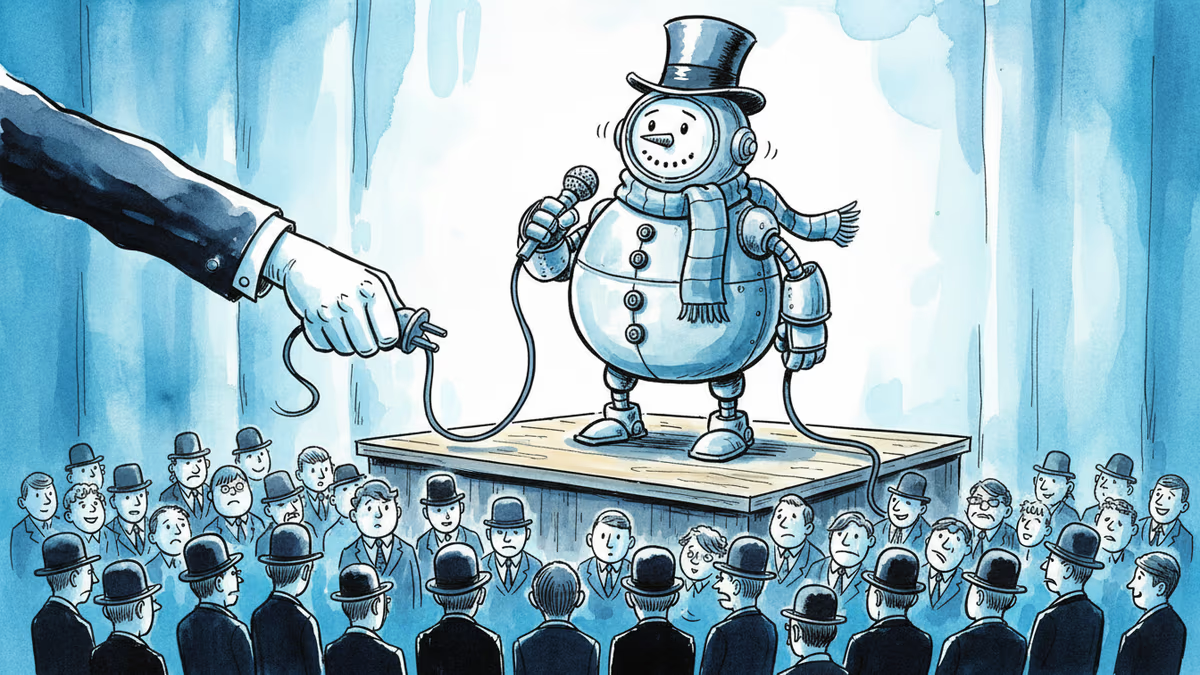
At Nvidia's GTC 2026, a rambling Olaf robot had its mic cut mid-demo. The real story isn't the glitch — it's the questions the industry keeps avoiding.
After 5 years as independent unit, Google absorbs AI robotics subsidiary Intrinsic, signaling strategic shift toward physical AI as core business priority
Eclipse Ventures just raised $1.3B to build an ecosystem of physical AI startups across transportation, energy, robotics, and defense. Here's why the strategy matters more than the money.
NASA's Swift Observatory is falling out of orbit. A $30M commercial robot mission may save it—and rewrite the rules for space infrastructure maintenance.
At Nvidia's GTC 2026, a rambling Olaf robot had its mic cut mid-demo. The real story isn't the glitch — it's the questions the industry keeps avoiding.
After 5 years as independent unit, Google absorbs AI robotics subsidiary Intrinsic, signaling strategic shift toward physical AI as core business priority
Thoughts
Share your thoughts on this article
Sign in to join the conversation