
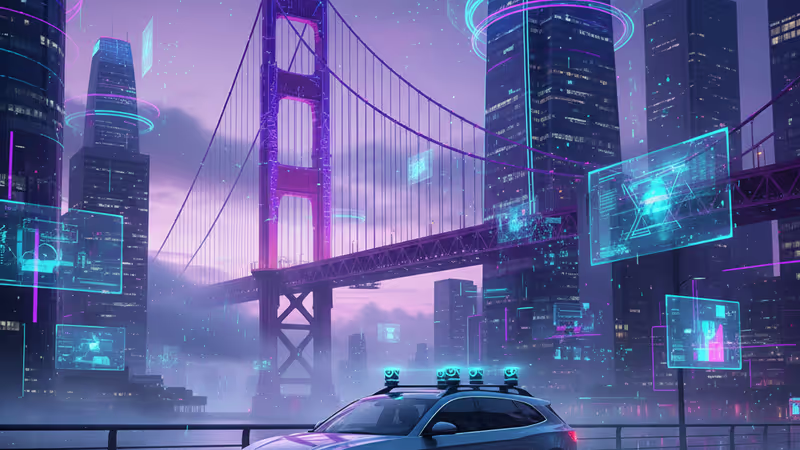
Uber Lucid robotaxi San Francisco: A New Challenger to Waymo's Throne
Uber unveils its custom Lucid robotaxi for San Francisco. Powered by Nvidia and Nuro, this 6-passenger EV aims to challenge Waymo's dominance in 2026.
Uber's ready to take back the wheel. In a major move on Monday, Uber unveiled a custom-built robotaxi in Las Vegas, marking a deep collaboration with electric vehicle maker Lucid, autonomous tech firm Nuro, and AI powerhouse Nvidia. It's no longer just an app company; it's becoming a full-stack mobility giant.
Uber Lucid robotaxi San Francisco: The Tech Inside
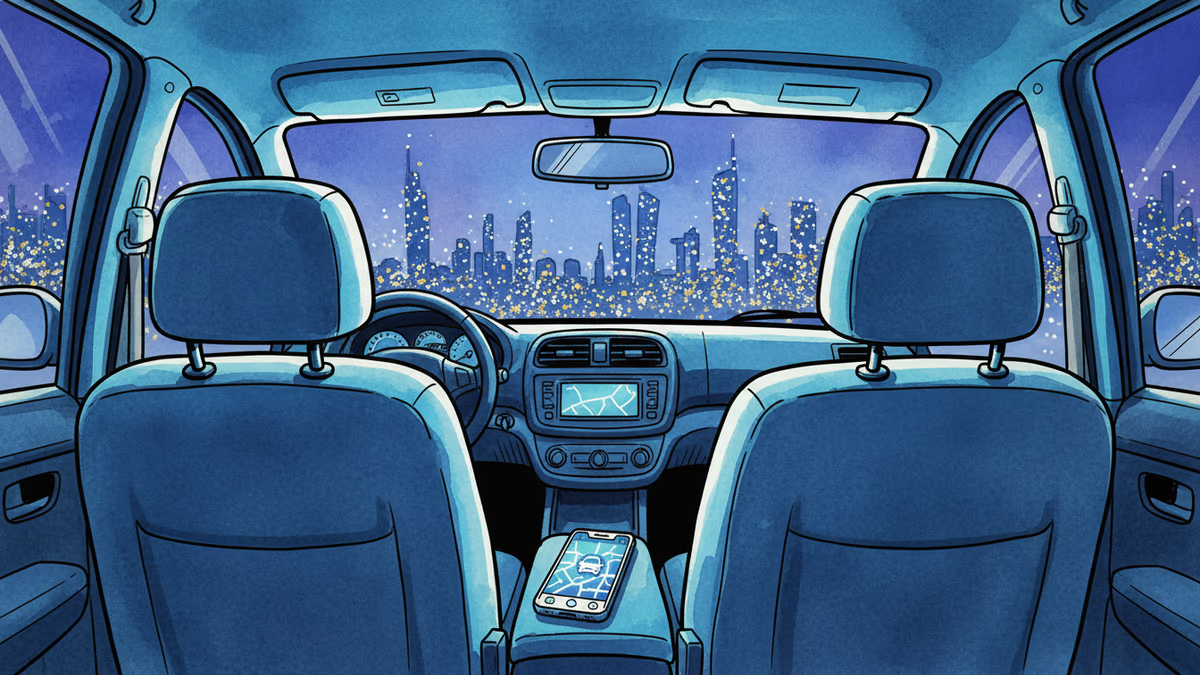
The new fleet is based on the Lucid Gravity SUV, an all-electric powerhouse designed to seat six passengers. This isn't your standard ride-share car. Inside, passengers find interactive screens allowing them to control seat heaters, climate, and music, or even signal the vehicle to pull over. The brain of the operation is powered by Nvidia AI infrastructure, which enables the vehicle to handle complex urban environments.

According to Reuters, Uber and Nvidia plan to deploy 100,000 robotaxis starting in 2027. Jensen Huang, CEO of Nvidia, noted that the project is turning science fiction into an everyday reality for commuters. Testing officially kicked off last month with safety drivers behind the wheel to ensure everything runs smoothly.
Confronting Waymo in its Backyard
San Francisco is currently the front line of the autonomous wars. Google's Waymo has already established a stronghold with over 800 vehicles in the area. Meanwhile, Amazon-owned Zoox is also testing its driverless service. Uber aims to launch its commercial service later in 2026, pending regulatory approval from California authorities.
Authors
Related Articles
Waymo's new Ojai robotaxi isn't just a vehicle upgrade. It's the company's most serious attempt yet at cracking the cost problem that has kept autonomous vehicles from scaling. Here's what's really at stake.
Tesla expanded its driverless robotaxi to Dallas and Houston, even after reporting 14 crashes in Austin. What does this tell us about how autonomous vehicles actually get built?
A U.S. Senate investigation found that seven autonomous vehicle companies — including Waymo and Tesla — refused to disclose how often remote operators intervene in their vehicles. Here's why that silence matters.
Uber and WeRide have launched fully driverless robotaxi service in Dubai — no safety operator, real fares. Here's what it means for the global AV race and your next ride.
Waymo's new Ojai robotaxi isn't just a vehicle upgrade. It's the company's most serious attempt yet at cracking the cost problem that has kept autonomous vehicles from scaling. Here's what's really at stake.
Tesla expanded its driverless robotaxi to Dallas and Houston, even after reporting 14 crashes in Austin. What does this tell us about how autonomous vehicles actually get built?
A U.S. Senate investigation found that seven autonomous vehicle companies — including Waymo and Tesla — refused to disclose how often remote operators intervene in their vehicles. Here's why that silence matters.
Uber and WeRide have launched fully driverless robotaxi service in Dubai — no safety operator, real fares. Here's what it means for the global AV race and your next ride.
Thoughts
Share your thoughts on this article
Sign in to join the conversation