
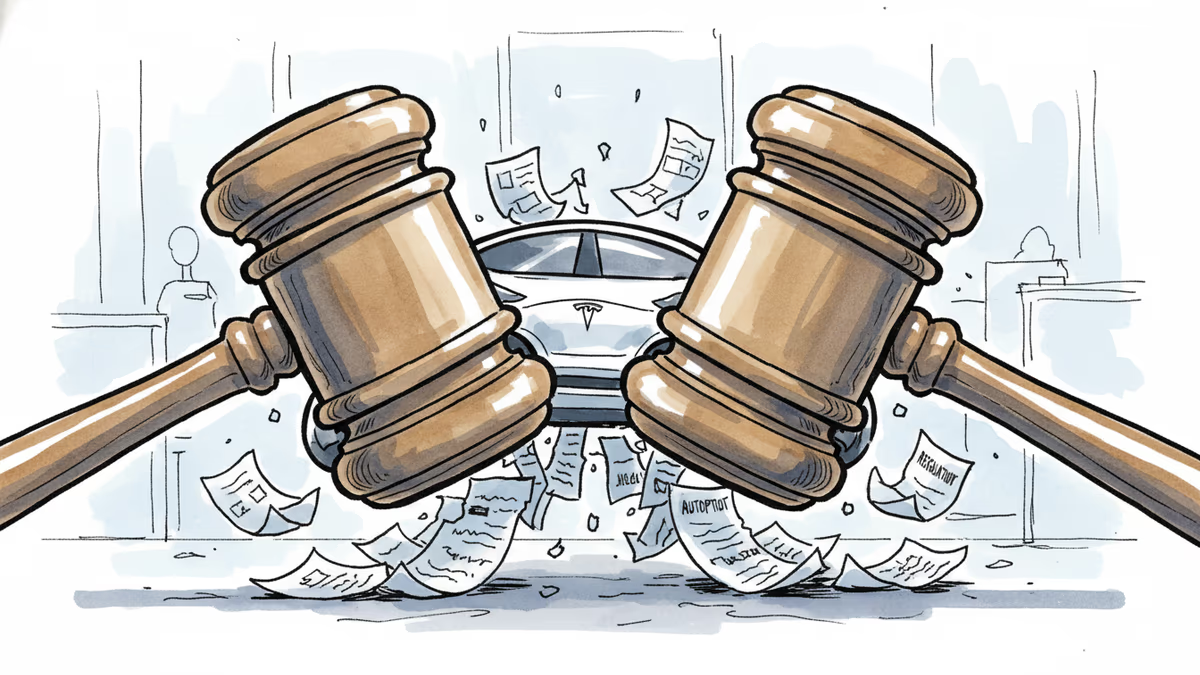
Tesla's Autopilot Gambit: Why the EV Giant Chose Court Over Compliance
Tesla discontinued Autopilot entirely, then sued California's DMV. The strategic calculation behind this legal battle reveals deeper tensions in autonomous vehicle regulation.
60 days. That's how long California gave Tesla to stop calling its driver assistance system "Autopilot." Tesla complied—then went nuclear, discontinuing Autopilot entirely across the US and Canada. Now it's fighting back in court.
The lawsuit against California's Department of Motor Vehicles wasn't supposed to happen. Last week, the dispute seemed settled when the DMV chose not to suspend Tesla's licenses despite an administrative judge's recommendation for a 30-day penalty.
The Regulatory Tightrope
California's DMV found itself walking a familiar tightrope. Rule too harshly against Tesla, and face accusations of stifling innovation. Rule too leniently, and invite criticism for prioritizing corporate interests over consumer safety.
The agency chose a middle path: finding Tesla guilty of deceptive marketing while stopping short of the nuclear option. Tesla's "Autopilot" branding, they ruled, misled consumers about the system's actual capabilities—a Level 2 system requiring constant driver attention, not the autonomous driving the name implied.
But Tesla's response caught everyone off guard. Instead of simply removing the term from marketing materials, the company eliminated Autopilot entirely from North American vehicles in January 2026.
The Branding Dilemma
For Tesla, "Autopilot" wasn't just a feature name—it was brand DNA. The term helped differentiate Tesla from traditional automakers who used conservative names like "ProPILOT Assist" or "Super Cruise."

Ford, GM, and other legacy automakers watched this regulatory drama with mixed feelings. Publicly, they supported "responsible marketing practices." Privately, many saw an opportunity to highlight their own measured approach to autonomous vehicle claims.
Meanwhile, newer EV startups like Rivian and Lucid Motors found themselves in an uncomfortable position. Tesla's aggressive marketing had helped legitimize the entire electric vehicle sector, but it also invited the kind of regulatory scrutiny they'd prefer to avoid.
The Stakes Beyond Tesla
This lawsuit extends far beyond one company's marketing practices. It's essentially asking courts to define the boundaries between aspirational branding and consumer deception in emerging technologies.
If Tesla wins, it could embolden other tech companies to use more aggressive marketing language. If California prevails, it might set a precedent for stricter oversight of AI and autonomous vehicle claims nationwide.
The timing is particularly significant. With Waymo expanding its robotaxi services and Cruise attempting a comeback after its own regulatory troubles, the industry is watching to see how much latitude regulators will give companies in describing their capabilities.
The Bigger Picture: Innovation vs. Accuracy
Tesla's legal strategy reveals a fundamental tension in tech regulation. The company appears to be betting that courts will be more sympathetic than regulatory agencies to arguments about innovation and competitive positioning.
But there's another calculation at play. By discontinuing Autopilot entirely, Tesla created a "nuclear winter" scenario that might make regulators think twice about future enforcement actions. The message: push too hard, and companies might choose extreme compliance over gradual improvement.
Authors
Related Articles
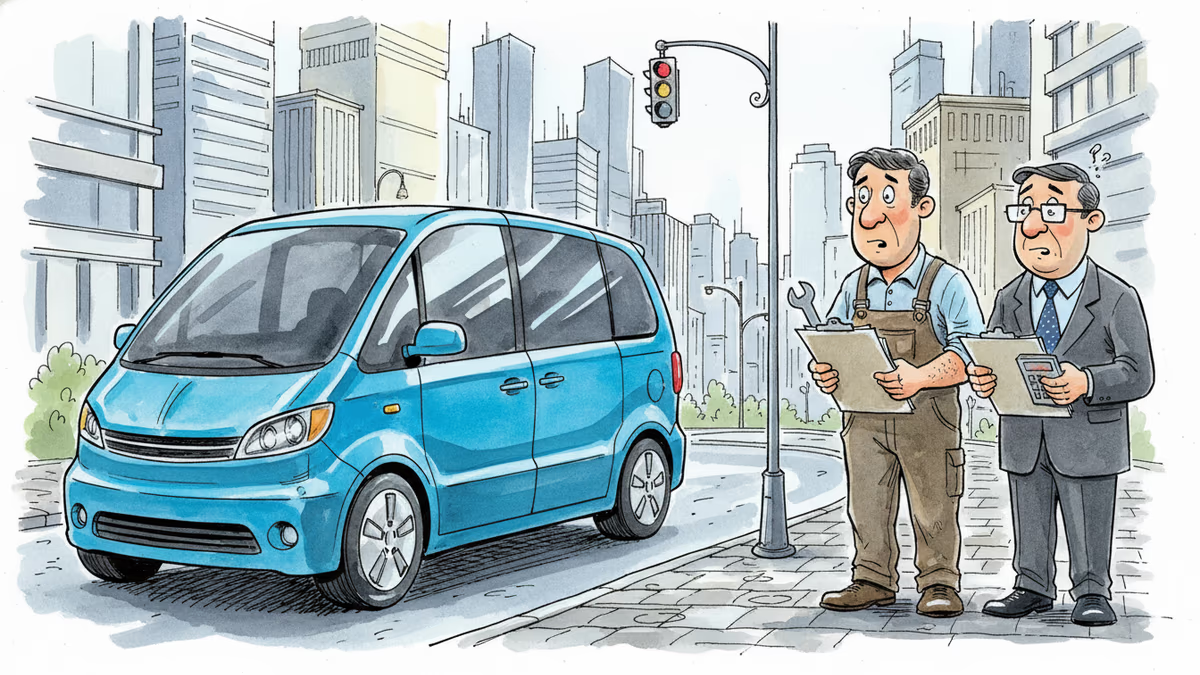
Waymo's new Ojai robotaxi isn't just a vehicle upgrade. It's the company's most serious attempt yet at cracking the cost problem that has kept autonomous vehicles from scaling. Here's what's really at stake.
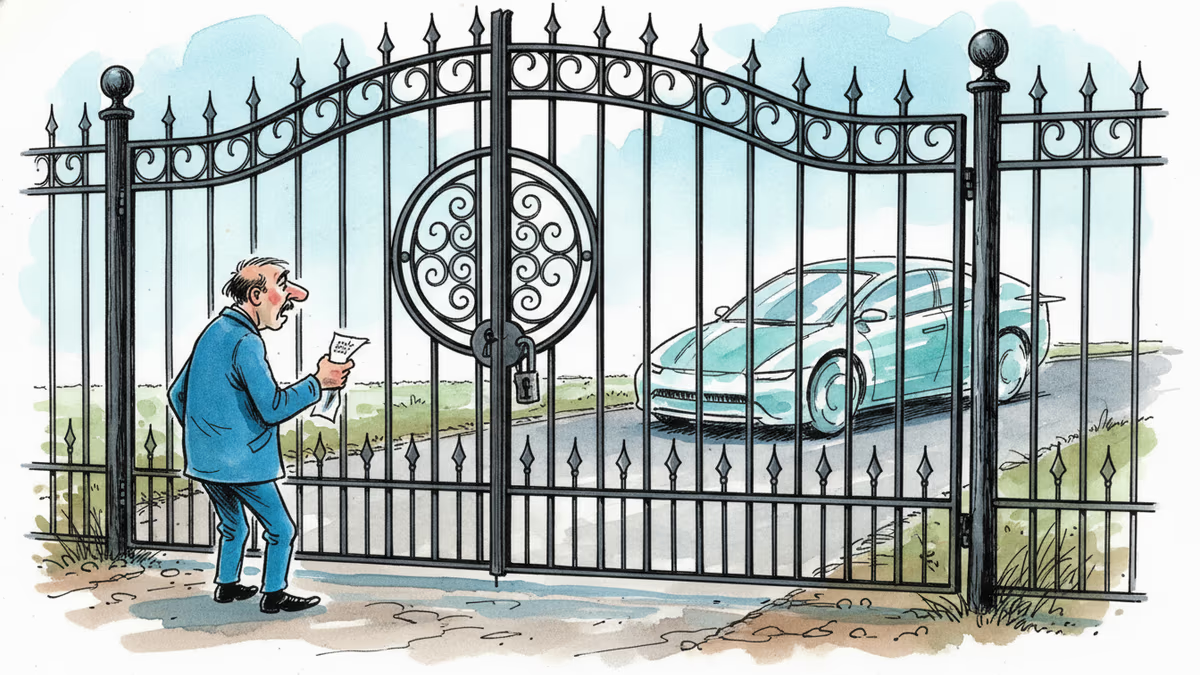
Elon Musk confirmed on Tesla's Q1 2026 earnings call that Hardware 3 vehicles will never receive unsupervised Full Self-Driving — locking out millions who paid for the feature.
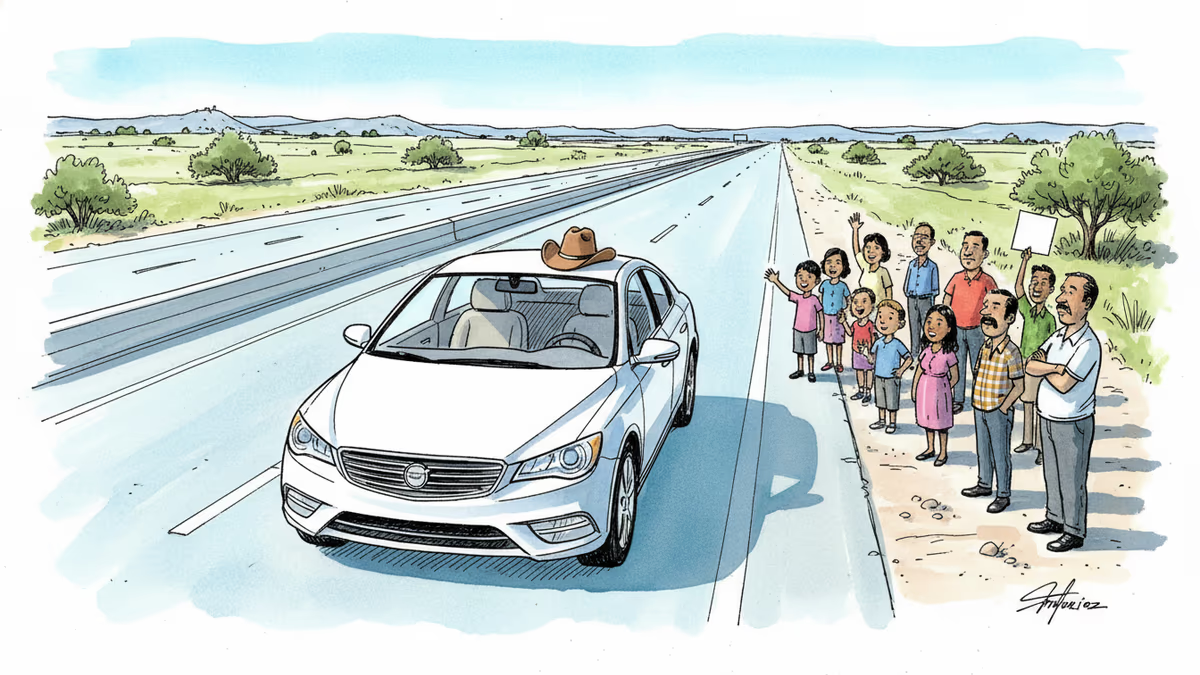
Tesla expanded its driverless robotaxi to Dallas and Houston, even after reporting 14 crashes in Austin. What does this tell us about how autonomous vehicles actually get built?
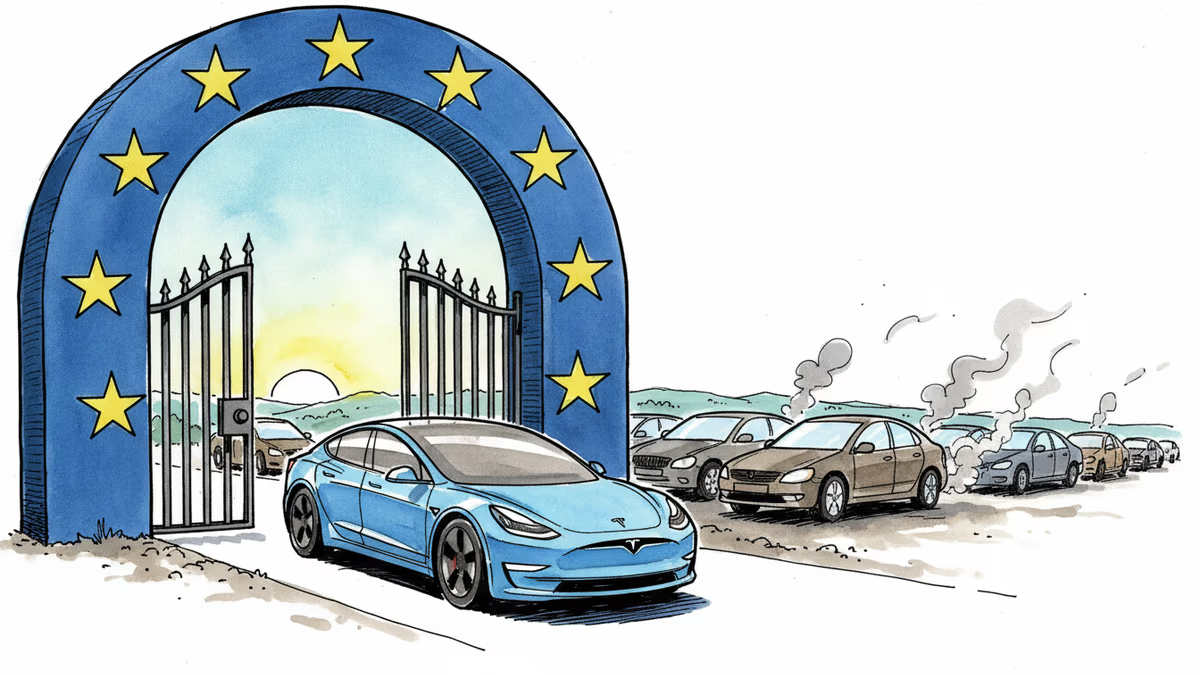
The Netherlands became the first European country to officially approve Tesla's FSD Supervised. With EU's type-approval framework, this could ripple across 27 member states fast.
Waymo's new Ojai robotaxi isn't just a vehicle upgrade. It's the company's most serious attempt yet at cracking the cost problem that has kept autonomous vehicles from scaling. Here's what's really at stake.
Elon Musk confirmed on Tesla's Q1 2026 earnings call that Hardware 3 vehicles will never receive unsupervised Full Self-Driving — locking out millions who paid for the feature.
Tesla expanded its driverless robotaxi to Dallas and Houston, even after reporting 14 crashes in Austin. What does this tell us about how autonomous vehicles actually get built?
The Netherlands became the first European country to officially approve Tesla's FSD Supervised. With EU's type-approval framework, this could ripple across 27 member states fast.
Thoughts
Share your thoughts on this article
Sign in to join the conversation