
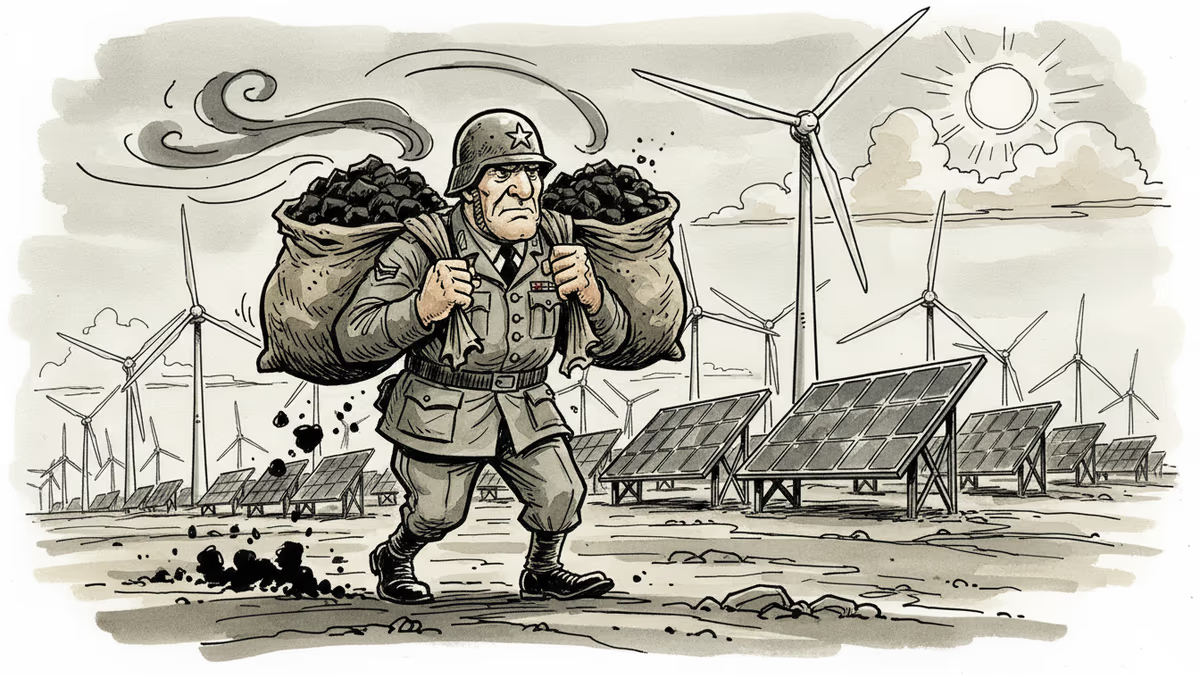
Trump's Coal Gambit: When Free Markets Meet Political Reality
Trump's executive order forcing military coal purchases reveals the contradictions in conservative energy policy as the industry fights for survival against market forces.
The Trophy and the Paradox
On Wednesday, as President Trump accepted a trophy dubbing him the "Undisputed Champion of Clean, Beautiful Coal," he unveiled his latest strategy to resurrect America's dying coal industry: forcing the military to buy it. The scene crystallized a fundamental contradiction at the heart of conservative energy policy—championing free markets while simultaneously intervening to prop up the market's biggest loser.
The executive order represents more than political theater. It's a desperate attempt to use government purchasing power to sustain an industry that market forces have all but abandoned.
The Numbers Don't Lie
Coal has become the second most expensive source of power on the US grid, beaten only by nuclear in terms of cost. Wind, solar, and natural gas have systematically undercut coal's economics, making closure inevitable for plant after plant. Even during Trump's first term, coal capacity continued its decline as utilities chose cheaper alternatives.
The industry's problems run deeper than economics. Coal produces more pollution per energy unit than any other major power source—from lung-damaging particulates to carbon dioxide emissions. For military planners increasingly focused on energy security and operational efficiency, coal represents a step backward.
When Markets Meet Politics

The administration's approach reveals the limits of market-based solutions when they conflict with political priorities. Trump's energy emergency declaration—already facing legal challenges—relies on what experts call a "tenuous interpretation" of the Federal Power Act. The strategy essentially argues that national security requires propping up the least competitive energy source.
This creates an awkward position for Republicans who typically champion market solutions. How do you reconcile free-market principles with direct government intervention to save an industry that consumers and businesses are abandoning?
The Military's Dilemma
Defense officials now face an uncomfortable mandate: purchase expensive, polluting energy in the name of national security. Military bases have been among the most aggressive adopters of renewable energy, driven by both cost savings and operational advantages. Solar panels and wind turbines don't require vulnerable supply chains or create obvious targets for adversaries.
The coal mandate forces a choice between fiscal responsibility and political loyalty—a position no military leader wants to occupy.
Beyond the Symbolism
Coal's decline reflects broader shifts in American energy markets that transcend any single administration. Utilities have invested billions in cleaner alternatives, creating infrastructure that won't be easily reversed. International markets increasingly penalize high-carbon energy sources, affecting everything from trade relationships to corporate investment decisions.
The executive order may slow coal's decline, but it cannot reverse the fundamental economics driving the transition. At best, it buys time for coal communities while imposing costs on taxpayers and military budgets.
Authors
Related Articles
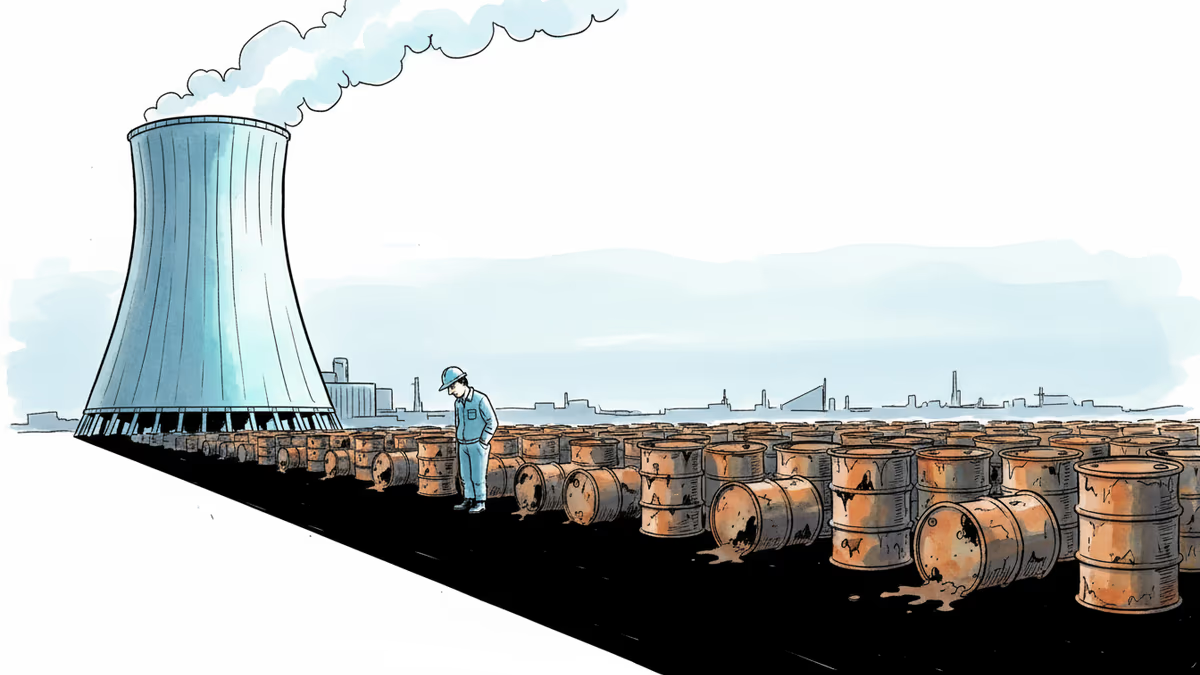
Nuclear power is winning fans across the political spectrum—and Big Tech is pouring billions in. But America still has no permanent home for the 2,000 metric tons of high-level waste its reactors produce every single year.
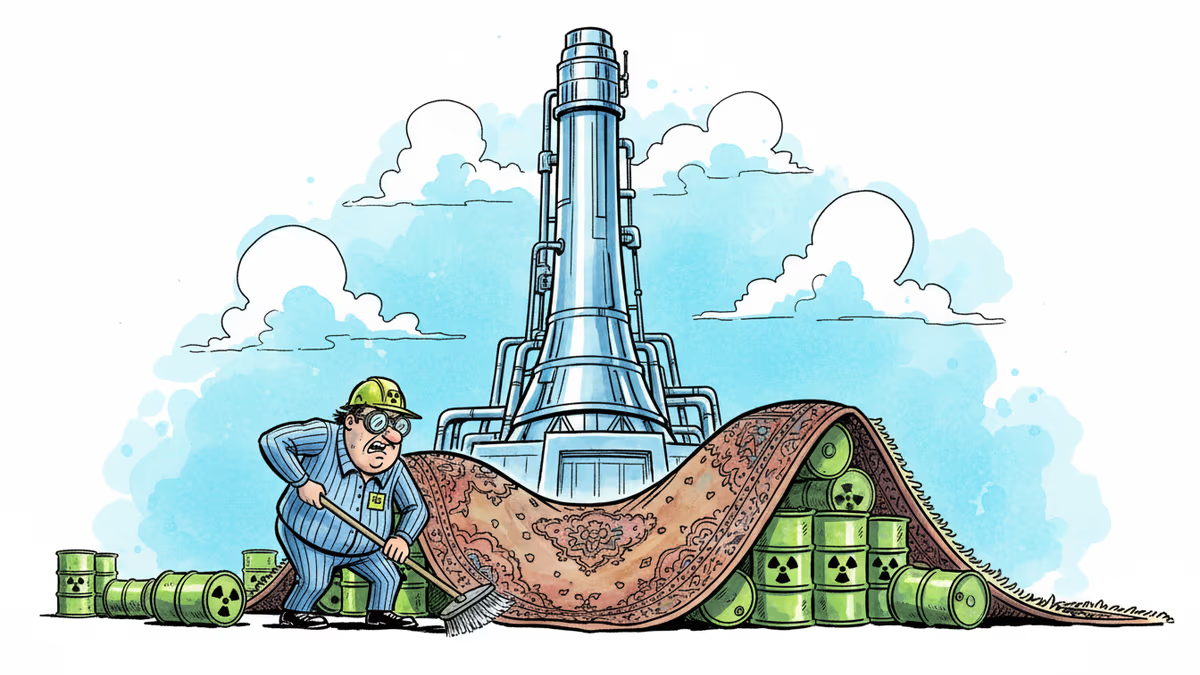
Nuclear energy is booming again, fueled by Big Tech's data center appetite. But 70 years of spent fuel still has nowhere permanent to go. Finland solved it. The US hasn't tried hard enough.
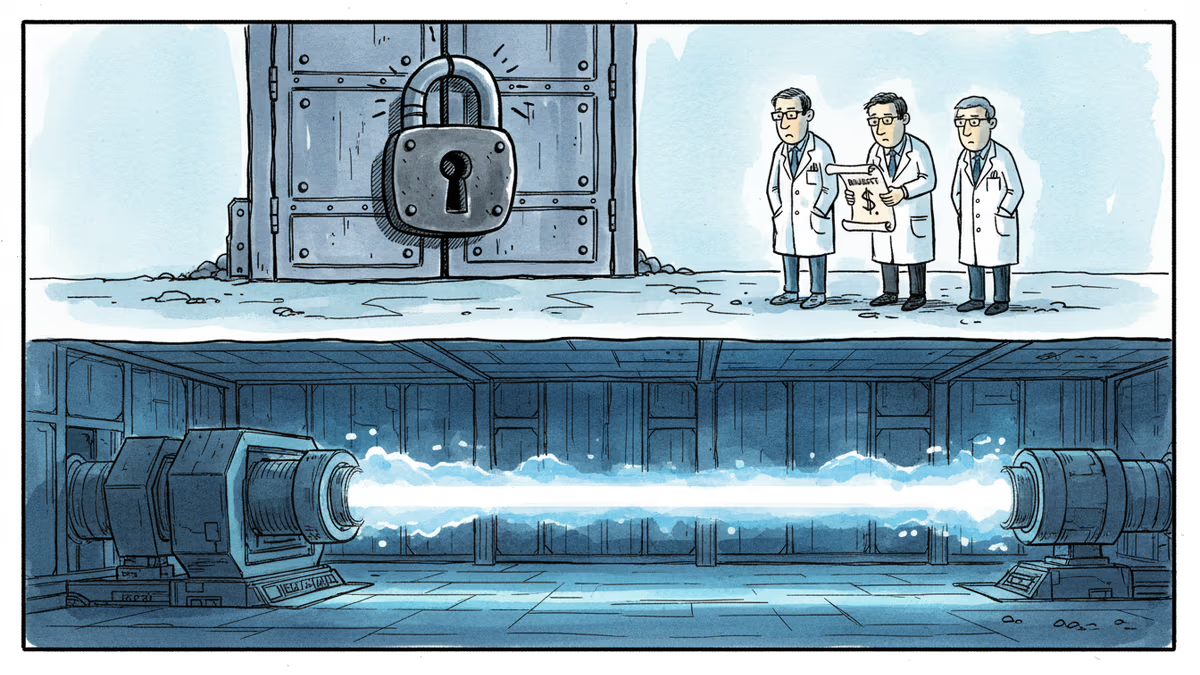
The Texas Petawatt laser—capable of outpowering the entire US electrical grid for a trillionth of a second—has shut down due to funding cuts. What does this mean for fusion energy and America's scientific future?
The Trump administration struck a deal to buy back offshore wind leases from TotalEnergies for $1 billion, redirecting that money into fossil fuel projects. What this means for energy markets, grid reliability, and the future of U.S. climate policy.
Nuclear power is winning fans across the political spectrum—and Big Tech is pouring billions in. But America still has no permanent home for the 2,000 metric tons of high-level waste its reactors produce every single year.
Nuclear energy is booming again, fueled by Big Tech's data center appetite. But 70 years of spent fuel still has nowhere permanent to go. Finland solved it. The US hasn't tried hard enough.
The Texas Petawatt laser—capable of outpowering the entire US electrical grid for a trillionth of a second—has shut down due to funding cuts. What does this mean for fusion energy and America's scientific future?
The Trump administration struck a deal to buy back offshore wind leases from TotalEnergies for $1 billion, redirecting that money into fossil fuel projects. What this means for energy markets, grid reliability, and the future of U.S. climate policy.
Thoughts
Share your thoughts on this article
Sign in to join the conversation