

The $15 Billion Bill: Trump 15 Billion Power Grid Plan Forces Tech Companies to Pay Up
The Trump administration is demanding tech companies invest $15 billion in the PJM power grid. Analyze the standoff between Big Tech's renewable goals and the government's fossil fuel push.
The price of powering the AI revolution just got a massive markup. According to Bloomberg and TechCrunch, the Trump administration is pushing for a $15 billion expansion of the nation's largest electricity grid, and it wants Big Tech to foot the bill—even if they don't currently need the extra juice.
Trump 15 Billion Power Grid Expansion Plan Explained
The White House is calling on PJM Interconnection, which manages the grid across 13 states, to auction off 15-year contracts for new power generation. The administration's stance is aggressive: tech giants should bid on these contracts now to secure future capacity. This comes as data center energy demand is projected to nearly triple over the next decade, fueled by the insatiable hunger of AI models.
The move targets the PJM region, which serves over 65 million people and includes Northern Virginia, the world's most dense data center hub. Residents there saw electricity rates jump 10% to 15% in 2025. While much of the blame has been pinned on tech companies, data from Monitoring Analytics suggests that 60% of those price hikes actually stem from soaring fossil fuel costs.

Risk Management: Why Fossil Fuels Scare Tech Giants
Tech companies aren't jumping at the opportunity. Traditionally, these firms have avoided the fossil fuel business, preferring renewables like solar and battery storage. A typical solar farm can be built in just 18 months and deployed in phases, aligning perfectly with data center construction timelines. In contrast, new fossil fuel plants are massive, multi-year undertakings costing hundreds of millions.
The relationship between the grid operator and the government remains chilly. PJM spokesman Jeffrey Shields told Bloomberg that they weren't even invited to the administration's planning event. With PJM's peak load expected to rise another 6.5% by 2027, the standoff over who pays for the infrastructure is reaching a breaking point.
Authors
Related Articles

Snowflake's new $6 billion AWS contract is about more than cloud spending. It signals a shift in AI infrastructure—away from Nvidia GPUs and toward cheaper, homegrown chips for the agent era.
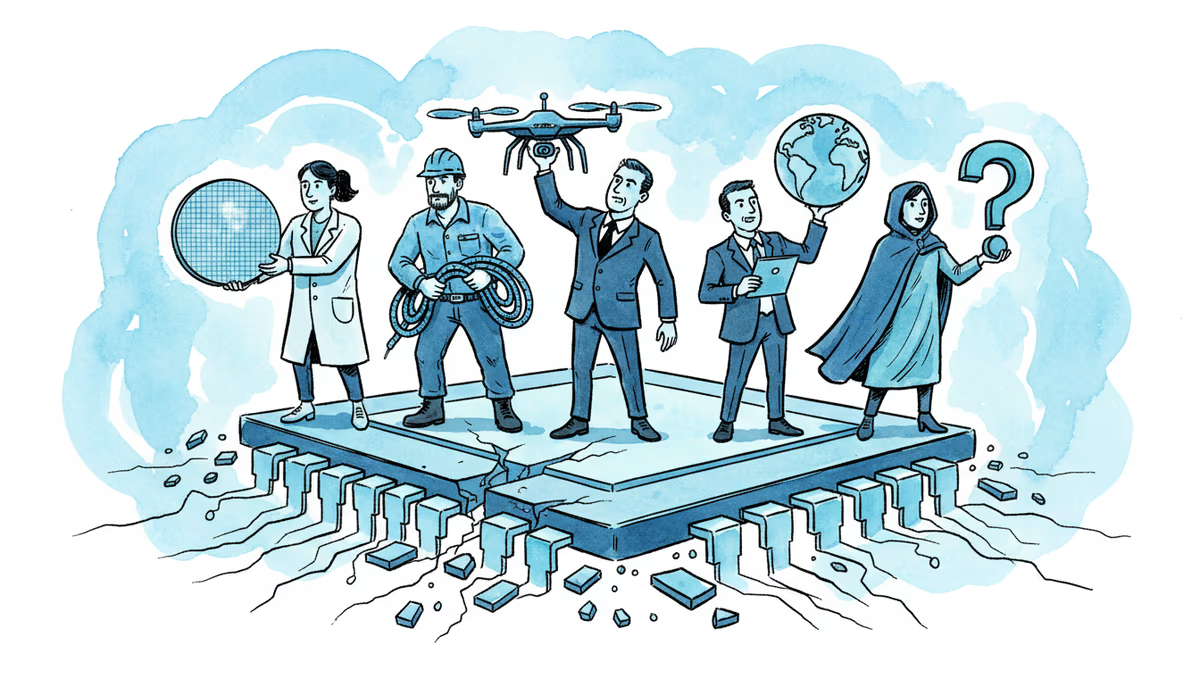
At Milken 2026, five AI insiders—from the CEO of ASML to a quantum physicist challenging LLMs—laid out the physical, energy, and geopolitical limits the AI boom is running into.
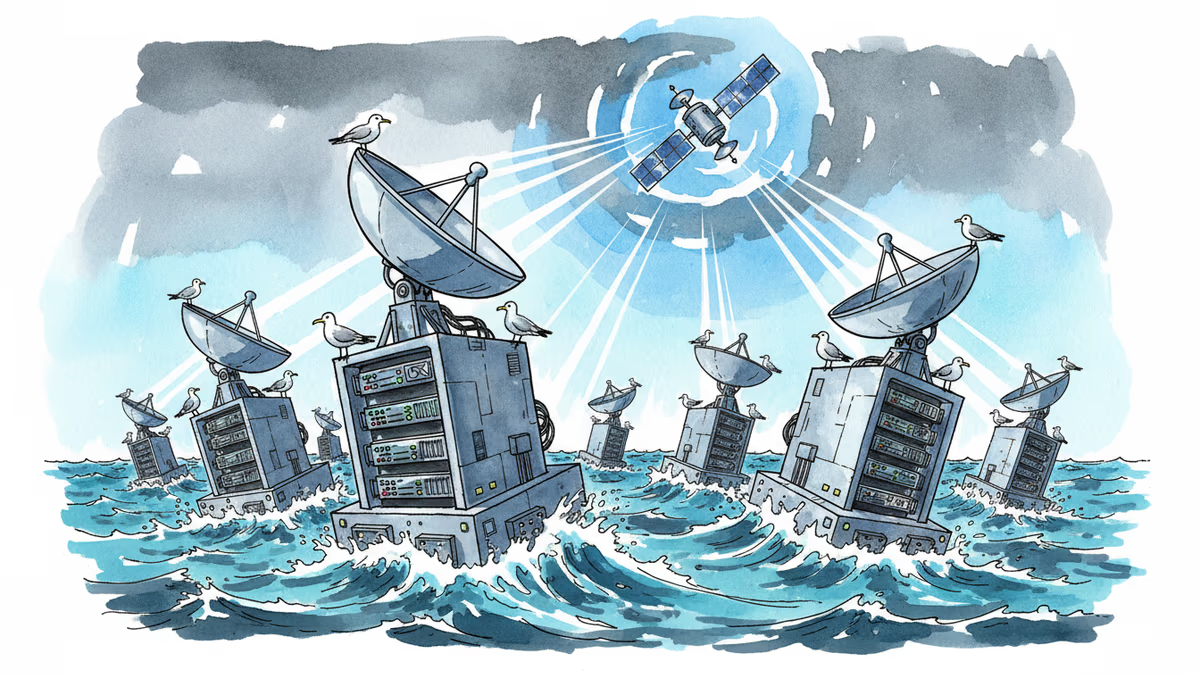
Palantir co-founder Peter Thiel and other Silicon Valley investors have poured $140 million into Panthalassa, a startup building wave-powered floating AI data centers in the open ocean. Here's what that actually means.
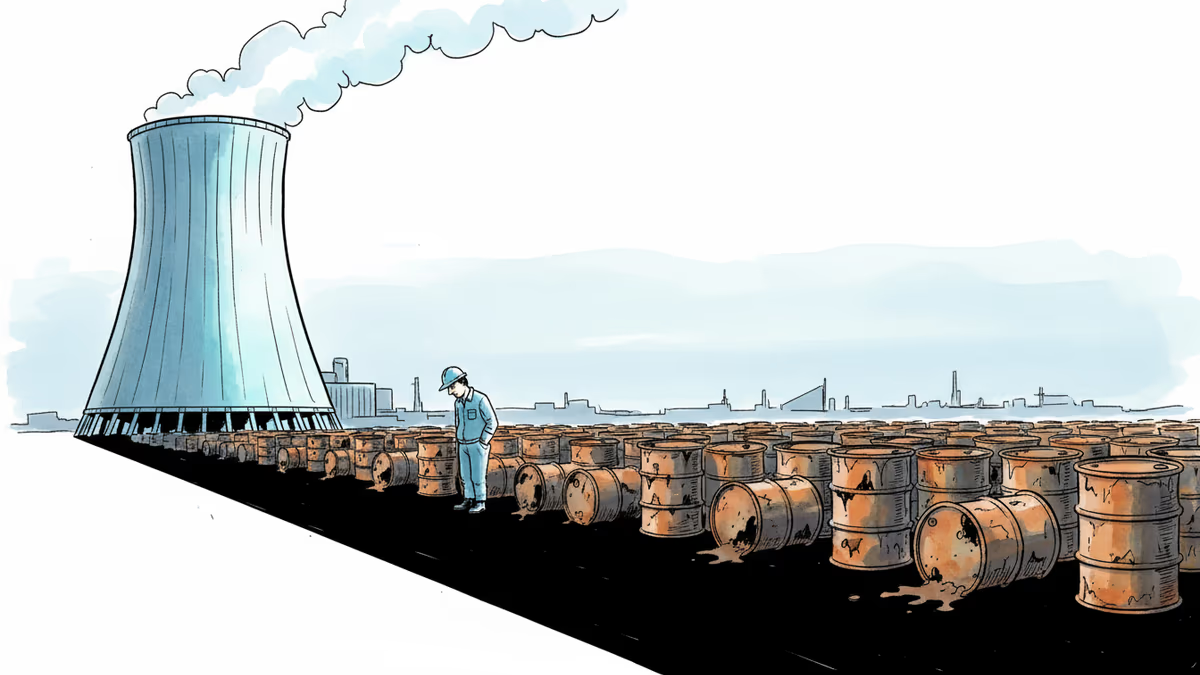
Nuclear power is winning fans across the political spectrum—and Big Tech is pouring billions in. But America still has no permanent home for the 2,000 metric tons of high-level waste its reactors produce every single year.
Snowflake's new $6 billion AWS contract is about more than cloud spending. It signals a shift in AI infrastructure—away from Nvidia GPUs and toward cheaper, homegrown chips for the agent era.
At Milken 2026, five AI insiders—from the CEO of ASML to a quantum physicist challenging LLMs—laid out the physical, energy, and geopolitical limits the AI boom is running into.
Palantir co-founder Peter Thiel and other Silicon Valley investors have poured $140 million into Panthalassa, a startup building wave-powered floating AI data centers in the open ocean. Here's what that actually means.
Nuclear power is winning fans across the political spectrum—and Big Tech is pouring billions in. But America still has no permanent home for the 2,000 metric tons of high-level waste its reactors produce every single year.
Thoughts
Share your thoughts on this article
Sign in to join the conversation