
AI at Sea: The Bet That Oceans Can Power What Land Can't
Palantir co-founder Peter Thiel and other Silicon Valley investors have poured $140 million into Panthalassa, a startup building wave-powered floating AI data centers in the open ocean. Here's what that actually means.
The next AI data center might not be in Virginia, Texas, or the Arizona desert. It might be somewhere in the Pacific, riding a wave.
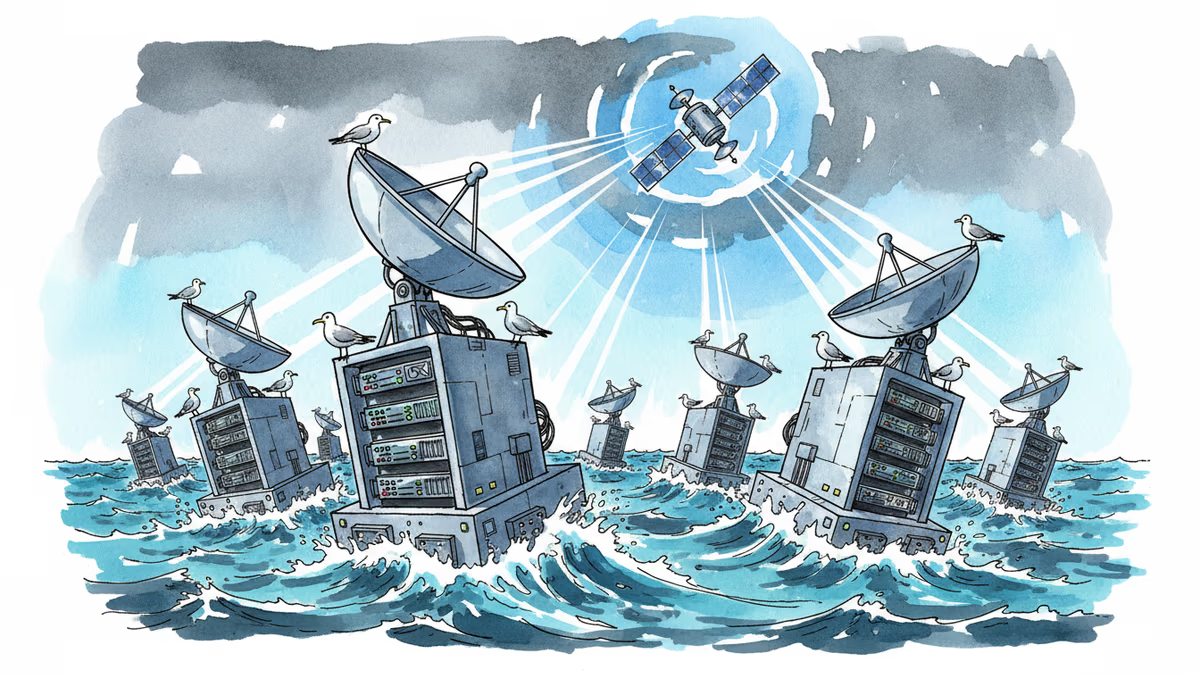
Panthalassa, a startup backed by Palantir co-founder Peter Thiel and other Silicon Valley investors, is building floating nodes that harvest energy from ocean waves and use it to run AI chips directly at sea. The results—inference tokens, the outputs of AI models—get beamed back to customers via satellite. No land. No grid connection. No permit fight with a local county board.
On May 4, the company announced a $140 million funding round to complete a pilot manufacturing facility near Portland, Oregon, and accelerate deployments of these ocean-going nodes.
The Problem They're Trying to Solve
To understand why this is being taken seriously, you need to understand just how badly the AI industry's land-based expansion has stalled.
Microsoft, Google, and Amazon have collectively pledged hundreds of billions of dollars toward AI infrastructure over the next five years. But actual construction is lagging. Grid connection queues in the U.S. now stretch for years—the Department of Energy estimates hundreds of gigawatts of data center capacity are waiting in line for transmission access. Local opposition, water rights disputes, and zoning fights have delayed or killed projects across multiple states.
The ocean, in theory, has none of those problems. No neighbors. No grid queue. No cooling water regulations. And waves, unlike solar or wind, don't stop at night or when the air is calm.
Benjamin Lee, a computer architect at the University of Pennsylvania, put it cleanly: "Panthalassa's idea transforms an energy transmission problem into a data transmission problem." Instead of dragging electricity across thousands of miles of wire, you move the computation to where the energy is, and send only the data back.

Where the Skepticism Lives
The concept is elegant. The engineering is not.
Running high-performance AI chips in a saltwater environment over extended periods has never been done at scale. The components most vulnerable to corrosion and humidity are also the most expensive to replace. Maintenance costs at sea—requiring specialized vessels and crews—could dwarf anything a land-based facility would face.
Then there's latency. Satellite links, even with SpaceX's Starlink at its best, introduce delays measured in tens of milliseconds. For many AI workloads—batch processing, background inference, non-time-sensitive tasks—that's fine. For real-time applications like voice assistants, autonomous systems, or financial trading, it's potentially disqualifying.
Reliability is another open question. Hyperscale data centers on land are engineered for 99.999% uptime. What happens when a node gets caught in a Category 4 hurricane? Who dispatches the repair crew?
The Portland pilot facility is still onshore. The actual ocean deployment remains ahead.
Thiel, Seasteading, and the Politics of Escape
Peter Thiel's involvement isn't incidental. He's been a long-time backer of Seasteading Institute, an organization exploring the creation of autonomous floating communities outside national jurisdictions. Ocean AI nodes fit neatly into a worldview that treats geography—and the regulations attached to it—as a constraint to be engineered around.
For investors, the appeal is straightforward: if land-based AI infrastructure is becoming a bottleneck, whoever cracks offshore deployment could capture enormous value. The global data center market is projected to exceed $500 billion annually within the decade. Even a small slice of that, delivered via a radically cheaper or faster-to-deploy model, justifies a nine-figure bet.
For regulators, the picture is murkier. AI computation happening in international waters raises questions that existing frameworks weren't built to answer: Which country's data protection laws apply? How do you tax revenue generated by a server on the high seas? If something goes wrong—a data breach, an environmental incident—who is liable?
This content is AI-generated based on source articles. While we strive for accuracy, errors may occur. We recommend verifying with the original source.
Related Articles
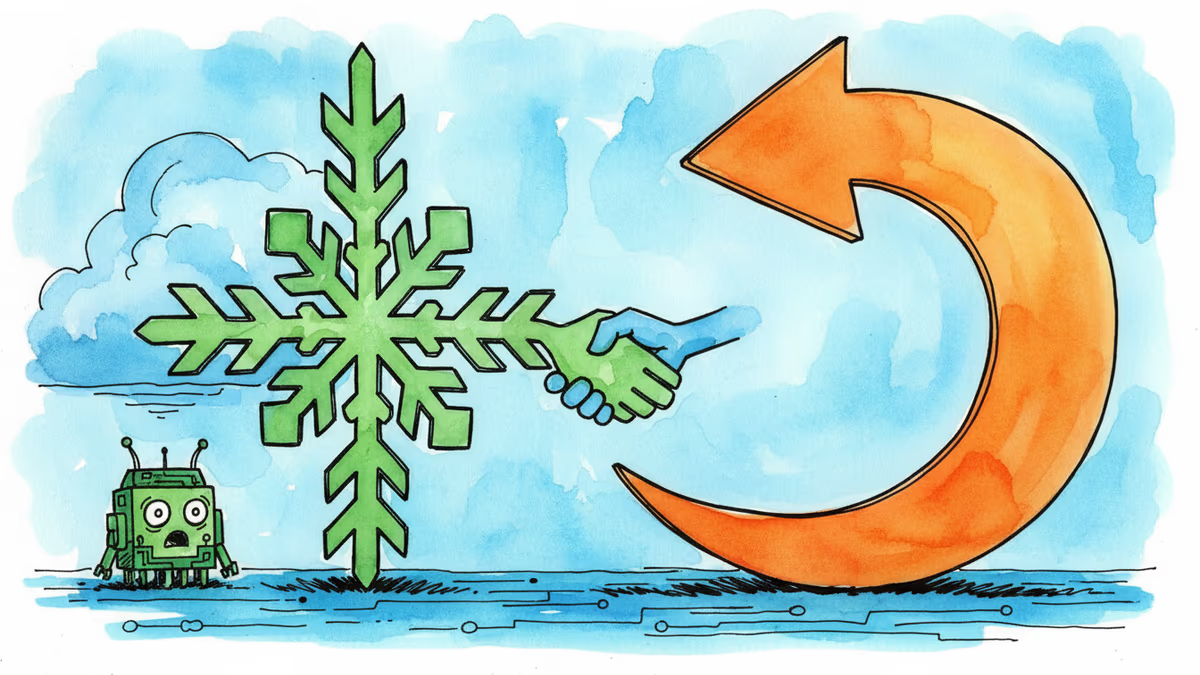
Snowflake's new $6 billion AWS contract is about more than cloud spending. It signals a shift in AI infrastructure—away from Nvidia GPUs and toward cheaper, homegrown chips for the agent era.

AI sustainability researcher Sasha Luccioni is launching a new venture to push for energy transparency in AI. Here's why Big Tech keeps the numbers hidden—and what's starting to change.
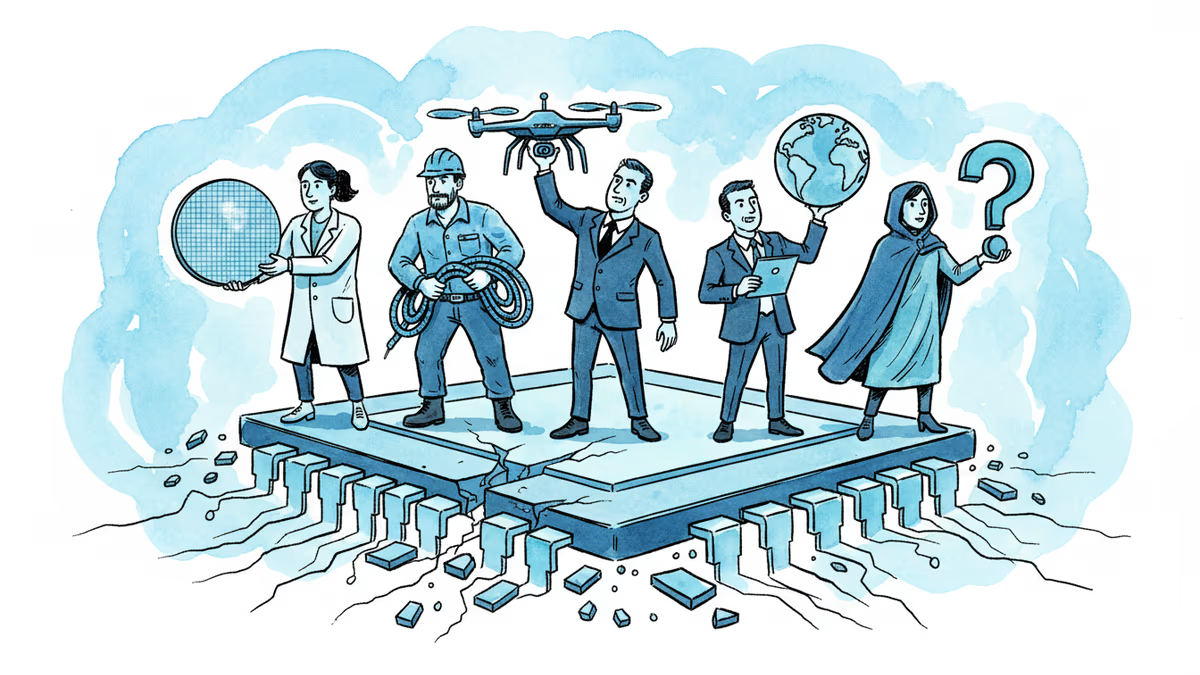
At Milken 2026, five AI insiders—from the CEO of ASML to a quantum physicist challenging LLMs—laid out the physical, energy, and geopolitical limits the AI boom is running into.
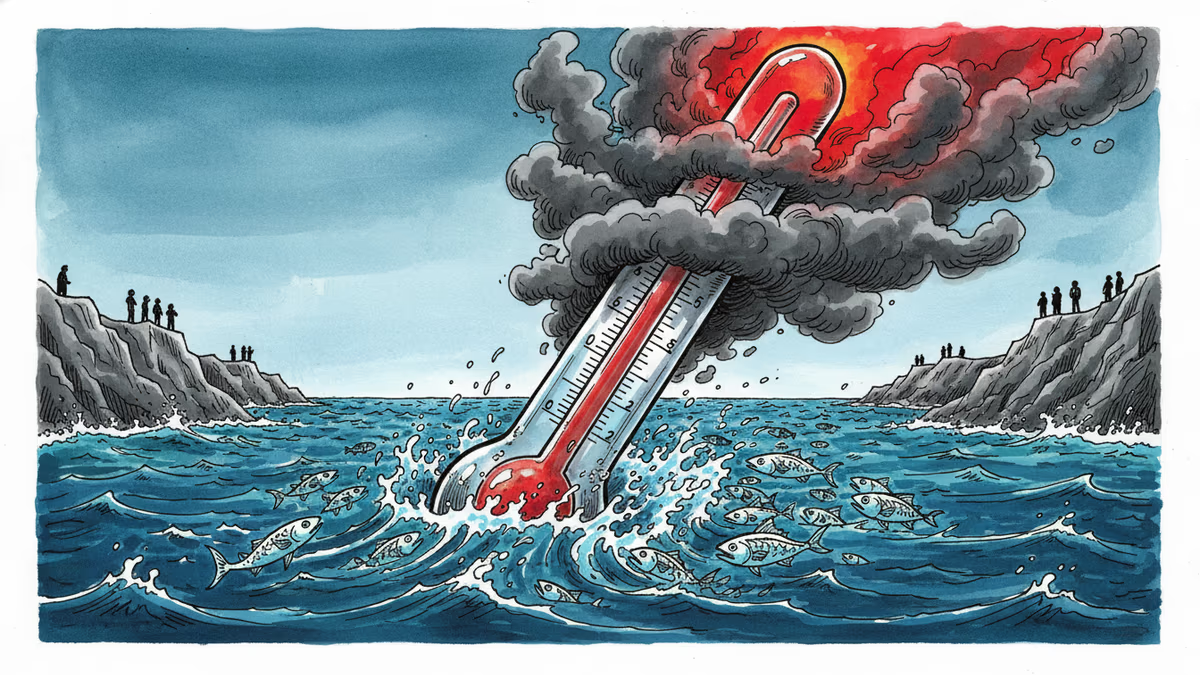
Scientists warn a strong El Niño could push Earth past the 1.5°C warming threshold within 12-18 months. What that means for weather, food, energy—and the politics of climate action.
Snowflake's new $6 billion AWS contract is about more than cloud spending. It signals a shift in AI infrastructure—away from Nvidia GPUs and toward cheaper, homegrown chips for the agent era.
AI sustainability researcher Sasha Luccioni is launching a new venture to push for energy transparency in AI. Here's why Big Tech keeps the numbers hidden—and what's starting to change.
At Milken 2026, five AI insiders—from the CEO of ASML to a quantum physicist challenging LLMs—laid out the physical, energy, and geopolitical limits the AI boom is running into.
Scientists warn a strong El Niño could push Earth past the 1.5°C warming threshold within 12-18 months. What that means for weather, food, energy—and the politics of climate action.
Thoughts
Share your thoughts on this article
Sign in to join the conversation