

His $20M Startup Failed. Now He’s Back With an AI Architect to Solve the Same Problem.
After his $20M-funded home design startup Atmos failed, founder Nick Donahue is back with Drafted, an AI-powered software to solve the same problem. Can lessons from his first failure lead to success?
Nick Donahue, founder of the custom-home startup Atmos which raised , shut it down nine months ago. Instead of taking a break, he immediately launched another company to fix the exact same problem, but this time, he’s swapping human designers for . His new venture, Drafted, is an -driven software that generates residential floor plans in minutes, aiming to disrupt the costly and slow home design industry.
The First Attempt: The Rise and Fall of Atmos
Coming from a family in the construction business, Donahue was obsessed with why custom homes were so expensive and time-consuming. He founded Atmos, a Y Combinator alum, to streamline the process with technology. The model involved in-house designers working with clients while software handled the back-end.
By many metrics, it was a success. The company raised from investors like Khosla Ventures and Sam Altman, grew to , and hit in revenue, building . But Donahue described it as an "extremely operational business" that became a "glamorized architecture firm." Technology never fully replaced the humans. When the Federal Reserve began hiking interest rates, clients could no longer afford the homes they’d spent months designing, forcing Donahue to shut down.
The AI Pivot: Drafted's Lean Machine

Just five months old, Drafted is everything Atmos wasn't: no designers on staff, no operational complexity, just pure software. Users input their desired specs—bedrooms, square footage—and the generates five design options instantly.
Drafted has already raised a seed round at a post-money valuation from investors including Bill Clerico and Stripe's Patrick Collison. The pitch is to sit between expensive architects and inflexible online templates. A complete plan from Drafted costs between .
The Big Questions: Market and Moat
Key challenges remain. Of the new homes built in the U.S. each year, only are custom designed. Investor Bill Clerico argues this is a chicken-and-egg problem: make custom design cheap and fast enough, and the market will expand, much like Uber expanded the market for on-demand car rides beyond traditional taxis.
Then there's the defensibility question. What's to stop a major player from creating a similar product? Donahue points to brand as the moat, citing his friend David Holz, founder of Midjourney. Despite a flood of new competitors, Midjourney's users remain loyal. Donahue believes if Drafted moves fast enough, it can become the go-to brand for home design.
Authors
Related Articles
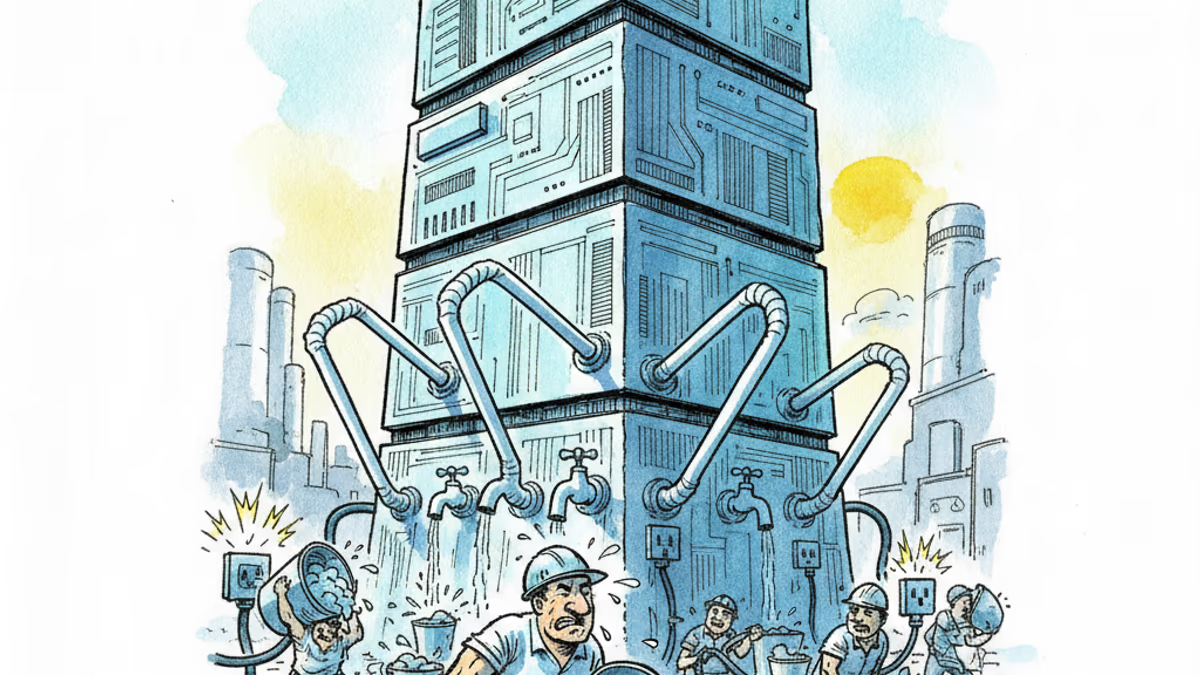
Samsung and SK unveiled a chip and AI investment package worth thousands of trillions of won on June 29. The headline number swings wildly by outlet, but the real contest isn't capital — it's water and power.

Lucra Sports CEO Dylan Robbins landed Cathie Wood's ARK Invest as a Series B lead without building AI. The story behind his unconventional fundraising playbook.

Viral videos show 2026 graduates jeering executives who praise AI at commencement ceremonies. It's not just rudeness — it's a signal about who pays for technological optimism.

Google's Gmail Live lets you ask your inbox questions out loud. Announced at I/O 2026, it's AI's pitch to skeptics — and a reminder of how much Google already knows about you.
Samsung and SK unveiled a chip and AI investment package worth thousands of trillions of won on June 29. The headline number swings wildly by outlet, but the real contest isn't capital — it's water and power.
Lucra Sports CEO Dylan Robbins landed Cathie Wood's ARK Invest as a Series B lead without building AI. The story behind his unconventional fundraising playbook.
Viral videos show 2026 graduates jeering executives who praise AI at commencement ceremonies. It's not just rudeness — it's a signal about who pays for technological optimism.
Google's Gmail Live lets you ask your inbox questions out loud. Announced at I/O 2026, it's AI's pitch to skeptics — and a reminder of how much Google already knows about you.
Thoughts
Share your thoughts on this article
Sign in to join the conversation