

Thinking Machines Lab Barret Zoph Departure to OpenAI Sparks Leadership Crisis
Thinking Machines Lab co-founder Barret Zoph has left for OpenAI following internal disputes and misconduct allegations, marking a major talent shift in the AI sector.
Can a $50 billion startup survive a mass exodus of its founding team? Mira Murati's Thinking Machines Lab is facing a critical juncture as co-founder Barret Zoph departs for OpenAI following allegations of misconduct and internal friction.
Internal Strife and Ethical Allegations
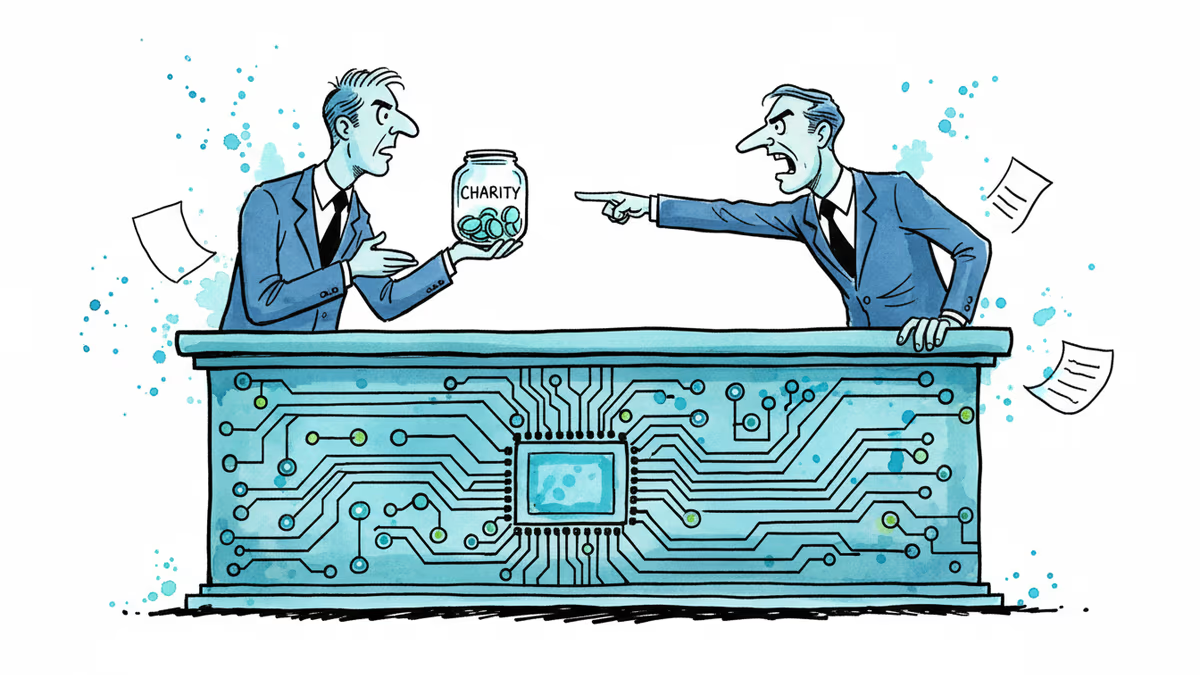
According to WIRED, leadership at Thinking Machines Lab confronted Barret Zoph last summer regarding an alleged relationship with another employee in a leadership position. While the employee has since left the firm, the confrontation reportedly shattered the working relationship between Murati and Zoph.
Following the breakdown, Zoph explored opportunities with Meta before ultimately securing a role at OpenAI. Notably, Fidji Simo, CEO of applications at OpenAI, indicated that she did not share the ethical concerns raised by Murati's lab.

A Broader Exodus to OpenAI and Meta
The instability isn't limited to Zoph. This week, co-founder Luke Metz and at least three other researchers also defected to OpenAI. This follows the October departure of co-founder Andrew Tulloch to Meta.
Insiders suggest the exodus stems from deeper strategic misalignment regarding the startup's product roadmap. Despite seeking a $50 billion valuation—up from $12 billion—the internal turmoil threatens to undermine investor confidence at a time when the AI talent war is at its peak.
Authors
Related Articles

Pope Leo XIV's first encyclical frames AI not as a technology problem but a power problem. Who controls the algorithm controls reality—and that's a political question, not a spiritual one.

OpenAI has reorganized for the second time in a month, merging ChatGPT and Codex into a single agentic platform under president Greg Brockman's unified product leadership.
After two weeks of witnesses calling him a liar, OpenAI CEO Sam Altman testified in his own defense, claiming Elon Musk tried to kill the company twice.

Sam Nelson, 19, died after following ChatGPT's advice to mix Kratom and Xanax. His parents are suing OpenAI for wrongful death, raising urgent questions about AI trust, liability, and design.
Pope Leo XIV's first encyclical frames AI not as a technology problem but a power problem. Who controls the algorithm controls reality—and that's a political question, not a spiritual one.
OpenAI has reorganized for the second time in a month, merging ChatGPT and Codex into a single agentic platform under president Greg Brockman's unified product leadership.
After two weeks of witnesses calling him a liar, OpenAI CEO Sam Altman testified in his own defense, claiming Elon Musk tried to kill the company twice.
Sam Nelson, 19, died after following ChatGPT's advice to mix Kratom and Xanax. His parents are suing OpenAI for wrongful death, raising urgent questions about AI trust, liability, and design.
Thoughts
Share your thoughts on this article
Sign in to join the conversation