
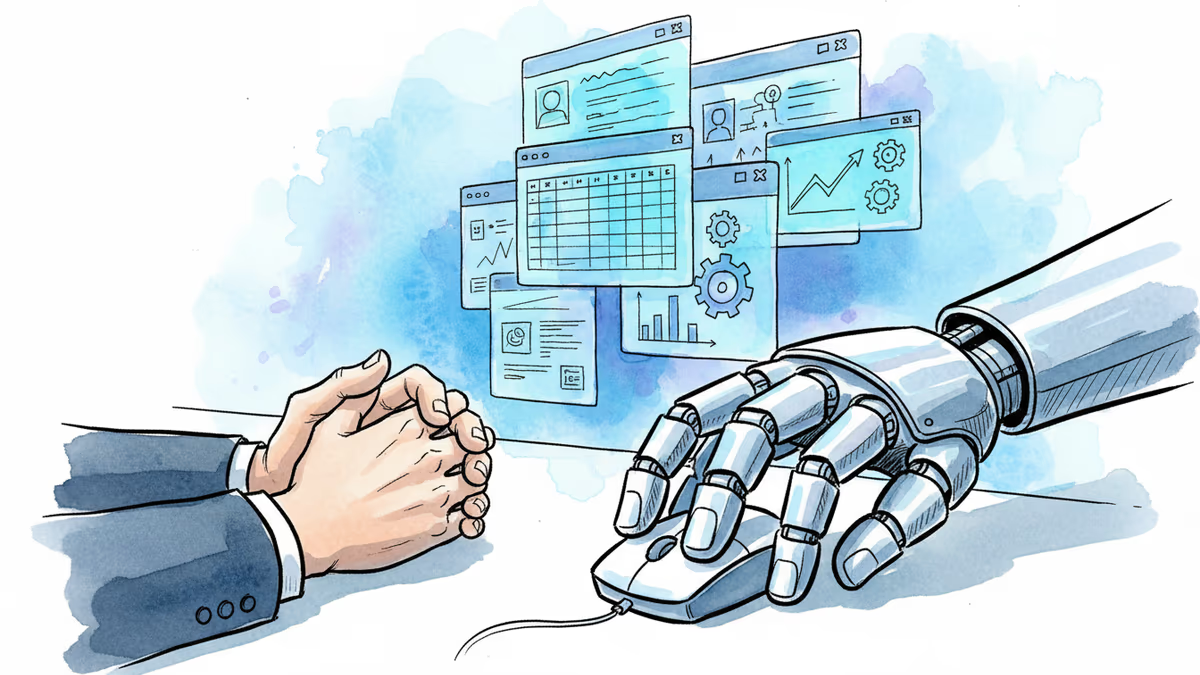
Your AI Assistant Just Learned to Use Your Computer
OpenAI's GPT-5.4 introduces native computer control, marking a shift from AI creators to AI operators. What happens when machines start clicking our mice?
The Mouse Moves Without You
OpenAI just dropped GPT-5.4, and this isn't your typical model update. For the first time, an AI can directly control your computer—clicking, typing, and navigating between apps like a digital employee who never takes coffee breaks.
We've crossed a threshold. Previous AI models were brilliant creators, generating text and images on command. But they couldn't do anything beyond their chat windows. GPT-5.4 changes that. It's the difference between having a consultant who gives great advice and having an assistant who actually implements it.
Silicon Valley's New Gold Rush
The reaction from enterprise software companies has been swift. Microsoft stock jumped 3.2% within hours of the announcement, while automation platform providers saw mixed results—some celebrating the validation, others worried about being leapfrogged.
Salesforce CEO Marc Benioff tweeted his excitement about "true agentic AI," but smaller RPA (Robotic Process Automation) companies are scrambling. Their carefully programmed bots suddenly look primitive next to an AI that can adapt to unexpected pop-ups or interface changes.
The Knowledge Worker's Dilemma

For millions of office workers, this announcement hits different. Data entry, report generation, and routine administrative tasks—the bread and butter of many roles—are now squarely in AI's crosshairs.
But here's where it gets interesting: early adopters report a 40% productivity boost when AI handles routine tasks. Instead of replacement, they're experiencing elevation—freed up to focus on strategy, creativity, and human connection. The question isn't whether AI will change office work, but whether companies will use it to empower employees or replace them.
The Security Elephant in the Room
Giving AI control of your computer is like handing your car keys to a brilliant teenager—impressive capabilities, questionable judgment. Cybersecurity firms are already raising red flags about potential vulnerabilities.
What happens when an AI agent accidentally deletes critical files? Or when bad actors figure out how to hijack these digital assistants? Google's security team has been working on "AI sandboxing" technologies, but the cat-and-mouse game between AI capabilities and security measures is just beginning.
The Regulatory Scramble
European regulators are watching closely. The EU's AI Act didn't anticipate AI systems with direct computer control capabilities. Emergency sessions are being called to address what some officials are calling "the automation gap" in current legislation.
Meanwhile, US lawmakers are split. Tech-friendly representatives see economic opportunity, while privacy advocates worry about surveillance implications. When AI can see and control everything on your screen, traditional notions of digital privacy need rethinking.
Authors
Related Articles
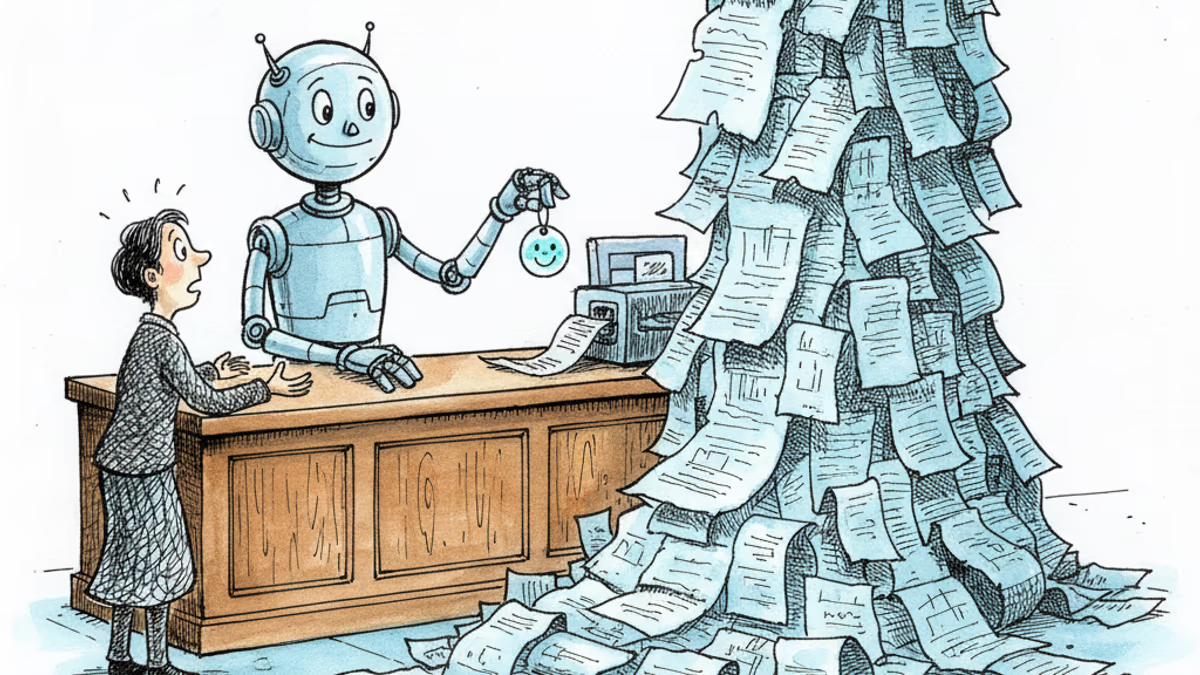
Anthropic shipped Claude Sonnet 5, its mid-tier agent model, on June 30. Behind the 'Opus-class power, budget price' headline sits a tokenizer catch and a three-horse race that's only half real. Here's what developers should actually run the numbers on.

OpenAI has reorganized for the second time in a month, merging ChatGPT and Codex into a single agentic platform under president Greg Brockman's unified product leadership.
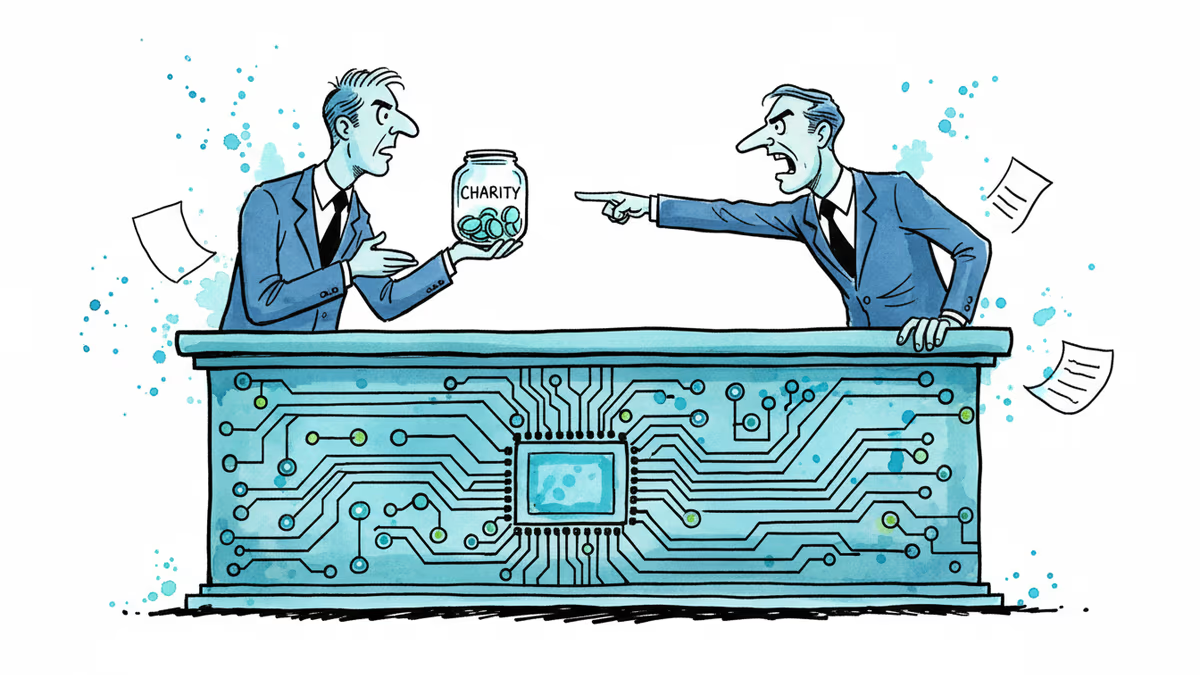
After two weeks of witnesses calling him a liar, OpenAI CEO Sam Altman testified in his own defense, claiming Elon Musk tried to kill the company twice.
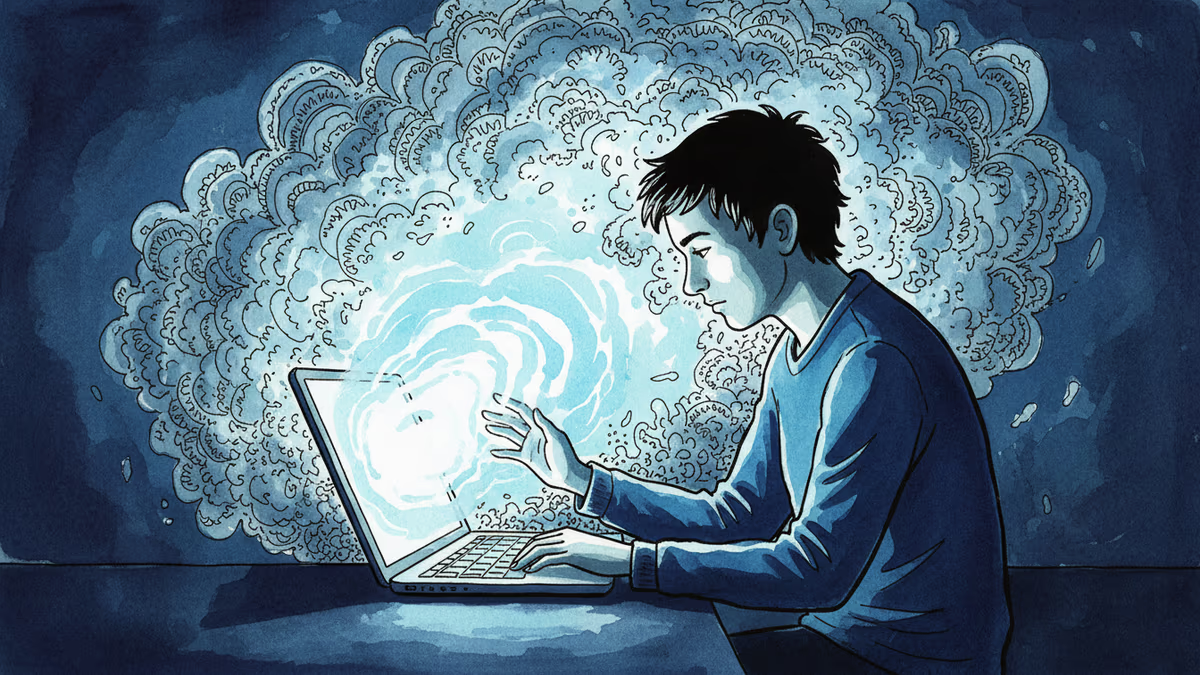
Sam Nelson, 19, died after following ChatGPT's advice to mix Kratom and Xanax. His parents are suing OpenAI for wrongful death, raising urgent questions about AI trust, liability, and design.
Anthropic shipped Claude Sonnet 5, its mid-tier agent model, on June 30. Behind the 'Opus-class power, budget price' headline sits a tokenizer catch and a three-horse race that's only half real. Here's what developers should actually run the numbers on.
OpenAI has reorganized for the second time in a month, merging ChatGPT and Codex into a single agentic platform under president Greg Brockman's unified product leadership.
After two weeks of witnesses calling him a liar, OpenAI CEO Sam Altman testified in his own defense, claiming Elon Musk tried to kill the company twice.
Sam Nelson, 19, died after following ChatGPT's advice to mix Kratom and Xanax. His parents are suing OpenAI for wrongful death, raising urgent questions about AI trust, liability, and design.
Thoughts
Share your thoughts on this article
Sign in to join the conversation