

Claude Opus 4.5 Coding Experience: The 3D Printer Moment for Software
Explore the Claude Opus 4.5 coding experience through 50 real-world projects. Discover why AI coding agents are the '3D printers' of software development in 2026.
Coding's having its '3D printer moment.' Remember that magical feeling when you first printed an object you could never have sculpted yourself? You'd load a file, push a button, and watch a physical shape emerge. AI coding agents are delivering that exact same brand of magic to software development today, turning complex syntax into a push-button experience.
50 Projects Later: The Claude Opus 4.5 Coding Experience
Since November 2025, extensive testing with Claude Code and Claude Opus 4.5 via a Claude Max account has revealed a seismic shift in productivity. After completing 50 diverse projects, it's clear: computers are fun again. This feeling of empowerment mirrors the nostalgia of learning BASIC on an Apple II Plus back in the 1990s.

For a utilitarian coder who has dabbled in C, Python, and PHP, the AI doesn't just replace the keyboard—it replaces the struggle. While OpenAI'sCodex paved the way, the latest iteration of agents allows for building modular architectures in Godot or complex web tools with unprecedented ease.
From Manual Labor to Architectural Vision
The results aren't always production-ready out of the box, much like a raw 3D print needs sanding. However, the ability to iterate rapidly transforms the developer's role. You're no longer just fighting with semicolons; you're directing a symphony of logic. Whether it's small utility scripts or hobbyist games, the barrier to entry has evaporated.
Authors
Related Articles
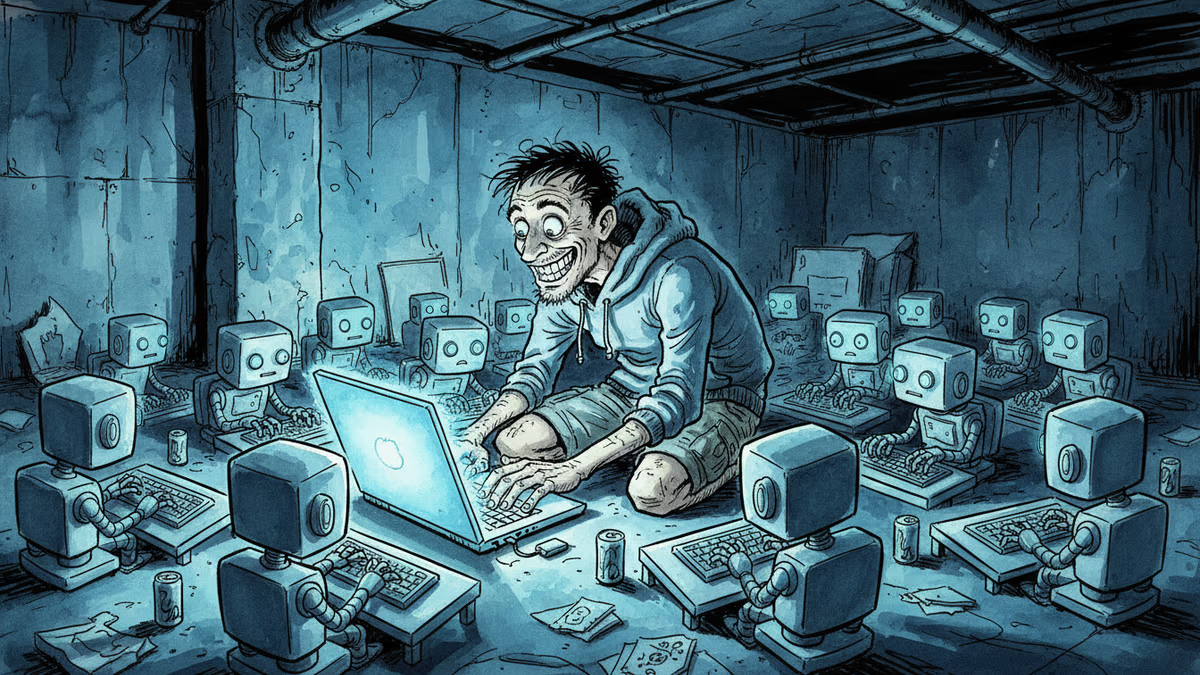
A small but growing group of developers has gone all-in on AI coding agents like Claude Code and OpenClaw. History suggests the rest of us won't be far behind.

Filipino virtual assistants using AI to ghost-manage LinkedIn profiles for executives is now a structured industry. 30 comments a day, fake engagement rings, and a platform struggling to tell real from fabricated.
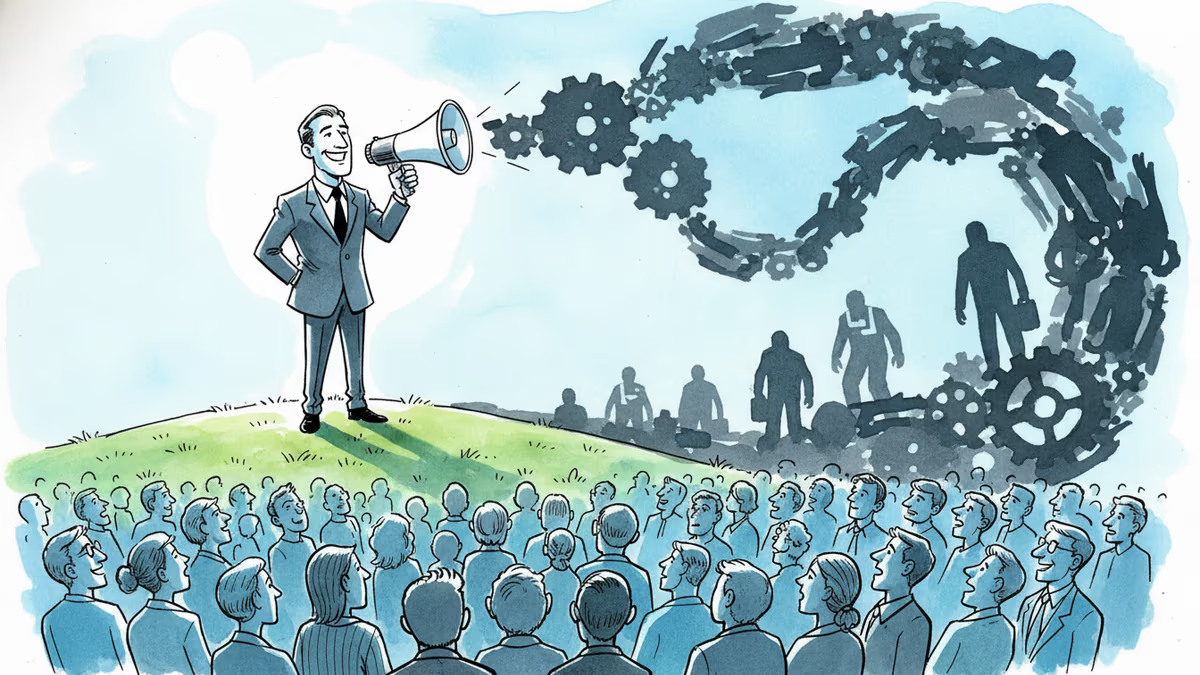
OpenAI's CEO published a blog post read by 600,000 people arguing AI is all upside. Is this genuine belief, strategic narrative, or both? PRISM examines the gaps in Silicon Valley's favorite story.
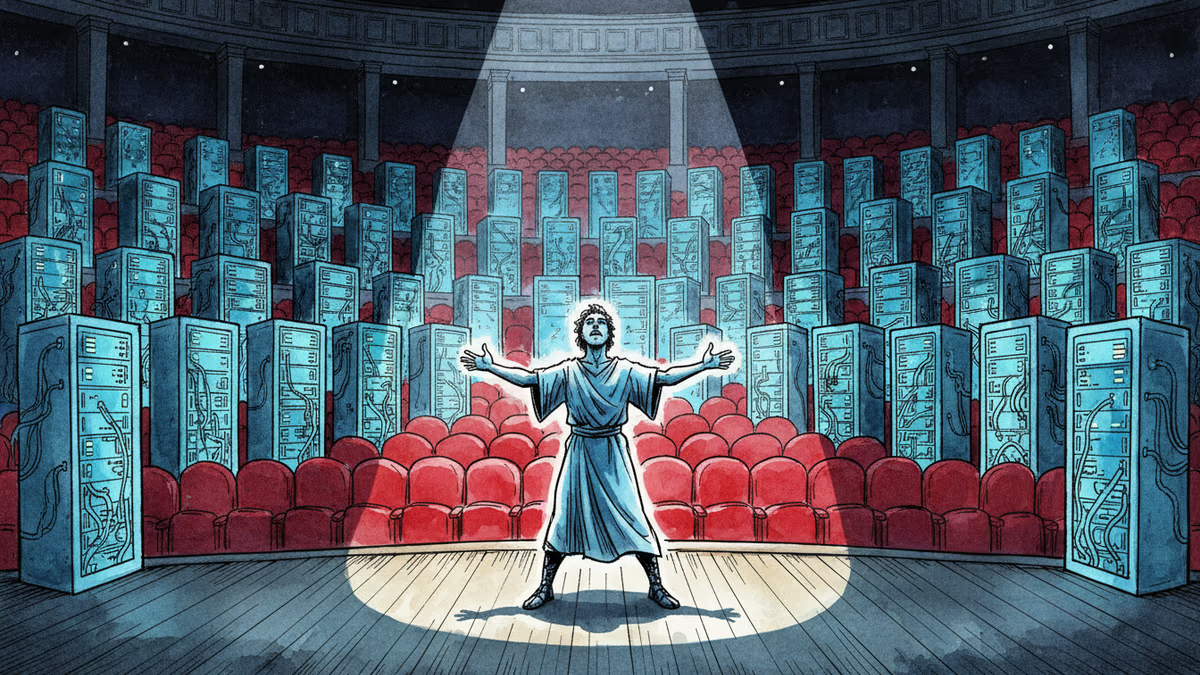
AI companies are hiring actors and writers to generate emotional training data. As creative labor becomes raw material for machine learning, what does that mean for the future of both?
A small but growing group of developers has gone all-in on AI coding agents like Claude Code and OpenClaw. History suggests the rest of us won't be far behind.
Filipino virtual assistants using AI to ghost-manage LinkedIn profiles for executives is now a structured industry. 30 comments a day, fake engagement rings, and a platform struggling to tell real from fabricated.
OpenAI's CEO published a blog post read by 600,000 people arguing AI is all upside. Is this genuine belief, strategic narrative, or both? PRISM examines the gaps in Silicon Valley's favorite story.
AI companies are hiring actors and writers to generate emotional training data. As creative labor becomes raw material for machine learning, what does that mean for the future of both?
Thoughts
Share your thoughts on this article
Sign in to join the conversation