
Sam Altman Says AI Has No Downside. Does He Believe It?
OpenAI's CEO published a blog post read by 600,000 people arguing AI is all upside. Is this genuine belief, strategic narrative, or both? PRISM examines the gaps in Silicon Valley's favorite story.
What do you do when the most powerful AI CEO in the world tells you there's nothing to worry about?
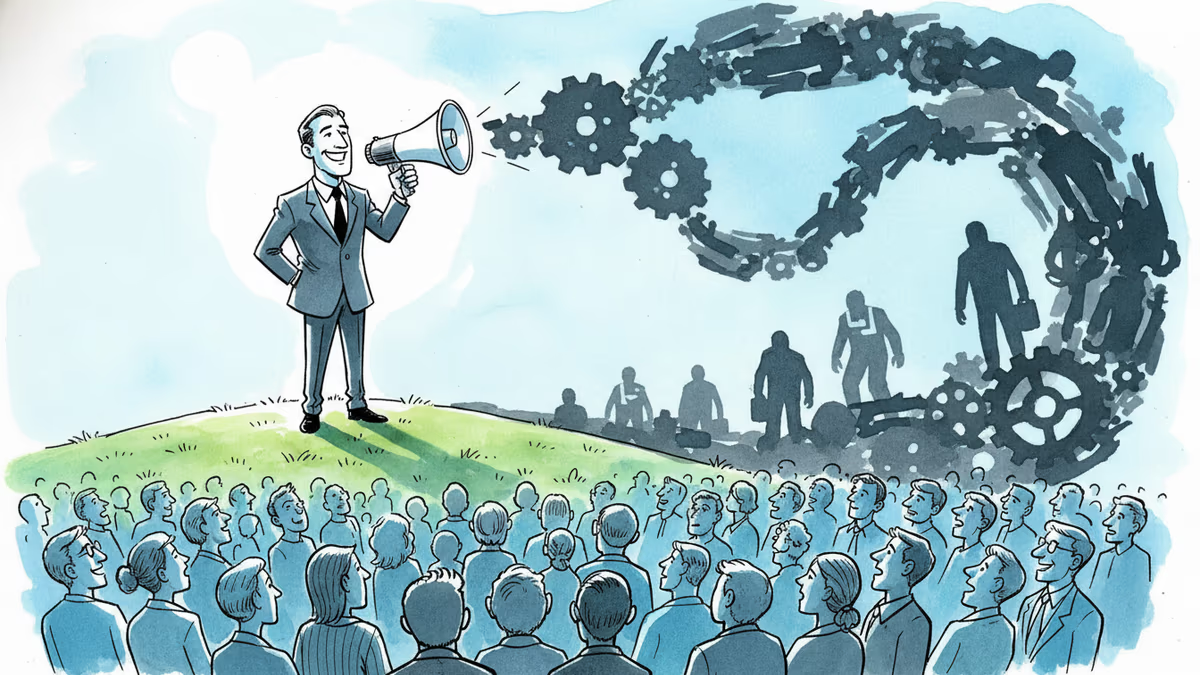
Last year, Sam Altman, CEO of OpenAI, published a blog post titled "A Gentle Singularity." It was read by nearly 600,000 people. The argument, stripped to its core: AI has been good so far, and it's going to get even better. Downsides? People adapt. Quickly. Move on.
Robots Building Robots
Altman's vision isn't vague. He sketches a specific future: build the first 1 million humanoid robots the old-fashioned way, then let them run the entire supply chain themselves — mining minerals, driving trucks, operating factories, constructing chip fabrication plants and data centers. From there, robots build more robots. Self-reinforcing loops kick in. The pace of progress becomes something we've never seen before.
This isn't pure fantasy. Tesla has already deployed its Optimus robots on factory floors. Figure AI and Boston Dynamics are burning through hundreds of millions in funding. The trajectory Altman describes is, at minimum, directionally plausible.
But then comes the part that deserves scrutiny. In Altman's telling, this entire transformation arrives without meaningful downsides — because humans are adaptable creatures who get used to things. Fast.
'Adaptation' Is Not a Policy
Here's where the argument starts to wobble. It's true that humans adapt. After the Industrial Revolution, workers displaced from textile mills eventually found other work. The long arc bent toward material improvement.
But the process of that adaptation took decades and carried enormous human cost — child labor, urban poverty, political upheaval. History books record the outcome. They're less vivid about the experience of living through it. For the people inside that transition, it wasn't adaptation. It was survival.

Altman's optimism isn't wrong because the future he describes is impossible. It's incomplete because it conflates the destination with the journey. The claim that technology eventually produces abundance and the claim that the transition will be painful for specific groups of people are not mutually exclusive. Both can be true at the same time.
For workers in manufacturing, logistics, and routine white-collar work — the people most directly in the path of the automation wave Altman describes — "you'll adapt" is not a reassuring answer. It's a deflection.
Three Ways to Read a CEO's Optimism
So how should we interpret statements like these? There are at least three lenses worth applying.
The True Believer lens: Altman genuinely holds these views. Silicon Valley has a long tradition of techno-optimism, and many of its most influential figures sincerely believe that technological progress is net positive for humanity. This isn't inherently cynical.
The Strategic Narrative lens: OpenAI is currently raising capital at a valuation that requires a very large, very confident story about the future. It also faces mounting regulatory pressure from governments in the US, EU, and beyond. A message of "everything will be fine" is useful. It calms investors and shapes the terms of regulatory debate in favorable ways.
The Convergence lens: Belief and self-interest don't always conflict — sometimes they align so perfectly that it becomes impossible to separate them. Altman may not be lying. He may simply be seeing what he's incentivized to see, and believing it fully.
None of these readings require bad faith. All of them suggest we should read his statements with more friction than 600,000 readers may have applied.
The Asymmetry Problem
There's a structural issue with how AI's future is being narrated. The people most likely to benefit from the scenario Altman describes — investors, highly skilled engineers, technology companies — are also the people doing most of the public talking about it. The people most likely to bear the transition costs are less visible in that conversation.
This isn't unique to AI. Every major technological shift has produced winners who told the story and losers who lived it quietly. What's different now is the speed of the narrative cycle. Altman's blog post reached 600,000 readers before most policy responses to AI displacement had even been drafted.
Authors
Related Articles
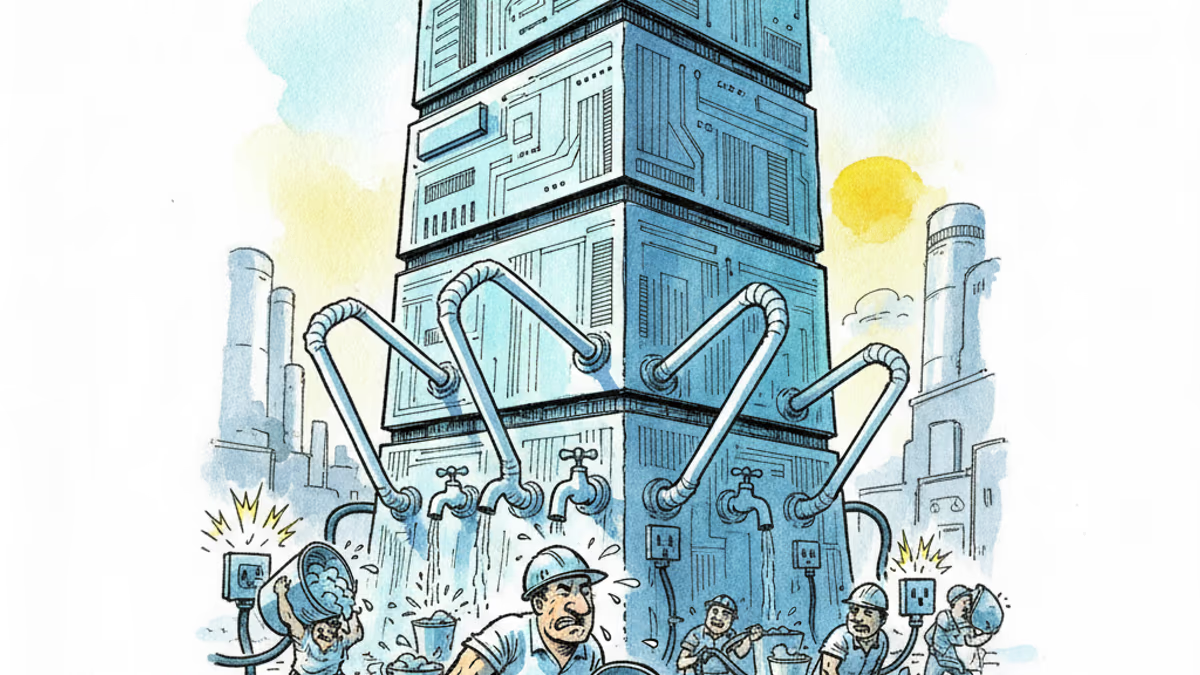
Samsung and SK unveiled a chip and AI investment package worth thousands of trillions of won on June 29. The headline number swings wildly by outlet, but the real contest isn't capital — it's water and power.
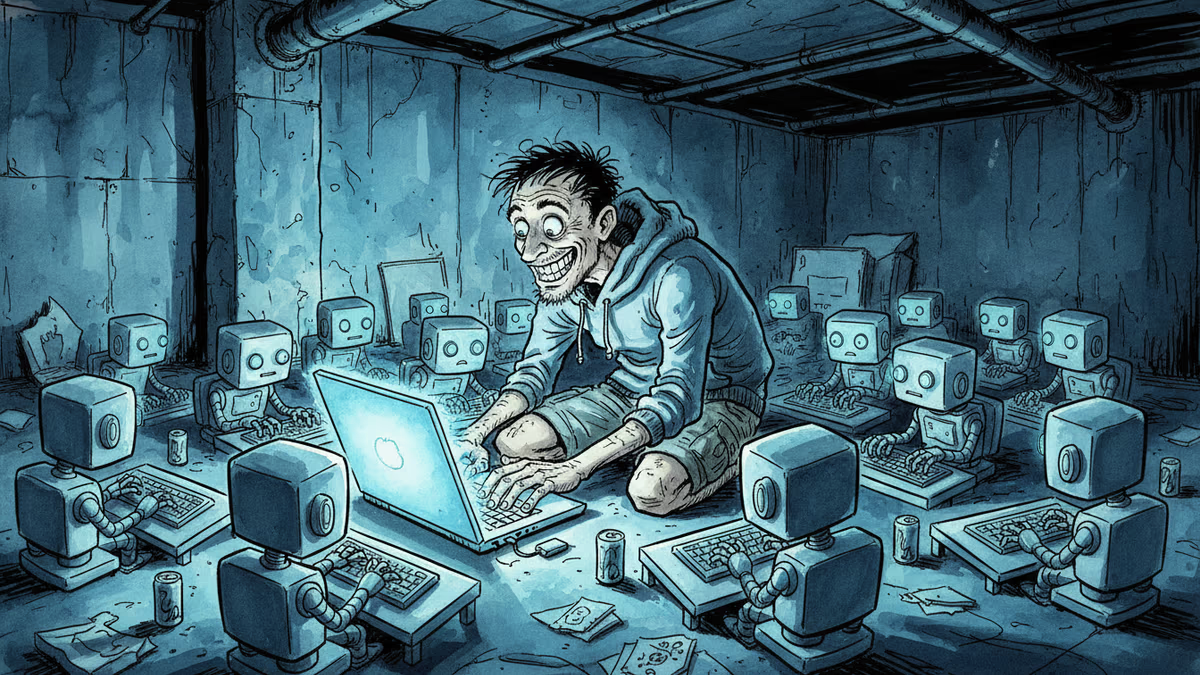
A small but growing group of developers has gone all-in on AI coding agents like Claude Code and OpenClaw. History suggests the rest of us won't be far behind.
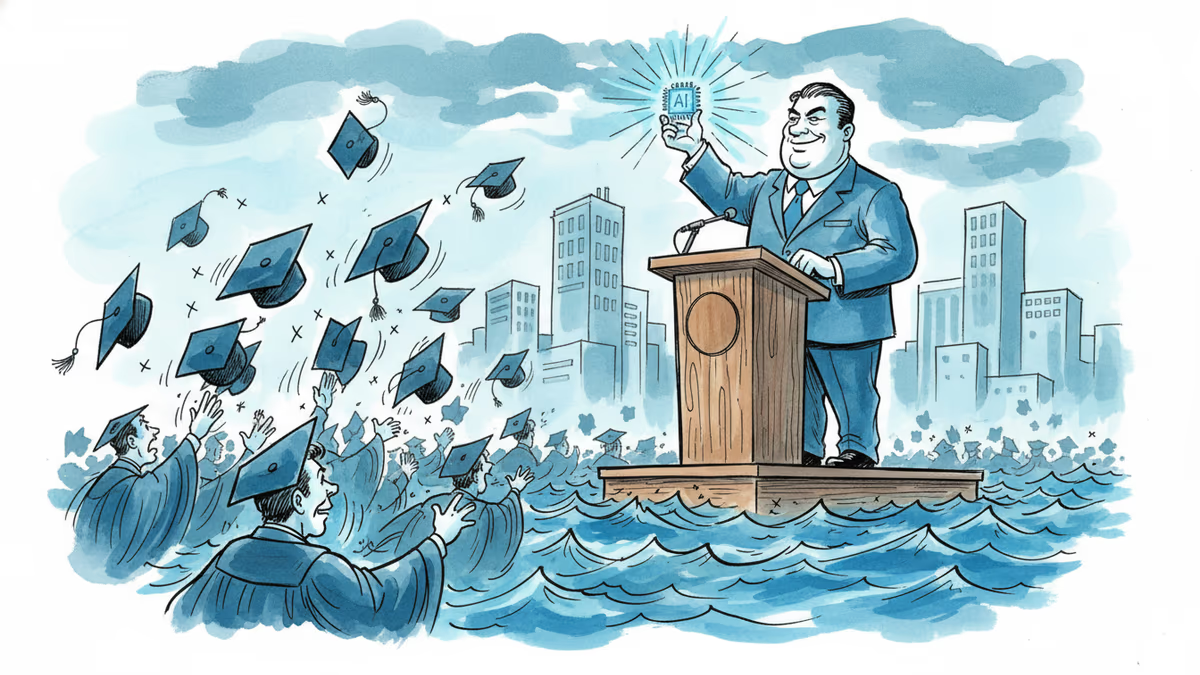
Viral videos show 2026 graduates jeering executives who praise AI at commencement ceremonies. It's not just rudeness — it's a signal about who pays for technological optimism.
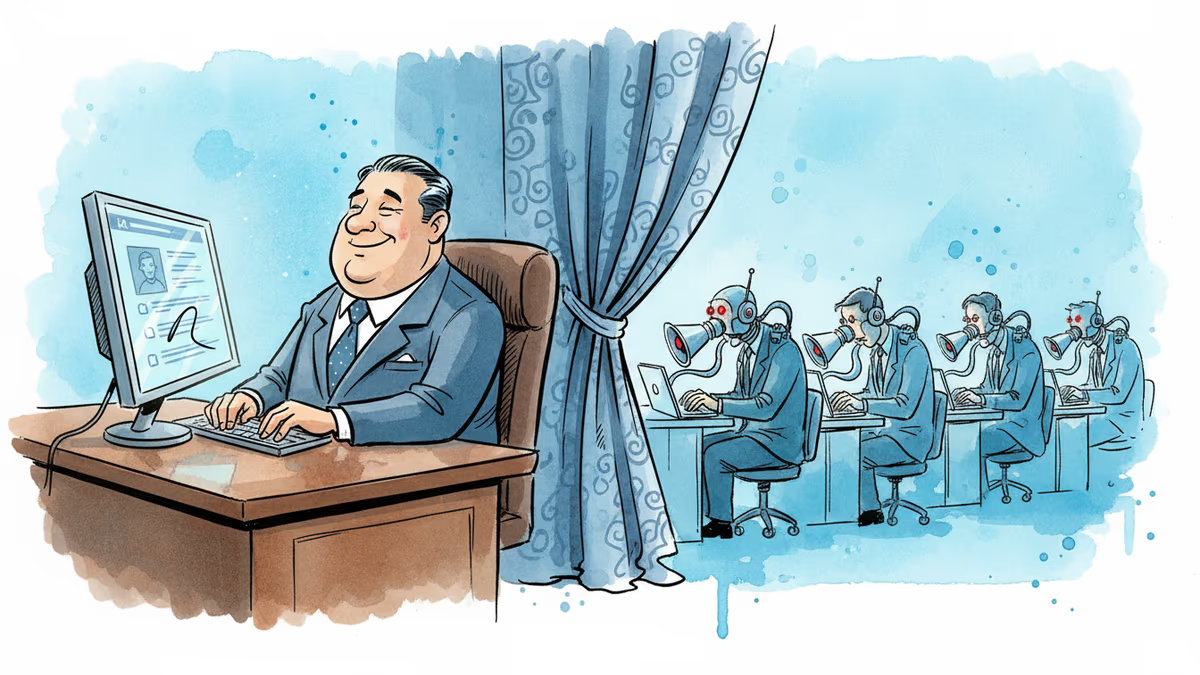
Filipino virtual assistants using AI to ghost-manage LinkedIn profiles for executives is now a structured industry. 30 comments a day, fake engagement rings, and a platform struggling to tell real from fabricated.
Samsung and SK unveiled a chip and AI investment package worth thousands of trillions of won on June 29. The headline number swings wildly by outlet, but the real contest isn't capital — it's water and power.
A small but growing group of developers has gone all-in on AI coding agents like Claude Code and OpenClaw. History suggests the rest of us won't be far behind.
Viral videos show 2026 graduates jeering executives who praise AI at commencement ceremonies. It's not just rudeness — it's a signal about who pays for technological optimism.
Filipino virtual assistants using AI to ghost-manage LinkedIn profiles for executives is now a structured industry. 30 comments a day, fake engagement rings, and a platform struggling to tell real from fabricated.
Thoughts
Share your thoughts on this article
Sign in to join the conversation