

Why RAM Is Suddenly the Most Precious, Expensive Chip in Your Device
RAM is the unsung hero in every device, but it's now a scarce and expensive commodity. Based on analysis from The Vergecast, here's why the chip is so hard to get right now.
It's the unsung hero inside every digital device you own, from your smartphone to your laptop. But this tiny, ubiquitous chip is now a precious and expensive commodity, creating a new bottleneck for the tech industry. According to a recent deep-dive on The Verge's Vergecast podcast, Random Access Memory—or RAM—is facing a perfect storm of demand and supply-chain pressures.
The Computer's 'Workbench'
On the show, hosts David Pierce and Nilay Patel, joined by The Verge's Sean Hollister, explored the history of this foundational technology. They describe as the computer's temporary 'workbench'—the space where it holds all the data it's actively working on. While your hard drive or SSD is the library, RAM is the desk where you spread out the books you're currently reading. A bigger desk means you can work on more things at once, much faster.

It was the evolution of RAM that enabled modern computing and seamless multitasking, transforming it from a niche component into an essential part of practically every electronic we own today.
The New Scarcity: Why Is It So Hard to Get?
The podcast discussion highlights why this once-abundant chip is now so hard to get. An explosion in demand from AI servers, high-performance gaming rigs, and the sheer volume of smart devices is outstripping production capacity. The hosts note that this, combined with the physical limits of semiconductor manufacturing and broader geopolitical supply chain tensions, is putting immense pressure on both the availability and price of RAM.
Authors
Related Articles

The US government invested $2 billion in quantum computing startups, but Congress says the money was never authorized for that purpose. The fate of IBM-backed Anderon hangs in the balance.
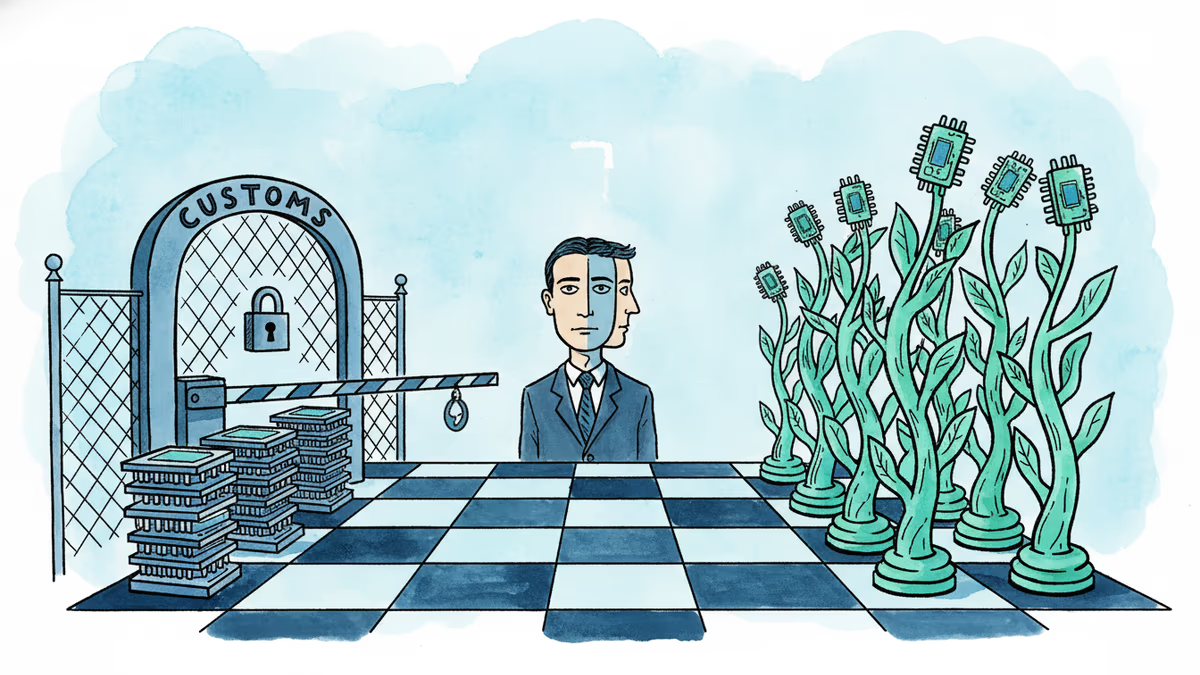
Beijing added an Nvidia gaming chip to its customs ban list the same week Jensen Huang visited China with Trump. Here's what it means for the chip war—and who actually wins.

Taiwan's Thunder Tiger became the first Asian firm to win US military drone clearance with a China-free supply chain. As Trump meets Xi, the drone arithmetic reshapes defense strategy.
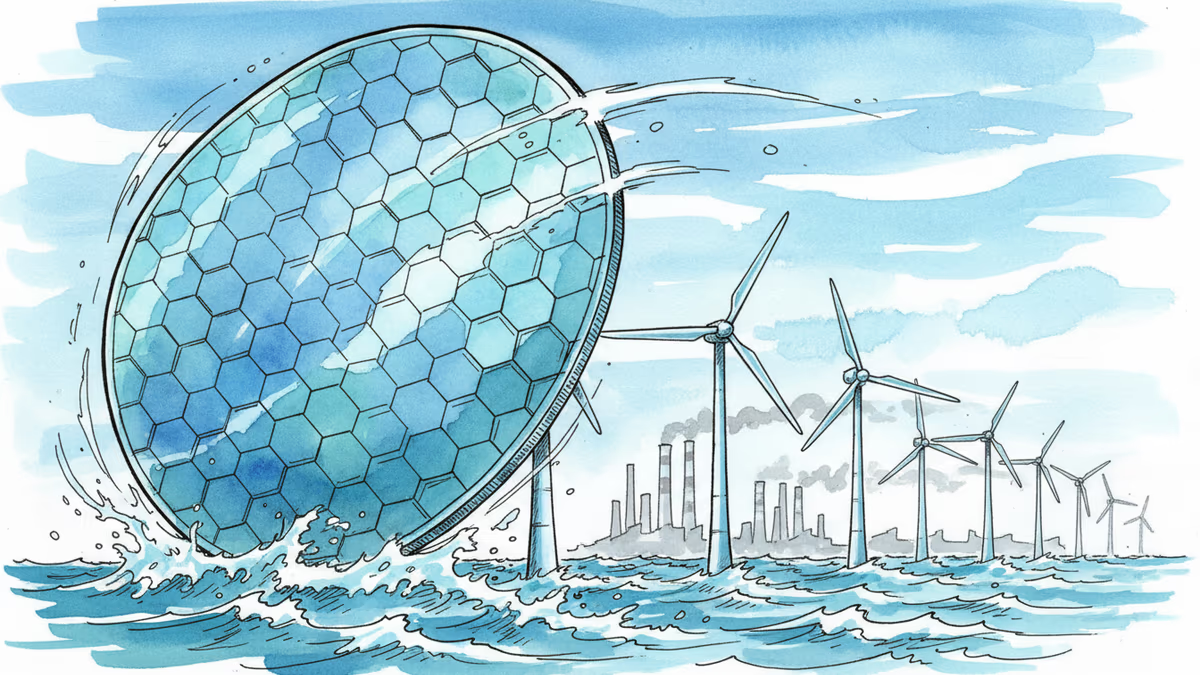
TSMC has signed a 30-year power purchase agreement for 100% of output from Taiwan's Hai Long offshore wind project. The 1GW deal reveals how chipmakers are quietly becoming energy companies.
The US government invested $2 billion in quantum computing startups, but Congress says the money was never authorized for that purpose. The fate of IBM-backed Anderon hangs in the balance.
Beijing added an Nvidia gaming chip to its customs ban list the same week Jensen Huang visited China with Trump. Here's what it means for the chip war—and who actually wins.
Taiwan's Thunder Tiger became the first Asian firm to win US military drone clearance with a China-free supply chain. As Trump meets Xi, the drone arithmetic reshapes defense strategy.
TSMC has signed a 30-year power purchase agreement for 100% of output from Taiwan's Hai Long offshore wind project. The 1GW deal reveals how chipmakers are quietly becoming energy companies.
Thoughts
Share your thoughts on this article
Sign in to join the conversation