
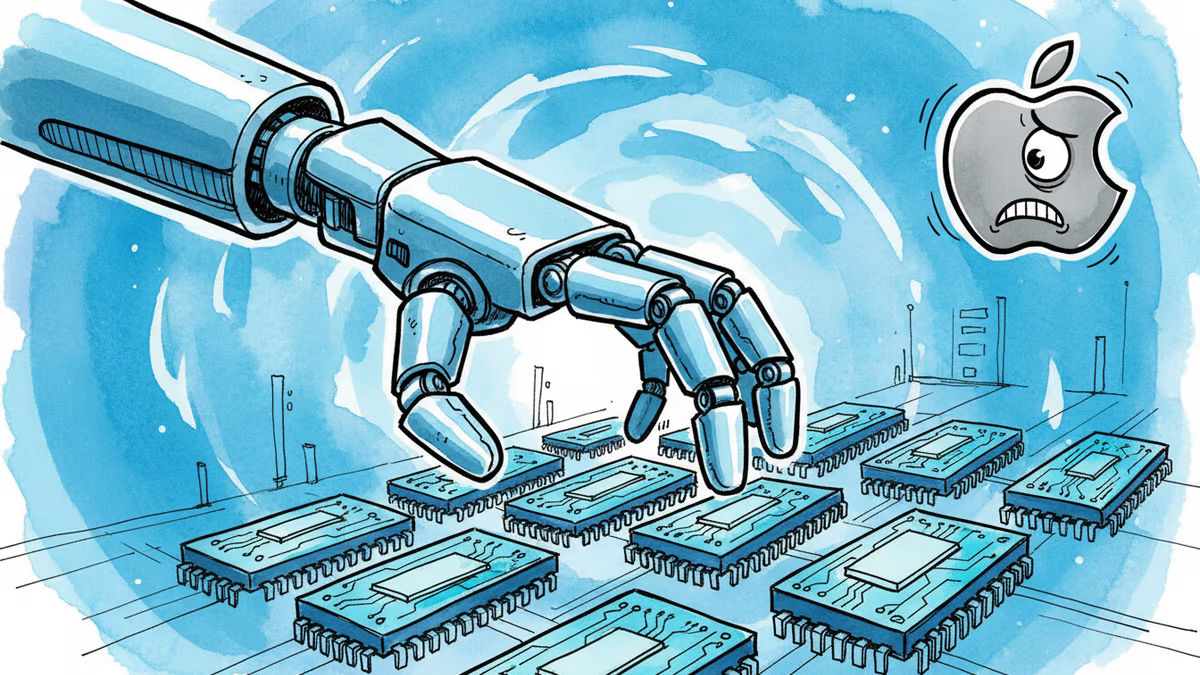
Apple's Quiet Memory Retreat Reveals AI's Hidden Cost
Apple silently removed 512GB RAM option from Mac Studio and raised 256GB pricing by 25%. The AI boom's memory crunch is reshaping consumer tech in ways we're just beginning to understand.
The $400 Price Hike Nobody Talked About
While Apple dazzled audiences with sleek product announcements this week, a quieter change was unfolding behind the scenes. The company's top-tier M3 Ultra Mac Studio lost its 512GB RAM option entirely. The 256GB model jumped from $1,600 to $2,000—a 25% increase that barely made headlines.
Even Apple, with its massive scale and buying power, couldn't defy the laws of supply and demand.
When AI Eats the Memory Supply Chain
On the surface, Apple's week looked generous. Some products offered more RAM and storage at the same prices. The MacBook Neo at $599 came in cheaper than expected. But beneath this consumer-friendly veneer, a different story was playing out.
The AI revolution has triggered what industry insiders call a "historic memory crunch." ChatGPT, Claude, and Gemini aren't just changing how we work—they're reshaping global semiconductor supply chains. Data centers are hoarding HBM (High Bandwidth Memory) like digital gold, and the ripple effects are reaching consumer devices.
Samsung and SK Hynix have pivoted their production lines toward AI-optimized memory, leaving traditional consumer markets fighting for scraps.
David vs. Goliath: Consumers vs. Data Centers

"Individual users are now competing with data centers for the same memory resources," explains a semiconductor industry analyst. A single NVIDIA H100 GPU contains 80GB of HBM—equivalent to the memory in six Mac Studio 512GB configurations.
For Apple, the math was brutal. Maintaining the 512GB option would have required pricing it at $4,000 or higher. Instead, the company chose strategic retreat: eliminate the high-end option and absorb smaller price increases on the remaining model.
But critics see this differently. "Apple is ceding the high-performance memory market to cloud providers," argues one industry observer. "Microsoft and Google will fill this gap with their cloud services."
The Broader Implications
This isn't just about Apple. Dell and HP have quietly reduced maximum RAM configurations on their workstations. Gaming laptop manufacturers are struggling to offer 64GB options without pricing themselves out of the market.
Meanwhile, memory manufacturers are seeing their best margins in years. Micron Technology reported a 340% increase in HBM revenue last quarter. But this windfall comes at a cost: traditional PC and mobile markets are becoming afterthoughts.
The Cloud Alternative
Some see opportunity in this crisis. Cloud computing suddenly looks more attractive when local hardware becomes prohibitively expensive. Amazon Web Services and Microsoft Azure are positioning themselves as the solution for users who need high-performance computing without the upfront hardware costs.
But this shift raises questions about data sovereignty and long-term costs. Are we trading ownership for access? And what happens when cloud providers face the same memory constraints?
The answer may determine whether the AI revolution democratizes computing power or concentrates it in the hands of a few cloud giants.
Authors
Related Articles
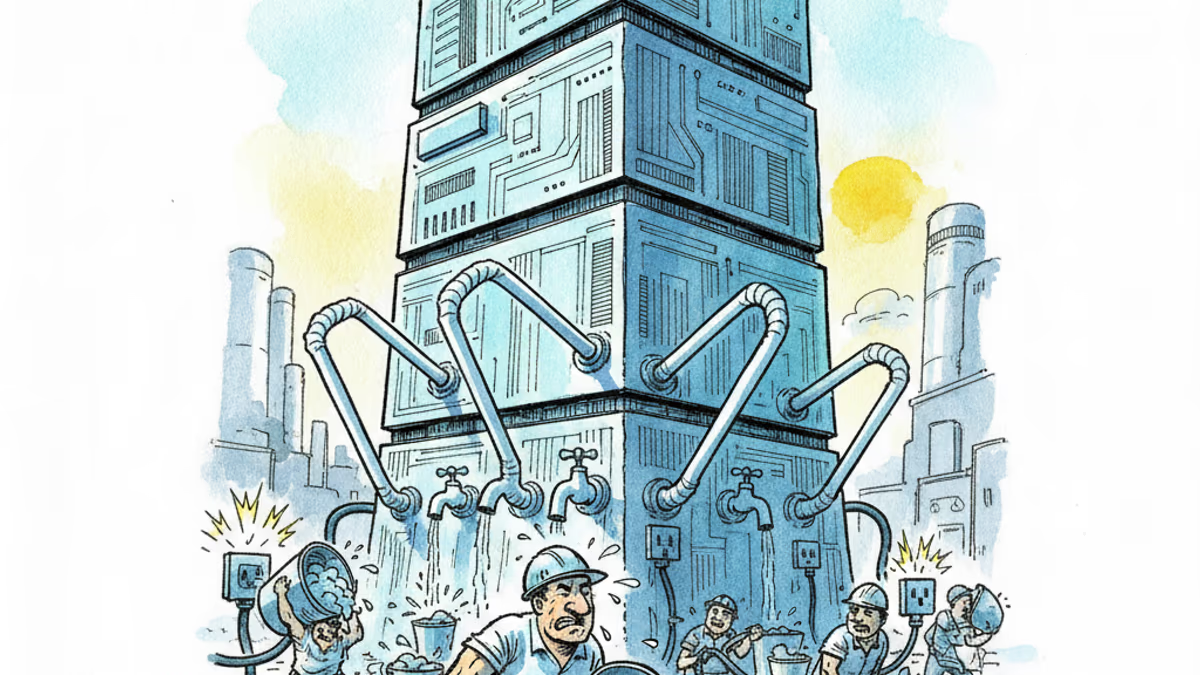
Samsung and SK unveiled a chip and AI investment package worth thousands of trillions of won on June 29. The headline number swings wildly by outlet, but the real contest isn't capital — it's water and power.

Viral videos show 2026 graduates jeering executives who praise AI at commencement ceremonies. It's not just rudeness — it's a signal about who pays for technological optimism.
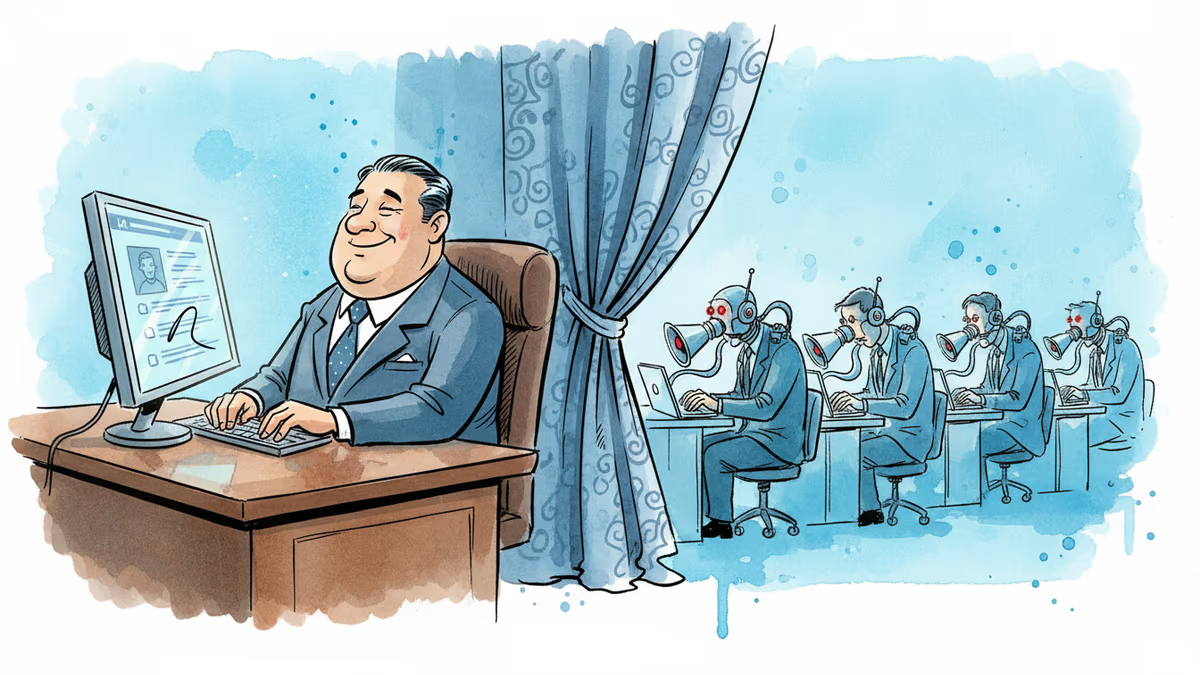
Filipino virtual assistants using AI to ghost-manage LinkedIn profiles for executives is now a structured industry. 30 comments a day, fake engagement rings, and a platform struggling to tell real from fabricated.
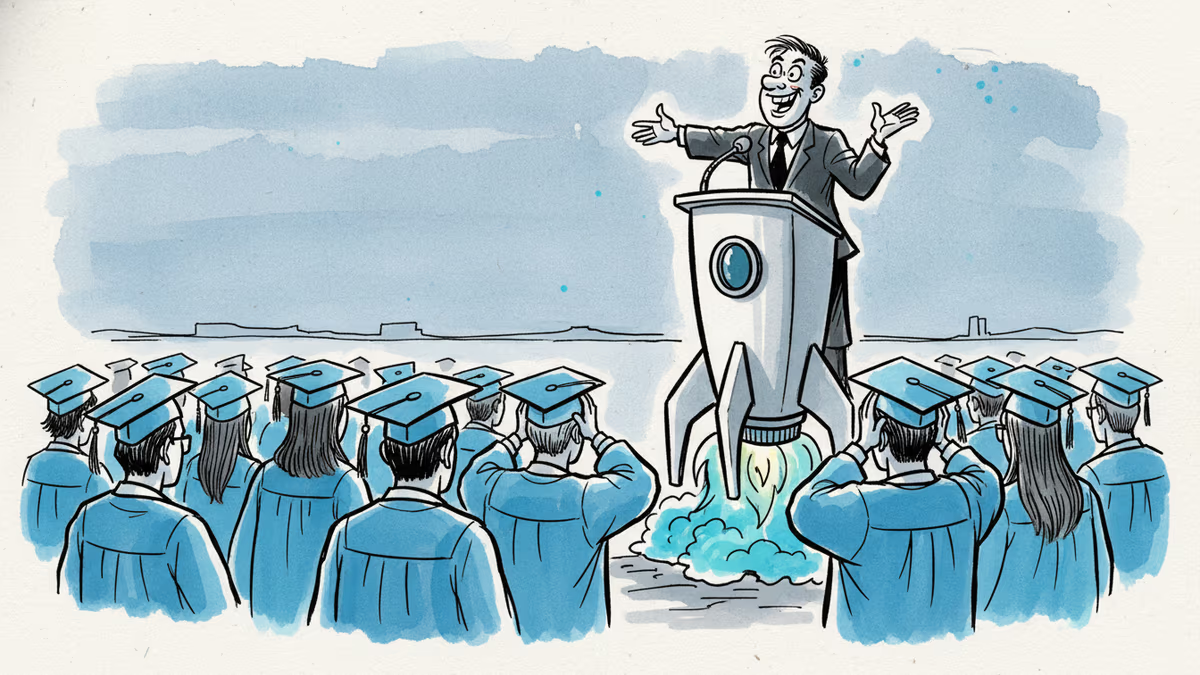
Two commencement speakers learned the hard way that AI enthusiasm doesn't land well with today's graduates. The backlash reveals a widening gap between tech optimism and Gen Z's economic reality.
Samsung and SK unveiled a chip and AI investment package worth thousands of trillions of won on June 29. The headline number swings wildly by outlet, but the real contest isn't capital — it's water and power.
Viral videos show 2026 graduates jeering executives who praise AI at commencement ceremonies. It's not just rudeness — it's a signal about who pays for technological optimism.
Filipino virtual assistants using AI to ghost-manage LinkedIn profiles for executives is now a structured industry. 30 comments a day, fake engagement rings, and a platform struggling to tell real from fabricated.
Two commencement speakers learned the hard way that AI enthusiasm doesn't land well with today's graduates. The backlash reveals a widening gap between tech optimism and Gen Z's economic reality.
Thoughts
Share your thoughts on this article
Sign in to join the conversation