
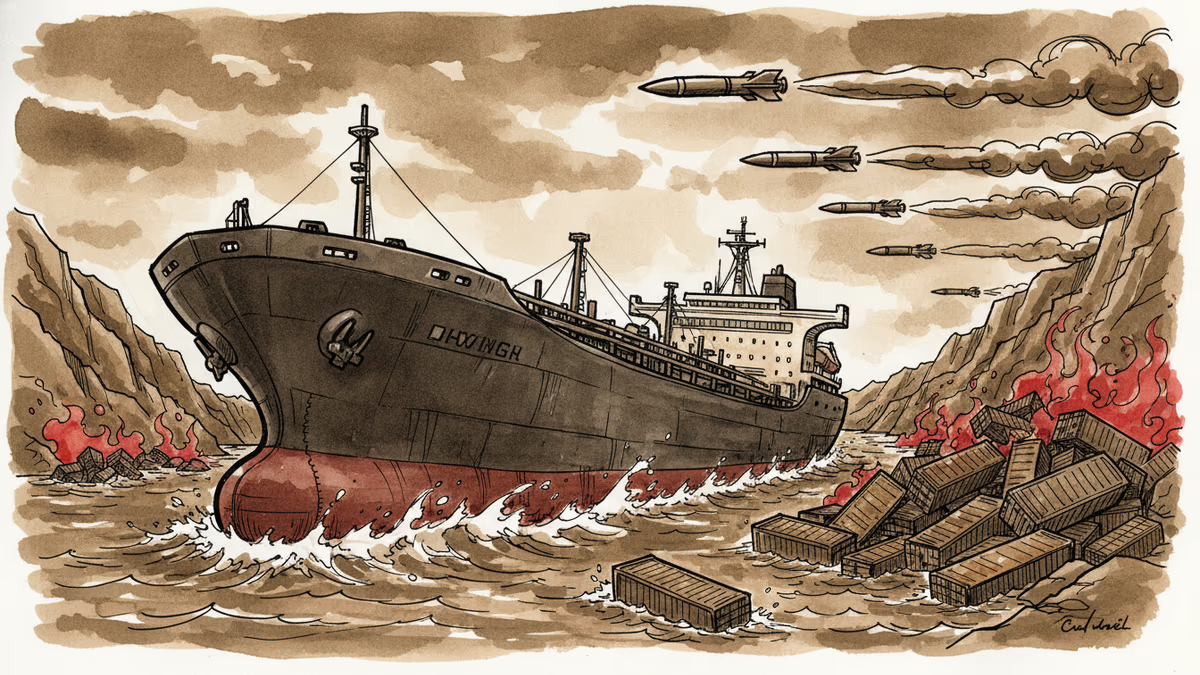
Middle East War Week One: When Global Supply Chains Collapse in Real Time
The US-Israel strikes on Iran have triggered supply chain chaos across industries in just seven days. How long can the global economy withstand this disruption?
1,000 Dead in Seven Days—And the World Just Stopped
February 28 marked the beginning of US-Israeli strikes against Iran. Seven days later, Iranian state media reports over 1,000 deaths within its borders. But the casualty count tells only part of the story. The real shock is the speed at which global commerce has ground to a halt.
Shipping through the Strait of Hormuz—carrying 21% of global oil—has completely stopped. Qatar halted liquified natural gas production. Saudi refineries are under attack. Amazon's data centers in two countries have been directly hit, causing "elevated error rates" across cloud services worldwide.
Defense Secretary Pete Hegseth says operations could last eight weeks. President Trump projects 4-5 weeks but admits they "have the capability to go far longer." The timeline matters less than this reality: critical economic arteries are already severed.
When Amazon Gets Hit, Everyone Feels It
Amazon Web Services facilities in Bahrain and the UAE were "directly struck," according to company statements. Iran reportedly targeted them for supporting US military operations. The result? Degraded cloud services affecting businesses globally—from Netflix streaming to corporate email systems.
This isn't just about one tech giant. It's about how quickly modern infrastructure becomes collateral damage in 21st-century warfare. When AWS goes down, so does a chunk of the internet economy.
The Domino Effect Accelerates
What started as US-Israeli strikes on Iran has metastasized across the region:

- Azerbaijan: Drone attacks damaged airports, injured civilians
- Lebanon: Israel bombing southern regions after Hezbollah retaliation
- Turkey: NATO missile defense systems activated
- 12 countries: Evacuating citizens from the region
The conflict is expanding faster than anyone predicted. Each new country drawn in multiplies the economic disruption exponentially.
Supply Chains: The Hidden Casualty
Qatar's production halt affects more than energy. The country produces methanol, polymers, and aluminum—critical inputs for everything from semiconductors to automotive manufacturing. Just-in-time inventory systems, optimized for efficiency, weren't designed for geopolitical shocks.
Oil prices have already spiked $15 per barrel. But energy is just the beginning. Fertilizer production (crucial for global food security), shipping routes, and tech manufacturing are all feeling the squeeze.
The Eight-Week Question
If this conflict truly lasts eight weeks, as Pentagon officials suggest, the economic implications compound dramatically:
- Week 1-2: Current inventory buffers hold
- Week 3-4: Production slowdowns begin
- Week 5-6: Consumer price increases accelerate
- Week 7-8: Supply shortages hit retail shelves
We're currently in Week 1. The question isn't whether this will affect global markets—it already has. The question is whether supply chains can adapt fast enough to prevent broader economic disruption.
Congress Still Silent
Perhaps most remarkably, the US Congress—which constitutionally holds the sole power to declare war—has not done so. The administration has offered various justifications, from "nuclear threats" to unverified claims about Iranian election interference. But formal war authorization remains absent.
This legal ambiguity adds another layer of uncertainty for businesses trying to assess long-term risks and plan accordingly.
Authors
Related Articles
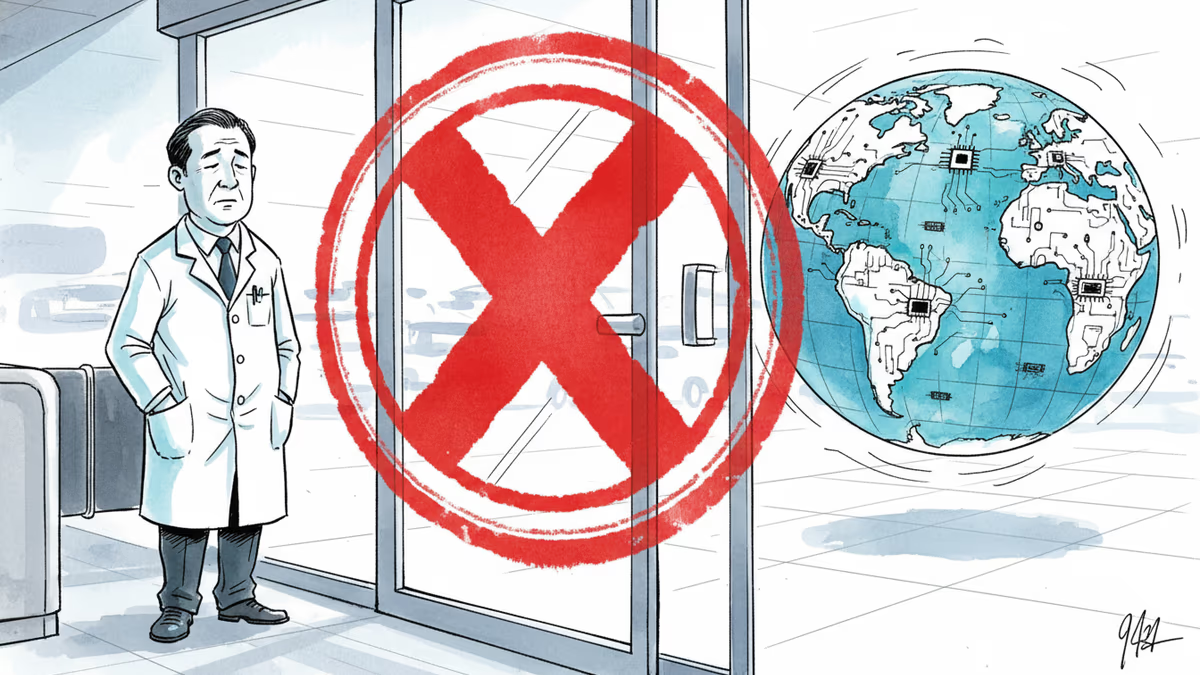
China is restricting AI researchers and startup founders from traveling abroad as the U.S.-China AI performance gap narrows to just 2.7%. What Beijing's talent lockdown means for the global AI race.
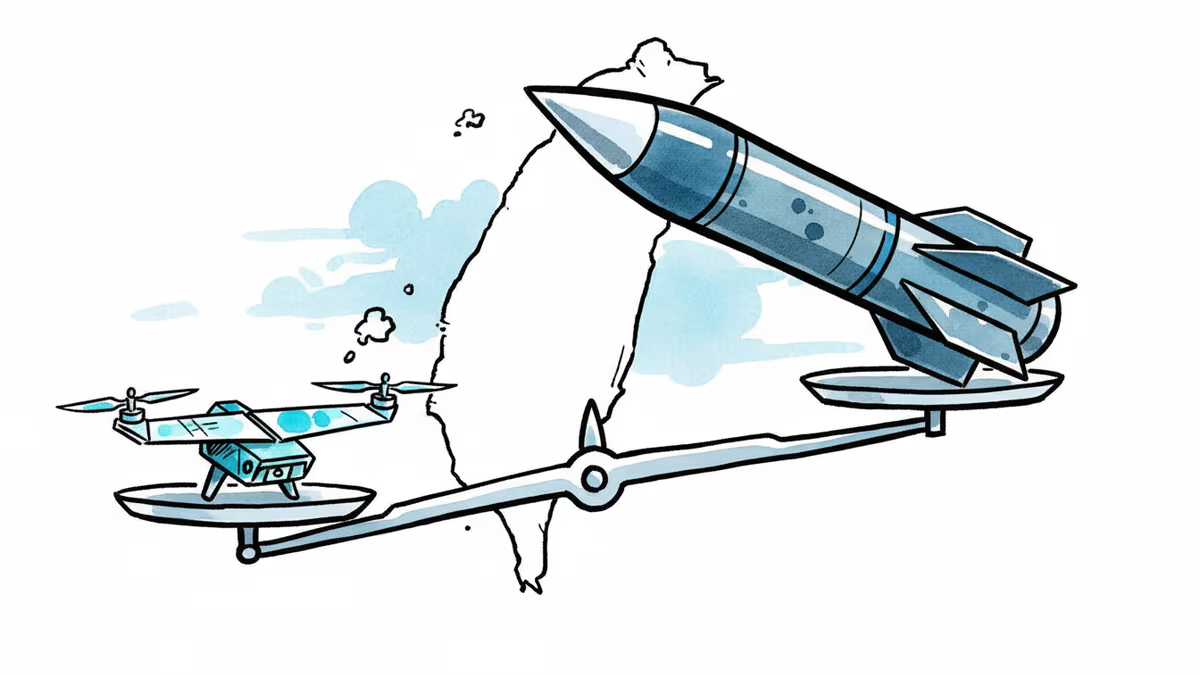
Taiwan's Thunder Tiger became the first Asian firm to win US military drone clearance with a China-free supply chain. As Trump meets Xi, the drone arithmetic reshapes defense strategy.

Apple quietly removed the entry-level $599 Mac Mini, raising the starting price to $799 — just one day after Tim Cook warned of chip supply constraints on the earnings call.
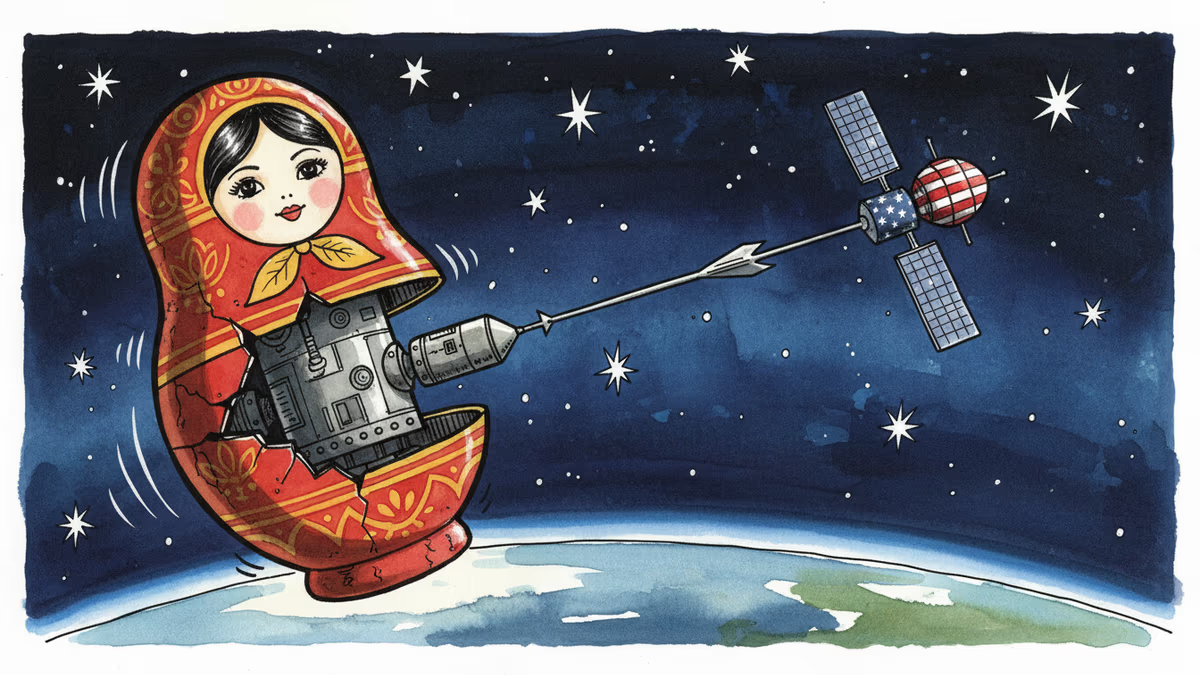
US Space Command confirms Russia has deployed operational anti-satellite weapons tracking American spy satellites in low-Earth orbit. What does this mean for space security?
China is restricting AI researchers and startup founders from traveling abroad as the U.S.-China AI performance gap narrows to just 2.7%. What Beijing's talent lockdown means for the global AI race.
Taiwan's Thunder Tiger became the first Asian firm to win US military drone clearance with a China-free supply chain. As Trump meets Xi, the drone arithmetic reshapes defense strategy.
Apple quietly removed the entry-level $599 Mac Mini, raising the starting price to $799 — just one day after Tim Cook warned of chip supply constraints on the earnings call.
US Space Command confirms Russia has deployed operational anti-satellite weapons tracking American spy satellites in low-Earth orbit. What does this mean for space security?
Thoughts
Share your thoughts on this article
Sign in to join the conversation